Classical music anniversaries in August span four centuries of the art form – from the birth of Baroque composer Barbara Strozzi in 1619 to the death of Sviatoslav Richter in 1997.
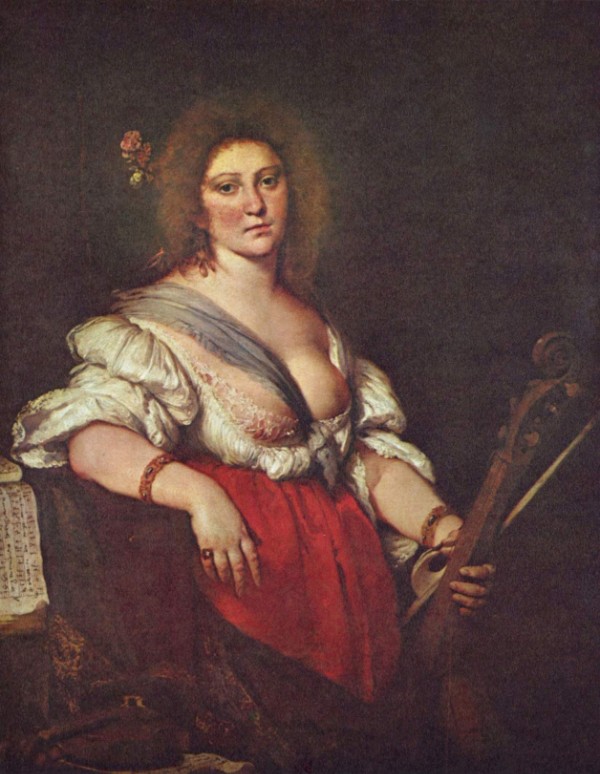
Barbara Strozzi
The month includes the anniversaries of the births of Claude Debussy and Leonard Bernstein, the premiere of Wagner‘s Lohengrin, and one of the most provocative events in 20th-century music: the 1952 premiere of John Cage‘s 4’33”.
Whether you’re looking for a birth, a death, a wedding, or a premiere, August has it all.
1 August 1997
Death of Sviatoslav Richter
Richter playing Schubert’s Piano Sonata No. 18
Widely considered one of the greatest pianists of the 20th century, Sviatoslav Richter was celebrated for his broad repertoire, bulletproof technique, and the emotional depth of his interpretations.
He died in Moscow from a heart attack at the age of 82. Ever the lifelong learner, before his death, he had been studying Schubert‘s Fünf Klavierstücke, D459.
In this article, we looked at how Richter became such a great pianist: https://interlude.hk/on-this-day-20-march-sviatoslav-richter-was-born/
2 August 1921
Death of Enrico Caruso
Caruso singing “Vesti la giubba”
Italian operatic tenor Enrico Caruso sang at all the major European and American opera houses and is generally recognised as the first international recording star.
His 1904 recording of “Vesti la giubba” from Leoncavallo’s Pagliacci became the first sound recording to sell a million copies.
After months of battling infection, he died of peritonitis on August 2, 1921, at the age of 48.
Over the course of his career, he’d made 863 appearances at the Metropolitan Opera alone.
In this article, we traced how Caruso rose from a street singer to the most famous tenor in the world: https://interlude.hk/on-this-day-25-february-enrico-caruso-was-born/
3 August 1998
Death of Alfred Schnittke
Schnittke’s Tango from Life with an Idiot
Although Soviet/Russian composer Alfred Schnittke suffered his first stroke in July 1985, and was declared clinically dead on several occasions, he recovered and continued to compose.

Alfred Schnittke
After his fifth stroke, he died in Hamburg on August 3, 1998, at the age of 63. His Moscow funeral drew thousands of mourners.
We looked at how – and why – Schnittke became a composer: https://interlude.hk/on-this-day-24-november-alfred-schnittke-was-born/
4 August 1782
Wolfgang Mozart marries Constanze Weber
Mozart’s C minor mass
The wedding of Wolfgang Mozart and soprano Constanze Weber took place on August 4, 1782, at St. Stephen’s Cathedral in Vienna.
Due to financial constraints and an urgent timeline (the couple had started living together before the wedding), the ceremony was small and simple.
Wolfgang’s father, Leopold, consented to the marriage but was never happy about his son’s choice of wife.
Wolfgang and Constanze came to visit Leopold the following year, in October 1783, and Wolfgang wrote his C minor mass during the trip, tailoring the soprano part to his wife’s voice so that she might make a good impression.
We dug into the history of Wolfgang and Constanze Mozart’s six children here: https://interlude.hk/what-happened-to-mozarts-children/
5 August 1916
Death of George Butterworth
Butterworth’s The Banks of Green Willow
English composer George Butterworth was killed in action at Pozières during the Battle of the Somme on August 5, 1916, at the age of 31.
His body was never found, and his name appears among the 73,357 listed on the Thiepval Memorial to the Missing.
His best-known piece is the 1913 orchestral idyll The Banks of Green Willow.
We wrote about how war service impacted three great composers, including Butterworth, here: https://interlude.hk/musical-voices-wwi-1914-18-ravel-berg-butterworth/
6 August 1619
Birth of Barbara Strozzi
Barbara Strozzi’s “Che si può fare”
Venetian singer and composer Barbara Strozzi published eight volumes of her own music during her lifetime, meaning she published more secular music than any other composer of her generation – an impressive feat accomplished without the backing of the Church or a noble patron.
She was the illegitimate daughter of the playwright Giulio Strozzi, who arranged for her to take composition lessons from Francesco Cavalli, the leading opera composer in Venice.
We looked at whether Barbara Strozzi was the greatest woman composer of the Baroque era here: https://interlude.hk/barbara-strozzi-is-she-the-greatest-woman-composer-of-the-baroque/
7 August 1912
Premiere of Prokofiev’s Piano Concerto No. 1
Prokofiev’s Piano Concerto No. 1
Prokofiev was still a conservatory student when he took the stage in Moscow on August 7, 1912, to premiere his first piano concerto. It was the first time he’d ever played with an orchestra. The crowd responded with enthusiasm, but conservative critics remained unimpressed.
He later performed the work as his graduation piece, both scandalizing and impressing his teachers. Alexander Glazunov, who headed the jury, found the music filled with “harmful tendencies” but voted with the majority to award Prokofiev the prestigious Anton Rubinstein Prize.
We looked at the history of the premiere of this concerto – and why Prokofiev was so nervous presenting it: https://interlude.hk/prokofiev-piano-concerto-1premiered-today-1912/
8 August 1857
Birth of Cécile Chaminade
Chaminade’s “Scarf Dance”
French composer and pianist Cécile Chaminade’s career was a triumph of persistence. Her father had forbidden her from enrolling in a conservatory, so she studied composition privately. She ultimately triumphed by becoming a professional composer.
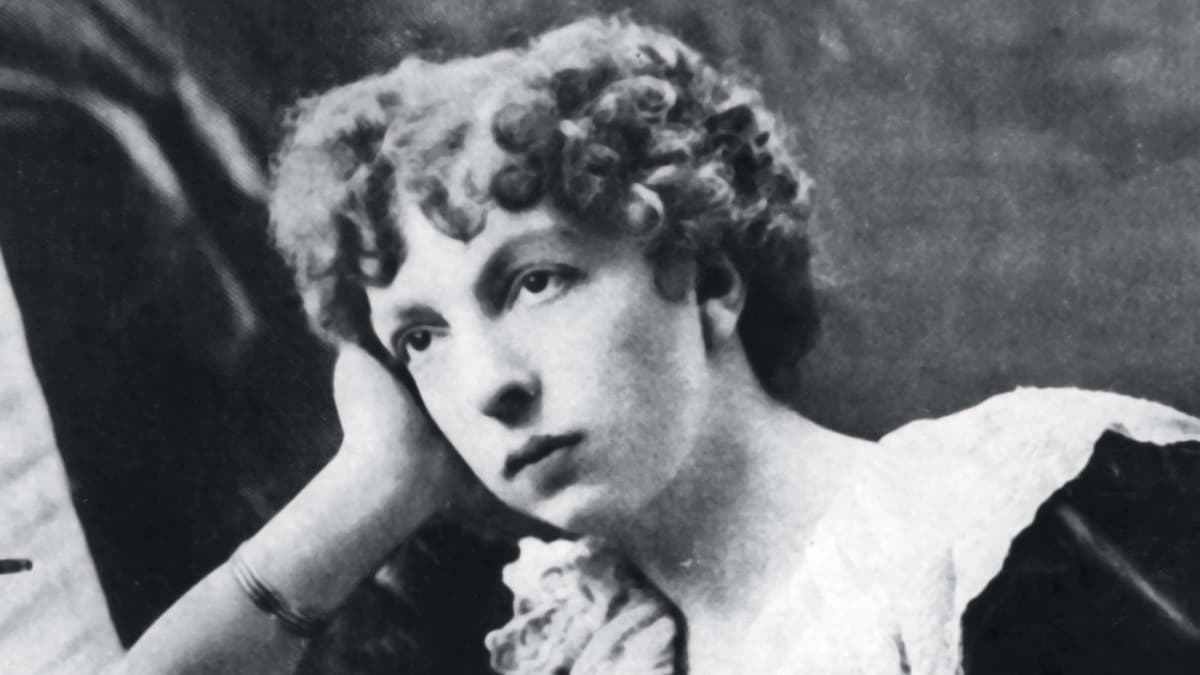
Cécile Chaminade
She was known chiefly for her piano music, which she performed on numerous concert tours. In 1913, she became the first female composer to be awarded the Légion d’Honneur, and she ended her career internationally celebrated.
We profiled Chaminade in this article about three great French women composers: https://interlude.hk/three-french-female-composers-whose-music-explore/
9 August 1874
Birth of Reynaldo Hahn
Reynaldo Hahn’s “A Chloris”
Reynaldo Hahn was born in Caracas, Venezuela, the youngest of twelve children.
His family moved to Paris when he was three. By six, the precocious boy was singing operetta numbers at the salon of Princess Mathilde, accompanying himself at the piano.
He is best remembered for his mélodies, of which he wrote more than a hundred, and his glittering social life, including his bonds with his dear friend Sarah Bernhardt and his long-time lover Marcel Proust.
We looked at some of Hahn’s most breathtaking piano works here: https://interlude.hk/the-quiet-art-of-reynaldo-hahn-died-on-january-28-1947-piano-music-from-the-belle-epoque/
10 August 1865
Birth of Alexander Glazunov
Glazunov’s violin concerto
Born in St. Petersburg in 1865, Glazunov showed his exceptional musical ear and memory from an early age, beginning to compose at 11 under the tutelage of Nikolai Rimsky-Korsakov. Rimsky-Korsakov famously remarked that as a child, Glazunov’s development progressed not by the day but by the hour.
He was elected director of the St. Petersburg Conservatory in 1905, when he was at the height of his creative powers.
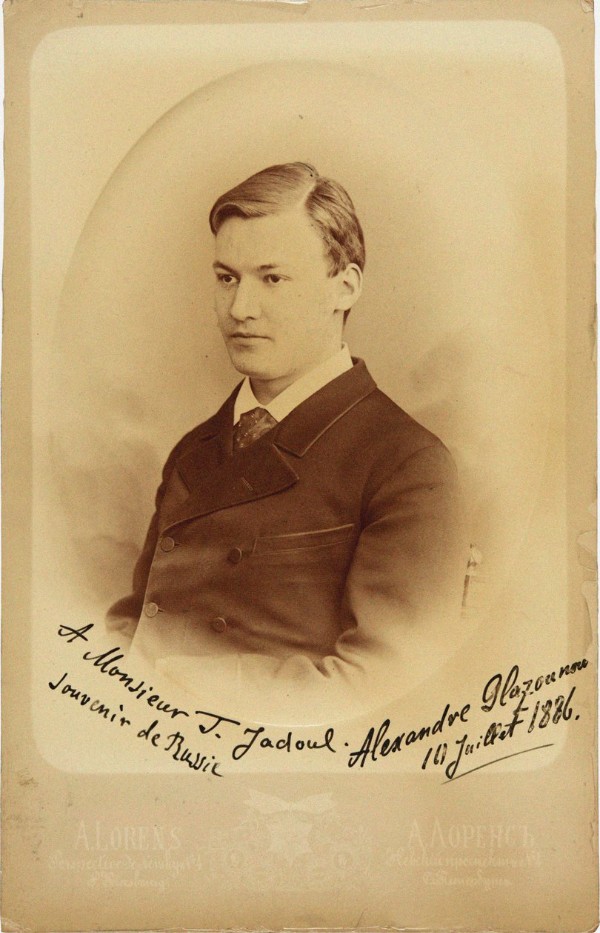
Alexander Glazunov
Today, he is best remembered for his violin concerto, his eighth symphony, and his ballet The Seasons.
We looked at Glazunov’s childhood and how he went from a child prodigy to a fully formed composer: https://interlude.hk/on-this-day-10-august-alexander-glazunov-was-born/
11 August 1919
Birth of Ginette Neveu
Ginette Neveu playing an excerpt from Chausson’s Poème
At the age of 16, French violinist Ginette Neveu beat out the 27-year-old David Oistrakh to win the Henryk Wieniawski Violin Competition – a feat that made her one of the most talked-about young performers of her generation.
She died on 28 October 1949, when an Air France flight from Paris to New York crashed into a mountain in the Azores. She was just thirty years old. All 48 people on board were killed, including her brother and accompanist Jean-Paul.
12 August 1928
Death of Leoš Janáček
Janáček’s Sinfonietta
In August 1928, Janáček developed pneumonia, and he was taken to Moravská Ostrava, where he died on the morning of August 12, at the age of 74.
Deeply inspired by Moravian and other Slavic folk music, Janáček created a unique, modern musical style of his own.
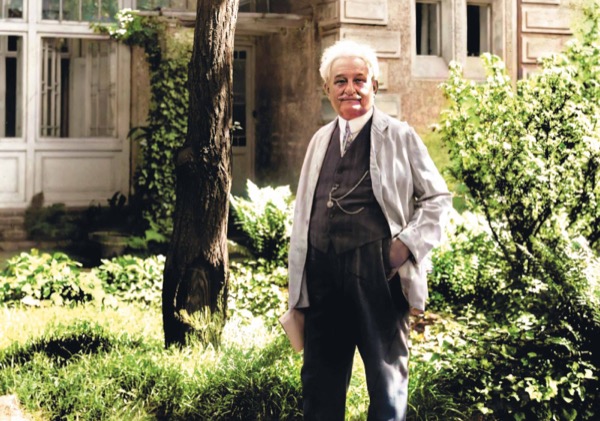
Leoš Janáček
He is one of classical music’s most striking examples of a late bloomer. He worked steadily for years, but he only achieved international renown in his final years, after the Prague production of his opera Jenůfa in 1916 – when he was 62!
We traced the story of Janáček’s decline and death here: https://interlude.hk/on-this-day-12-august-leos-janacek-died/
13 August 1912
Death of Jules Massenet
Massenet’s “Pourquoi me réveiller?” from Werther
On the evening of August 12, Massenet arranged notes and music paper on his desk in preparation for the next day’s work – a quiet ritual he had kept for over fifty years. He died early the following morning.
The most frequently staged of his thirty-plus operas are Manon (1884) and Werther (1892); they have remained in the repertoire for well over a century.
We looked at the story of Massenet’s death from abdominal cancer here – and why his funeral had no music: https://interlude.hk/on-this-day-13-august-jules-massenet-died/
14 August 1892
Birth of Sorabji
Sorabji’s Le Jardin Parfumé
Born Leon Dudley Sorabji in Chingford, Essex, Kaikhosru Shapurji Sorabji was a half-English, half-Indian composer, pianist, music critic, and writer whose output ranged from miniatures to works lasting several hours.
His posthumous reputation has fluctuated widely. Some critics have called him one of the greatest composers of the twentieth century, while others think of him, in the words of British critic Andrew Clements, as “just another 20th-century English eccentric.”
We covered his intriguing background and biography in greater depth here: https://interlude.hk/sorabji-inspiration/
15 August 1882
Birth of Marion Bauer
Bauer’s Symphony No. 1
American composer, teacher, and music critic Marion Bauer was born in Walla Walla, Washington, and taught music history and composition at New York University from 1926 to 1951, playing an active role in shaping the direction of American musical life in the first half of the twentieth century.
In 1947, the New York Philharmonic performed her symphonic poem Sun Splendor. It was only their second time playing a work by a woman.
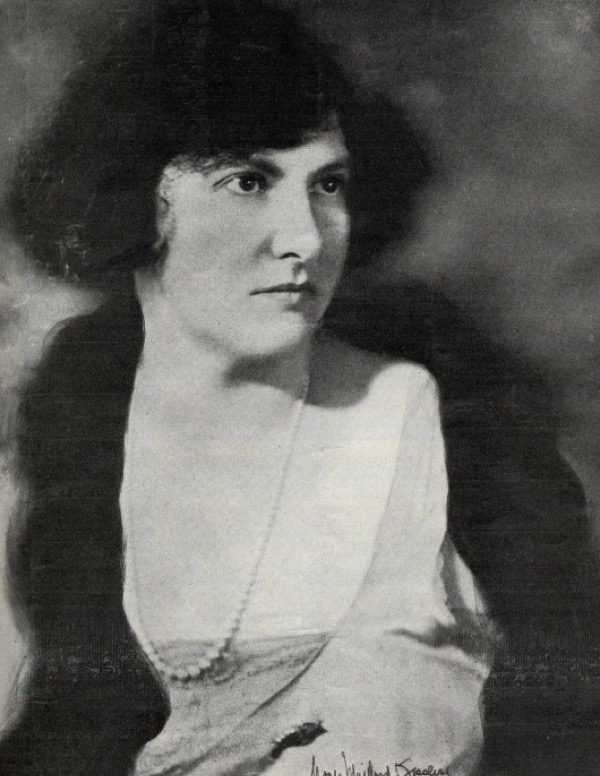
Marion Bauer
We profiled Marion Bauer here: https://interlude.hk/marion-bauer-the-composer-educator-and-advocate-who-shaped-american-modern-music/
16 August 1876
Premiere of Wagner’s opera Siegfried
Excerpt from Wagner’s Siegfried
The third of the four “music dramas” that make up Wagner’s epic cycle Der Ring des Nibelungen, Siegfried, premiered at the Bayreuth Festspielhaus on August 16, 1876, as part of the first-ever complete performance of the Ring cycle.
Wagner had begun composing Acts I and II as early as 1856, but then set the opera aside for over a decade to write Tristan und Isolde and Die Meistersinger. He didn’t return to Siegfried until 1869.
Siegfried (the character) made our list of five clueless heroes in opera: https://interlude.hk/when-the-hero-isnt-quite-heroic-clueless-heroes-in-classical-operas/
17 August 1846
Birth of Marie Jaëll
Jaëll’s “Dans les flammes” from Dix-Huit Pièces pour piano d’après la lecture de Dante
French pianist, composer, and pedagogue Marie Jaëll won the first piano prize at the Paris Conservatoire at the age of 16, studied with Franz Liszt, and was the first pianist to perform the complete Beethoven piano sonatas in Paris.
Later in life, she developed the Jaëll Method, a piano teaching system grounded in physiology and experimental psychology, which she detailed in a 1899 manual.
She also wrote two piano concertos and a number of other fascinating works.
We profiled three French women composers, including Jaëll, here: https://interlude.hk/three-female-composers-in-societe-nationale-de-musique-augusta-holmes-clemence-de-grandval-and-marie-jaell/
18 August 1942
Death of Erwin Schulhoff
Schulhoff’s String Quartet No. 1
Austro-Czech composer and pianist Erwin Schulhoff had been granted Soviet citizenship in 1941; his hope was that his citizenship would serve as an escape route from Nazi-occupied Czechoslovakia.
Tragically, however, he was arrested before he could leave the country. He was deported to the Wülzburg prison camp near Weißenburg in Bavaria, where he died of tuberculosis on August 18, 1942, at the age of 48.
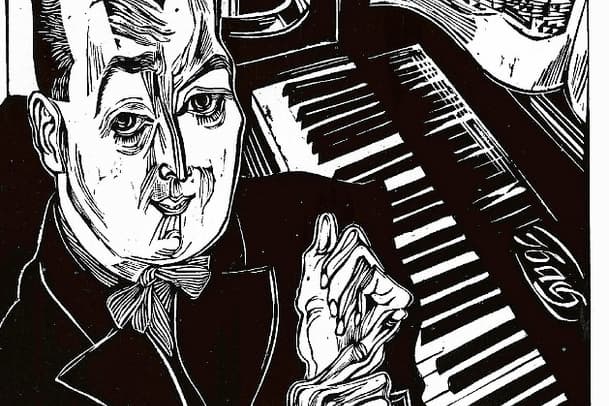
Woodcut by Conrad Felixmüller of the composer Erwin Schulhoff, Prague 1924. Lindenau-Museum, Altenburg, VG Bild-Kunst. © Leo Baeck Institute
One of the first European composers to experiment with integrating jazz into traditional classical forms such as symphonies and concertos, he was at the creative height of his career at the time of the German invasion.
His death in the camp resulted in the near-total erasure of his work from music history for decades.
We examined how his legacy was destroyed by the Nazis: https://interlude.hk/composer-erwin-schulhoff-and-how-his-legacy-was-destroyed-by-the-nazis/
19 August 1881
Birth of Georges Enescu
Enescu’s Romanian Rhapsody No. 1
Romanian composer, violinist, pianist, conductor, and teacher George Enescu was one of the most talented musicians of his generation.
He began experimenting with composition as early as age five; his earliest surviving work of significant length bears the inscription “opus for violin and piano by George Enescu, Romanian composer, aged five years and a quarter.”
Among his many pupils as a violin teacher were Yehudi Menuhin, Christian Ferras, Ivry Gitlis, Arthur Grumiaux, and Ida Haendel – all of whom made major influential careers of their own.
We wrote an article here about why Georges Enescu may just be the greatest musician you don’t know: https://interlude.hk/george-enescu-romanian-composer/
20 August 1827
Birth of Josef Strauss
Josef Strauss’s Dorfschwalben aus Österreich/Walzer
Josef Strauss was born in Vienna, the son of Johann Strauss I. His brothers included composers Johann Strauss II and Eduard Strauss.
His father had wanted him to pursue a military career, but he trained as an engineer instead, designing a horse-drawn street-sweeping vehicle and publishing two textbooks on mathematics before being drawn into the family orchestra.
His elder brother Johann II once remarked, “Josef is the more gifted, and I am simply more popular.”
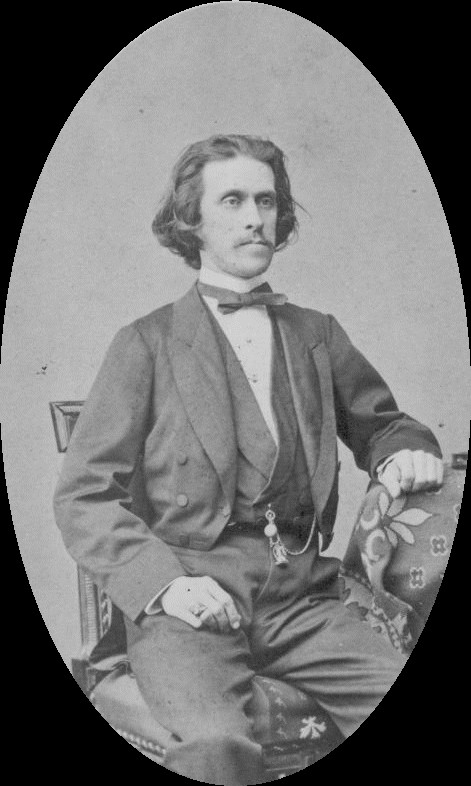
Fritz Luckhardt: Josef Strauss
We looked at how Josef pursued his many passions here: https://interlude.hk/josef-strauss-1827-1870-art-imitates-life/
21 August 1893
Birth of Lili Boulanger
Boulanger’s D’un matin de printemps
In 1913, Lili Boulanger became the first woman to win the Prix de Rome for composition, with her cantata Faust et Hélène.
It was a milestone that came despite her having been forced to withdraw from the competition the previous year due to chronic illness.
She died of chronic illness – likely intestinal tuberculosis or Crohn’s disease – in 1918 at the age of 24, leaving behind a body of work that scholars have praised for its sophistication and depth.
We traced the intertwined stories of Lili Boulanger and her sister Nadia here: https://interlude.hk/sisters-prix-de-rome/
22 August 1862
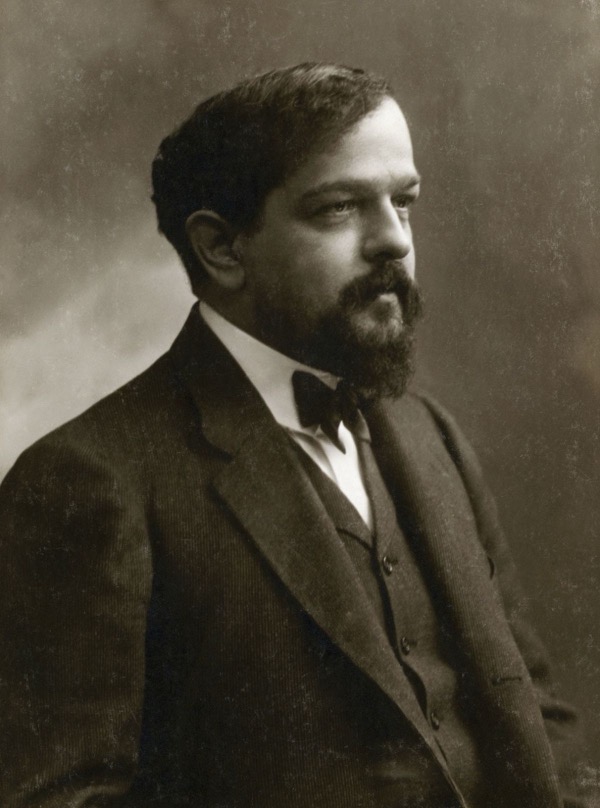
Birth of Claude Debussy
Debussy’s La mer
Born into a family of modest means in Saint-Germain-en-Laye, Debussy showed enough musical talent to be admitted to the Paris Conservatoire at the age of ten, where he always felt out of place.
He went on to win the Prix de Rome in 1884, cultivating a reputation for courting innovation and controversy.
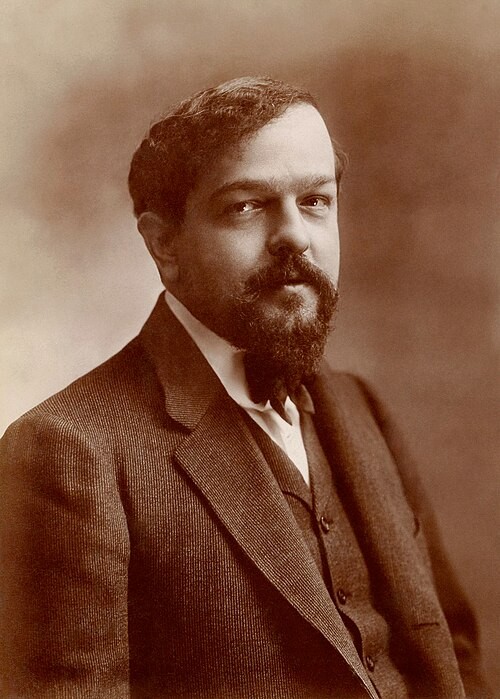
Claude Debussy
His opera Pelléas et Mélisande, completed in 1902, divided French musical opinion so sharply that it made him one of the most polarising musical figures in the country.
We looked at Debussy’s family origins here, and how his professional musical life began with an association with Tchaikovsky’s patroness: https://interlude.hk/on-this-day-22-august-claude-debussy-was-born/
23 August 1900
Birth of Ernst Krenek
Krenek’s Phantasiestück for cello and piano
Austrian-born composer Ernst Krenek achieved international success in 1927 with his jazz opera Jonny spielt auf, which went on to be staged in over 100 cities and translated into 20 languages.
Glenn Gould described him as a “one-man history of twentieth-century music” – a characterisation earned by a career that moved through late Romanticism, atonality, neoclassicism, twelve-tone technique, serialism, and electronic music across more than 240 works.
We delved into how a trip into the mountains inspired Krenek to write a song cycle: https://interlude.hk/ernst-krenek-travelogue-from-the-austrian-alps/
24 August 1949
Birth of Stephen Paulus
Paulus’s To Be Certain of the Dawn
Minnesota-based composer Stephen Paulus co-founded the American Composers Forum in 1973.
Over the course of his career, he wrote 300 works spanning orchestra, opera, choral music, and chamber ensemble, all while serving as composer-in-residence for orchestras in Minnesota, Atlanta, Tucson, and Annapolis.
His “Pilgrims’ Hymn” from To Be Certain of the Dawn was sung at the state funerals of both President Reagan and President Ford.
We paid homage to Paulus here: https://interlude.hk/music-icons-minnesota-prince-paulus/
25 August 1918
Birth of Leonard Bernstein
Bernstein playing Gershwin’s Rhapsody in Blue
Born Louis Bernstein in Lawrence, Massachusetts, to immigrant parents of Jewish Ukrainian origins, Bernstein’s introduction to music came when an aunt gave the family an upright piano when he was a child.
When he took the helm of the New York Philharmonic in 1958, he became the first American-born and American-trained conductor appointed music director of a major American orchestra.
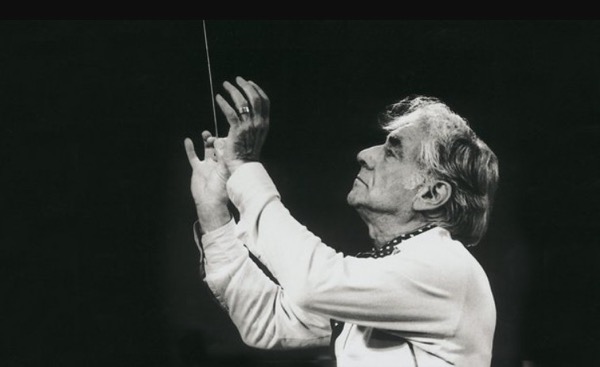
Leonard Bernstein
His legacy encompasses over 500 recordings – as well as a number of classic compositions, including West Side Story.
We answered the ten most frequently asked questions about Leonard Bernstein here: https://interlude.hk/ten-most-asked-questions-about-leonard-bernstein/
26 August 1958
Death of Ralph Vaughan Williams
Vaughan Williams’s Symphony No. 9
On the evening of August 25, Vaughan Williams went to bed looking forward to attending the recording session for his ninth symphony the following day.
However, he died overnight at the age of 85, and the recording session turned into a memorial performance.
At the time of his death, he was still actively composing, with a new opera, two song cycles, and a cello concerto all in various states of progress.
We looked at the story behind Vaughan Williams’s death, and what music he had played at his funeral: https://interlude.hk/on-this-day-26-august-ralph-vaughan-williams-died/
27 August 1886
Birth of Rebecca Clarke
Rebecca Clarke’s Viola Sonata
Born in Harrow to an American father and a German mother, composer and violist Rebecca Clarke became one of the first women to play professionally in an orchestra when Henry Wood admitted her to the Queen’s Hall Orchestra in 1912.
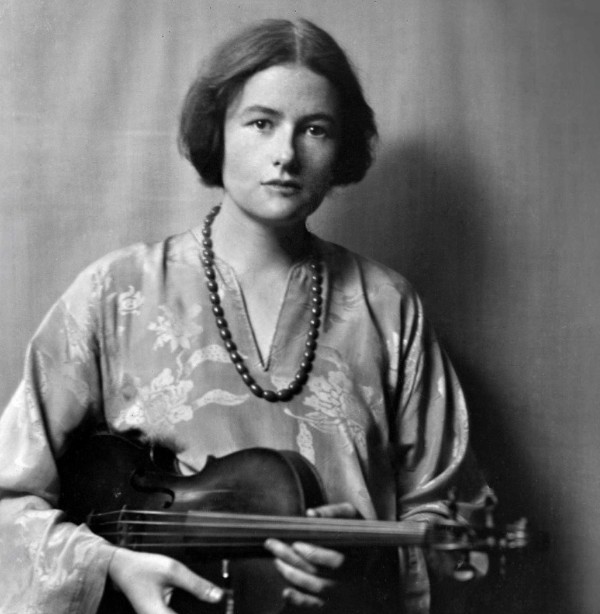
Rebecca Clarke
She enrolled at the Royal College of Music as one of Sir Charles Stanford’s first female composition students. Stanford encouraged her to take up the viola, telling her she would be “right in the middle of the sound, and can tell how it’s all done” – advice that shaped the rest of her career, both as a performer and composer.
We looked at seven must-know works by Rebecca Clarke: https://interlude.hk/seven-of-the-best-works-by-violist-composer-rebecca-clarke/
28 August 1850
Premiere of Wagner’s opera Lohengrin
Wagner’s Prelude to Lohengrin
Franz Liszt, working as a conductor, deliberately chose August 28 – the 101st anniversary of Goethe’s birth – as the premiere date for Lohengrin in Weimar. Liszt conducted the performance himself at the Weimar Hoftheater.
Wagner was unable to attend; at the time, he was in exile following his role in the Dresden uprising of 1849.
Wagner would not see a complete performance of the opera until 1861!
We looked at the whole shocking story here: https://interlude.hk/on-this-day-28-august-wagner-lohengrin-was-premiered/
29 August 1952
Premiere of Cage’s 4’33”
Cage’s 4’33”
Pianist David Tudor gave the premiere of 4’33” at the Maverick Concert Hall in Woodstock, New York on August 29, 1952.
He sat at the piano and opened and closed the keyboard lid to mark the boundaries of each of the piece’s three movements, all without playing a single note.
Cage later recalled that the audience heard wind stirring outside during the first movement, raindrops beginning to patter on the roof during the second, and the sounds of people talking or walking out during the third – all of which he considered to be the music.
We ranked multiple performances of Cage’s 4’33” here: https://interlude.hk/the-ten-best-performances-of-john-cages-433-an-unscientific-ranking/
30 August 1933
Premiere of Barber’s Overture to The School for Scandal
Barber’s Overture to The School for Scandal
This is Barber’s first work for full orchestra, composed in 1931 as his Curtis Institute graduation project.
He was inspired by Richard Brinsley Sheridan’s 1777 comedy of manners, hoping to capture “a musical reflection of the play’s spirit.”
The Philadelphia Orchestra gave the premiere on 30 August 1933, conducted by Alexander Smallens.
The eight-minute overture went on to win the Bearns Prize from Columbia University and helped establish Barber’s national reputation.
This overture made our list of great concert overtures: https://interlude.hk/past-present-overtures-for-the-concert-hall/
31 August 1879
Birth of Alma Schindler Mahler
Arrangements of Alma Mahler’s Five Songs
Born in Vienna to the landscape painter Emil Jakob Schindler and his wife, Alma studied composition with Alexander von Zemlinsky before her sudden marriage to Gustav Mahler in 1902.
Mahler initially insisted she give up composing as a condition of the marriage, but during a later period of difficulty in their marriage, seeking to connect with her on a deeper level, he reconsidered his stance.
After Mahler’s death, she married the architect Walter Gropius, then the novelist Franz Werfel. Her Viennese-style salon drew figures including Arnold Schoenberg and Alban Berg, who dedicated his opera Wozzeck to her.
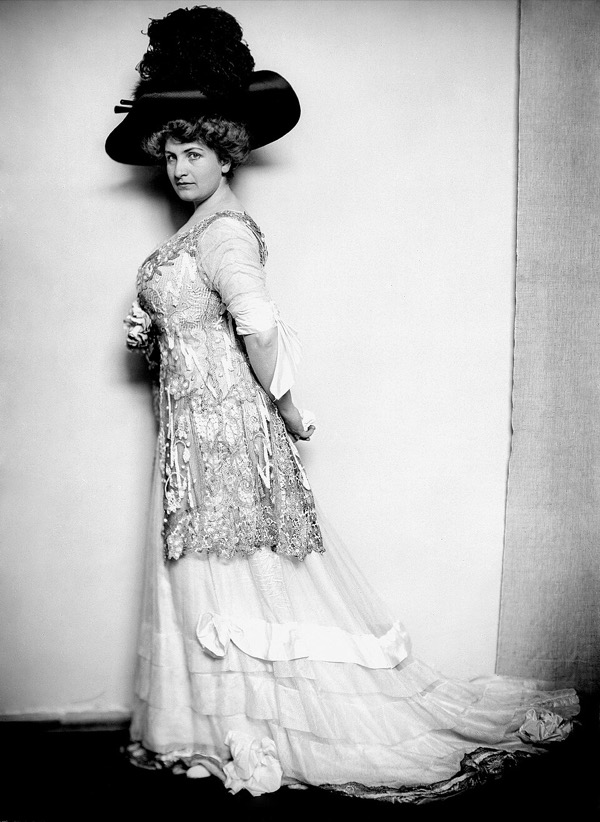
Alma Mahler
We pondered Alma Mahler’s complicated legacy here: https://interlude.hk/alma-mahler-giving-music-life/
Conclusion
From Debussy’s birth to Richter’s death, August turns out to be one of the richest months in classical music history.
Several of the figures here – Rebecca Clarke, Marion Bauer, Erwin Schulhoff – spent much of their careers underrecognized, and the anniversaries of their births and deaths offer a wonderful excuse to revisit what they left behind.
At the same time, it’s never a bad idea to revisit pillars of the canon, like La mer, Lohengrin, or Mozart’s C minor mass.
Which dates will you be celebrating this year?
For more of the best in classical music, sign up for our E-Newsletter