In 19th- and early 20th-century Paris, some of classical music’s most important gathering places weren’t concert halls; they were salons held in private homes.
Behind the doors of elegant mansions and apartments, female music patrons and salon hostesses brought together composers, performers, writers, artists, and intellectuals, creating networks that could launch careers and inspire new works.
Here are five remarkable women who shaped classical music through their salons and patronage, helping define the musical life of Paris during one of the most transformative periods in music history.
Marie Trélat (1834–1914): Art Song Dedicatee
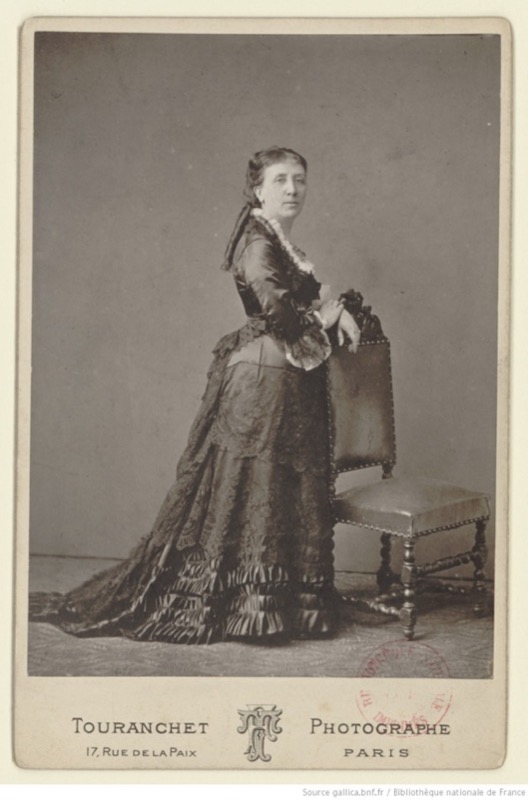
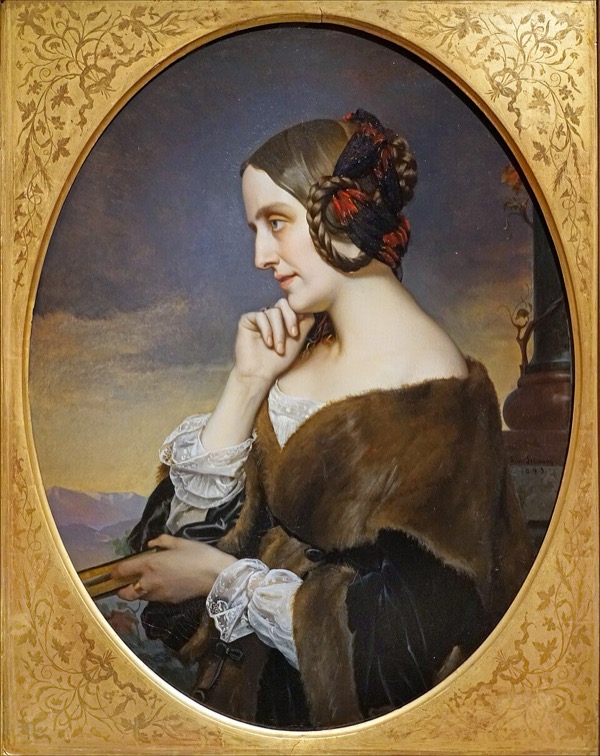
Marie Trélat
Marie Trélat was born in Paris in 1834, her father an architect and her mother an opera singer who had once studied with Rossini. She was a musical child and grew up to become a mezzo-soprano herself.
In 1857, when she was 23, she married Ulysse Trélat, a surgeon who attended to Napoleon III. He also helped to develop the Baizeau and Trélat method, a type of surgery that corrects cleft palates.
They set up a Friday night salon after their marriage, inviting composers, authors, and intellectuals. Visitors included nearly every major Paris-based composer of the 19th century: Édouard Lalo, Charles Marie Widor, Léo Delibes, Jules Massenet, Charles Gounod, César Franck, Camille Saint-Saëns, and Gabriel Fauré. During one memorable evening, Georges Bizet played excerpts from the in-progress score of Carmen for feedback.
Marie had a special fondness for the intimacy and immediacy of art song, and many of the composers she entertained wrote for her voice.
Fauré worked as her accompanist for a time and dedicated his song “Lydia,” Op. 4, No. 2 to her.
Fauré’s “Lydia”
Other dedications included the songs “Le Mariage des roses” by Franck, “Sérénade d’automne” by Massenet, and “Rose d’amour” by Bizet: an impressive collection of tributes.
César Franck: Le mariage des roses, M. 80 (Chen Reiss, soprano; Charles Spencer, piano)
Jules Massenet: Sérénade d’automne (Sally Silver, soprano; Richard Bonynge, piano)
Georges Bizet: Feuilles d’album: No. 5. Rose d’amour (Adèle Charvet, mezzo-soprano; Florian Caroubi, piano)
In the 1870s, she began supporting the Société Nationale de Musique, a prestigious organisation devoted to elevating French composers after the Franco-Prussian war of 1870–1871. The work the society did laid the groundwork for the recognisably French style of art music of the early 20th century, most famously exemplified by Debussy and Ravel.
We wrote about Marie’s salon in greater depth here: https://interlude.hk/muses-musings-salon-marie-trelat/.
Marguerite de Saint-Marceaux (1850–1930): Casual Elegance
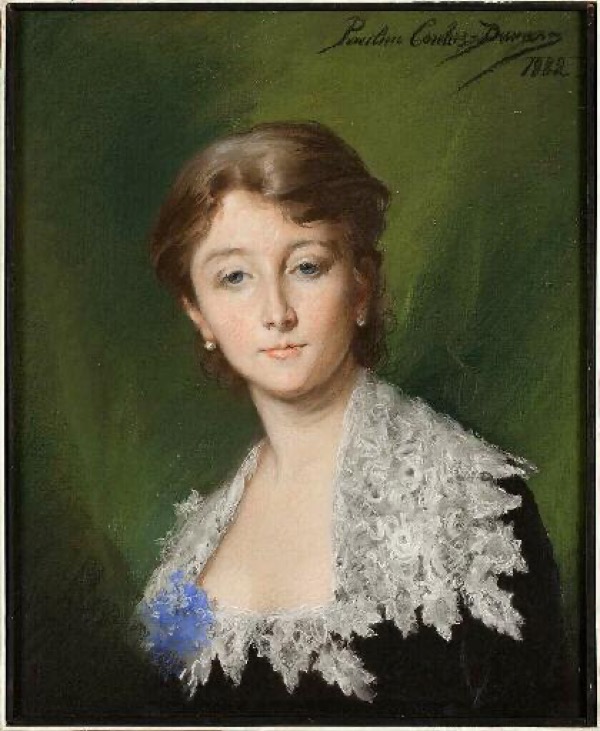
Marguerite de Saint-Marceaux
Marguerite de Saint-Marceaux was born in 1850 in the town of Louviers, in Normandy, to a cloth merchant and his wife.
She was musical from an early age, becoming both a talented pianist and vocalist. She studied with Antoine François Marmontel (the teacher of Albéniz, Bizet, Debussy, and d’Indy, among others) and Romain Bussine (a professor of solfège at the Paris Conservatoire and cofounder with Saint-Saëns of the Société Nationale de Musique).
As a young woman, she was courted by Saint-Saëns, who was fifteen years her senior, but her family discouraged her from marrying him. She opted to marry painter Eugène Baugnies instead.
The couple built a mansion together in Paris in 1875. There, Marguerite oversaw a Friday night salon attended not only by many of the great composers of the era, but also by great writers, artists, thinkers, and politicians. The atmosphere was casual and relaxed; evening dress was prohibited. She saved her formality for Thursday night dinners.
Her husband died in 1891, at the age of 49. In 1895, she married her second husband, sculptor René de Saint-Marceaux, and continued entertaining.
The writer Colette wrote of her salons that they “were more than just a social curiosity – they were a reward granted to the devout lovers of music.”
Colette actually met Maurice Ravel at Marguerite’s salon, and their ensuing friendship led to their collaboration on their one-act opera, L’enfant et les sortilèges.
Ravel’s L’enfant et les sortilèges
Countless composers debuted works-in-progress at the salon, including Debussy with piano reductions of his opera Pelléas et Mélisande and tone poem Prélude à l’après-midi d’un faune.
She even provided matchmaking services, introducing Fauré to his future wife, Marie Frémiet. (The marriage wasn’t a particularly happy one, but that wasn’t Marguerite’s fault.) Fauré dedicated his first nocturne to Marguerite.
She continued leading her salon for decades, up until the start of World War I, when she was 64. She lived until 1930, having for many years kept an invaluable diary of her experiences in Parisian musical society, both during and after her salon-keeping days.
Élisabeth Greffulhe (1860–1952): Fabled Impresario
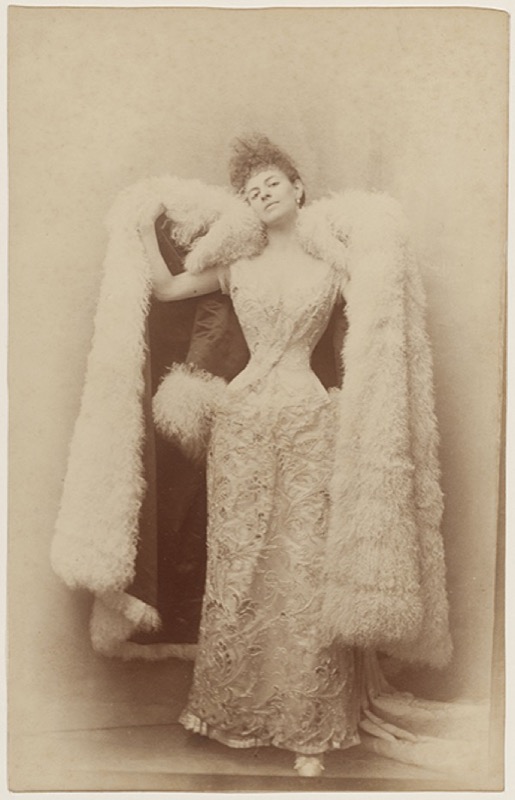
Comtesse Greffulhe (1887)
Élisabeth was born in Paris in 1860 to Belgian and French aristocracy. Her great-grandmother, Thérésa Tallien, had run a musical salon at the turn of the 19th century, supporting figures like Charles de Bériot and Luigi Cherubini.
Élisabeth married Count Henri Greffulhe, from a Belgian family of financiers, in 1878. He was unfaithful, and the marriage was unhappy.
To escape her marriage, she turned to the arts. She loved the visual arts (promoting the work of Whistler, Rodin, and many others), but her first love was music.
Gabriel Fauré dedicated his melancholy 1887 Pavane to the countess (in the vocal version, he even set a text by Greffulhe’s cousin, Count Robert de Montesquiou). She also supported Diaghilev’s Ballets Russes.
Fauré’s Pavane (chorus arrangement)
In 1890, she founded the Société des Grandes Auditions Musicales de France, an organisation that fundraised and presented unsung major works of stage music. Their first performance was Berlioz’s opera Béatrice et Bénédict. That was followed up by an astonishing lineup of productions: Berlioz’s Les Troyens, Wagner’s Tristan und Isolde and Götterdämmerung, Elgar’s The Dream of Gerontius, Strauss’s Salome, Mahler’s Symphony No. 2, and Stravinsky’s The Firebird.
She also helped fund Marie Curie’s Radium Institute, and was an inspiration to Marcel Proust, who modelled his character Oriane, the Duchesse de Guermantes, from In Search of Lost Time on her.
She retired from salon life after World War I and lived comparatively quietly until she died in 1952.
We wrote more about her here – and why Fauré called her the “King of Bavaria”: https://interlude.hk/muses-musings-la-comtesse-greffulhe-female-entrepreneurial-power/.
Winnaretta Singer, Princesse de Polignac (1865–1943): Lesbian Power Broker
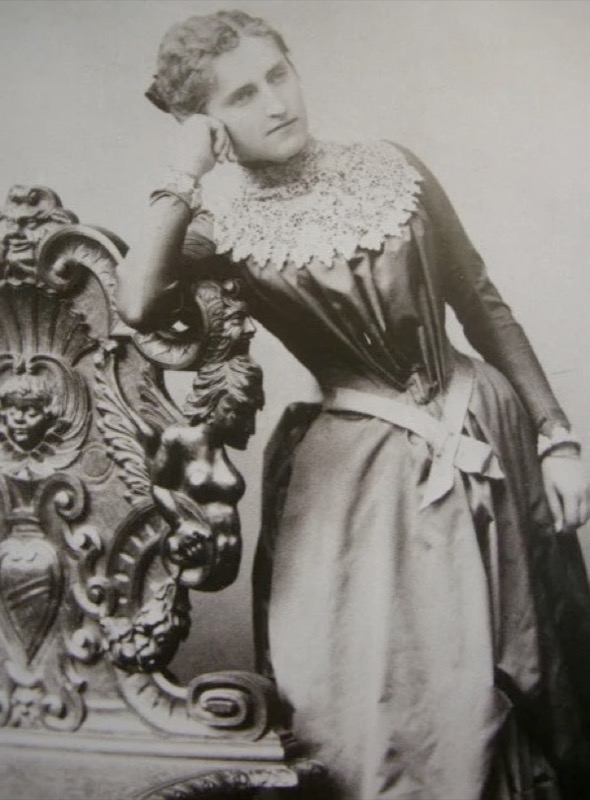
Winnaretta Singer
Winnaretta was born in 1865 in Yonkers, New York, to Isaac Singer, the founder of the Singer Sewing Machine Company, and his much younger wife, Isabella Eugénie Boyer.
Winnaretta grew up in Paris, London, and Devon. Her father died when she was ten, and her stepfather was abusive. As soon as she was able, she took her million-dollar inheritance and left home.
She made her break from the household complete by marrying Count Louis de Scey-Montbéliard in 1887. On their wedding night, she clambered on top of an armoire and brandished an umbrella, threatening to kill the prince if he touched her. Their marriage was annulled in 1892, securing her the independence she’d sought.
She entered into a lavender marriage in 1893 with composer Prince Edmond de Polignac. She was a lesbian, and he was a gay man. She got social standing out of the deal, while he was able to draw on her inherited fortune. The spouses were great friends.
(Interestingly, the unconventional union came about after Polignac told his lover Robert de Montesquiou about his money troubles, and Montesquiou in turn told his cousin Élisabeth Greffulhe – who came up with the idea to matchmake the prince and Winnaretta.)
Ravel’s Pavane pour une infante défunte
The Polignac salon became legendary, playing host to Stravinsky, Satie, Milhaud, Poulenc, Smyth (with whom she had an affair), Tailleferre, Debussy, Fauré, Ravel, and others. Ravel dedicated his Pavane pour une infante défunte to Winnaretta.
She was also a patron to a mind-boggling number of musical performers, including Horowitz and Rubinstein.
Later in her life, her interests expanded from the performing arts to progressive politics. For instance, in 1911, she funded the development of public housing, and in the 1920s and 1930s, she commissioned the architect Le Corbusier to design Salvation Army shelters. She also contributed to the construction of the suburban Paris Foch Hospital.
She died of a heart attack in 1943 in London, where she was doing charitable work during the war.
We wrote about Winnaretta here: https://interlude.hk/winnaretta-singer-muse-modern-music/.
Misia Sert (1872–1950): Ballets Russes Saviour
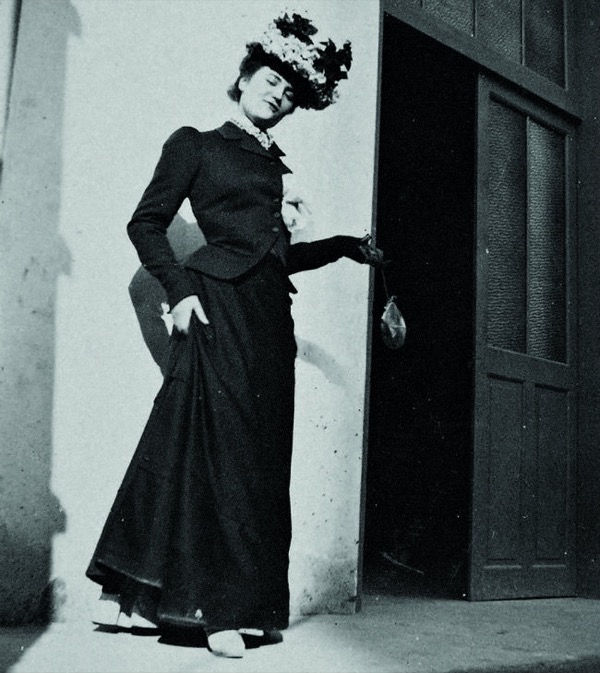
Misia Sert
Misia Sert was born in 1872 just outside of St. Petersburg. Her father was a sculptor professor, and her mother was the daughter of Adrien-François Servais, one of the greatest cellists of the mid-19th century. Tragically, her mother died when she was just an infant, and she was sent to Brussels to be raised by the Servais family, where her music education began.
After her father remarried, she rejoined the household, but then, between 1882 and 1890, she attended a convent school in Paris. During this time, she took keyboard lessons from Gabriel Fauré.
In 1893, she married her cousin, wealthy publisher/editor/critic Thadée (Tadeusz) Natanson, who had a passion for socialism and talking to artists and intellectuals. All manner of creatives stopped by their house, including Debussy and Satie. Toulouse-Lautrec served as bartender.
Natanson approached publishing magnate Alfred Edwards about a potential business deal to bail out the left-leaning literary review La Revue Blanche. Edwards fell in love with Misia and said he’d fund the venture if Natanson divorced his wife. Natanson did – and the magazine survived, and Edwards and Misia married. The marriage came to a quick end, however, after Edwards cheated on Misia with a younger actress.
In 1908, Misia fell in love with painter José-Maria Sert, marrying him in 1920. The new salon she ran with him was even starrier than her last. Composers – figures like Milhaud, Stravinsky, and Poulenc – gravitated toward her salon, grateful to have a well-connected, beautiful pianist as hostess. In tribute to her musical talent and the environment she’d built, Maurice Ravel dedicated La Valse to her.
Ravel’s La Valse
She also funded the financially unstable Ballets Russes. In fact, on the opening night of Stravinsky’s Petroushka in 1911, she paid to keep the costumes from being repossessed so the show could go on. (Diaghilev also heard the piano version of The Rite of Spring when Stravinsky performed it at Misia’s – a work her patronage had helped make possible, which changed 20th century music forever.)
Her husband began an affair with Princess Isabelle Roussadana Mdivani, and Misia fell in love with her, too. The three lived together in a ménage à trois for a time in the 1920s before the Serts divorced in 1928.
Later in her life, she became close to and had a tumultuous relationship with Coco Chanel. Misia had a heart attack in 1939, and her health was generally not helped by her morphine addiction. She died in 1950; Chanel prepared the body.
We wrote more about Misia Sert here: https://interlude.hk/misia-sert-muse-patron-poets-painters-musicians/.
Conclusion
The history of classical music is usually told through the names of its composers, but those composers didn’t work in isolation. They relied on patrons and cultural gatekeepers like Trélat, Saint-Marceaux, Greffulhe, Singer, and Sert, who created the environments in which their exciting new musical ideas could flourish.
Taken together, these salonnières’ stories offer a different way of understanding the history of classical music: not merely as a succession of already-famous great composers, but as a large network of women long-neglected by the official histories, who believed in the value of new music and helped bring it into the world.
For more of the best in classical music, sign up for our E-Newsletter