Classical music anniversaries in November span nearly four centuries, from Jean-Baptiste Lully’s birth in 1632 to Nelson Freire’s death in 2021.
This month gave us the births of Bellini, Borodin, Falla, Joplin, and Hindemith; the deaths of Mendelssohn, Rossini, Tchaikovsky, Puccini, and Schubert; and premieres ranging from Brahms’s second piano concerto to a Schumann violin concerto that spent nearly a century locked away by the people who loved him most.
Below is a day-by-day guide to the month’s essential dates, deaths, and debuts – and the drama behind each one.
November 1, 2021
Death of Nelson Freire
Freire plays Chopin’s Piano Concerto No. 2
The great Brazilian pianist died at his home in Rio de Janeiro, just two weeks after his 77th birthday.
Known as “the child with golden hands,” Freire gave his first public recital at four. At fourteen he went to Vienna to study with Bruno Seidlhofer, alongside fellow students Martha Argerich and Friedrich Gulda. He went on to record much of the piano duo repertoire with Argerich and became a celebrated Chopin interpreter.
Away from the stage, he was famously reserved and gave few interviews, letting his playing speak for him.
We revisited the documentary that captured this famously private musician here: https://interlude.hk/nelson-freire-born-on-october-18-1944when-music-speaks/.
November 2, 1739
Birth of Carl Ditters von Dittersdorf
Dittersdorf’s Double Bass Concerto
Dittersdorf was a fixture in the Classical-era Viennese music scene, and he counted Haydn and Mozart among his chamber music partners.
He was also a prolific composer, writing roughly 120 symphonies over his career.
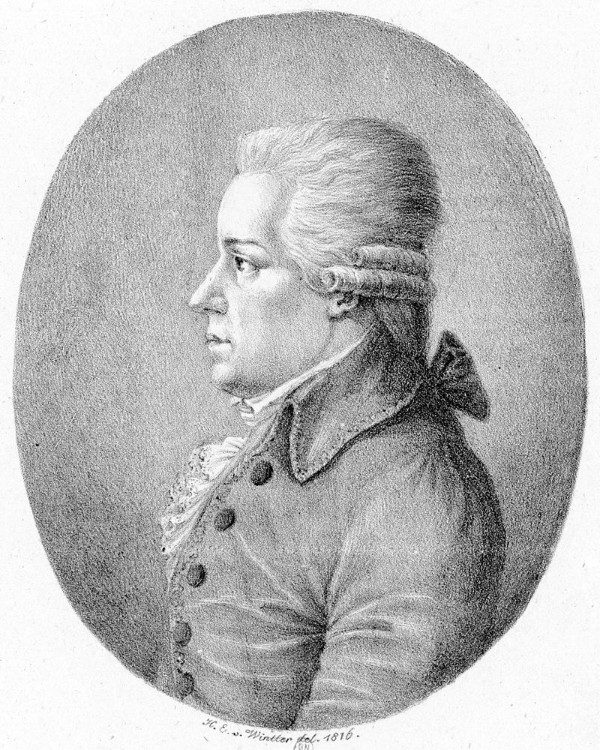
Carl Ditters von Dittersdorf
His double bass concerto is one of the rare Classical-era showcases for the instrument, requiring solo virtuosity from players usually stuck in orchestral sections.
We wrote an introduction to six of Dittersdorf’s fun and fanciful symphonies: https://interlude.hk/fanciful-stories-in-music-dittersdorf-ovid-symphonies-i/.
November 3, 1801
Birth of Vincenzo Bellini
Bellini’s “Casta Diva” from Norma
Bellini was born in Catania, Sicily, into a family of professional musicians; his father and grandfather were composers, organists, and teachers.
He grew up to become one of opera’s great melodists. His “Casta Diva” from Norma is one of the most beloved soprano arias in the repertoire.
We dug into the story of Bellini’s childhood here – including how, according to family legend, he could sing arias by the time he was eighteen months old: https://interlude.hk/on-this-day-3-november-vincenzo-bellini-was-born/.
November 4, 1847
Death of Felix Mendelssohn
Mendelssohn’s String Quartet No. 6
Mendelssohn died at 38 in the aftermath of a stroke – just months after the devastating death of his sister Fanny from the same cause.
His String Quartet No. 6, written after her death, is often heard as a musical response to his grief; its urgency and turbulence depart from the polished style usually associated with him.
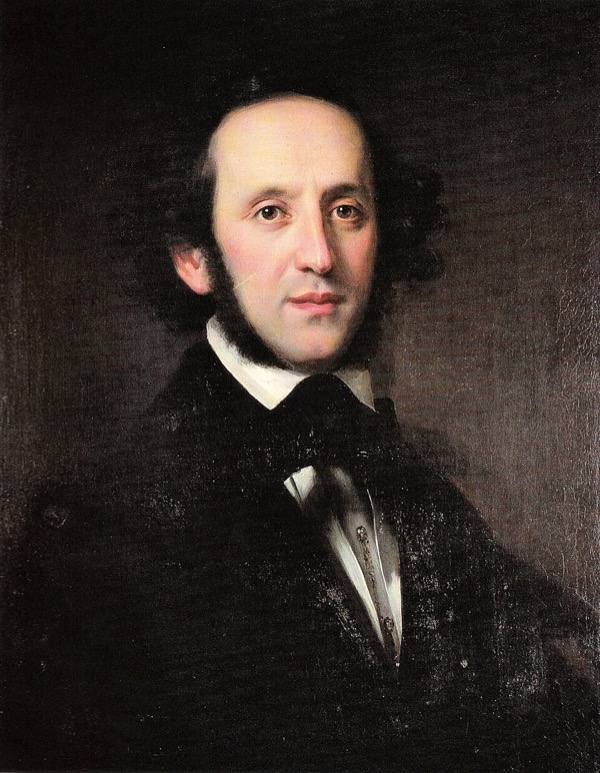
Eduard Magnus: Felix Mendelssohn, 1846 (Berlin State Library)
We told the horrifying story of Mendelssohn’s death here: https://interlude.hk/on-this-day-4-november-felix-mendelssohn-died/.
November 5, 1989
Death of Vladimir Horowitz
Horowitz playing Schumann’s “Träumerei”
Horowitz died of a heart attack at his New York townhouse at the end of a decades-long international career.
He had a special affinity with Romantic-era music, and his late-in-life interpretations of Schumann’s “Träumerei” are especially legendary.
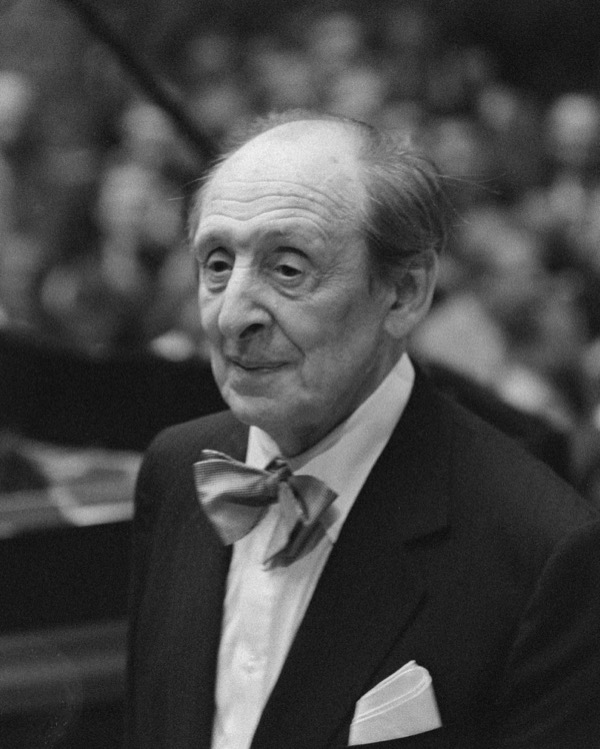
Vladimir Horowitz (1986)
We answered the fifteen most frequently asked questions about Horowitz here: https://interlude.hk/the-fifteen-most-faqs-about-vladimir-horowitz-stage-fright-flat-fingers-and-more/.
November 6, 1893
Death of Pyotr Ilyich Tchaikovsky
Tchaikovsky’s Symphony No. 6
Tchaikovsky died just nine days after conducting the premiere of his Symphony No. 6, “Pathétique,” a work he called the best thing he’d ever written.
The official cause was cholera, contracted from a glass of unboiled water at a restaurant. Still, generations of biographers have proposed alternatives – that the death was suicide or tied to an emerging scandal over his attraction to men.
We told the story of Tchaikovsky’s tragic illness and death here: https://interlude.hk/on-this-day-6-november-pyotr-ilyich-tchaikovsky-died/.
November 7, 1934
Premiere of Rachmaninoff’s Rhapsody on a Theme of Paganini
Rachmaninoff’s Rhapsody on a Theme of Paganini
Rachmaninoff wrote the Rhapsody in just six weeks, creating twenty-four variations out of the Paganini caprice that had already inspired Liszt and Brahms.
He premiered it himself with the Philadelphia Orchestra, led by Leopold Stokowski, during a concert in Baltimore.
The work is especially famous for its eighteenth variation, a soaring, upside-down version of the theme that became one of his most beloved melodies.
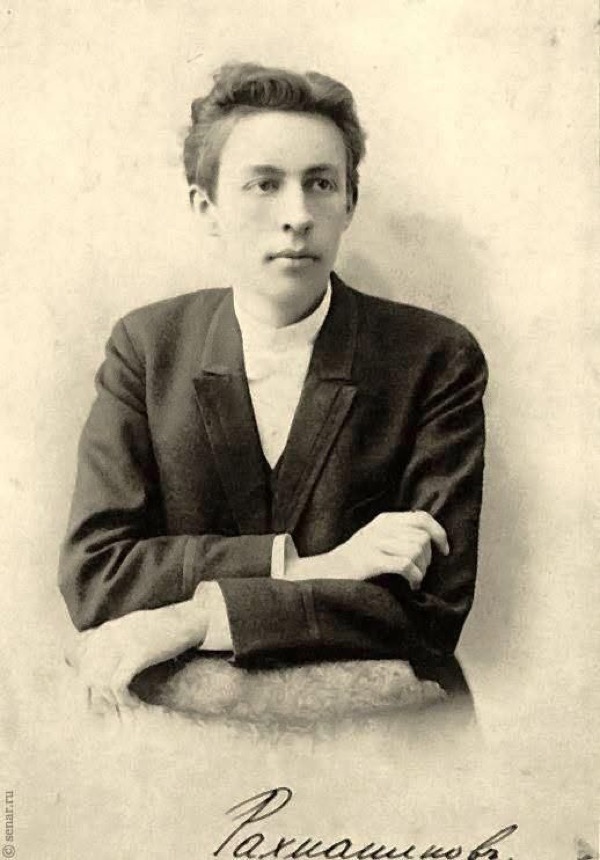
Sergei Rachmaninoff, 1892
We explored the background of the Rhapsody here – and why Rachmaninoff is often quoted as saying of the eighteenth variation, “This piece is for my agent.”: https://interlude.hk/creme-de-menthe-variationssergei-rachmaninoff-rhapsody-on-a-theme-of-paganini/.
November 8, 1883
Birth of Sir Arnold Bax
Bax’s Tintagel
Bax grew up in a wealthy London household, taught himself to improvise at the piano as a child before he ever had formal lessons, and later studied at the Royal Academy of Music.
He was especially inspired by Irish and Celtic myth. That inspiration produced Tintagel, his tone poem evoking a ruined castle on the Cornish coast.
We called Arnold Bax “far and away the most neglected British composer who flourished in the first half of the 20th century.” Find out why here: https://interlude.hk/on-this-day-8-november-arnold-bax-was-born/.
November 9, 1881
Premiere of Brahms’s Piano Concerto No. 2
Brahms’s Piano Concerto No. 2
Brahms wryly described this concerto to a friend as “a tiny little piano concerto with a wisp of a scherzo.” In fact, it’s a mammoth four-movement work that redefined what a piano concerto could be.
Its unusual scherzo movement began life as a discarded middle movement for his violin concerto, but Brahms decided it didn’t fit and reworked it here instead.
We dug into the concerto’s history here: https://interlude.hk/when-the-symphony-embraces-the-concerto-brahms-piano-concerto-no-2-op-83/.
November 10, 1928
Birth of Ennio Morricone
Morricone’s Gabriel’s Oboe from The Mission
Morricone was born in Rome to a professional trumpeter and started composing at six. He entered the Rome Conservatory at twelve, building a classical foundation before becoming one of the most recognisable film composers of the 20th century.

Ennio Morricone
He scored more than 500 movies, and his unconventional instrumentation – his use of whistling, cracking whips, and jaw harp – became central to those films’ identity.
After Morricone died in 2020, we wrote a tribute: https://interlude.hk/in-memoriam-ennio-morricone-1928-2020/.
November 11, 1994
Death of Elisabeth Maconchy
Maconchy’s String Quartet No. 1
Along with Bax, Maconchy was one of the most underrated British composers of the 20th century.
She studied at the Royal College of Music under Ralph Vaughan Williams.
Although she faced sexism working in interwar Britain, she built a large body of work marked by taut construction and emotional intensity.
Today her best-known works are her thirteen string quartets.
November 12, 1833
Birth of Alexander Borodin
Borodin’s Polovtsian Dances from Prince Igor
Borodin was born in St. Petersburg, the illegitimate son of a 62-year-old Georgian prince and a much younger Russian woman.
Despite that precarious start, he showed a talent for both music and chemistry, training as a physician and research chemist while composing on the side.
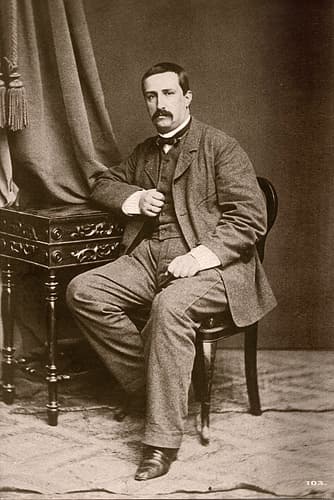
Alexander Borodin
That double life makes the “Polovtsian Dances” from his opera Prince Igor especially remarkable. It’s some of the most vivid, exoticist orchestral writing of the Russian nationalist school – and it was written by a man who never considered composing his day job.
We dug into Borodin’s childhood here: https://interlude.hk/on-this-day-12-november-alexander-borodin-was-born/.
November 13, 1868
Death of Gioachino Rossini
Rossini’s Overture from Wilhelm Tell
Rossini spent much of his life managing the fallout from a gonorrhea infection, which triggered decades of complications including cancer, the disease that killed him after two operations in Paris.
He retired from opera in 1829, at the height of his fame, immediately after composing the wildly successful opera Wilhelm Tell.
His funeral in Paris drew thousands. Fittingly for Rossini, newspapers at the time noted the mood was closer to a festive concert than a sombre service.
We wrote about Rossini’s chronic health issues and funeral here: https://interlude.hk/on-this-day-13-november-gioachino-rossini-died/.
November 14, 1805
Birth of Fanny Mendelssohn Hensel
Mendelssohn Hensel’s String Quartet
Fanny and her younger brother Felix were trained by the same teachers from childhood, and both were prodigies.
However, Fanny couldn’t pursue the same kind of public music career Felix had because of expectations around her gender and her family’s social standing.
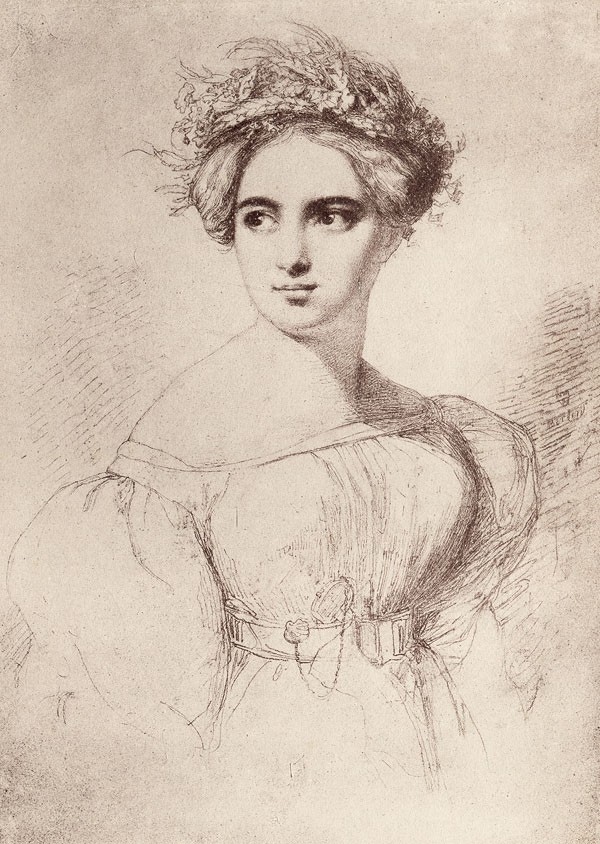
Fanny Mendelssohn-Hensel
Despite this, she wrote more than 450 works, most of them unpublished in her lifetime. She’d recently decided to start publishing more when she died suddenly of a stroke in May 1847.
Felix was devastated; his final string quartet was privately subtitled “Requiem for Fanny.”
We wrote an article about Fanny and Felix’s profound musical bond here: https://interlude.hk/felix-and-fanny-mendelssohn-compared-nine-works-that-reveal-their-intertwined-genius/.
November 15, 1787
Death of Christoph von Gluck
Gluck’s “Che farò senza Euridice?” from Orfeo ed Euridice
Gluck spent the 1760s dismantling one of opera’s most entrenched conventions: the da capo aria, which paused the story’s drama so singers could show off improvised ornamentation during a repeated section.
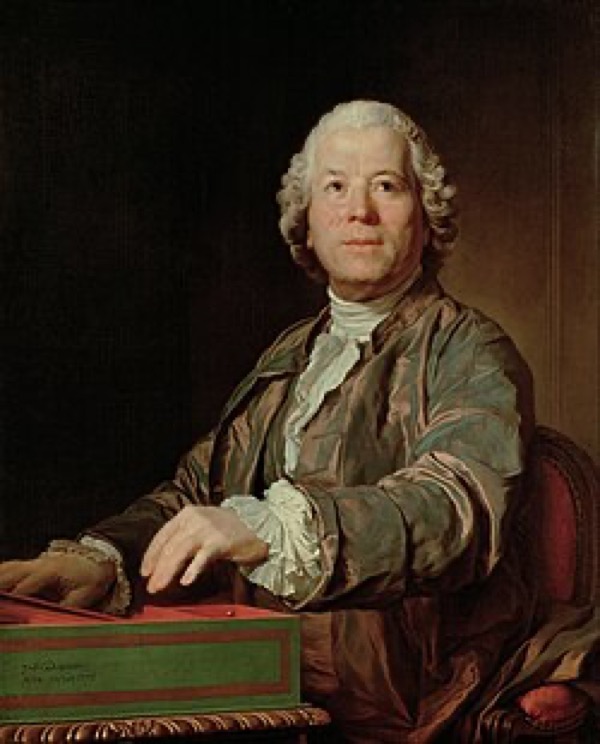
Joseph Siffred Duplessis: Christoph Willibald von Gluck, 1775 (Kunsthistorisches Museum)
Orfeo ed Euridice, his first reform opera, became famous for its lack of showy arias. Its lamenting aria “Che farò senza Euridice?” has been sung by everyone from contraltos to baritones to countertenors ever since.
Gluck died in 1787 as one of the greatest reformers in operatic history.
We gathered 75 years of recordings of Gluck’s famous opera Orfeo ed Euridice here: https://interlude.hk/christoph-willibald-gluck-born-on-july-2-1714-75-years-of-recordings-of-orfeo-ed-euridice/.
November 16, 1895
Birth of Paul Hindemith
Hindemith’s Symphonie Mathis der Maler
After World War I, Paul Hindemith emerged as a leading voice of the German avant-garde.
He trained as a violinist before focusing on composition, eventually developing his muscular, contrapuntally dense style.
That style reached its pinnacle in his Mathis der Maler (Matthias the Painter) symphony, drawn from his opera about the painter Matthias Grünewald.
The opera follows Grünewald as he struggles to understand the purpose of art in a time of political violence – a subject that resonated particularly strongly for Hindemith, given his increasingly fraught position in Nazi Germany.
We wrote about Hindemith’s childhood here – and why his father forced Paul and his siblings to study music: https://interlude.hk/on-this-day-16-november-paul-hindemith-was-born/.
November 17, 1888
Premiere of Tchaikovsky’s Symphony No. 5
Tchaikovsky was initially worried about his fifth symphony, writing to his patron Nadezhda von Meck that he sensed something insincere and overworked in it, despite its warm reception from critics and audiences.
Fortunately, he fell back in love with it when he conducted it on tour. Today, it’s one of the most beloved symphonies of the 19th century.
We looked at the symphony’s history here: https://interlude.hk/darkness-and-light-tchaikovskys-symphony-no-5/.
November 18, 1953
Death of Ruth Crawford Seeger
Seeger’s Suite for Wind Quintet
Ruth Crawford Seeger died of intestinal cancer shortly after composing her Suite for Wind Quintet. This work marked a brief, hopeful return to composition after two decades away.
During the 1920s and early 1930s, she’d been one of American ultramodernism’s most strident voices, and her 1931 String Quartet is one of the era’s most influential works.
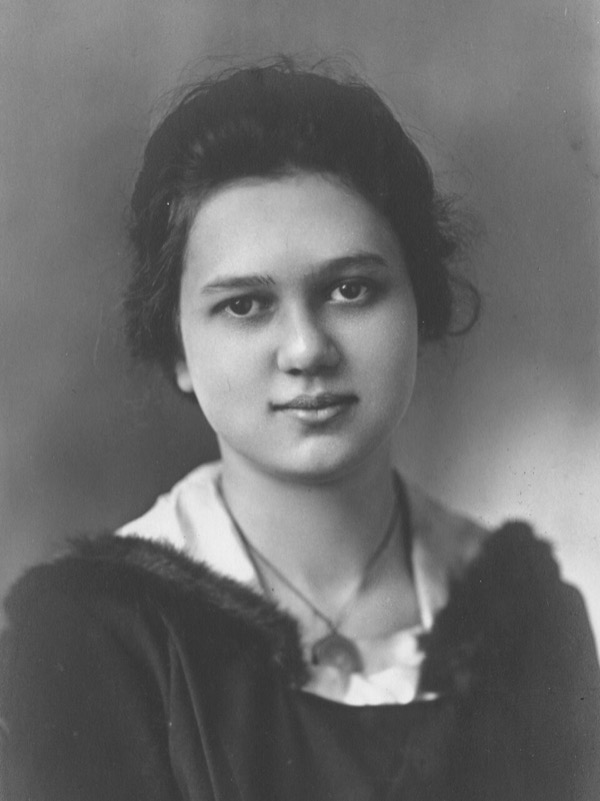
Ruth Crawford Seeger
But after the mid-1930s, she came to see composing ultramodern music for its own sake as indefensible amid the Depression’s grinding poverty. She focused on raising her children and transcribing American folk songs for songbooks like American Folk Songs for Children – work that shaped how generations of Americans first encountered folk music.
We wrote about Seeger’s life during the Great Depression here: https://interlude.hk/ruth-crawford-seeger-depressing/.
November 19, 1828
Death of Franz Schubert
Schubert’s Piano Sonata No. 21
Schubert died at thirty-one in his brother’s Vienna apartment of a years-long syphilis infection.
Between spring and autumn of his final year, he completed his last three piano sonatas, works so thematically and structurally intertwined that scholars often treat them as a trilogy.
The Sonata No. 21 in B-flat is the last of the three and is often considered their culmination.
We wrote about Schubert’s final months, including his battle with syphilis and his death: https://interlude.hk/on-this-day-19-november-franz-schubert-died/.
November 20, 1894
Death of Anton Rubinstein
Rubinstein’s Romance in E-flat major
Composer Anton Rubinstein died at home outside St. Petersburg at age 64. Historian Philip S. Taylor wrote, “The composer’s body lay in an open coffin. Two rows of soldiers lined the route from the railing surrounding the catafalque to the church pulpit, and the western entrance to Trinity Church in St. Petersburg was packed with police.”
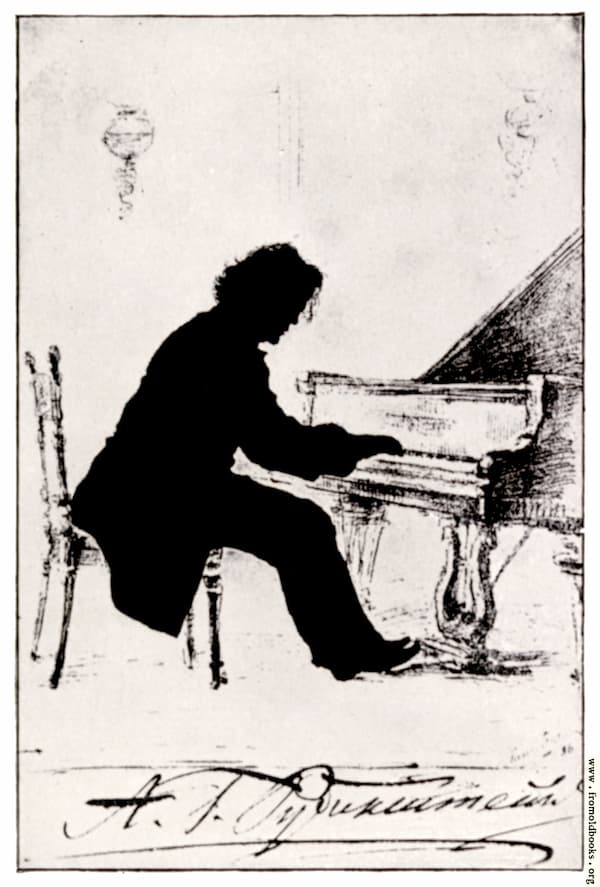
Anton Rubinstein silhouette
During Rubinstein’s lifetime, he was most famous for his piano playing and compositions.
His music may have fallen out of fashion today, but his influence on Russian music was profound.
We wrote about Rubinstein’s death here: https://interlude.hk/on-this-day-20-november-anton-rubinstein-died/.
November 21, 1695
Death of Henry Purcell
Purcell’s Rondeau from Abdelazer
Purcell died in Westminster at age 36, having spent his short career navigating the dual role of church and court composer.
His anthems for the Chapel Royal ranged from intimate “full anthems” for unaccompanied voices to lavish “symphony anthems” built for orchestra and soloists.
One of Purcell’s own funeral anthems, “Thou Knowest, Lord,” was performed at his burial in Westminster Abbey – then, centuries later, at the state funeral of Queen Elizabeth II in 2022.
We wrote about Purcell’s legacy of church and court music here: https://interlude.hk/henry-purcells-sacred-legacy-the-art-of-the-anthem/.
November 22, 1710
Birth of Wilhelm Friedemann Bach
Bach’s Sinfonia in D minor
Wilhelm Friedemann was Johann Sebastian Bach’s second child and eldest son – and by most contemporary accounts, his most naturally gifted.
His father wrote the Clavier-Büchlein partly as a teaching tool, personally guiding much of his early training.
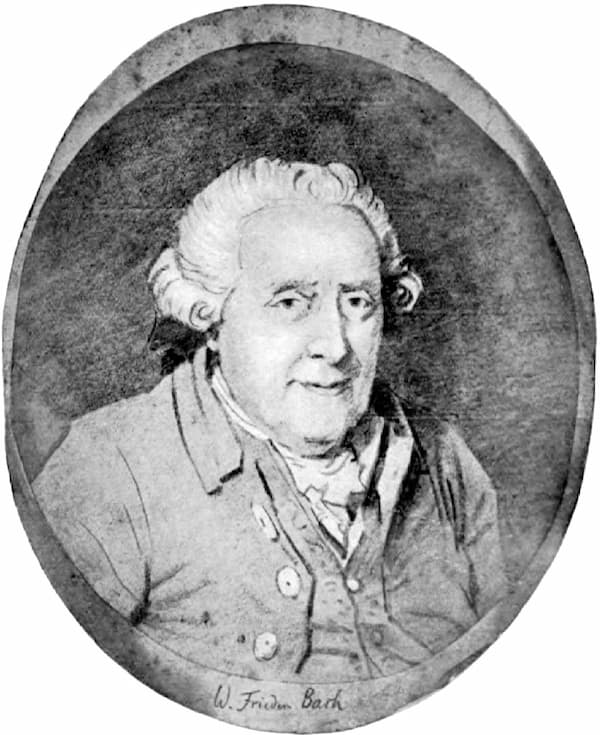
Wilhelm Friedemann Bach
Wilhelm held prestigious organist posts in Dresden and Halle for over two decades, but his career gradually unravelled due to financial mismanagement and a reputation for unreliability.
He died in poverty in Berlin in 1784, largely unpublished and dependent on his students for income.
We looked at Wilhelm Friedemann Bach’s life here: https://interlude.hk/bach-babies-in-music-wilhelm-friedemann-bach-1710-1784/.
November 23, 1876
Birth of Manuel de Falla
de Falla’s Nights in the Gardens of Spain
Falla was born in Cádiz to a merchant father and a pianist mother. As a child, he planned to become a writer before deciding at seventeen to focus on composition instead.
His decisive influence was his teacher Felipe Pedrell, a scholar devoted to reviving Spanish music through folk song. That inspiration shows throughout Noches en los jardines de España (“Nights in the Gardens of Spain”), which combines impressionistic orchestral colour with Andalusian atmosphere.
We wrote about de Falla’s childhood here – and the story of the imaginary utopian city he governed as a child: https://interlude.hk/on-this-day-23-november-manuel-de-falla-is-born/.
November 24, 1868
Birth of Scott Joplin
Joplin’s “The Entertainer”
Scott Joplin’s birth date is often given as 24 November 1868, though scholars have recently questioned it, along with the exact location of his birth. His father was formerly enslaved, and records are scarce.
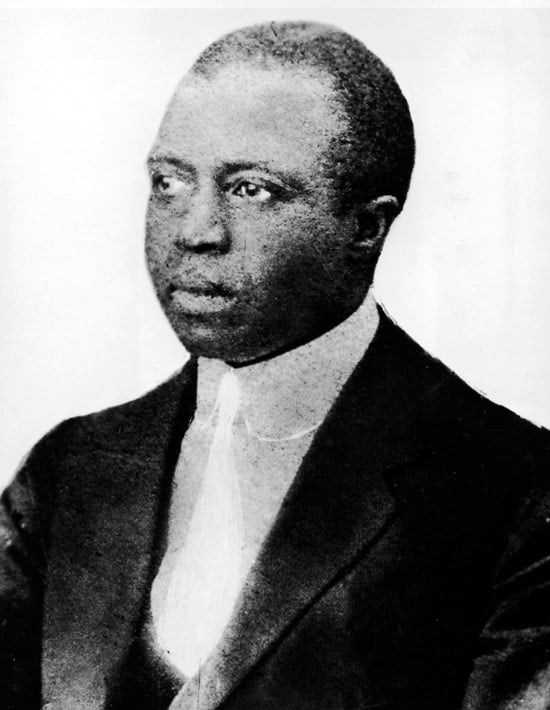
Scott Joplin in 1912
Although his “Maple Leaf Rag” made him rich and famous, Joplin aimed for even more ambitious goals. He spent the latter part of his life writing and trying, in vain, to stage his opera Treemonisha – a work that wouldn’t reach the stage until decades after he died.
We wrote about how Joplin was the king of ragtime and an opera pioneer here: https://interlude.hk/scott-joplin-1868-1917-king-of-ragtime-and-opera-pioneer/.
November 25, 1965
Death of Dame Myra Hess
Hess playing her arrangement of “Jesu, Joy of Man’s Desiring”
Hess was a beloved pianist in the first half of the 20th century, but she is best remembered for what she did during the Blitz. Rather than let the war silence London’s musical life, she organised nearly 1,700 lunchtime concerts at the National Gallery, performing in 150 of them herself.
Londoners queued around Trafalgar Square for the first concert, and the crowds kept coming throughout the war. She was ultimately made a Dame for her efforts to improve wartime morale.
We told her remarkable story here: https://interlude.hk/great-women-artists-shaped-music-iv-dame-myra-hess/.
November 26, 1937
Premiere of Schumann’s Violin Concerto
Schumann wrote this concerto in a feverish three-week burst in 1853, shortly before a suicide attempt led to his admittance to the asylum where he’d die.
Joseph Joachim, the violinist it was dedicated to, thought the piece betrayed Schumann’s declining mental state, and he convinced Clara Schumann and Brahms to help him suppress it.
Joachim eventually willed the manuscript to the Prussian State Library with instructions that it stay sealed for a century.
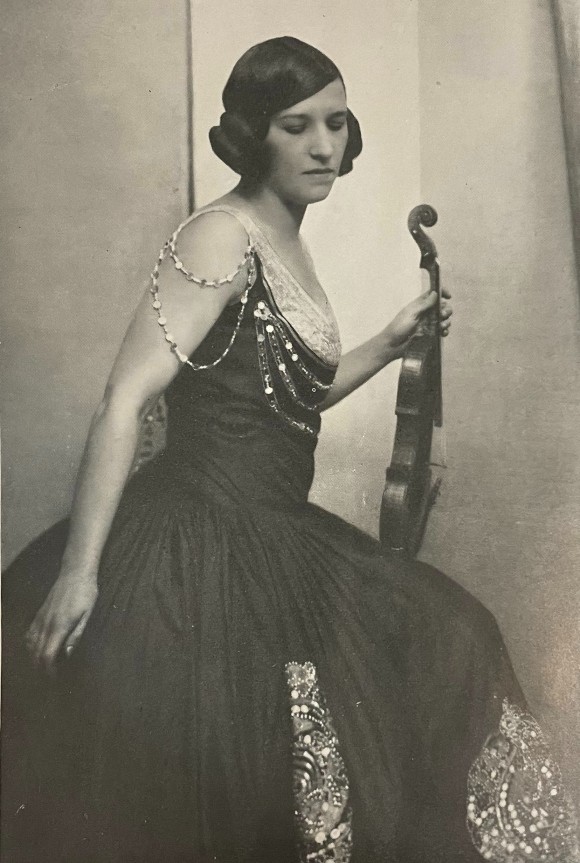
Jelly d’Aranyi
It resurfaced by accident in 1933, when Joachim’s violinist grandniece, Jelly d’Arányi, found the score, claiming her great-uncle’s spirit had led her to it.
We told the otherworldly story of rediscovering Schumann’s violin concerto here: https://interlude.hk/unsung-concertos-robert-schumann-violin-concerto-woo-23/.
November 27, 1955
Death of Arthur Honegger
Honegger’s Pacific 231
Honegger was a member of Les Six, a loose collective of French composers active in the 1920s and 1930s who embraced a lean, modern style.
He’s best remembered today for “Pacific 231,” an orchestral work with relentless rhythms that has reminded many listeners of a steam train. (For his part, Honegger denied the connection.)
We looked at “Pacific 231” and its two companion pieces here: https://interlude.hk/world-captured-music/.
November 28, 1632
Birth of Jean-Baptiste Lully
Lully’s Suite from “Le Bourgeois gentilhomme”
The Italian-born Lully arrived in France at age fourteen and took a job as a tutor, teaching Italian to a French princess.
He trained as a dancer, and during one royal ballet rehearsal, sped up music he found too slow and performed several roles himself. The teenage Louis XIV was impressed and named him court composer.
He dominated French music for decades, specialising in overtures and lively court dances.
We wrote about the beginning of Lully’s turbulent life journey here: https://interlude.hk/on-this-day-28-november-jean-baptiste-lully-was-born/.
November 29, 1924
Death of Giacomo Puccini
Puccini’s “O mio babbino caro” from Gianni Schicchi
Puccini died in Brussels after an aggressive, experimental treatment for throat cancer. He’d travelled to Belgium specifically to undergo a brutal procedure involving crystal needles implanted directly into the tumour.
Initially, he seemed to be recovering, but he died and collapsed from heart failure on 29 November 1924.
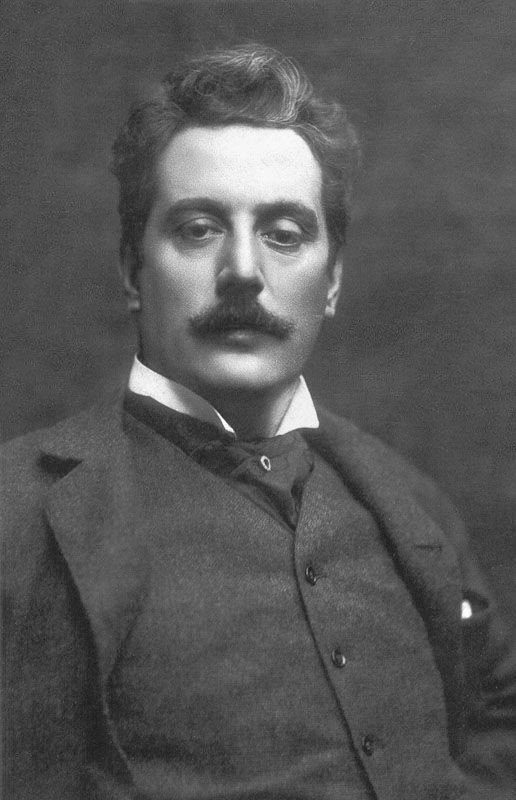
Giacomo Puccini
We wrote an article about his illness and death here: https://interlude.hk/on-this-day-29-november-giacomo-puccini-died/.
November 30, 1813
Birth of Charles-Valentin Alkan
Alkan’s “Le Festin d’Esope”
Alkan was one of the best pianists of his generation: a rival of Liszt and Chopin.
Despite that reputation, his career stalled dramatically in his thirties. Passed over for a coveted teaching post at the Paris Conservatoire and then devastated by Chopin’s death in 1849, he withdrew from public musical life for nearly two decades, retreating into Biblical scholarship instead.
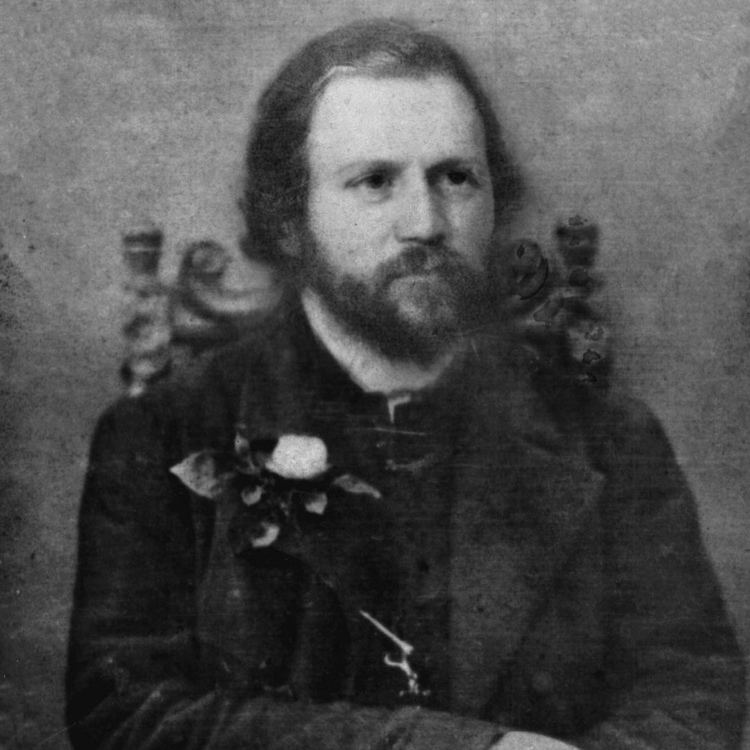
Charles-Valentin Alkan
Much of his output remains genuinely obscure even now, overshadowed by the reclusiveness that defined the second half of his career.
We told the story of how Alkan grew up to become one of the century’s most successful pianists here: https://interlude.hk/on-this-day-30-november-charles-valentin-alkan-was-born/.
Conclusion
Thirty days, thirty stories: court composers and ragtime pioneers, prodigies and late bloomers, symphonies finished in triumph, and concertos suppressed out of love.
What is your favourite November classical music anniversary to observe?
For more of the best in classical music, sign up for our E-Newsletter