Classical music history is filled with famous rivalries, but some of the most interesting stories are about composers and their musical best friends.
From Johannes Brahms and violinist Joseph Joachim to Leonard Bernstein and Aaron Copland, these relationships offered the great composers companionship, encouragement, and profound musical inspiration.
Here are some of the most remarkable composer friendships in classical music history – along with the music they helped bring into the world.
Johannes Brahms and Joseph Joachim
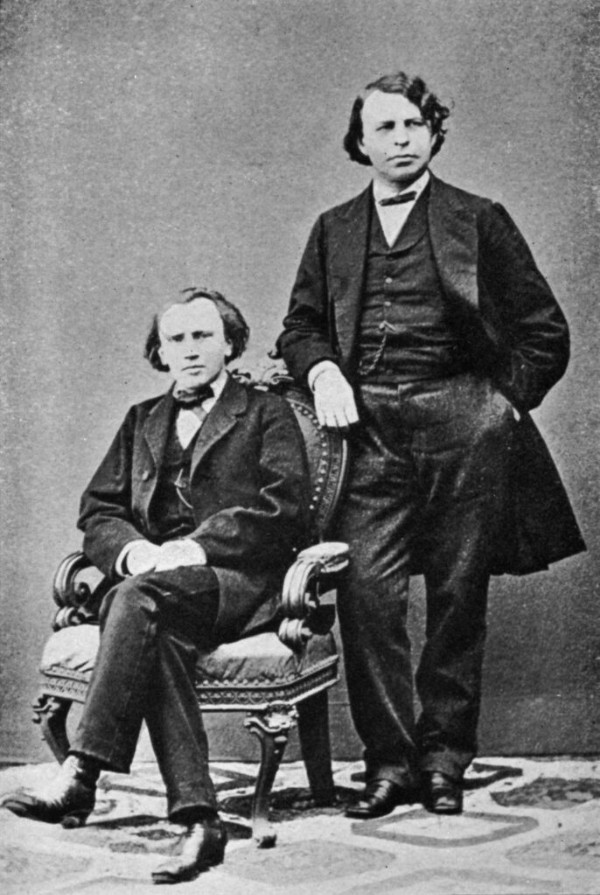
Brahms and Joachim
Composer Johannes Brahms and violinist Joseph Joachim met in 1853, when Brahms, an unknown musician who’d grown up in the commercial harbour city of Hamburg, arrived in Hannover with a letter of introduction to the already-famous Joachim.
Joachim was floored both by Brahms’s piano playing and his compositions, so he began spreading the word about his new friend, even writing a letter of introduction for Brahms to Robert and Clara Schumann. These relationships put Brahms on the musical map.
Over the years, Joachim and Brahms became close musical collaborators and friends. The friendship’s high water mark was arguably the creation of Brahms’s 1878 violin concerto, written specifically for Joachim’s strengths and tastes. Joachim even composed the cadenza.
Brahms: Violin Concerto
In the early 1880s, they had an intense falling-out. It began after Joachim accused his wife Amalie of infidelity and began divorce proceedings. Brahms thought those suspicions were overblown and wrote her as much in a letter – and it was later used in court, much to Joachim’s anger.
In 1887, Brahms was the first to extend an olive branch, composing his Double Concerto for violin and cello, and requesting Joachim’s feedback.
In the end, Joachim premiered it, and the two were reconciled. Although they were never as close as they’d been as young men, the friendship endured until Brahms died in 1897.
We wrote about the divorce and how it impacted their friendship here: https://interlude.hk/did-brahms-break-up-the-marriage-of-the-joachims/.
Edward Elgar and August Jaeger
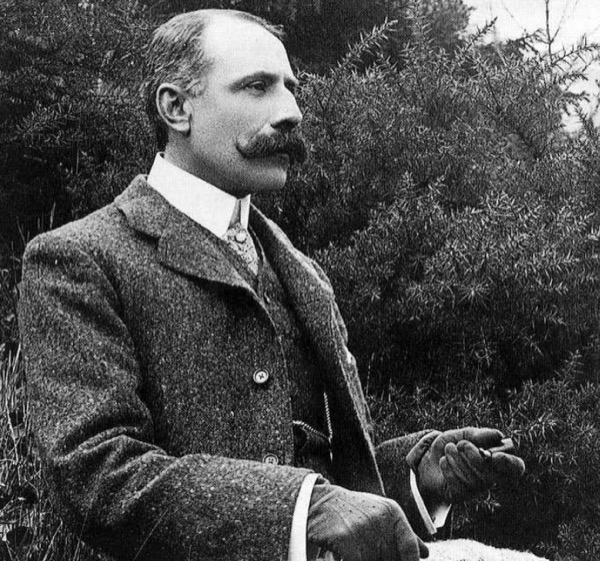
Edward Elgar
Edward Elgar first began corresponding with August Jaeger, the German-born music publisher at the London-based publishing firm Novello, in 1897.
At the time, Elgar was a composer and music teacher who had never made his longed-for breakthrough – and who, at the age of 40, seemed unlikely to.
The two men became fast friends, and Jaeger’s belief in Elgar’s talent helped to pull him back from the brink of quitting composing.
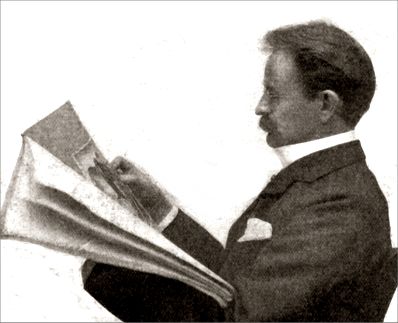
August Jaeger
In 1898, Elgar was improvising at the piano when he hit upon a theme he liked. That theme evolved into the Enigma Variations, an orchestral work with fourteen variations on the theme, each portraying a different person in his life. It became Elgar’s first large-scale hit.
Edward Elgar – Enigma Variations, Op.36: IX. (Nimrod)
The emotional heart of the work, a variation titled “Nimrod”, became a tribute to his publisher: Jäger is German for hunter, and the Biblical figure Nimrod is described in the book of Genesis as a “mighty hunter.”
Jaeger provided feedback to Elgar’s works that the composer valued deeply, including for his 1900 oratorio The Dream of Gerontius and even the Enigma Variations themselves.
In 1905, Jaeger became ill with tuberculosis and was forced to relocate to Switzerland to attempt a rest cure. The cure failed to arrest the infection, and Jaeger died of tuberculosis in 1909 at the age of 49.
That same year, the Worshipful Company of Musicians commissioned Elgar to compose a musical tribute to the late Reverend Robert Hadden. The resulting work was his Elegy, Op. 58. Given that it was written within a month of Jaeger’s death, some listeners have connected it to Jaeger’s death.
Edward Elgar: Elegy, Op. 58 (BBC Symphony Orchestra; Edward Elgar, cond.)
We wrote about the Enigma Variations’ origin story here: https://interlude.hk/on-this-day-19-june-elgar-enigma-variations-was-premiered/.
Jean Sibelius and Ferruccio Busoni
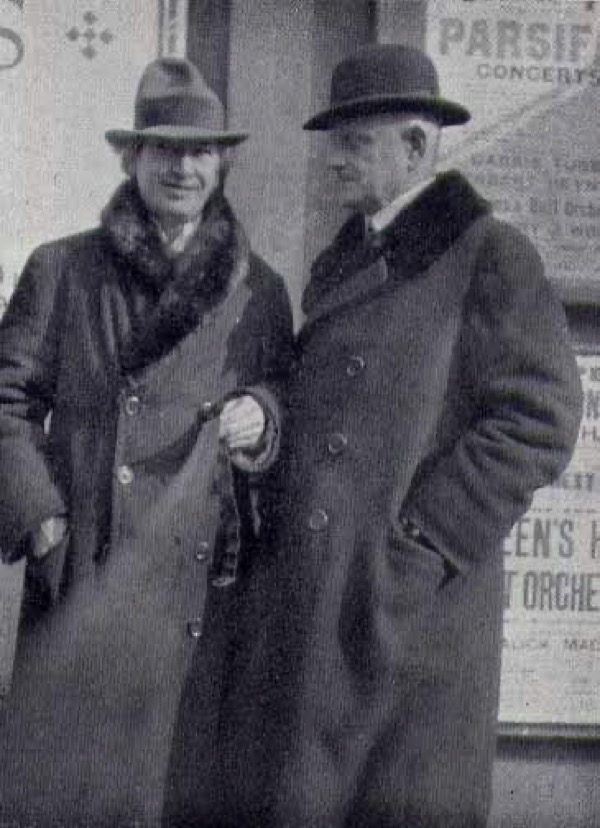
Busoni and Sibelius
Jean Sibelius and Ferruccio Busoni met in Helsinki in 1888, when Busoni accepted a position as a piano instructor at the Helsinki Music Institute, where Sibelius was studying. Both men were in their early twenties.
They were an odd couple. Busoni had been a piano prodigy who toured so much he once said, “I never had a childhood.” At the same time, Sibelius was a modestly talented violinist dreaming of becoming a travelling virtuoso.
But the two got along anyway, and even jokingly dubbed themselves “Leskovites” after the name of the restaurant where they and their friends gathered (and drank heavily).
Two years after they met, Busoni was offered a prestigious position at the Moscow Conservatory, which he accepted. Busoni and Sibelius never lived in the same city again, but they kept in touch via letter-writing.
By then, Busoni was a prominent figure in Berlin’s new-music scene and occasionally conducted Sibelius’s works, advocating for his music before it had cemented its place in the repertoire.
Gustav Holst and Ralph Vaughan Williams
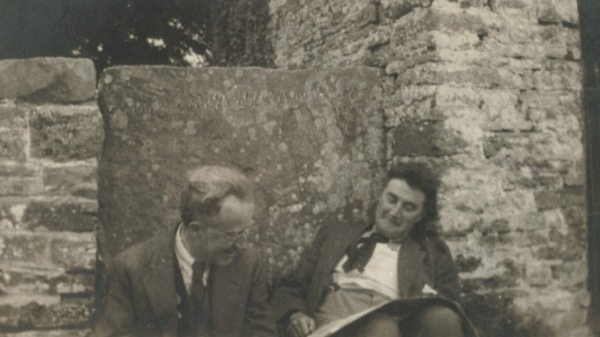
Holst and Vaughan Williams
Gustav Holst and Ralph Vaughan Williams met in 1895 while studying at the Royal College of Music in London.
There they began a ritual they dubbed “field days” – regular meetings where they’d play each other’s works-in-progress and give feedback on them. Both men found these discussions formative.
They also shared a passion for British folk music. Vaughan Williams went on multiple long excursions to gather folksong, and Holst drew on his friend’s work in his own writing.
Vaughan Williams’s English Folk Song Suite
The music of both composers became known for its uniquely English identity. That identity was especially meaningful given the rise of musical nationalism and the dominance of German and French music.
When Holst died in 1934, Vaughan Williams was devastated. He spent years afterwards helping to preserve and champion his friend’s works, including editing and promoting his manuscripts.
We wrote about their friendship – and why they both set the same Whitman text – here: https://interlude.hk/poetry-and-music-whitman-and-vaughan-williams-and-holst/.
Gustav Holst: Phantasy on British Folksongs, Op. 36 (ed. Swanston) (Tippett Quartet)
Dmitri Shostakovich and Ivan Sollertinsky
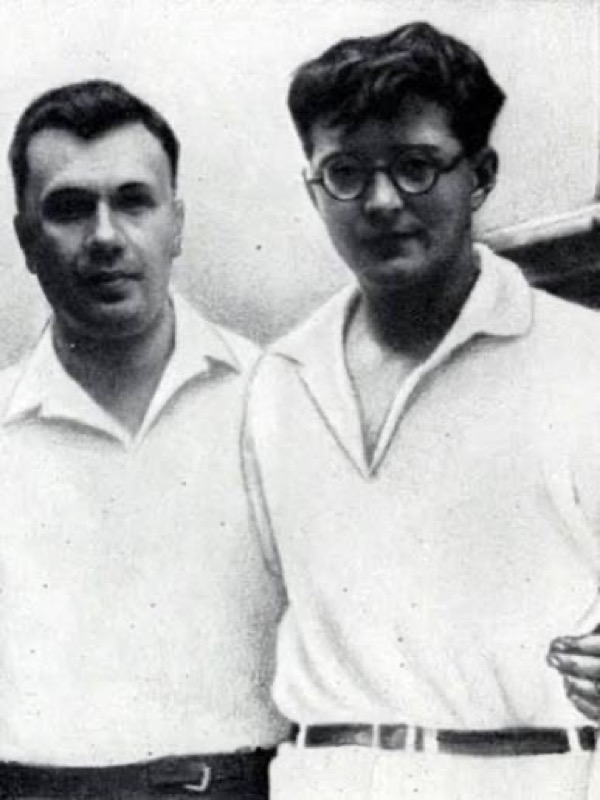
Shostakovich and Sollertinsky
Shostakovich’s Piano Trio No. 2
Dmitri Shostakovich met Ivan Sollertinsky in Leningrad in the late 1920s.
Sollertinsky, then in his mid-twenties, was already an unnervingly brilliant musicologist, celebrated for his encyclopedic knowledge of literature, philosophy, and languages (according to legend, he could speak around thirty).
Shostakovich’s talents weren’t quite so showy, but he was clearly one of the most promising up-and-coming young Soviet composers, and thanks to their shared interests, he and Sollertinsky became friends.
Sollertinsky even began influencing Shostakovich’s music by introducing him to Gustav Mahler’s output, which gave him a model for what an ambitious large-scale symphonist could achieve.
Sollertinsky enthusiastically praised Shostakovich’s opera Lady Macbeth of the Mtsensk District – praise that came under fire after the opera was denounced in an unsigned Pravda editorial widely believed to reflect Stalin’s own views.
Even after it became clear that supporting Shostakovich was dangerous, Sollertinsky refused to retract that praise until Shostakovich, terrified for his friend’s safety, finally convinced him to.
After years of poor health, impacted by the privations of World War II, Sollertinsky died of heart issues in February 1944.
Shostakovich was devastated, writing that he had lost his “closest and dearest friend.”
He had already begun a new piano trio that December; after Sollertinsky’s death, the work became a tribute to his friend and was completed that August.
Leonard Bernstein and Aaron Copland
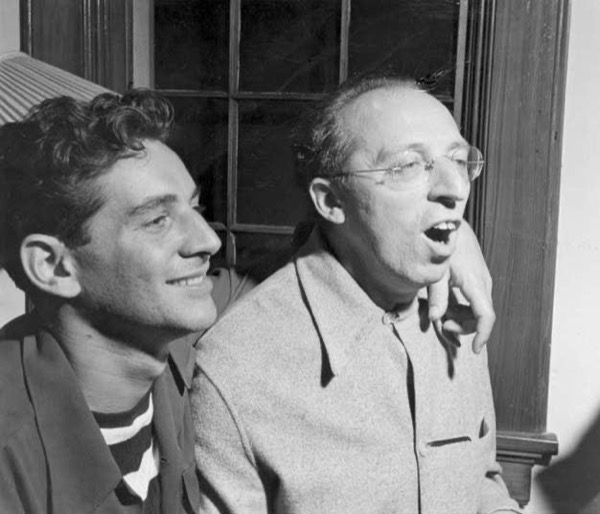
Copland and Bernstein
Aaron Copland appears on a 1964 Leonard Bernstein Young People’s Concert
Leonard Bernstein and Aaron Copland met in November 1937, when the 19-year-old Bernstein attended a modern-dance recital in New York and struck up a conversation with the man sitting next to him – who turned out to be Copland himself, celebrating his 37th birthday.
The two hit it off instantly and spent the night at a party in Copland’s apartment, where Bernstein played Copland’s virtuosic Piano Variations, much to its composer’s delight.
Scholars believe that Bernstein and Copland began a sexual relationship soon after meeting. Their initial electric spark cooled, but their respect and admiration for each other’s musicianship remained. Copland championed Bernstein’s works, and Bernstein championed Copland’s work.
They remained close friends for decades. They ended up dying just seven weeks apart – Bernstein in October 1990 and Copland in December 1990.
Conclusion
Each one of these friendships left fingerprints on the music itself: Joachim’s cadenza is still played in performances of Brahms’s concerto, Jaeger inspired the nickname of the famous “Nimrod” variation, and Sollertinsky’s loss runs through the piano trio Shostakovich wrote in his honour.
Knowing these stories helps us understand not only the composers better, but also the music they wrote.
For more of the best in classical music, sign up for our E-Newsletter