Orlando Gibbons (1583–1625) has been called the “English Palestrina,” and Glenn Gould’s favourite composer. He compared Orlando Gibbons to Beethoven and Webern. He suggested, “Like Beethoven in his last quartets, or Webern at almost any time, Gibbons is an artist of such intractable commitment that, in the keyboard field, at least, his works work better in one’s memory, or on paper, than they ever can through the intercession of a sounding-board.”
Given such notoriety, it is somewhat surprising that the music of his eldest surviving son, Christopher Gibbons (1615–1676), seems to have been much neglected. After all, he “was one of the great line of Organists at Westminster Abbey, the first to be appointed in 1660 after the Restoration of the Monarchy.” (Egarr, Discovering Christopher Gibbons, 2012)
As you will have noticed from the composer’s dates, we commemorate the 350th anniversary of Christopher Gibbons’ death in 2026. We take this anniversary as an opportunity to explore the life and music of Christopher Gibbons, a true English musical treasure.
Christopher Gibbons: Voluntary in A minor
Musical Inheritance
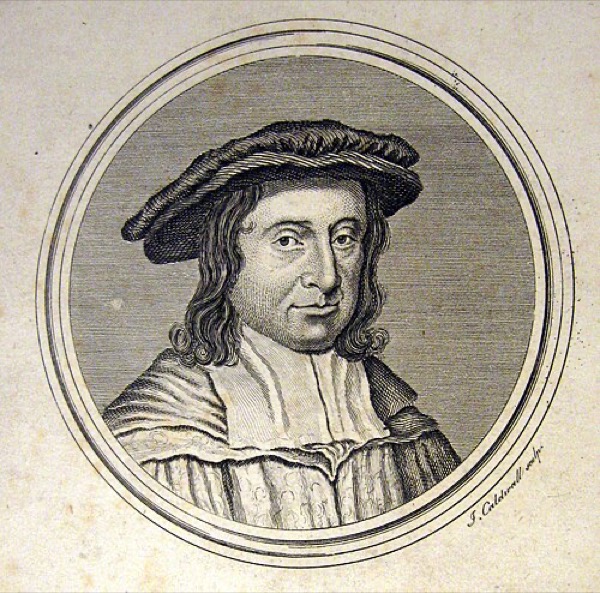
Christopher Gibbons
Christopher Gibbons was born to Orlando and Elizabeth in Westminster, where he was baptised on 22 August 1615. The exact date of birth is unknown, but it likely fell a couple of days before his baptism. Furthermore, we have very little information on the first 10 years of his life.
He likely studied music with his father, and a report suggests he was brought up in music from childhood under his uncle, presumably Edward. His father died 4 months after Charles I ascended to the throne in 1625, and the family went to live with their uncle Edward, who assisted in musical matters at Exeter Cathedral.
Christopher Gibbons: O bone Jesu (Charmian Bedford, soprano; Jacqueline Connell, alto; Susanna Spicer, alto; Richard Latham, bass; Alastair Ross, organ; Richard Egarr, cond.)
When Music Fell Silent
Gibbons appears to have been musically active, and in 1638 he succeeded Thomas Holmes as organist of Winchester Cathedral. However, the English Civil War and its suppression of church music ended Gibbons’ position. Gibbons fought for the Royalist cause, but after the execution of Charles I, Gibbons moved to London in 1651.
Gibbons made his living as a music teacher and organist for several private individuals. He was one of the few Royalist musicians who did not flee England for the continent during the Interregnum, a turbulent political period dominated by Oliver Cromwell.
Christopher Gibbons: Above the stars my Saviour dwells (Philippa Hyde, soprano; Charmian Bedford, soprano; Alastair Ross, organ; Academy of Ancient Music Choir; Richard Egarr, cond.)
Royal Appointments
With Charles II’s return to the English throne, Gibbons immediately received appointments at the Chapel Royal and Westminster Abbey. He quickly became one of the most important composers of the post-Interregnum period, becoming organist of Westminster in 1660 and Master of the Choristers in 1664.
Christopher D.S. Field writes that “between 1662 and 1665 he was involved in a scandal over plans for a new organ at Worcester Cathedral, and accused of corruptly seeking to procure the contract for William Hathaway.” (Field, Grove Music Online, 2001)
Christopher Gibbons: Fantasia-Suite in D Minor (Donald Nicolson, harpsichord; Latitude 37)
A Master of the Restoration
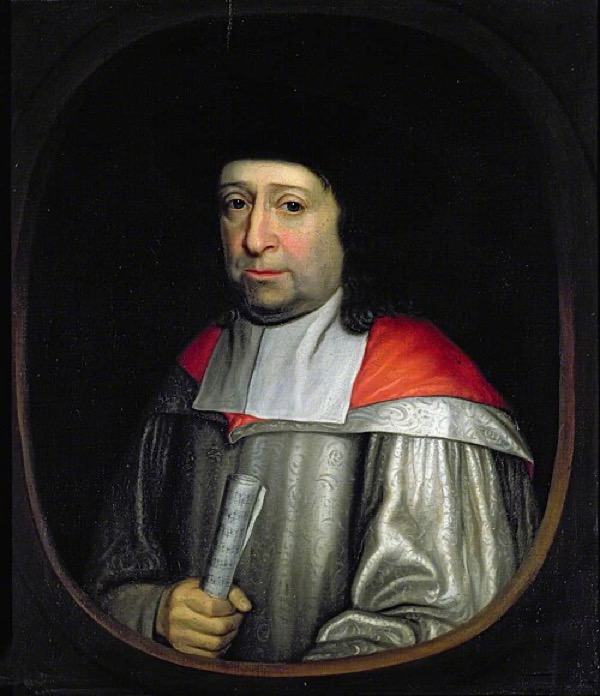
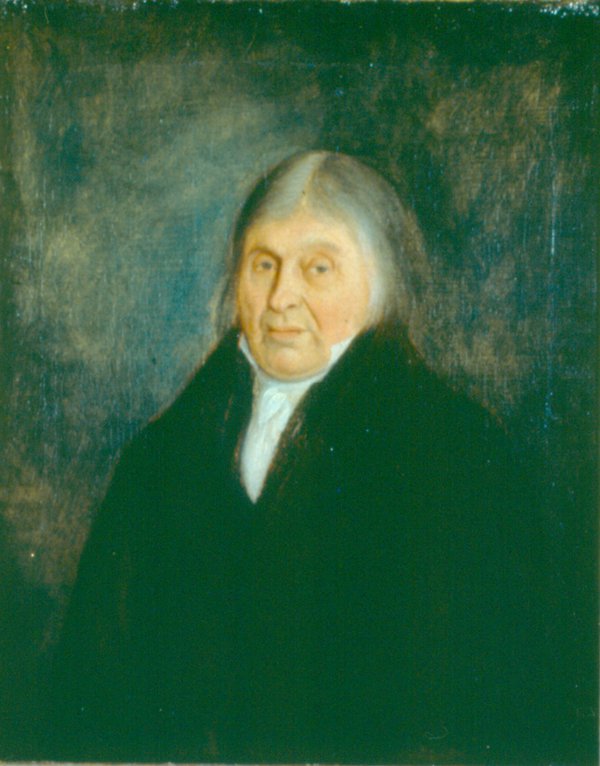
Portrait of Christopher Gibbons
In 1664, Gibbons was awarded the degree of DMus at Oxford University, and he became well known and influential in musical circles. He appears several times in the diaries of Samuel Pepys and helped nurture several great Restoration composers, including Blow, Humfrey, and Henry Purcell. He also became the first recorded organist of St Martin-in-the-Fields in 1674, and he died in Westminster on 20 October 1676.
As a keyboard player, Gibbons was an outstanding figure in Restoration music. As a composer, he was called a great master in the ecclesiastical style and also in consort music, and his music was described as “bold, solid, and strong, but desultory and not without a little of the barbaresque.”
Christopher Gibbons: The Lord said unto my lord (Philippa Hyde, soprano; Charmian Bedford, soprano; Susanna Spicer, alto; Alastair Ross, organ; Academy of Ancient Music Choir; Richard Egarr, cond.)
Between Lawes and Purcell
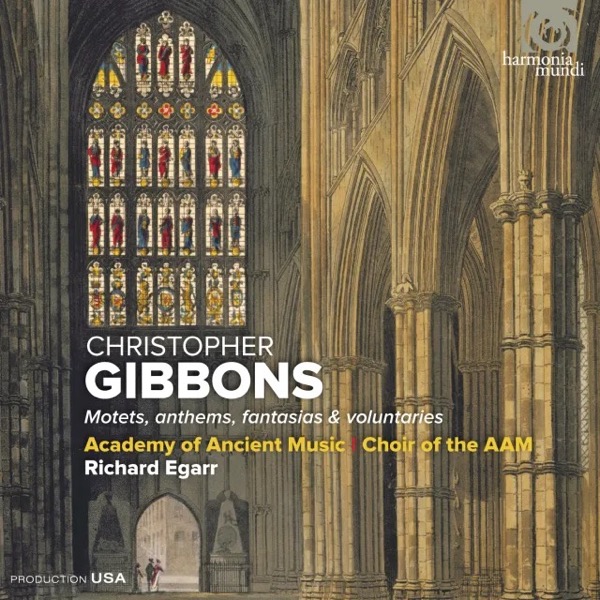
Gibbons was the musical link between the pre-Commonwealth world of William Lawes and the Restoration works of Henry Purcell. His music contains the angular, combative lines and dissonance that typify Lawes’s consort music, yet his harmonic sense is more tempered and stable.
Egarr writes, “The fact that Gibbons was in his maturity during the musically and theatrically prohibitive world of Oliver Cromwell is perhaps partly responsible for the relatively marginal dissemination of his music and its neglect.” (Egarr, Discovering Christopher Gibbons, 2012)
Today, new research and recordings are finally helping to restore Christopher Gibbons to his rightful and well-deserved place in English music history.
For more of the best in classical music, sign up for our E-Newsletter
Christopher Gibbons: Not unto us, O Lord (Alastair Ross, organ; Academy of Ancient Music Choir; Richard Egarr, cond.)