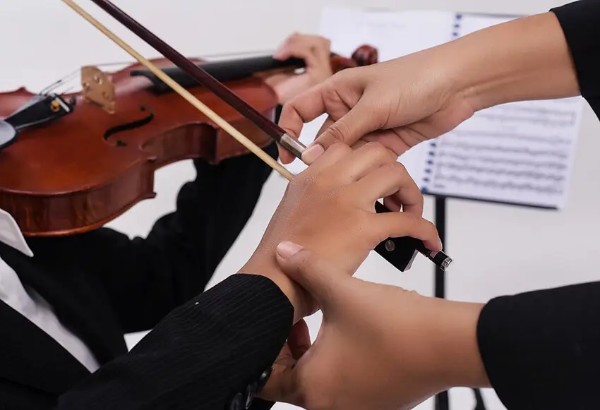
Beethoven’s violin teachers never turned him into a virtuoso; that was never their job. His calling card was always his dynamic pianism, not his violin playing.
But his relationship with the instrument didn’t keep him from writing some of the century’s most important violin parts, found in his ten violin sonatas, his nine symphonies, his sixteen string quartets, and his genre-defining violin concerto.
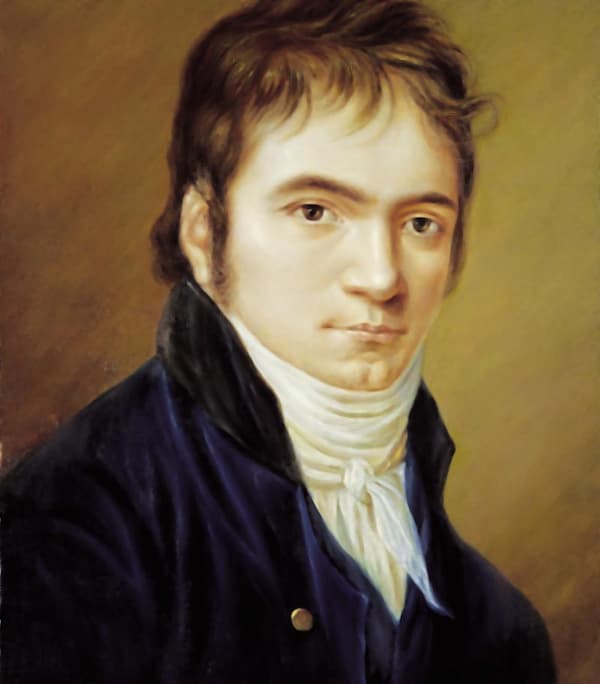
Beethoven in 1803
Three men gave Beethoven enough technical grounding to write brilliantly for the instrument: Wenzel Krumpholz, Franz Anton Ries, and Ignaz Schuppanzigh.
Each one has their own story. One taught him violin and viola as a teenager in Bonn. One lured him into learning mandolin on the side. One kept leading string quartets through Beethoven’s most demanding writing (brothel invitation and all).
Together, their lessons shaped the string parts running through his symphonies, sonatas, and quartets.
Franz Anton Ries (1755–1846): Beethoven’s Childhood Violin Teacher and Support System
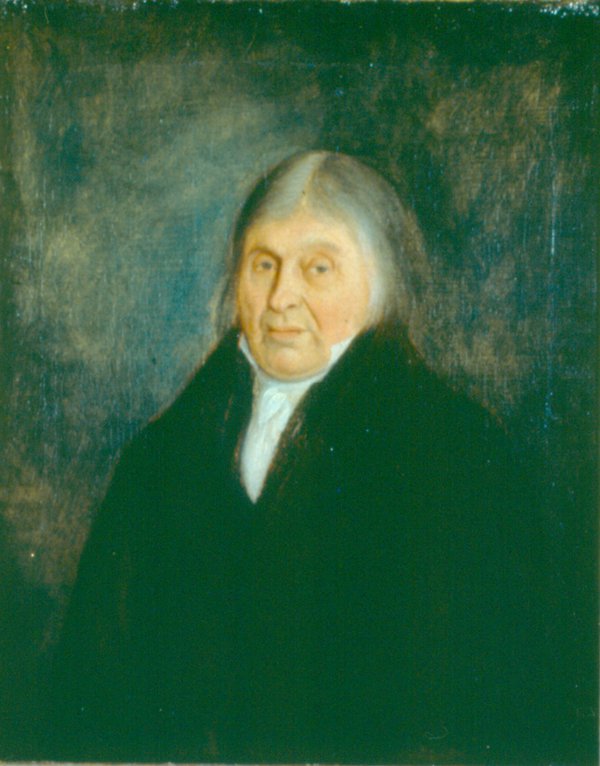
Franz Anton Ries
Franz Anton Ries was born 15 years before Beethoven, in Beethoven’s hometown of Bonn. (He would later live across the street from Beethoven’s birthplace.)
Franz’s father was a trumpet player in the court orchestra of the Elector of Bonn, the same ensemble Beethoven’s father belonged to.
Franz joined the orchestra as a child in the mid-1770s, marking him as an extraordinary prodigy.
Later, in his early twenties, he took a study trip to Vienna, then returned to continue his career in Bonn.
During the mid-1780s, when Beethoven was in his teens, Ries taught him both violin and viola.
Beethoven would never excel on the violin as much as he did on the piano. Still, it doesn’t matter: these lessons were vital to Beethoven’s later ability to write the string parts in his symphonies, sonatas, quartets, and more.
After the Bonn court orchestra was disbanded during the French Revolution, Ries turned to teaching full-time to make his living.
Wenzel Krumpholz (1750–1817): Beethoven’s Mandolin-Loving Violin Teacher
Beethoven’s Sonatina for mandolin and harpsichord in C minor, WoO 43a
Wenzel Krumpholz was born to a musical family in the town of Zlonice, in the present-day Czech Republic.
Although he specialised in the mandolin, he was also a talented violinist and earned a position in the Court Opera orchestra in Vienna.
Beethoven and Krumpholz first met in Vienna in 1795, after Beethoven published Op. 1, a set of three piano trios. Krumpholz was impressed and began giving Beethoven violin lessons.
It wasn’t long before Krumpholz was playing the mandolin for Beethoven, and even luring him into mandolin lessons, too. (The mandolin is tuned the same as the violin, making it easy to switch between instruments.)
Beethoven ended up keeping a mandolin hanging on the wall by his piano. He also wrote six works for mandolin, although none were published during his lifetime.
Krumpholz also introduced the young piano prodigy Carl Czerny to Beethoven. Czerny would go on to become Beethoven’s student – and one of the most influential piano teachers of the 19th century.
Ignaz Schuppanzigh (1776–1830): Beethoven’s Long-Suffering Quartet Leader
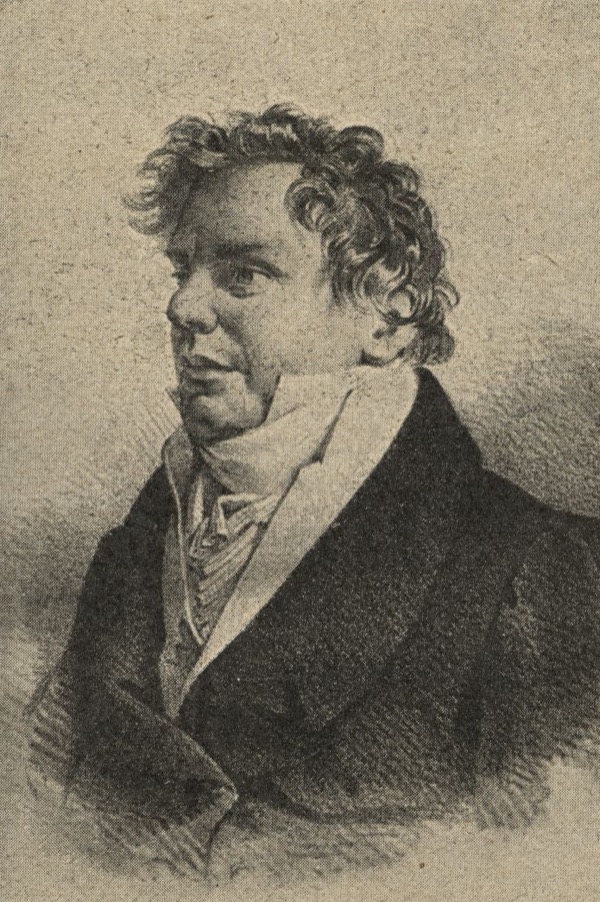
Ignaz Schuppanzigh
Beethoven’s String Quartet No. 7
Ignaz Schuppanzigh was born in Vienna six years after Beethoven. He became a violinist and violist, and after Beethoven arrived in Vienna in the early 1790s, Schuppanzigh taught him the violin.
Schuppanzigh had a passion for quartet playing and led several ensembles in Vienna over the years. But in 1808, the year he turned 32, he was given an extraordinary opportunity: a lifetime contract to perform for Count Andrey Razumovsky, the same man who had commissioned Beethoven’s boundary-pushing Op. 59 quartets of 1806, which featured technical content amateur ensembles could not tackle. The Razumovsky quartet only disbanded after a fire destroyed the palace in 1815.
Eight years passed, during which Schuppanzigh travelled. But in 1823, he returned to Vienna and got the band back together, so to speak. This time they found funding by selling subscriptions to audience members: an unusual funding mechanism at the time.
Schuppanzigh inspired Beethoven to write quartet music more difficult than any he’d attempted before. Schuppanzigh and his colleagues gamely took on the responsibility, but they were occasionally overwhelmed.
According to one legend, after hearing of Schuppanzigh’s complaints, Beethoven once snapped, “Does he really believe that I think about his silly fiddle when the muse strikes me to compose?”
Although the two quarrelled for several reasons – ranging from the thorniness of Beethoven’s late quartets, to Beethoven blaming Schuppanzigh for a performance he didn’t like in 1824, to the fact that Schuppanzigh once brought Beethoven to a brothel – the two men remained friends until the end of their lives.
We wrote more about him here: https://interlude.hk/in-praise-of-the-fat-oneignaz-schuppanzigh/.
Conclusion
None of these three men made Beethoven a great violinist; despite his studies, he would always favour the piano.
But Beethoven’s violin writing, chamber music, and orchestral string parts wouldn’t exist in the form we know them without these three men.
His violin lessons may have ended when he was a young man, but the influence of his violin teachers never did.
For more of the best in classical music, sign up for our E-Newsletter