
Working from the Habsburg court in Vienna, Christoph Willibald Ritter von Gluck, born on this day, 2 July (1714–1787), freed opera from the stranglehold of opera-series practices that had been accruing over time and created a new opera style that found a new audience.
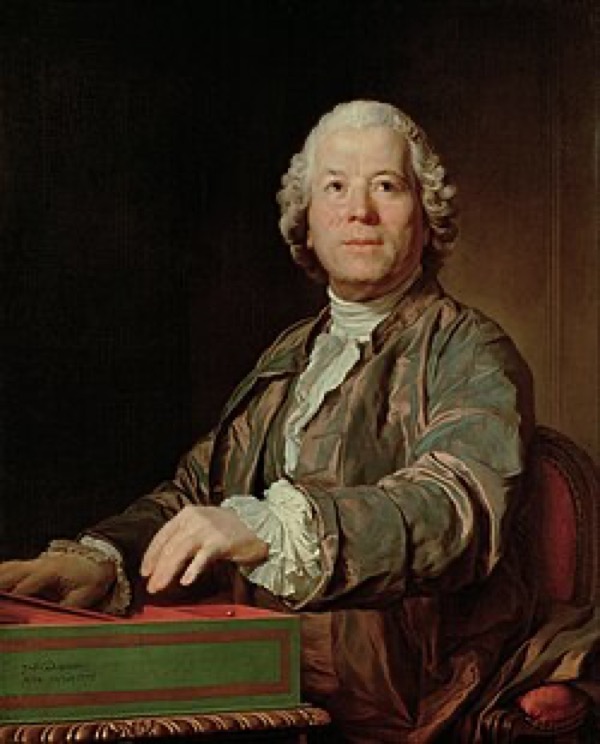
Joseph Siffred Duplessis: Christoph Willibald von Gluck, 1775 (Kunsthistorisches Museum)
Starting in 1760 with Orfeo ed Euridice, Gluck increased the drama in opera by placing greater emphasis on the orchestra, primarily through orchestral recitatives, and cutting down the long da capo arias. These arias, particularly in the Baroque period, were composed in three sections: A. The complete song, B. a contrasting section with changes of key, texture and mood, and A’ the da capo. The da capo section, meaning go back to the head (capo), the beginning of the piece and singing it again with improvised variations and ornaments. Often, the composer didn’t even write out the third section but merely wrote ‘da capo’ in the score and let the singer go.
This made for very long arias, and sometimes even very dull ones, as the audience waited for incompetent singers to make their way through the ornaments of the final section. It also killed the action, since arias are always points of stasis where the storyline pauses while the singer reflects on the action, or comes to a decision.
It was the writings of Francesco Algarotti and his 1755 Essay on the Opera that set Gluck on his reforming path. Algarotti advocated simplifying the stultifying opera seria model, placing the drama to the fore and moving the music, ballet, and staging to the background. As Algarotti wrote: The drama itself should ‘delight the eyes and ears, to rouse up and to affect the hearts of an audience, without the risk of sinning against reason or common sense’.
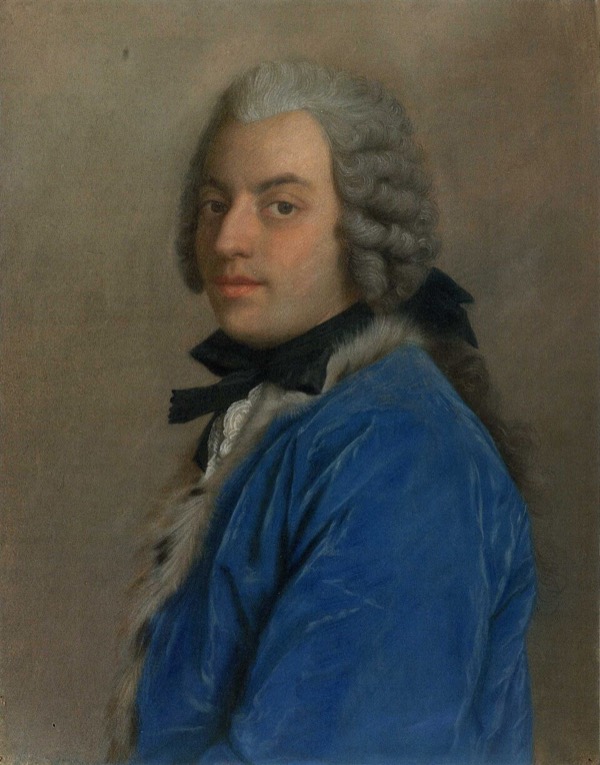
Jean-Étienne Liotard: Algarotti, 1745 (Rijksmuseum)
The three principal parts in Orfeo ed Euridice are Orfeo, Amore, and Euridice. At its Vienna premiere, 5 October 1762, the role of Orfeo was sung by an alto castrato (Gaetano Guadagni), by a soprano castrato (Giuseppe Millico) at its Parma premiere on 24 August 1769, and by a high tenor (Joseph Legros) at its Paris premiere on 2 August 1774.
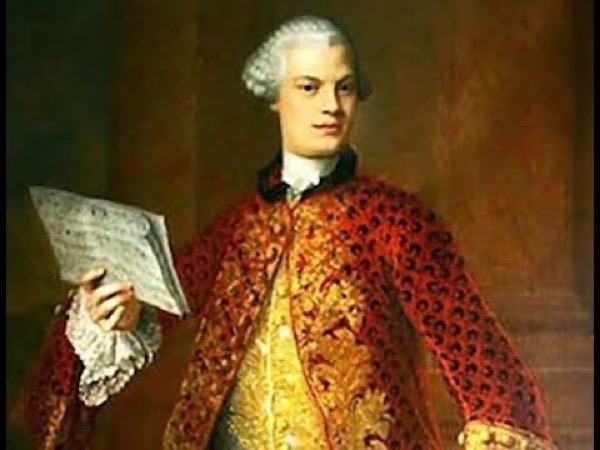
Gaetano Guadagni, the first Orfeo
The roles of Amore and Euridice were sung by sopranos, with Amore as a trouser role (a male role sung by a woman).
The story is familiar, with this one opening after Euridice’s death, with Orfeo mourning at her tomb. Amore comes to tell him that he can travel to the underworld to bring back Euridice with the proviso that he never look back to check that she is there.
In Act 2, Orfeo has to persuade the Furies and Cerberus to let him pass. When he enters Elysium, there is a dance (which in the Paris production became the Dance of the Blessed Spirits). Orfeo convinces the spirits to bring him Euridice.
Act 3 starts with the couple’s trip out of the underworld. Orfeo refuses to explain why he won’t look at his beloved, and she takes this to mean he’s been unfaithful. He turns to remonstrate with her, and she dies and vanishes. At this, Orfeo sings his great lament aria: ‘Che farò senza Euridice?’ and resolves to kill himself to join her. Amore intervenes, and as a reward for Orfeo’s love, restores Euridice to him. The opera closes with a four-movement ballet and a song in praise of Amore.
We’ll use Orfeo’s lament aria to look at some of the greatest Orfeo performances.
The 1951 recording with Kathleen Ferrier (contralto) uses a curiously low woman’s voice to sing a part that was also for a higher tessitura.
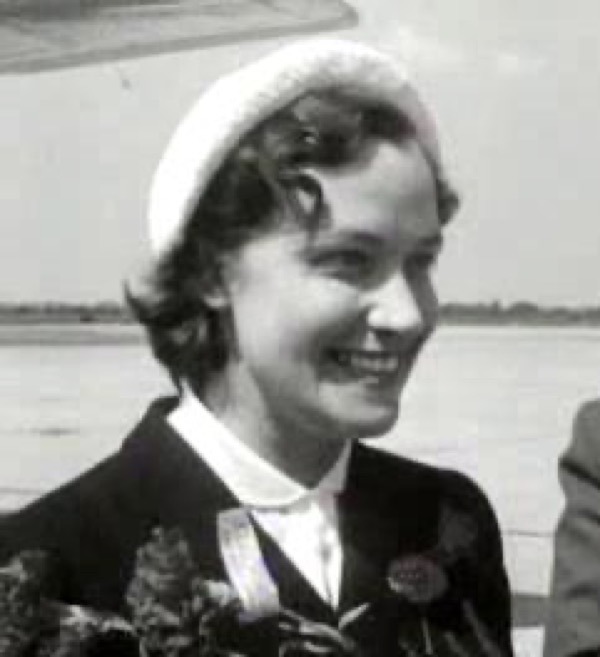
Kathleen Ferrier, 1951
Christoph Willibald Gluck: Orfeo ed Euridice: Act III: Aria: Che farò senza Euridice? (Kathleen Ferrier, contralto; Netherlands Opera Orchestra; Charles Bruck, cond.)
The 1957 recording with Risë Stevens (mezzo-soprano) as Orfeo slows the tempo down. Forgetting the emphasis on drama, the music emphasises the beauty of the musical line. The da capo aria speeds up slightly for the da capo section, but doesn’t really show the ornamentation that would be expected.
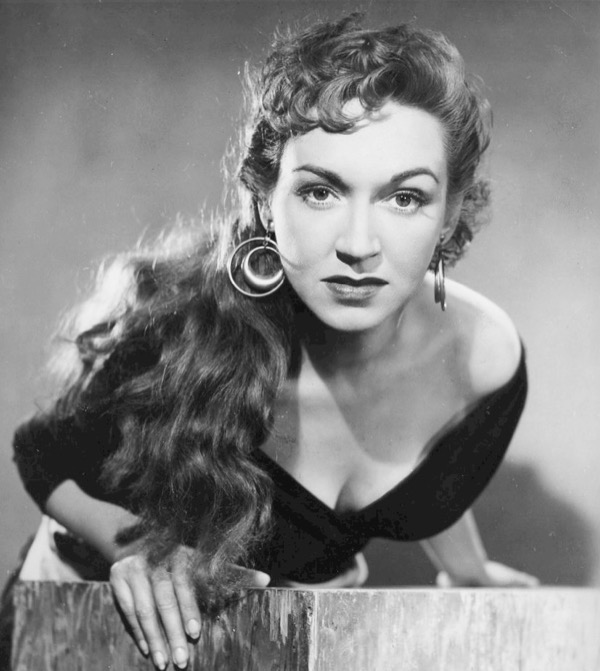
Risë Stevens as Carmen, 1959
Christoph Willibald Gluck: Orfeo ed Euridice: Act III Scene 1: Aria: Che farò senza Euridice? (Risë Stevens, Orfeo; Rome Opera House Orchestra; Pierre Monteux, cond.)
Both these recordings represent the state of early Classical opera in the mid-20th century – sticking to the line as written and not knowing enough of Gluck’s style to take advantage of a da capo aria.
Jumping forward to 1989, with Marilyn Horne singing the role of Orfeo, we have a return to the high voice.
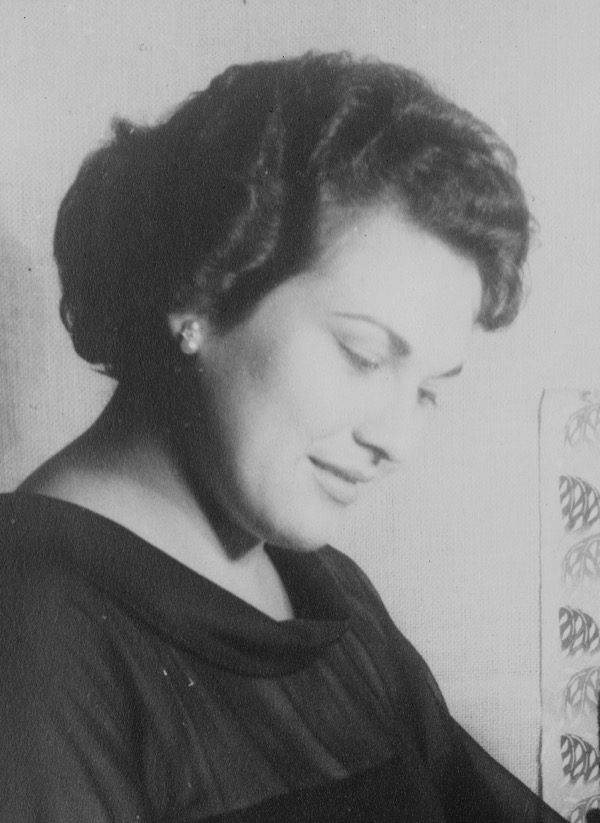
Carl van Vechten: Marilyn Horne, 1961 (Library of Congress, cph.3c14440)
Christoph Willibald Gluck: Orfeo ed Euridice: Act III Scene 1: Aria: Che farò senza Euridice? (Marilyn Horne, Orfeo; Royal Opera House Orchestra, Covent Garden; Georg Solti, cond.)
The 1992 recording with Michael Chance as Orfeo marks one of the early returns of the male voice in the part. In this recording, the B section is shortened, and the drama is heightened with the da capo return, but there’s little decoration.
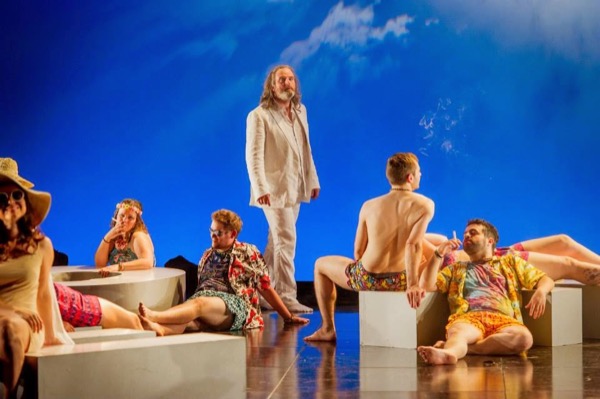
Michael Chance as Orfeo, Buxton Festival, 2014 (photo by Robert Workman)
Christoph Willibald Gluck: Orfeo ed Euridice: Act III Scene 1: Aria: Che farò senza Euridice? (Michael Chance, Orfeo; Tafelmusik Baroque Orchestra; Frieder Bernius, cond.)
In what is regarded as one of the greatest roles in his opera career, Dietrich Fischer-Dieskau turns the tables entirely by singing the role of Orfeo as a baritone. He leaves the whole question of the high voice alone. He made another recording of this opera with the Munich Bach Orchestra, conducted by Karl Richter.

Dietrich Fischer-Dieskau
Christoph Willibald Gluck: Orfeo ed Euridice: Act III Scene 1: Aria: Che farò senza Euridice? (Dietrich Fischer-Dieskau, Orfeo; Cappella Coloniensis; Ferdinand Leitner, cond.)
Finally, in the 1999 recording, the orchestra comes to life with delicate accelerando and other tempo effects. We also have a singer who understands the freedom given to him in a da capo aria. The orchestra’s tempo control frees the singer from restraint. This is the first recording where we’ve heard the singer add his own ideas.
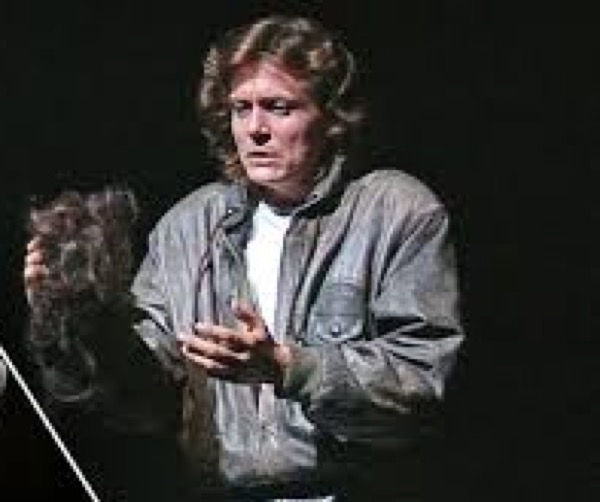
Jochen Kowalski as Orfeo
Christoph Willibald Gluck: Orfeo ed Euridice: Act III Scene 1: Aria: Che farò senza Euridice? (Jochen Kowalski, Orfeo; Carl Philipp Emanuel Bach Chamber Orchestra; Hartmut Haenchen, cond.)
René Jacobs’ 1981 recording with conductor Sigiswald Kuijken finally puts the aria in the hands of someone who knows what to do with the style and vocal line. This was René Jacobs’ first recording in the role. In 2001, he was the conductor with the Freiburger Barockorchester.
Christoph Willibald Gluck: Orfeo ed Euridice: Act III Scene 1: Aria: Che farò senza Euridice? (René Jacobs, Orfeo; Collegium Vocale Gent; La Petite Bande; Sigiswald Kuijken, cond.)
Polish soprano Ewa Podleś’ 1998 recording takes some liberties with the da capo section, but she could have done more.
Christoph Willibald Gluck: Orfeo ed Euridice: Act III Scene 1: Aria: Che farò senza Euridice? (Ewa Podleś, Orfeo; Galicia Symphony Orchestra; Peter Maag, cond.)
In one survey of the many Gluck recordings, the one by tenor Richard Croft garnered the vote for the top recording with a tenor. Here, in the 1774 Paris version (i.e., in French), we have the same kind of voice used for that French premiere.
Christoph Willibald Gluck: Orfeo ed Euridice: Act III Scene 1: Air: J’ai perdu mon Euridice (Richard Croft, Orfeo; Les Musiciens du Louvre; Marc Minkowski, cond.)
As an example of the new generation of high male-voice singers who are more comfortable with 18th-century stylings, we have the countertenor Franco Fagioli as Orfeo. The orchestra doesn’t quite have the freedom we heard in the Kowalski recording, but Fagioli is able to put the drama back into the aria nicely.
Christoph Willibald Gluck: Orfeo ed Euridice: Act III Scene 1: Aria: Che farò senza Euridice? (Franco Fagioli, Orfeo; Insula Orchestra; Laurence Equilbey, cond.)
With an even lighter tone, Derek Lee Ragin takes on the role. The English Baroque Soloists under the baton of John Eliot Gardiner are well able to support his vocal extravaganzas.
Christoph Willibald Gluck: Orfeo ed Euridice: Act III Scene 1: Aria: Che farò senza Euridice? (Derek Lee Ragin, Orfeo; English Baroque Soloists; John Eliot Gardiner, cond.)
British countertenor Iestyn Davies lightens the tone even further, but doesn’t do enough with the da capo.
Christoph Willibald Gluck: Orfeo ed Euridice: Act III Scene 1: Aria: Che farò senza Euridice? (Iestyn Davies, Orfeo; La Nuova Musica; David Bates, cond.)
One of the latest recordings is by another countertenor, Jakub Józef Orliński. His prolongation at the ends of lines where he’s calling for Euridice to return is especially effective. His use of silence also emphasises his reflection on what he will do without Euridice. Even without hearing the next recitative with Amore, where Orfeo declares he will kill himself because he’s lost Eurydice, we can hear it in the music.
Christoph Willibald Gluck: Orfeo ed Euridice: Act III Scene 1: Aria: Che farò senza Euridice? (Jakub Józef Orliński, Orfeo; Il Giardino d’Amore; Stefan Plewniak, cond.)
The long history of recordings makes it nearly impossible to decide something as banal as ‘The Best Recording of….’. For Orfeo ed Euridice, you have to decide which premiere you want: Vienna, Parma, or Paris. What kind of voice do you want to sing the role: the high male voices used in Vienna and Parma, or the tenor from Paris? Or perhaps you find Dietrich Fischer-Dieskau’s possession of the role most persuasive. Or maybe you want the mashup: the imagination of the recording with the Carl Philipp Emanuel Bach Chamber Orchestra under Hartmut Haenchen with one of the modern countertenors, such as Jakub Józef Orliński!
For more of the best in classical music, sign up for our E-Newsletter





Gluck’s reform operas fundamentally transformed the relationship between music and drama in ways that influenced Mozart and all subsequent opera composers.