In late November, pianist Steven Osborne returns to China for a series of recitals exploring the waltz through works by Beethoven, Schumann, Ravel, Lili Boulanger and others. His concerts also include Anatoly Lyadov’s A Musical Snuff-Box and Rachmaninoff’s arrangement of Liebesleid, which Osborne just recorded for his newest album OK by me. Before his visit to Shanghai, Osborne shared with me his view on Ravel’s complex sensitivity, Rachmaninoff’s expressive candour, Beethoven’s Diabelli Variations, and Charles Rosen’s most precious advice.
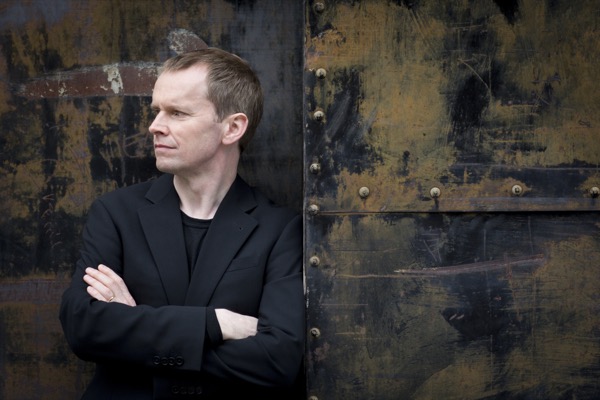
Steven Osborne © Benjamin Ealovega
Last year, you collaborated with artist Grégoire Pont to visualise Debussy’s music in Shanghai. What did you enjoy most?
It was a lovely project. He has such a beautiful sensibility in the way he responds to music. These kinds of crossover projects are very difficult to do well, and I thought he had a wonderful concept, as well as great skill in executing the drawings in real time.
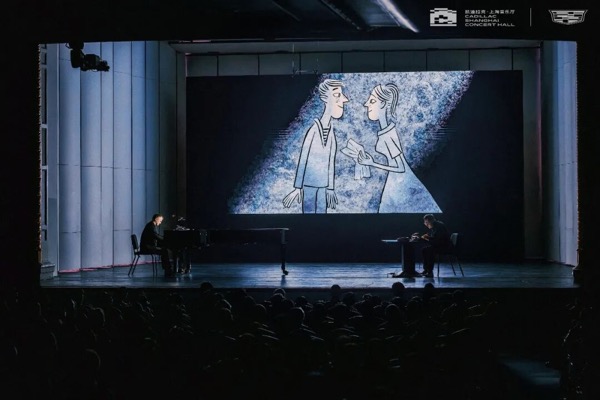
Steven Osborne and Grégoire Pont © Shanghai Concert Hall
How might your recital this time enrich our perception of the waltz?
The waltz was actually quite scandalous when it first became popular in late-18th-century high society because it was so wild and the dancers’ bodies were so close together. This scandal, combined with how much fun the dance was, helped make the waltz the pre-eminent dance form of the 19th century.
I don’t know what people will take away from my concert, but I just like seeing how different composers used the waltz to say different things—Schumann telling a Jean Paul story in Papillons, Satie deconstructing the genre in Gymnopédie No. 3, Boulanger painting a picture of a garden in D’un jardin clair, Ravel pretending to say very little but actually saying a lot in Valses nobles et sentimentales… And, of course, Beethoven’s 33 Variations on a Waltz by Diabelli, whose exploration of a little waltz is cataclysmic.
How did you discover the piece by Anatoly Lyadov?
It was in my parents’ piano bench when I was growing up (both my parents played piano). I love it partly because it reminds me of my mum’s musical jewellery box.
What do you hear when you listen to Rachmaninoff himself playing?
He was a phenomenal musician. He had supreme pianistic control but also wonderful taste: understatement, dignity, colour, charm and imagination. His recording of Liebesleid is unsurpassable. And his original music is so nakedly emotional it hurts.
People are sometimes dismissive of Rachmaninoff’s music as second-rate, and I wonder if it comes from a discomfort with such direct self-expression. At least in the UK, when you ask someone how they are doing, you are shocked if they tell you the truth. Rachmaninoff is the guy who is able to reply at times, “I feel awful.”
Rachmaninoff plays Kreisler’s Liebesleid
You recorded Ravel’s complete solo piano works. What is special about Ravel?
I wouldn’t put Ravel above the other French composers I play; they’re just different. But Ravel was the first of them I really loved. He was a man of deep feeling who struggled in the adult world. At parties, for example, he would seek out the children to play with so he didn’t have to converse with the adults. He tended to be sarcastic, even with close friends. But at heart, he was a generous man.
I think there’s a deep nostalgia in his music that is rather hidden. The fact that his second opera is about a child having a tantrum is maybe significant! He seems to transform this unfinished childhood business into very poignant and touching music.
Maurice Ravel: Gaspard de la nuit: I. Ondine (Steven Osborne, piano)
Beethoven’s piano sonatas also use variations. What was he after in the Diabelli Variations?
I think one of the defining aspects of Beethoven’s compositional journey was his attempt to incorporate improvisation into classical structures. Indeed, variation form itself originated in improvisation. The many ways Beethoven combines the spontaneity of improvisation with larger structures are remarkable, and the structure is often crucial to the emotional effect of his music.
In the Diabelli Variations specifically, it’s hard to tell how much of the character came directly from improvisation, except in a couple of obvious places. But the enormous scope of the piece, emerging from a trivial waltz, could, to me, suggest Beethoven saying that he can create a masterpiece out of absolutely anything.
In your blog, you mentioned Charles Rosen as a mentor. What have you discussed?
I had a handful of lessons with him when I was a student. He was an excellent teacher, but he didn’t say much. He would normally comment on structural matters. For example, he gave me the best advice I’ve ever heard about interpretation: “There’s nothing happening here, so don’t do anything.”
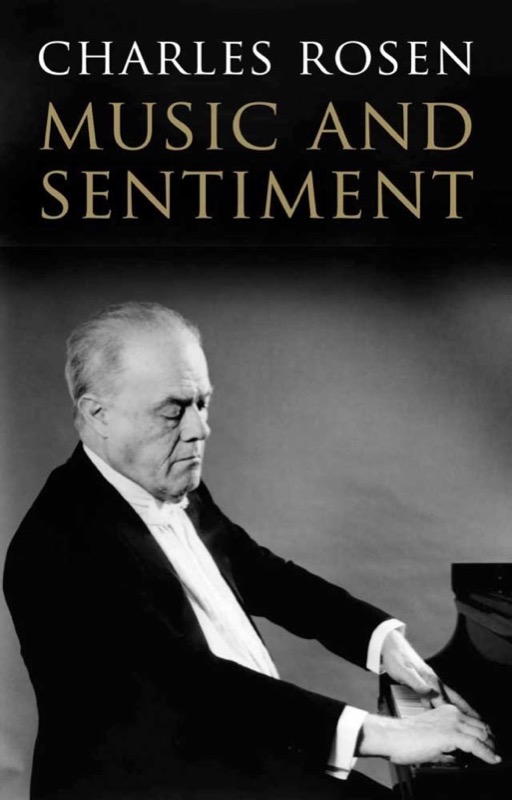
Cover of Charles Rosen’s Book
How did your collaboration with Paul Lewis begin? Recently, you both performed in tribute concerts to Alfred Brendel.
Paul and I met through the BBC New Generation Artists programme in 2000, and we immediately got on. We have similar artistic values and a similar sense of humour, which always helps. I’ve loved the concerts we’ve done together—they’ve been so comfortable and satisfying. You’ve got to like someone if you’re sitting so close to them!
Franz Schubert: Fantasie in F Minor, Op. 103, D. 940 (Paul Lewis, piano; Steven Osborne, piano)
Regarding Brendel, I grew up listening to his Schubert recordings, and I’ve been more influenced by his playing than by that of any other classical musician. His ability to characterise music made a deep impression on me. I also played for him once, and hearing him play up close was a revelation—it sounded so crude! It helped me understand that if the music sounds pretty where the pianist sits, the audience probably isn’t going to hear much of substance.
See Steven Osborne’s calendar: https://www.stevenosborne.com/concerts-steven-osborne
For more of the best in classical music, sign up for our E-Newsletter