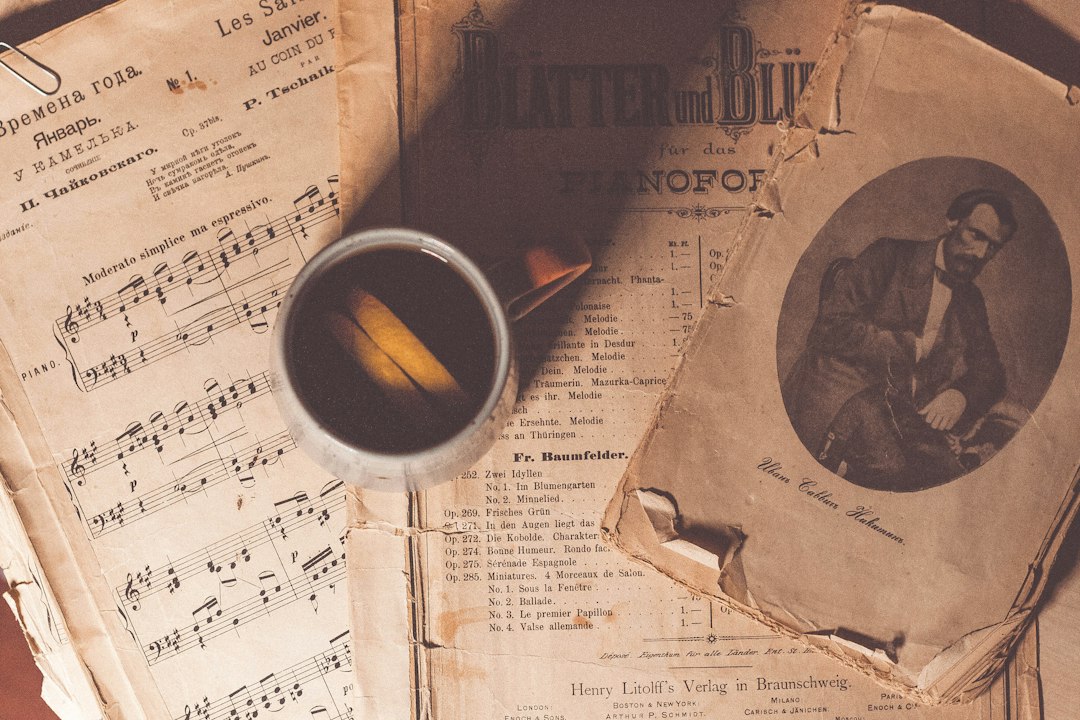
You are born into a musical family and begin piano lessons with your mother at the age of four. A year later, your parents get divorced because your mother runs away with another man, and consequently, your draconian father takes over your piano studies. He also makes sure you are well educated in religion and languages, and insists that you learn the violin and study music theory, harmony, counterpoint, composition, and orchestration.
You give your first solo debut performance at the Leipzig Gewandhaus at age eleven, and start composing at the same time, your first work being the Four Polonaises Op.1. At age twelve, you give your Paris debut, and also premiere Robert Schumann’s Papillons, having met the composer already as he has been studying with your father. At age 14, you give the premiere of your own piano concerto in A minor with the Leipzig Gewandhaus Orchestra, conducted by Felix Mendelssohn. You had conceived this concerto initially as a one-movement piece but later add the second and third movements, revising the work until it gets published when you turn 18. The uniqueness of this concerto is that the second movement is for piano and solo cello.
1838 is a significant year for you because that was when you came into the limelight as a concert pianist, having given a series of recitals in Vienna. It is also the time when you are madly in love with your future husband. But your overbearing father will not have it — he is hugely opposed to the relationship and will not give consent to marriage. During this period, your lover and you communicate only via letters, leading to him composing a piano work that many view not only as a declaration of love and longing for you but also an outburst of frustration at the fact that you cannot be together. However, like the coda of this composition, which conveys a glimpse of hope, you do end up marrying him after going through a messy court battle.

A Wedding
In this year of your marriage, you compose two songs, of which Am Strande was written as a Christmas gift to your husband for your first Christmas together as a married couple. The text is a German translation of Musing on the Roaring Ocean by Robert Burns and it describes the anxiety of a woman longing for her husband’s return.
Incidentally, all this time, you are actually far more successful and well-known than your husband, which was perhaps one of the reasons why your career-focused father was so opposed to the marriage. You pioneer playing solo recitals from memory and also was one of the first to include not only your own compositions but also music by other composers such as Bach, Chopin, Mendelssohn, and Brahms, not to mention bringing your husband into the public eye by regularly performing his works in your recitals.
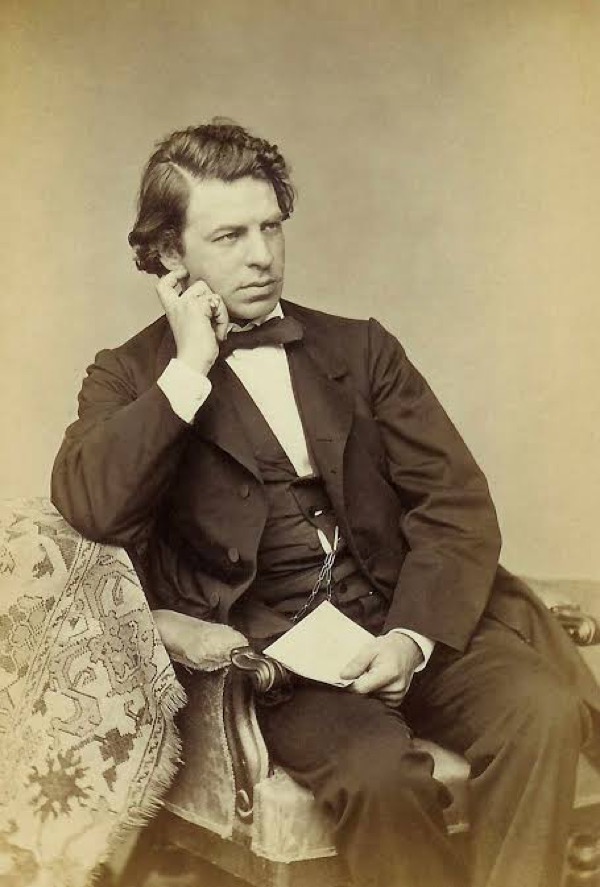
Joseph Joachim
Apart from being a solo musician, you also frequently perform with violinist Joseph Joachim; as a duo, your renditions of the Beethoven Sonatas are particularly well received. Music aside, you form a deep, lifelong friendship with Joachim and also with Brahms (whom you meet through Joachim), both of whom stand by you and help you through your husband’s mental illness and institutionalisation.
Your husband’s death in 1856 pretty much ends your composing career, though you continue to perform and tour. This was a real shame as you were clearly a prolific composer and enjoyed it — you wrote that ‘composing gives me great pleasure… there is nothing that surpasses the joy of creation, if only because through it one wins hours of self-forgetfulness, when one lives in a world of sound.’ Your husband also saw that and had remarked in your joint diary: ‘… to have children, and a husband who is always living in the realm of imagination, does not go together with composing. She cannot work at it regularly, and I am often disturbed to think how many profound ideas are lost because she cannot work them out.’ Though your output was mainly music for piano solo, your piano trio, written in 1846, remains one of your most celebrated works. You even wrote one song cycle together with your husband, Liebesfrühling (based on poems by Friedrich Rückert), of which three are yours (your Op.12) and the rest are his (Op.37).
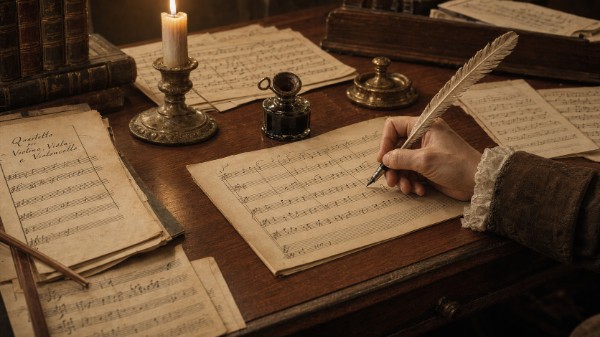
Truly a superwoman, you manage to somehow balance your domestic duties and your composing/teaching/performing career, seemingly unfazed by all the hardships you dealt with throughout your life: a dictatorial father who even supervised your diary entries until you were 18; a mother who left and only remained in contact through letters; a husband whose unstable mental health led to a suicide attempt before being confined to a mental asylum, and whom you were not allowed to visit until two days before his death; a son with mental illness which led to four decades of incarceration; and the deaths of four of your eight children. You are so loved and celebrated by your people that the 100 Deutsche Mark banknote issued in 1990 featured your picture, and this banknote was in use until the currency got replaced by the Euro.
You are… (Scroll down for the answer.)
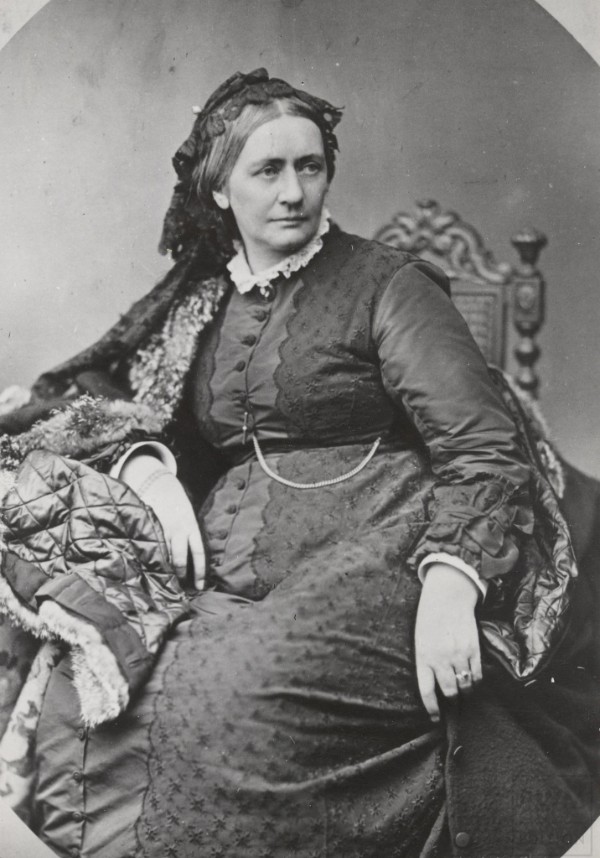
Clara Schumann
For more of the best in classical music, sign up for our E-Newsletter
Here are some of her compositions that you might like!
Clara Schumann: 4 Polonaises, Op. 1 (Angela Tirino, piano)
Clara Schumann: Piano Concerto in A Minor, Op. 7 (Ragna Schirmer, piano; Staatskapelle Halle; Ariane Matiakh, cond.)
Clara Schumann: Piano Trio in G Minor, Op. 17 (Ragna Schirmer, piano; Iason Keramidis, violin; Benedict Kloeckner, cello)
Clara Schumann: 3 Lieder, Op. 12 (Dorothea Craxton, soprano; Hedayet Djeddikar, piano)
Clara Schumann: Am Strande (Dorothea Craxton, soprano; Hedayet Djeddikar, piano)