Historically, April has been packed with pivotal moments in classical music history.
The month has seen the births of Russian giants like Sergei Rachmaninoff and Sergei Prokofiev, as well as the deaths of some of the world’s most famous composers, such as Brahms, Stravinsky, and Handel.
But April also contains a remarkable number of world premieres and historic performances that helped shape the symphony, opera, concerto, and sacred repertoire we still hear in concert halls today.
Today, we’re looking at 30 important classical music anniversaries in April – one for every day of the month – and celebrating a number of masterpieces that continue to be heard in concert halls around the world.
1 April 1873
Birth of Sergei Rachmaninoff
Rachmaninoff’s Piano Concerto No. 2
Born into an aristocratic Russian family, Sergei Rachmaninoff became one of the last great Romantic composers.
He was famous for his sweeping piano concertos, lush harmonies, and virtuosic pianism, which helped bridge the 19th and 20th centuries.
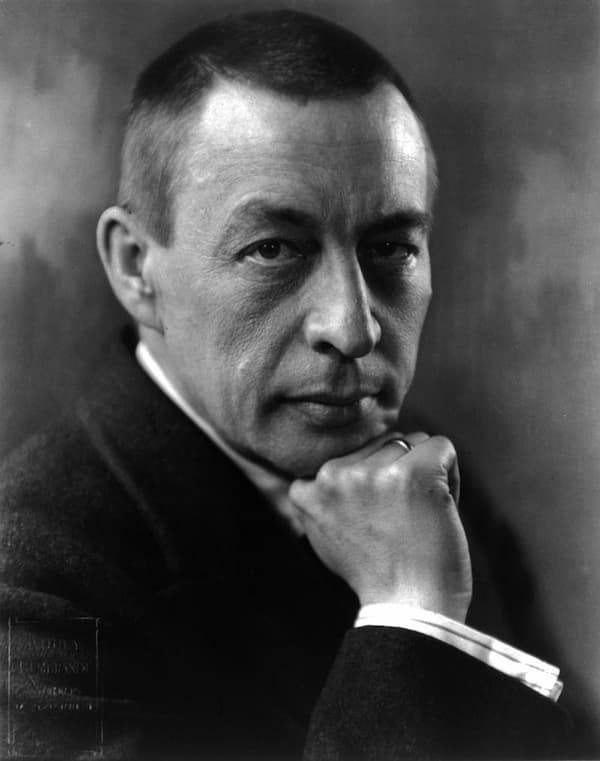
Kubey-Rembrandt Studios: Sergei Rachmaninoff, 1921
Read more about Rachmaninoff’s birthday.
2 April 1800
Premiere of Beethoven’s Symphony No. 1
Beethoven’s Symphony No. 1
On 2 April 1800, at Vienna’s Burgtheater, a 29-year-old Ludwig van Beethoven premiered his first symphony.
It was a work clearly inspired by Haydn and Mozart, while already hinting at the bold Beethovenian individuality that would soon upend the symphonic tradition.
3 April 1897
Death of Johannes Brahms
Brahms’s Symphony No. 3
Johannes Brahms was a composer who stood as both heir to Beethoven and guardian of the Romantic symphonic tradition.
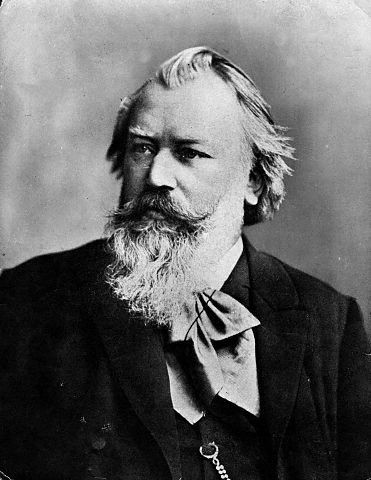
Johannes Brahms
His death in Vienna in the spring of 1897 marked the end of a career devoted to absolute music, unimpeachable craftsmanship, and carefully expressed emotions. In many ways, his death was the end of an era.
Learn about Brahms’s death from liver cancer.
4 April 1875
Premiere of Smetana’s The Moldau
Smetana’s The Moldau
Premiered in Prague, Bedřich Smetana’s symphonic poem The Moldau (from the cycle Má vlast) portrayed the geography of the Czech river’s journey, and became one of the most famous examples of musical nationalism in classical music history.
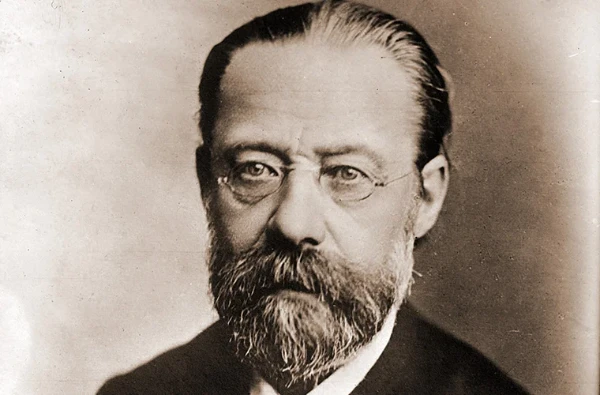
Bedřich Smetana
Discover more about the premiere.
5 April 1908
Birth of Herbert von Karajan
Karajan conducting Wagner’s Tannhauser Overture
Born in Salzburg in 1908, Herbert von Karajan became one of the most influential – and controversial – conductors of the 20th century.
As music director of the Berlin Philharmonic, he helped shape the orchestra’s sound for decades and dominated the classical recording industry during the LP era.
We looked at Karajan’s background and early life.
6 April 1971
Death of Igor Stravinsky
Stravinsky’s Rite of Spring
With the death of Igor Stravinsky in his New York apartment in 1971, the musical world lost a genuinely revolutionary figure.
His career spanned the styles of primitivism, neoclassicism, and serialism, and he was continually inventing and reinventing what modern music could sound like.
7 April 1805
Premiere of Beethoven’s Symphony No. 3
Beethoven’s Symphony No. 3
The premiere of Beethoven’s Third Symphony (nicknamed the “Eroica” or “Heroic”) shattered expectations of what a symphony could be.
With it, Beethoven expanded the genre’s scale and emotional range. Without it, nearly every Romantic-era work that followed would have been different.
Read about this hugely important premiere.
8 April 1692
Birth of Giuseppe Tartini
Tartini’s Devil’s Trill Sonata
Italian violinist-composer Giuseppe Tartini, famed for his virtuosic Devil’s Trill Sonata, was born in 1692 in present-day Slovenia, then a part of the Republic of Venice.
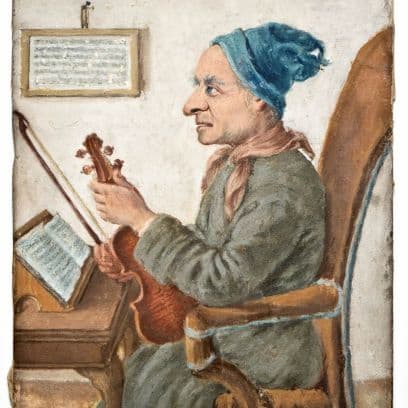
Giuseppe Tartini
He was a Baroque master whose technical innovations influenced generations of string players to come.
9 April 1887
Birth of Florence Price
Price’s Violin Concerto No. 2
Born in Little Rock, Arkansas, in 1887, Florence Price became the first African-American woman to have a symphony performed by a major American orchestra in 1933, when the Chicago Symphony Orchestra played her first symphony.
Her instantly recognisable style blends European Romanticism with spirituals and other uniquely American idioms.
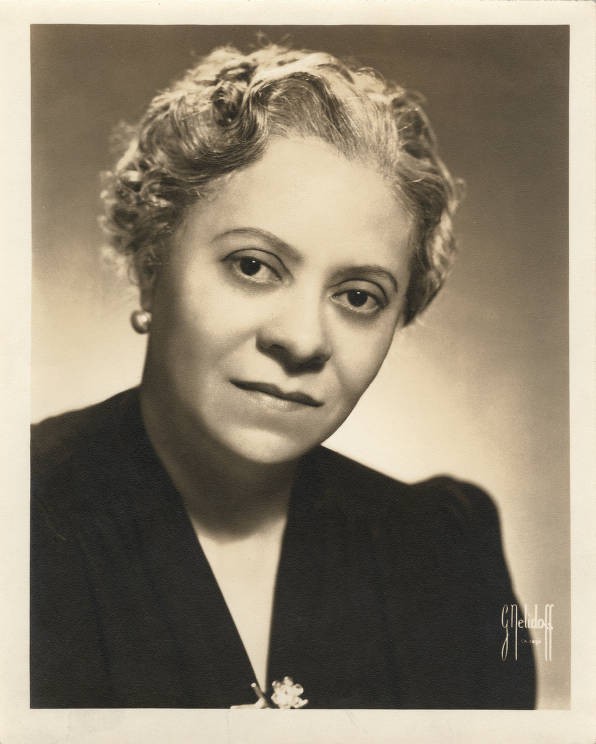
George Nelidoff: Florence Price
Learn more about Florence Price’s boundary-breaking first symphony.
10 April 1868
Premiere of Brahms’s German Requiem
Brahms’s German Requiem
The initial six-movement version of Johannes Brahms’s A German Requiem premiered in Bremen on Good Friday, 1868. (A longer version was presented the following February.)
It offers a beautiful humanistic meditation on mortality, using the Lutheran Protestant tradition that Brahms had been raised in, as opposed to a more foreboding traditional Latin Masses for the dead.
It is his longest work, and one of his most personal.
Discover the story about the Brahms’ A German Requiem and the premiere of the longer seven-movement version.
11 April 1727
Premiere of Bach’s St. Matthew Passion
Bach’s St. Matthew Passion
Johann Sebastian Bach’s St. Matthew Passion was first heard in Leipzig on Good Friday 1727.
It is a monumental sacred drama that remains one of the towering achievements of Western music.
We looked at why some listeners were sceptical of the St. Matthew Passion, now universally acknowledged to be a masterpiece.
12 April 1907
Birth of Imogen Holst
Imogen Holst’s Suite for Unaccompanied Viola
Daughter of Gustav Holst, Imogen Holst forged her own distinguished career as a composer, conductor, pianist, teacher, musicologist, and more, championing early music and serving as a close collaborator with one of her best friends, Benjamin Britten.
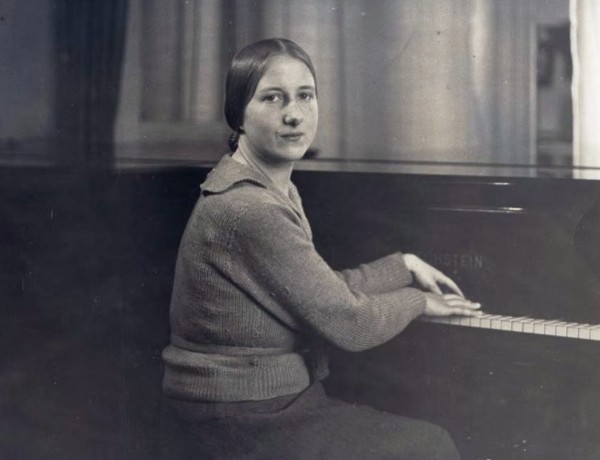
Imogen Holst
Read and find out about Imogen Holst’s background and her gorgeous choral works.
13 April 1377
Death of Guillaume de Machaut
de Machaut’s “Puisqu’en oubli”
The death of Guillaume de Machaut, one of the leading composers and poets of the medieval Ars Nova, closed a chapter in 14th-century music that shaped the development of polyphony – and therefore, classical music as we know it.
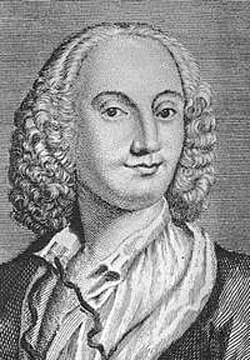
Guillaume de Machaut
We wrote about de Machaut’s strange and striking work Le Livre dou Voir Dit, which he wrote in his sixties about a fictitious 19-year-old woman.
14 April 1759
Death of George Frederic Handel
Handel’s Water Music
Handel may have been born in present-day Germany, but he moved to Britain in 1712 and contributed immeasurably to early 18th-century British musical life and culture.
His operas and oratorios – especially his 1741 English-language oratorio Messiah – secured his lasting place not just on the stages of Britain, but the world.
Take a look at the circumstances behind Handel’s death.
15 April 1924
Birth of Neville Marriner
Marriner’s performance of Elgar’s “Nimrod” from the Enigma Variations
British conductor Sir Neville Marriner, born in Lincoln, England, founded the Academy of St. Martin in the Fields, making a huge number of recordings with them that became standard listening for classical music lovers of the late twentieth century.
He became a leading figure in historically informed performance and was one of the most recorded conductors of all time.
16 April 1791
Premiere of the revised version of Mozart’s Symphony No. 40
Mozart’s Symphony No. 40
Musicologists believe that the revised version of Wolfgang Amadeus Mozart’s legendary Symphony No. 40 in G minor – now including clarinets – was likely heard in Vienna on this date in 1791.
The work was one of the most dramatic symphonies of the Classical era.
In 2025, we looked at the most popular Mozart symphonies on YouTube. Find out where Mozart’s fortieth ended up on the list.
17 April 1882
Birth of Artur Schnabel
Schnabel’s performance of Beethoven’s Piano Concerto No. 4
Pianist Artur Schnabel, born in what is now Poland in 1882, became one of the 20th century’s most revered interpreters of Beethoven, Schubert, and other Viennese composers.
He was admired by his listeners and his colleagues for his intellectual depth over flashy virtuosity.
Learn about Schnabel’s fascinating life, and his unthinkable losses during the Nazi regime.
18 April 1944
Death of Cécile Chaminade
Chaminade’s Concertino for Flute
French composer and pianist Cécile Chaminade, widely celebrated in her lifetime, left behind a rich body of salon pieces and songs, as well as a piano sonata and this famous Concertino.
Though some critics later dismissed her music as lightweight, she was one of the most famous and successful women composers of her generation. Plus, all of her music is absolutely beguiling.
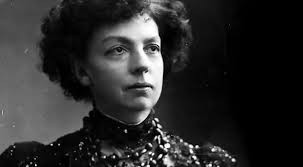
Cécile Chaminade
We included Chaminade on our list of French women composers in the Romantic era.
19 April 1892
Birth of Germaine Tailleferre
Tailleferre’s Petite suite pour orchestre
The only female member of Les Six, Germaine Tailleferre was born in Paris. She contributed wit, clarity, and neoclassical elegance to 20th-century French music.
Read about the traumas and lifelong struggles Tailleferre faced.
20 April 1910
Premiere of Ravel’s Ma Mere l’oye
Ravel’s Ma Mere l’oye
Maurice Ravel’s Ma Mère l’Oye (Mother Goose) premiered in its original piano duet form on 20 April 1910, immediately enchanting audiences.
He later reworked this series of delicate fairy-tale-inspired miniatures into a fully orchestrated ballet.
Learn more about the ballet Ma Mere l’oye, and why it’s a unique highlight of Ravel’s catalog.
21 April 1749
First public rehearsal of Handel’s Music for the Royal Fireworks
Handel’s Music for the Royal Fireworks
In April 1749, over 12,000 people flocked to Vauxhall Gardens to hear a public rehearsal of Handel’s Music for the Royal Fireworks, a grand outdoor spectacle created to celebrate the Treaty of Aix-la-Chapelle.
Handel didn’t want this to be the public premiere, but this performance in the park ended up becoming a de facto one.
22 April 1858
Birth of Ethel Smyth
Ethel Smyth’s Overture from The Wreckers
English composer and suffragette Ethel Smyth was born in Surrey on 22 April 1858. She would later gain fame for her opera The Wreckers and her anthem “The March of the Women.” Her spirit of brave independence was legendary and chronicled in her delightful memoirs.
Interestingly, although she was born on April 22nd, she celebrated on April 23rd, because she and her family liked to celebrate it on Shakespeare’s birthday.
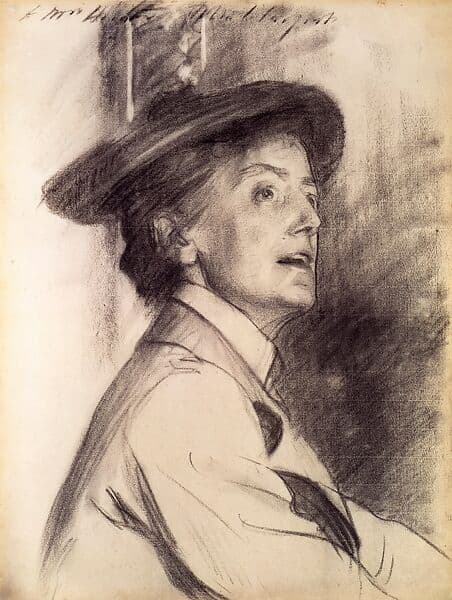
John Singer Sargent: Portrait of Dame Ethel Mary Smyth
Read about Smyth’s relationship with her beloved dog Marco, who met Brahms, Tchaikovsky, and others.
23 April 1891
Birth of Sergei Prokofiev
Prokofiev’s Romeo and Juliet Suite
Born in present-day Ukraine, Sergei Prokofiev became one of the 20th century’s most distinctive voices.
He blended biting modernism with aching lyricism in works from his sinister ballet Romeo and Juliet to the educational Peter and the Wolf, a charming piece that introduces children to the instruments of the orchestra.
Learn more about Prokofiev’s early life and childhood.
24 April 1948
Death of Manuel Ponce
Manuel Ponce’s Intermezzo No. 1
Mexican composer Manuel Ponce, known for integrating folk melodies into classical forms and for his collaborations with guitarist Andrés Segovia, died in Mexico City on 24 April 1948.
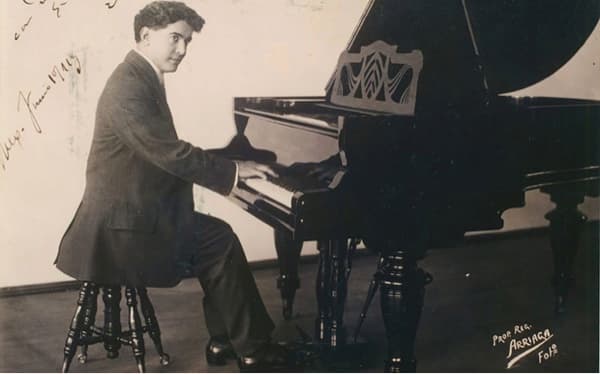
Manuel Ponce
25 April 1906
Death of John Knowles Paine
Paine’s Concert Variations on “The Star Spangled Banner”
American composer John Knowles Paine, a key figure in establishing classical music education in the United States and a member of the so-called “Boston Six,” passed away on this day, 25 April 1906.
He taught at Harvard for decades, until the year before his death.
26 April 1951
Death of John Alden Carpenter
Carpenter’s Impromptu from 2 Piano Pieces
Chicago-born composer John Alden Carpenter, remembered for works like Krazy Kat and his jazz-influenced orchestral writing, died in 1951.
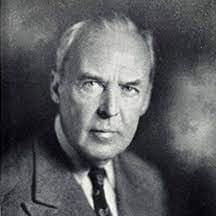
John Alden Carpenter
Discover his unique work, “Adventures in a Perambulator”, a portrait of the life experiences of his young daughter.
27 April 1915
Death of Alexander Scriabin
Scriabin’s Etude, Op. 42, No. 5
The death of Russian mystic-composer Alexander Scriabin cut short a visionary career that fused late Romantic harmony with synesthetic philosophy and radical tonal experiments.
He was also unlucky enough to have one of the strangest deaths in classical music history: he died from an infection that started with a pimple on his upper lip.
Read the full story about Scriabin’s strange death.
28 April 2013
Death of János Starker
A János Starker recital
Hungarian-American cellist János Starker, celebrated for his technical precision and clarity of tone, died at 88 after a long performing and teaching career.
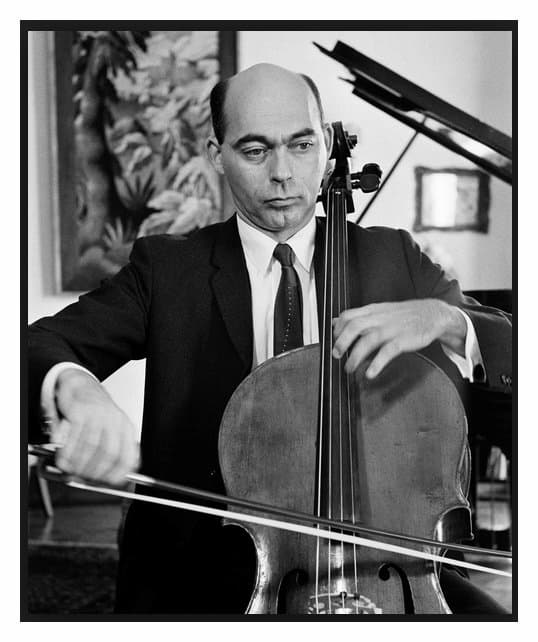
János Starker
Trace the life of János Starker in this article.
29 April 1879
Birth of Sir Thomas Beecham
Sir Thomas Beecham: Interview and Rehearsal
English conductor Sir Thomas Beecham was born in Lancashire to a wealthy family on 29 April 1879. Instead of going into the family business (selling laxatives), he went into music instead.
He later founded the Royal Philharmonic Orchestra and became one of Britain’s most colourful musical personalities.
30 April 1902
Première of Debussy’s opera Pelléas et Mélisande
Debussy’s Pelléas et Mélisande
The Paris premiere of Claude Debussy’s opera Pelléas et Mélisande introduced a new kind of musical drama to Parisian stages: strange, subtle, atmospheric, psychological, and revolutionary in its rejection of grand Romantic excess.
Not everyone was a fan (fellow composer Camille Saint-Saëns reportedly skipped his summer vacation to badmouth the opera and its composer), but it was a milestone of 20th-century opera, and it is still heard today.
Conclusion
Taken together, these April anniversaries reveal the astonishing range of classical music history – from medieval polyphony and Baroque spectacle to Romantic symphonies, nationalist tone poems, and modernist opera.
Whether you’re revisiting Beethoven’s Eroica Symphony, Ravel’s Ma Mère l’Oye, Debussy’s Pelléas et Mélisande, or discovering composers like Florence Price and Ethel Smyth, April offers a musical journey through centuries of creativity.
Every day of the month holds another milestone – and, happily, another excuse to listen!
For more of the best in classical music, sign up for our E-Newsletter