Today, Amalie Joachim is often remembered solely as being the wife of violinist Joseph Joachim: an injustice, given her own era-defining musical talents.
Their messy divorce is known among classical music lovers as the inciting event that nearly destroyed Joachim’s relationship with Johannes Brahms, a composer who had always taken deep inspiration from Joachim’s artistry.
However, Amalie Joachim was one of the great artists of her age in her own right.
Today, we’re looking at her life, career, and inspirational musicianship.
Amalie’s Childhood – And How It Was Shattered
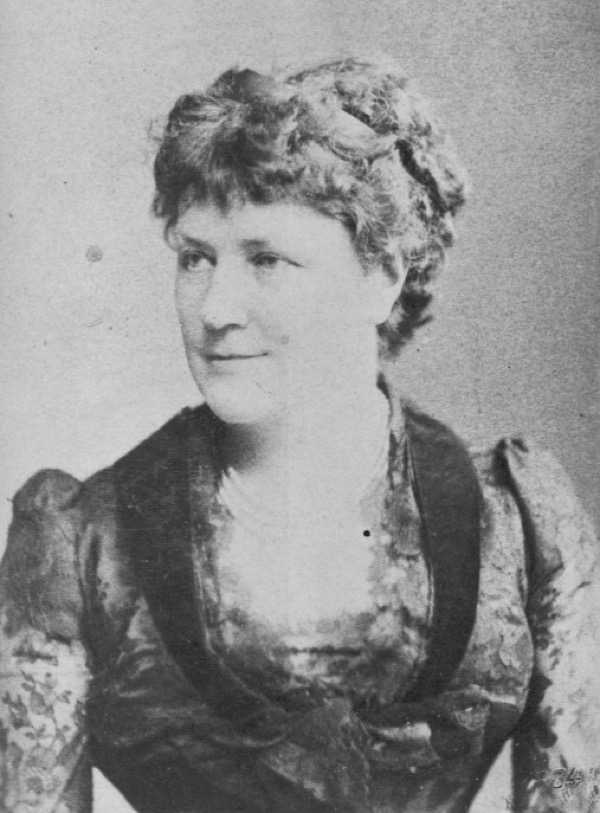
Amalie Joachim
Amalie Joachim was born Amalie Marie Schneeweiss on 10 May 1839 in Maribor in the Austrian Empire, in present-day Slovenia.
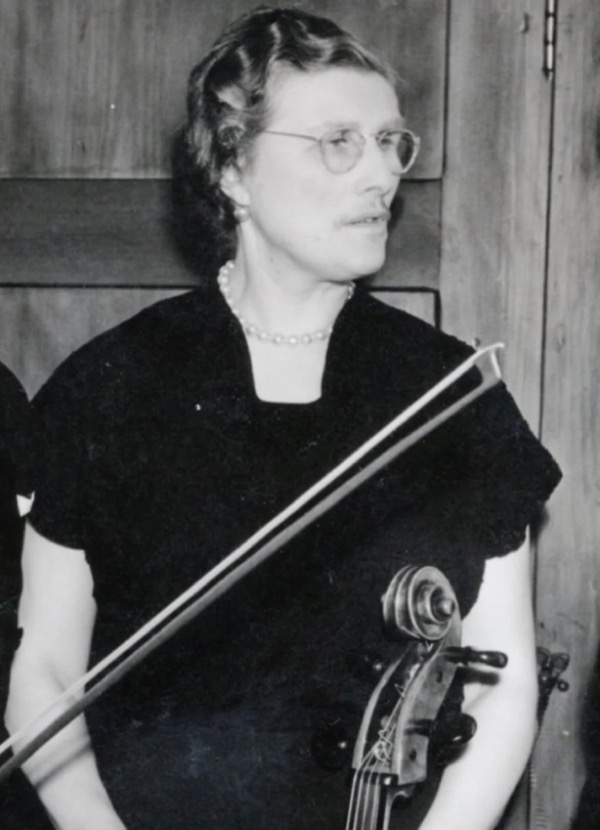
Her father was a civil servant and an amateur violinist, and her mother was an amateur singer. She had a pianist sister and a cellist brother.
Amalie was also musical. According to her autobiography, she started studying singing with an elderly cantor when she was just three years old.
Her idyllic childhood was shattered during the Hungarian Revolution of 1848.
After democratic reforms had been enacted into law in Hungary, the new Austrian monarch, Franz Joseph I, rolled them back. Eventually, the war evolved into a war of independence for Hungarians.
Amalie’s brother chose to fight with the Hungarians against the Austrians. The choice had consequences for his entire family, and her father was dismissed from his court position.
In the early days of the conflict, it seemed like the revolutionaries might win. However, after the embattled Franz Joseph allied with Nicholas I of Russia, the allied armies crushed the resistance. Hungary was placed under martial law.
Amalie’s brother fled to the United States, but the family didn’t hear from him again and assumed he was dead.
Death of Her Father and Finding Her Voice
The upheaval had only just begun. In 1851, her father died, leaving a destitute widow and two children. The women in the family were forced to sew to survive.
The Schneeweiss family moved to Graz, Austria, in the early 1850s, hoping to receive support from family. They never got it.
However, Amalie did start studying with a vocal teacher, Julie von Franck, at the Municipal Conservatorium. Because it was a municipal institution, the lessons were free. Despite still being a child, she also started giving lessons herself.
She made her public debut as a singer in 1853 at the age of 14.
Her Professional Breakthrough and Her Marriage
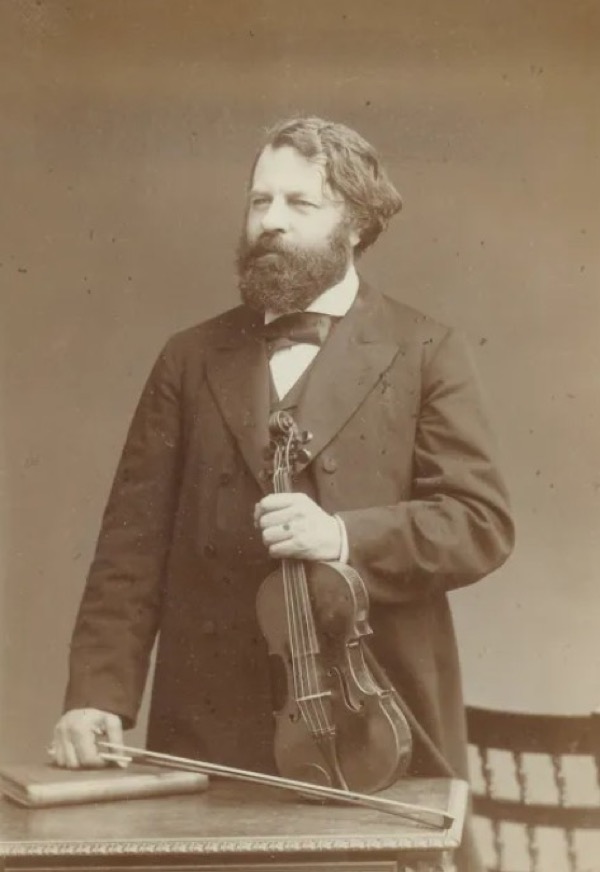
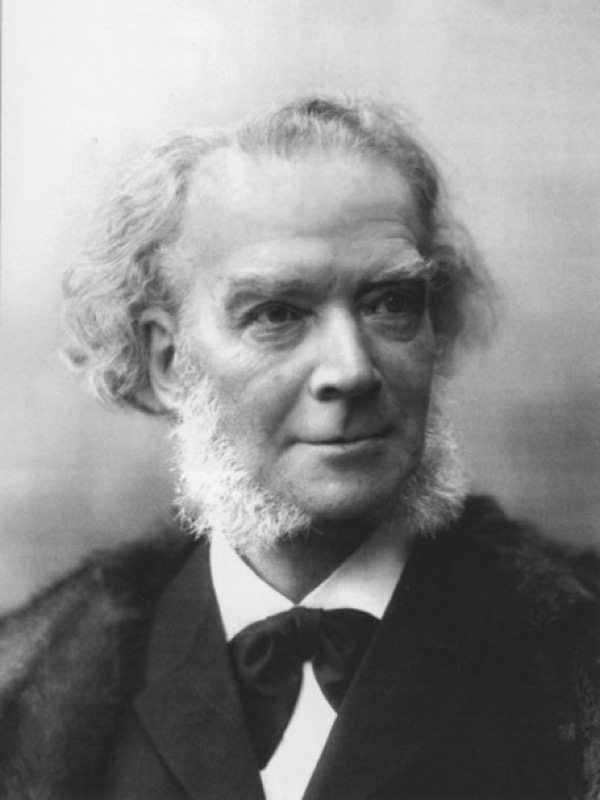
Joseph Joachim, Amalie’s husband
Between 1854 and 1862, Amalie appeared, albeit always in minor roles, at the Kärntnertortheater (the Carinthian Gate Theatre) in Vienna.
At the same time she was attempting to embark on a career, the health of her mother and siblings deteriorated. She went into debt to pay for their medical bills and, later, funerals.
But in April 1862, she finally had her professional breakthrough when she debuted at the Hanover State Opera.
While there, she met and hit it off with Joseph Joachim, the prodigy-turned-concertmaster of the Hanover orchestra. She was 23, and he was 31.
Their romance developed quickly. By February of 1863, Joachim was writing to friends announcing the engagement.
He warned Brahms, “Do not run away with the usual notions which are unfortunately connected with the life in our operatic circles…her mind and her appearance have remained simple and refined.”
Despite the reservations of Joseph’s family, they married in June 1863 in a storybook wedding. The Queen of Hanover was a guest.
Motherhood
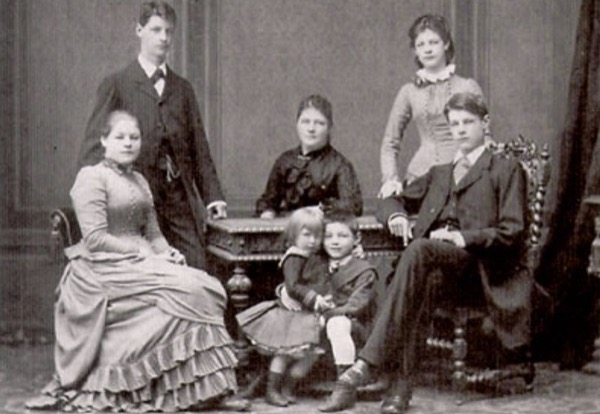
Amalie Joachim and her children
Amalie Joachim would have six children with Joachim. Between 1864 and 1869 alone, she had four. (Their first baby was named Johannes after Brahms.) She went on to have two more children in 1877 and 1881.
Joachim discouraged her from pursuing her career: a difficult proposition, as she had finally made her long-awaited professional breakthrough just before her marriage and motherhood.
The domestication of her life seemed to take a toll on her mental health.
In late 1865, when she was eight months pregnant with her second baby, she wrote to Clara Schumann:
“I am so sorry for Jo, buried here in dull Hanover, by the side of an unskillful housewife…[who] does not suffice him in other directions, as an artist – still less stimulate and inspire him!”
Despite her considerable professional accomplishments, she clearly felt pressured to measure her own worth as a housewife and not take into account all she had accomplished as a great singer: a disconnect that undoubtedly contributed to her declining mental and physical health.
After her pregnancies, she became ill with rheumatism that was so severe that she had to use a cane to get around. She also had gained weight. Tensions escalated between her and her impatient husband.
Even in 1867, when the family relocated to Berlin so he could take a leadership role at the Royal Academy of Music, Joseph dismissed the idea of her being involved as a teacher.
Return to the Stage
By the early 1870s, Amalie decided she had to return to performance for her mental health.
At the time, it was considered improper for married women to appear on the operatic stage; fears ran rampant about the “loose morals” of young, attractive opera stars.
Instead, Amalie shifted her attention to performing in recitals and oratorios. She herself vowed in 1868 that she would not return to the opera stage, writing passionately, “They always say whoever was in the theatre can’t leave and must return. God protect me from such idiotic sickness.”
Diana Damrau Sings Robert Schumann’s Frauenliebe und Leben
For the rest of her career, reviewers would focus on the spiritual qualities of her musicianship. In 1879, one characteristic review was:
“Amalie Joachim sang Schumann’s ‘Frauenliebe und Leben.’ It is unnecessary to remark that the highly poetic or rather authentically warm and human interpretation of this singer brought Schumann’s songs, perhaps the most beautiful ones there are, to such an advantageous conclusion that the listening audience completely forgot their surroundings; many an eye was moist. These songs, sung like this, are almost too beautiful for concert performance; and yet, on the other hand, one might like the whole world to be present and share in this deep spiritual pleasure.”
How Amalie Inspired the Great Composers
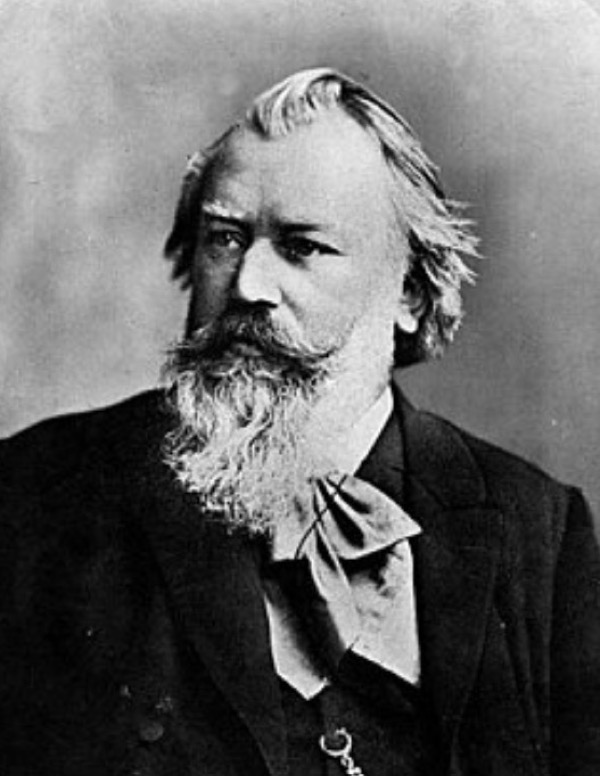
Johannes Brahms
Max Bruch’s Odysseus
Amalie became an inspiration to the greatest composers of the day. Max Bruch wrote alto parts in his “Odysseus” and “Achilleus” oratorios for her. Brahms wrote vocal music for her, too.
Over the course of her career, she also championed recital works by up-and-coming contemporary composers like Richard Strauss, Gustav Mahler, and Hugo Wolf, as well as women composers like Louise Reichardt, Clara Faisst, and Clara Schumann.
She also performed in the world premiere of Mahler’s Des Knaben Wunderhorn.
Gustav Mahler’s Des Knaben Wunderhorn
She wasn’t just satisfied with pushing boundaries with new repertoire; she also pushed boundaries with new concert formats.
In 1891, she teamed up with musicologist Heinrich Reimann to create innovative programs about the history of German song. These sought to bridge the gap between folksong people might have heard at home and the more refined, sophisticated high-art lieder.
She toured around the world presenting these programs, including in the United States, no small journey in the late nineteenth century.
She began teaching around 1885 in Berlin and eventually began her own singing school. She continued her outside-the-box thinking by working with respiratory therapists.
While in Berlin, she founded a subscription concert series focused on exploring German lied.
Divorce
In 1884, after years of conflict, Joseph filed for divorce, accusing Amalie of cheating with Brahms’s music publisher, Fritz Simrock.
However, Brahms opposed the divorce, and in 1880, he even wrote a letter to Amalie expressing his support for her during her and Joseph’s fights. She asked if she could use the letter as a character witness, and he said yes.
After Amalie used the letter in the divorce trial, Joseph lost the court battle. He felt bitterly betrayed by Brahms, and although he still continued to perform Brahms’s music, the two didn’t communicate much for years.
Amalie Joachim faced an uphill battle when it came to re-establishing her career. Her husband was incredibly influential in the music world, and many musicians didn’t want to risk upsetting him.
Joachim playing Brahms’s Hungarian Dance No. 2 in 1903
Her Early Tragic Death – and Legacy
In February 1899, she died in Berlin during a gallbladder surgery. She was sixty years old. Joseph died in 1907.
The couple is buried next to each other in a Berlin cemetery.
Thankfully, Amalie Joachim’s legacy extends far beyond the scandal that once overshadowed her name.
As one of the nineteenth century’s most influential vocal artists, she helped redefine the recital tradition, shaped the performance of German lied, and championed both new music and innovative concert formats decades ahead of their time.
Her collaborations with composers such as Brahms and Bruch, her advocacy for emerging voices, and her forward-thinking approach to pedagogy and vocal health mark her as a central figure in musical modernity rather than a peripheral one.
Remembering Amalie Joachim on her own terms restores her to her rightful place as a pioneering artist whose impact continues to resonate in vocal performance and programming even today.
For more of the best in classical music, sign up for our E-Newsletter