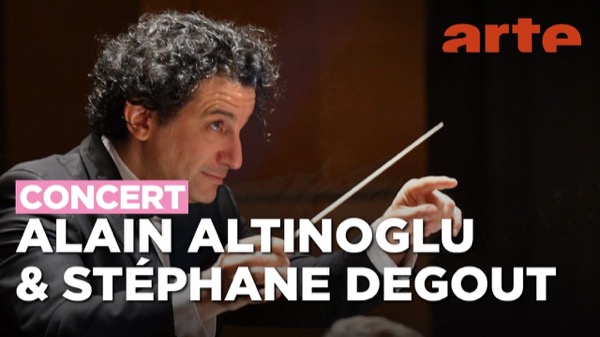
At the Opéra national du Rhin, Stéphane Degout sings the title role under the direction of Ingo Metzmacher in the revival of Albéric Magnard’s opera Guercoeur. The manuscript of the work was partly destroyed when German troops burned down Magnard’s house in 1914, but it was later reconstructed by his close friend Guy Ropartz for its 1931 première.
Guercoeur is a knight and freedom fighter who meets an early death and ends up in heaven. However, his soul is unable to rest and begs to be returned to earth. But he will be bitterly disappointed.
Framed by Christof Loy’s austere staging, which explores the boundaries between the two worlds, the production probes a post-Wagnerian sound world in an atmospheric fin-de-siècle lyrical tragedy.
Albéric Magnard: Guercoeur
Available until 21/04/2027
Albéric Magnard
Albéric Magnard
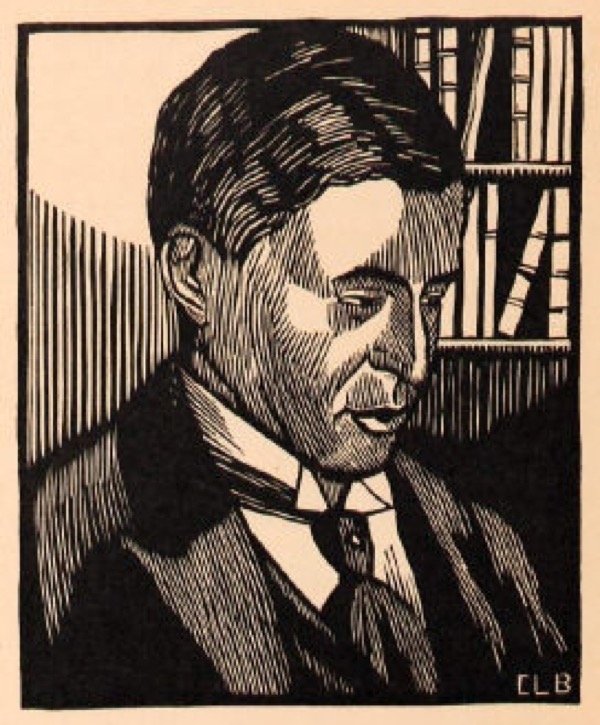
Albéric Magnard, born on 9 June 1865 in Paris, was a fiercely independent composer, symphonist, and opera creator. He was born into wealth, as his father, Francis Magnard, was the influential editor of Le Figaro.
He deliberately resisted privilege and visited the Bayreuth Festival. After hearing Tristan und Isolde, he devoted himself to music with a boundless idealism, and studied at the Paris Conservatoire. Among his teachers, we find Jules Massenet (composition), Théodore Dubois (counterpoint/harmony), and most importantly, Vincent d’Indy (orchestration and fugue).
Magnard composed four symphonies and wrote three operas to his own librettos. He self-published much of his music, hesitated to promote it, and had few performances and little success during his lifetime. Partial deafness later in life contributed to his isolation.
The French Bruckner
Ruins of Magnard’s house at Baron
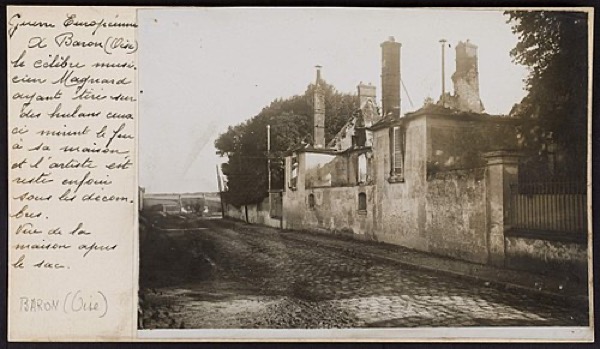
Magnard was killed when German troops entered his property, and his house was set on fire. His early opera Yolande and parts of Guercoeur, alongside other unpublished music, were destroyed in the blaze.
The surviving music has a reputation for excessive austerity, featuring tightly woven counterpoint and a luminous orchestra, but his burning sincerity and spirituality earned him the nickname the “French Bruckner.”
In his operas, Magnard followed Wagner‘s conception, yet his thought was more formally symphonic and his harmony less chromatic. His leitmotifs never depict objects but delineate emotional and spiritual states.
Paradise Lost and Ideals Betrayed
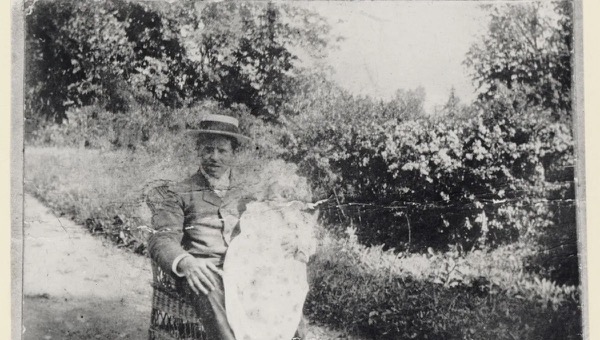
Albéric Magnard
Guercœur was composed between 1897 and 1901 to Magnard’s own libretto. It reflects Magnard’s own worldview by blending allegory, political idealism, and metaphysical reflection. He was a committed republican and agnostic who greatly distrusted political opportunism and deeply believed in moral responsibility.
The libretto unfolds across three acts and five tableaux, and instead of descending into the underworld for love, Guercœur returns to life on earth. He had been the democratic leader of a free city in medieval times, but sadly died young.
Paradise is ruled by the goddess Truth (soprano), and Guercoeur (baritone) remains dissatisfied. He still yearns for the love of his wife Giselle (mezzo-soprano), the friendship of his companion-in-arms Heurtal (tenor), and for the people he led to freedom.
The goddess Suffering (contralto) returns him to earth, where he discovers Giselle guiltily cohabiting with Heurtal, who has made himself a dictator, manipulating and enslaving the people through demagoguery.
Guercoeur forgives the faithless Giselle, but is lynched by Heurtal’s supporters and returns to Paradise sadder and wiser, aware that his achievement was but one transient symbol among those that inspire future generations to seek love and liberty and thus aid the development of the human race.
Restoring a Lost Vision
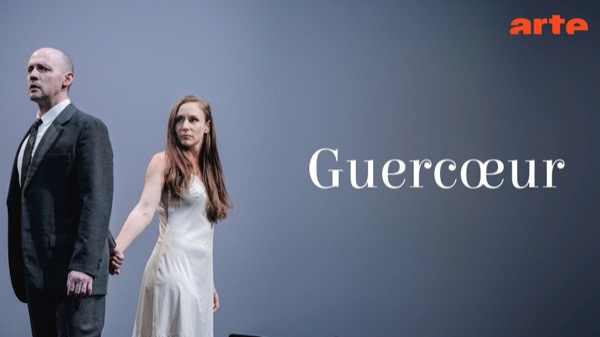
Guercoeur, Opéra national du Rhin (ARTE)
As Acts I and II are set in heaven inhabited by personified virtues, Magnard’s music has a grave and static quality that is indebted to Parsifal. The human world in Act II, however, glitters with the passion of Berlioz at his best. And for the various scene changes, Magnard composed substantial interludes in a probing symphonic style.
This 2024 Opéra national du Rhin production, filmed and distributed by ARTE, was greeted with overwhelmingly enthusiastic reviews. It was seen by many as the rediscovery of a neglected masterpiece anchored by Ingo Metzmacher’s ability to make the unfamiliar score feel compelling.
Stéphane Degout, in the title role, was described as exceptional, and his performance was called a true achievement. The depth of his singing and acting was seen as deeply expressive in portraying Guercoeur as a deeply loving idealist crushed by reality.
With a strong supporting cast and chorus, including the Strasbourg Philharmonic and Christof Loy’s restrained and minimalist staging, this production deserves to be seen and heard far more widely.
For more of the best in classical music, sign up for our E-Newsletter