
English composer Ernest Tomlinson (1924-2015) was noted as a composer of light music, and with the rise of pop music, found that organisations all over Britain, from the BBC to theatre, were discarding their Light Music collections. Appalled, he started to collect and save this repertoire and founded the Library of Light Orchestral Music.
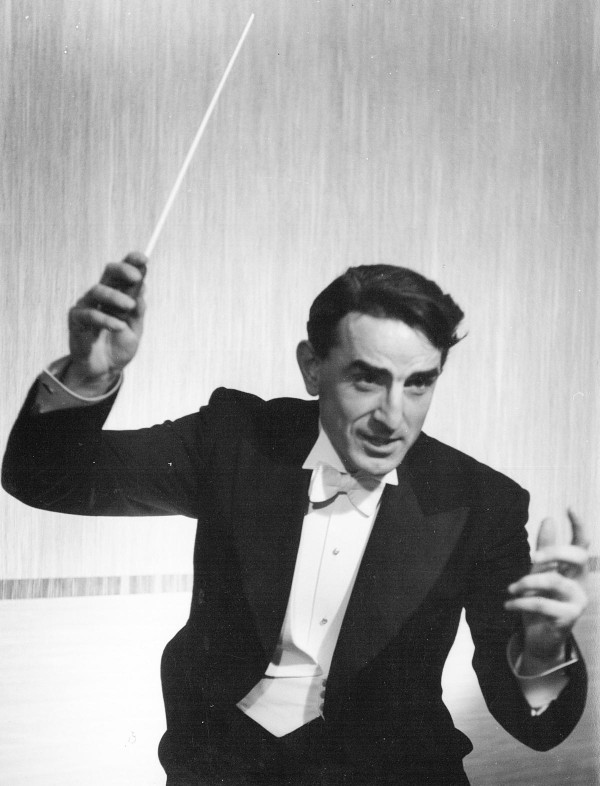
Ernest Tomlinson
What is light music? It was a genre of classical music that came to the fore in the 18th and 19th centuries, lasting until the mid-20th century. These were (generally) through-composed pieces or suites that appealed to an audience that wanted classical music but didn’t want to sit through a concerto, a symphony, or an opera. Although the genre has generally faded from sight, there’s an enormous body of it lurking on the edges of your perception.
The emphasis is on melody and distinctive musical textures. One writer summarised it as ‘original orchestral pieces’ consisting of ‘three or four minutes of music with an arresting main theme and a contrasting middle section’
Think of all the films where a little Johann Strauss II didn’t go amiss, or where you needed music for the seaside. The genre began in the 1920s, and in 1945, the BBC Light Programme came on the air. We can see a continuing love for the genre in the Proms Concerts, particularly during the Last Night of the Proms.
Ernest Tomlinson capped the genre with his Fantasia on Auld Lang Syne, written in 1976, the 19-minute work that encapsulates the idea of light music by combining over 120 pieces of music as a fantasy based on Auld Lang Syne.
It was commissioned by the French Instrument Buffet Crampon as a finale for the 5th World Saxophone Congress in 1976. It was originally written for 16 saxophones. In Tomlinson’s words, his ‘brief was for a work enjoyable by the knowledgeable musicians who participated in the Congress and by … other interested parties…’. The ensemble performing the work consisted of the London Saxophone Quartet on the conductor’s right, The Peter Hughes Saxophone Quintet (a jazz group) on the conductor’s left, and in the centre, one each of all the members of the Saxophone family, from Sopranino to Soprano, Alto, Tenor, Baritone, Bass, and a seven-foot high Contrabass saxophone that was brought over from Paris just for the concert.
By the next year, it had been orchestrated, and there is also an arrangement for ‘two pianos and two turn-overs’ (presumably page turners). A final arrangement was made by the composer for concerto band.
The work is yet another example of a quodlibet, where multiple melodies are combined and intertwined. (We’ve seen earlier ones in Mozart’s Don Giovanni, for example).
The composer said he used 129 works in his Fantasia, but when it came time to create a list, we could only get up to 126.
It’s a remarkable overview of music, ranging all over Europe, Russia, North and South America, Australia, but, unfortunately, little from Asia. For listeners, it’s a challenge of naming that work that is just on the tip of your tongue!
Can you get them? First, here’s the work as recorded
Ernest Tomlinson (1924-2015) : Fantasia on Auld Lang Syne, for orchestra (1976)
- Auld Lang Syne
- Old Folks at Home / Swanee River by Stephen Foster
- Soldier’s Chorus from Faust by Charles Gounod
- Prince of Denmark’s March, Trumpet Voluntary by Jeremiah Clarke
- The British Grenadiers
- Men of Harlech
- Go In and Out The Window / So Early in the Morning
- Overture to William Tell by Gioachino Rossini
- Rakes of Mallow
- She’ll Be Coming Around the Mountain
- The Irish Washerwoman
- Symphonic Variations by César Franck
- Piano Sonata No. 2 in B flat minor: III. Marche funèbre: Lento by Frédéric Chopin
- Engima theme from Enigma Variations by Edward Elgar
- Ode to Joy from Symphony No. 9 in D minor, “Choral”, by Ludwig van Beethoven
- St. Anthony Chorale attributed to Joseph Haydn
- The Young Person’s Guide to the Orchestra: Theme (Rondeau from Abdelazer by Henry Purcell) by Benjamin Britten
- 24 Caprices, Op. 1, No. 24 in A Minor: Tema con Variazioni: Quasi presto by Niccolò Paganini
- Piano Quintet in A major, D. 667, The Trout: IV. Andantino – Allegretto by Franz Schubert
- Symphony No. 94 in G major, Surprise, II. Andante, by Joseph Haydn
- Jesu, Joy of Man’s Desiring from Herz und Mund und Tat und Leben, BWV 147 by J.S. Bach
- Londonderry Air (Danny Boy)
- La Golondrina by Narciso Serradell Sevilla
- Humoresque No. 7 by Antonín Dvořák
- Beautiful Dreamer by Stephen Foster
- Symphony No. 6 in B minor, Pathétique: III. Allegro molto vivace by Pyotr Ilyich Tchaikovsky
- A Life on the Ocean Wave by Henry Russell
- Victory at Sea by Richard Rodgers, orchestrated by Richard Rodney Bennett
- Spartacus Suite No. 2: I. Adagio of Spartacus and Phrigia by Aram Khachaturian
- The Hebrides in D Major, Op. 26, Fingal’s Cave, by Felix Mendelssohn
- Wintermärchen, Op. 366 (Hearts and Flowers) by Alphons Czibulka
- Piano Sonata No. 16 in C major, K. 545: II. Allegro by W.A. Mozart
- Solomon, HWV 67: Act III. Arrival of the Queen of Sheba by George Frideric Handel
- Over the Hills and Far Away
- Swan Lake: Danse des petits cygnes by Pyotr Ilych Tchaikovsky
- The Well-Tempered Clavier: Fugue No. 2 in C minor, BWV 847, by J.S. Bach
- The Keel Row
- Phil the Fluter’s Ball by Percy French
- Overture to Carmen by Georges Bizet
- Tom, Tom, the Piper’s Son / Do You Know the Muffin Man
- This Old Man
- Alfred: Rule, Britannia! by Thomas Arne
- The Floral Dance by Katie Moss
- Frühlingsstimmen (The Voices of Spring) by Johann Strauss II
- Les Patineurs (The Skater’s Waltz) by Émile Waldteufel
- Kaiser-Walzer (Emperor Waltz) by Johann Strauss II
- Künstlerleben (Artist’s Life) by Johann Strauss II
- Home on the Range by Daniel E. Kelley
- Swan Lake: Waltz by Pyotr Ilych Tchaikovsky
- Morgenblätter (Morning Journals) by Johann Strauss II
- Wein, Weib und Gesang (Wine, Women, and Song) by Johann Strauss II
- Valses Sentimentales, Op. 50, No. 13, by Franz Schubert
- Invitation to the Dance by Carl Maria von Weber
- Roméo et Juliette: Act I: Ah! Je veux vivre dans ce rêve (Juliette’s Waltz) by Charles Gounod
- Il Bacio (The Kiss) by Luigi Arditi
- “Brüderlein, Brüderlein und Schwesterlein” (Waltz) from Die Fledermaus by Johann Strauss II
- Tales from the Vienna Woods by Johann Strauss II
- Dolores, Op. 170 by Émile Waldteufel
- Waves of the Danube by Iosif Ivanovici
- Waltz in B minor, Op. 69, No. 2, by Frédéric Chopin
- Grande valse brilliante in E flat major by Frédéric Chopin
- The Blue Danube by Johann Strauss II
- The Ash Grove
- Oranges and Lemons
- Mazurkas, Op. 7, No. 1 in B-flat major by Frédéric Chopin
- Coppélia: Mazurka by Léo Delibes
- Serenade for Strings in E Major, Op. 22: II. Tempo di Valse by Pyotr Ilych Tchaikovsky
- Künstlerleben (Artist’s Life) by Johann Strauss II
- The Bartered Bride: Act III. Skočná (Dance of the Comedians) by Bedřich Smetana
- Slavonic Dances, Op. 46, No. 3, by Antonín Dvořák
- Hungarian Dance No. 6 by Johannes Brahms
- Overture to Light Cavalry by Franz von Suppé
- For He’s a Jolly Good Fellow
- Romeo and Juliet Fantasy-Overture by Pyotr Ilych Tchaikovsky
- Perpetuum Mobile by Johann Strauss II
- Third Movement from Horn Concerto No. 4 in E-flat major by W. A. Mozart
- Mignon: Act II: Me voici dans son boudoir, Gavotte by Ambroise Thomas
- Girls and Boys Come Out To Play
- Slavonic Dances, Op. 46, No. 2, by Antonín Dvořák
- Wi’ a Hundred Pipers by Carolina Nairne
- Overture to Rosamunde by Franz Schubert
- Orpheus in the Underworld: Act II: Can Can (Galop Infernal) by Jacques Offenbach
- 3 Marches militaires, Op. 51, D. 733: No. 1 in D Major by Franz Schubert
- Hungarian Dance No. 5 by Johannes Brahms
- Faust: Danse de Phryné by Charles Gounod
- Les soirées musicales: No. 8. La danza, Tarantella napoletana by Gioachino Rossini
- Sylvia: Act III: Divertissement: Pizzicati by Léo Delibes
- La Vie Parisienne: Overture by Jacques Offenbach
- Hungarian Rhapsody No 2 by Franz Liszt
- Mysterioso Pizzicato (Villain’s Theme) by Jens Bodewalt Lampe
- B-A-C-H motif
- The Musical Offering: Ricercare a 6 by J.S. Bach
- Dark Eyes by Florian Hermann
- Post Horn Galop by Hermann Koenig
- Overture to Semiramide by Gioachino Rossini
- Jamaican Rumba by Arthur Benjamin
- Gayane: Sabre Dance by Aram Khachaturian
- Overture to The Barber of Seville by Gioachino Rossini
- Overture to Ruslan and Lyudmila by Mikhail Glinka
- Goodnight, Ladies by Edwin Pearce Christy
- Hungarian Rhapsody No. 2 by Franz Liszt
- Comin’ Thro’ the Rye
- Waltzing Matilda by Christina Macpherson
- Peter, Peter, Pumpkin Eater
- L’Arlesienne Suite No. 2: IV. Farandole by Georges Bizet
- Hungarian Rhapsody No. 2 by Franz Liszt
- 1812 Overture by Pyotr Ilych Tchaikovsky
- Cuckoo’s Call
- Westminster Quarters by Joseph Jowett, John Randall or William Crotch
- Come, All Ye Faithful (Adestes Fideles) by John Francis Wade
- Jarabe Tapatio (Mexican Hat Dance) by Jesús González Rubio
- The Marriage of Figaro: Act I: Aria – Non più andrai, farfallone amoroso by W. A. Mozart
- The Barber of Seville: Act I: Largo al factotum by Gioachino Rossini
- Here We Go ‘Round the Mulberry Bush
- La Cucaracha
- Lieder ohne Worte, Book 5, Op. 62: No. 30 in A Major, Op. 62, No. 6, Frühlingslied (Spring Song) by Felix Mendelssohn
- Rigoletto: Act III. La donna è mobile by Giuseppe Verdi
- The Girl I Left Behind
- Symphony No. 4 in A major, Italian: I. Allegro vivace by Felix Mendelssohn
- Yankee Doodle
- Rigoletto: Act I. Questa o quella by Giuseppe Verdi
- The Pirates of Penzance: Act I. Poor wand’ring one by Arthur Sullivan
- Good King Wenceslas
- The Sailor’s Hornpipe
- Symphony No. 5 in C minor: I. Allegro con brio by Ludwig van Beethoven
- Symphony No. 9 in E minor, From the New World: IV. Allegro con fuoco by Antonín Dvořák
Now, if you need to have it annotated, here’s an annotated version:
Ernest Tomlinson – Fantasia on Auld Lang Syne (Annotated with Quoted Melodies)
It’s an amazing tour de force by Tomlinson. If you’re thinking you didn’t do well because you didn’t get many of them, just think of how many you DID get and how much you know and how wide-ranging your musical knowledge really is! Tomlinson uses music from the 16th to the 20th century, and 500 years of music in 20 minutes is a lot!
For more of the best in classical music, sign up for our E-Newsletter





How do you say “se me pone la piel de gallina” in English? remembering the multiple melodies that I can recognize but not name or at least not immediately.
And Auld lang Syne that appears intermittently with its intense melancholy.
Thank you for this beautiful piece .