Bach built the architecture. Mozart gave it a human voice. Vivaldi taught it to paint.
No single mind invented Western classical music. It was assembled across centuries — through faith, craft, theatre, and intellectual daring. But among its many masters, three names stand like load-bearing columns: Johann Sebastian Bach, Wolfgang Amadeus Mozart, and Antonio Vivaldi.
Each rewired music in a different direction. Bach gave it depth. Mozart gave it grace. Vivaldi gave it weather.
Placing them side by side isn’t really a biographical exercise. It’s a way to see three completely different visions of genius: the mind that orders the universe, the spirit that sings before it reasons, and the ear that hears storms inside a violin.
1. Bach: The Architect of Musical Law
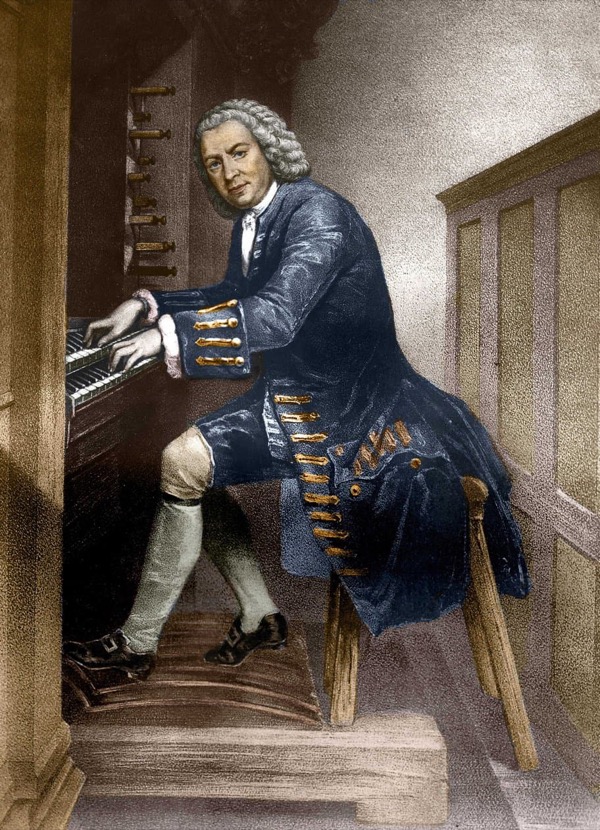
Johann Sebastian Bach playing the organ (c. 1881)
Bach is not a beginning or an ending in music history. He is the sea into which earlier rivers flowed, and from which everything afterward continued to drink. The Turkish conductor Gürer Aykal once described him as the man who wrote the constitution of music — and the phrase sticks because it’s exactly right.
Counterpoint as architecture. In a Bach fugue, independent melodic lines move at the same time without cancelling each other. They answer, resist, complete. The result isn’t cold math; it’s a cathedral made of sound. Every note carries structural weight. Remove one carelessly and the whole thing begins to tremble.
A bridge into modern tonality. The Well-Tempered Clavier didn’t single-handedly invent the modern tuning system, but it did something equally important: it proved that every major and minor key could become a living territory for thought and feeling.
Discipline, not glamour. Bach was orphaned young. He grew through work, study, and stubborn apprenticeship. The legendary story of his long walk on foot to hear the organist Dieterich Buxtehude has become a symbol of artistic devotion — a reminder that genius is partly a gift, but mostly hunger and craft. His final years, shadowed by failing eyesight, only deepened the tragic weight of an already superhuman career.
Johann Sebastian Bach: Prelude and Fugue No. 1 in C Major, BWV 846 (Jenő Jandó, piano)
2. Mozart: The Heavenly Genius and the First Freelance Rebel
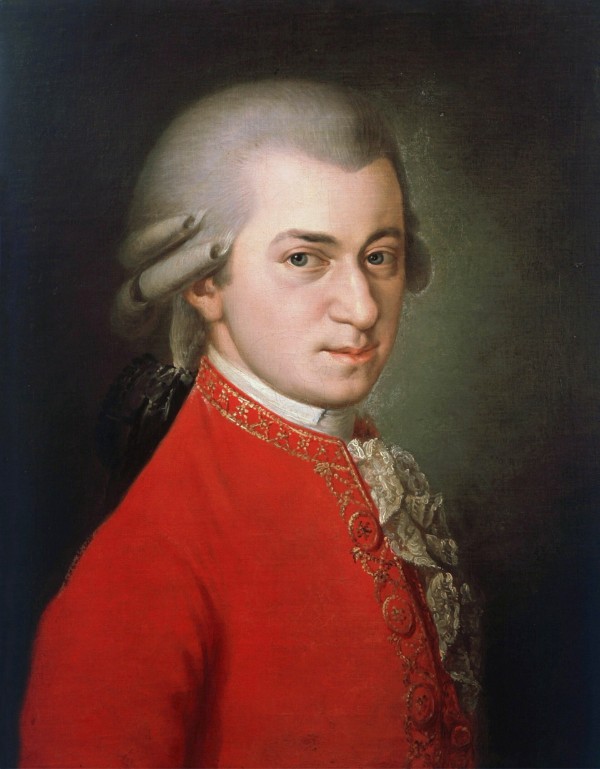
Wolfgang Amadeus Mozart
If Bach is the mind that gives music its laws, Mozart is the heart that makes those laws breathe.
His music has a strange illusion of effortlessness — as if melodies arrive already finished, waiting in the air. The old line that other composers reach toward heaven while Mozart seems to descend from it is exaggerated, but it captures the astonishment his work still provokes.
An inner ear that worked at impossible speed. Popular myth simplifies Mozart’s process, but the manuscripts and letters reveal something real: he could hold huge structures in his mind and transfer them to the page with extraordinary fluency. Discipline and inspiration, fused.
A revolt against artistic servitude. This matters as much as the music. In an age when musicians were treated as servants of court or church, Mozart broke with the Salzburg establishment and tried to build an independent career in Vienna. He became one of the symbolic ancestors of the modern freelance artist — admired, brilliant, and economically exposed.
Opera as social X-ray. The Marriage of Figaro puts a servant on stage outwitting his aristocratic master. Beneath the elegance and wit, Mozart understood desire, jealousy, forgiveness, and class tension with unnerving clarity. His death at thirty-five, followed by a modest Viennese burial, sealed one of the most enduring tragedies in artistic history.
Wolfgang Amadeus Mozart: Le nozze di Figaro (The Marriage of Figaro), K. 492: Overture (Vienna Philharmonic Orchestra; Herbert von Karajan, cond.)
3. Vivaldi: The Red Priest Who Painted Nature in Sound
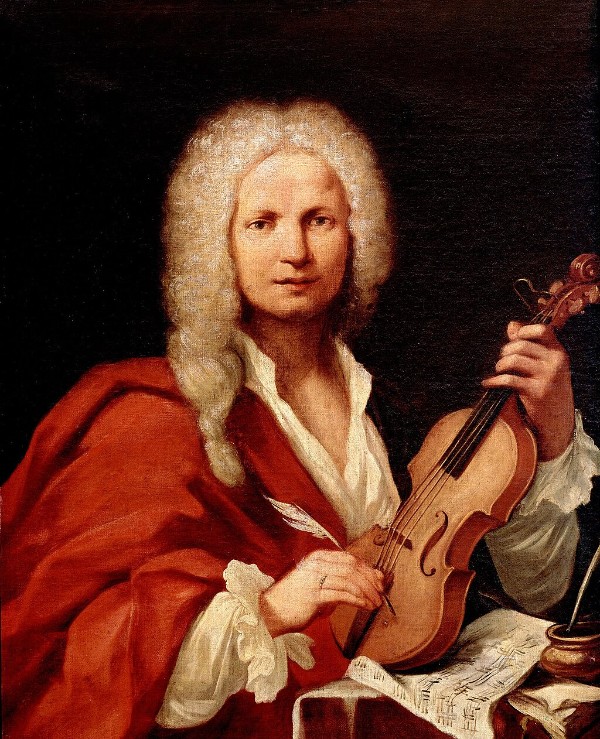
Antonio Vivaldi
Vivaldi is the most vividly pictorial of the three. Where Bach builds cathedrals and Mozart lets human emotion speak with luminous ease, Vivaldi paints motion. Wind. Birds. Rain. Pursuit. Fever. Cold.
Sound as image. The Four Seasons is not just a string of attractive melodies — it’s one of the most famous works of program music written before the modern era. It asks you to see through sound. Spring opens into birdsong. Summer thickens into storm. Autumn dances itself drunk on harvest. Winter shivers through icy textures and sharp rhythmic gestures.
The violin as actor. In Vivaldi’s hands, the bow becomes wind, wing, lightning, breath. This is why his music remains so immediately accessible: it doesn’t only ask you to understand form, it lets you walk straight into a scene.
A career, a silence, a rediscovery. Nicknamed the Red Priest for his clerical background and red hair, Vivaldi spent much of his life connected to the Ospedale della Pietà in Venice, composing for and teaching highly trained young female musicians. His rhythmic energy and bold contrasts shaped the Baroque concerto. Yet his reputation faded after his death, and his work only fully returned to public consciousness in the twentieth century. Vivaldi’s modern fame is, in part, a story of resurrection.
Antonio Vivaldi: The Four Seasons: Violin Concerto in E Major, Op. 8, No. 1, RV 269, “La primavera” (Spring) — I. Allegro (Katarina Andreasson, violin; Swedish Chamber Orchestra)
Three Visions of Immortality
Bach, Mozart, and Vivaldi don’t represent the same kind of greatness. Their genius moves in different directions.
Bach reveals the vertical depth of music — architecture, counterpoint, spiritual order. Mozart reveals its horizontal grace — melody, drama, human vulnerability. Vivaldi reveals its outward eye — nature, atmosphere, physical sensation.
There is also a quietly human thread connecting them. None of these masters lived a life equal to the gifts they gave the world. Each met pressure, neglect, or hardship. And yet the music survived every limitation imposed by biography. It outlived courts, patrons, fashions, and institutions.
What remains is not just a repertoire. It’s a civilization of sound — an invisible temple where intelligence, beauty, and feeling still meet.
Tunacan Tuna is a Turkish cultural writer, radio host, and singer-songwriter currently pursuing postgraduate research in Culture and Arts Management at Yıldız Technical University in Istanbul. His work explores music, cultural memory, and urban life. He writes cultural essays for TürkTime and hosts a radio program on Viyana FM devoted to music, cities, travel, and contemporary cultural thought.
For more of the best in classical music, sign up for our E-Newsletter