Opera director Tang Xinxin has a new production opening in Singapore of Verdi’s Macbeth, running 27 to 29 March. We spoke with Ms Tang about this production and her other work in a recent conversation.
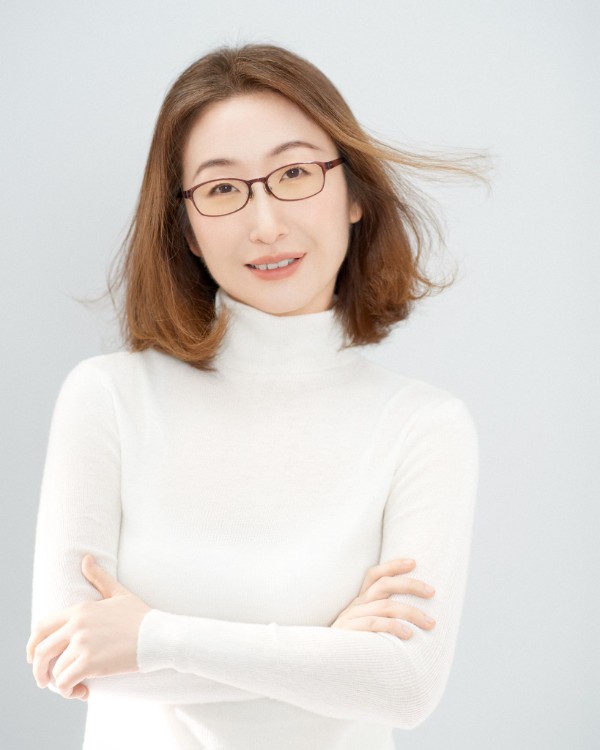
Tang Xinxin
Ms Tang is a graduate of Die Hochschule für Musik und Theatre in Hamburg and made her first work as an assistant, then resident director at the National Centre for the Performing Arts (NCPA) in Beijing. Projects at the NCPA included the highlights of Western opera, both Italian and German: Tosca, Turandot, L’elisir d’amore, Il trovatore, Nabucco, Un ballo in maschera, Otello, Il barbiere di Siviglia, La Cenerentola, L’italiana in Algeria, Der fliegende Holländer, Lohengrin, Der Rosenkavalier, the paired bill of Cavalleria rusticana and Pagliacci, Les Contes d’Hoffmann, and Carmen.
After Ms Tang and her family moved to Singapore in 2015, she expanded her international career. Recent productions have included Turandot and Bluebeard’s Castle for Opera Southwest (Albuquerque, New Mexico), Turandot with Opera Delaware, and a semi-staged Das Rheingold at Singapore’s Esplanade. She’s also ventured into the world of operetta with Die Fledermaus and The Merry Widow.
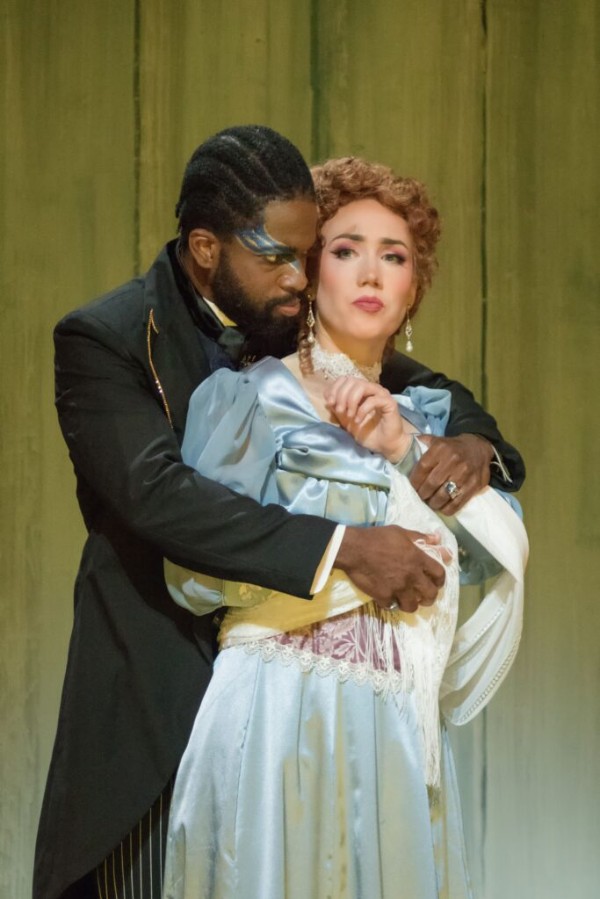
Bluebeard’s Castle, Opera Southwest (photo by Lance W. Ozier)
Ms Tang sees deeper into opera than most directors, starting with her ability to read into the directions that the composer has placed in the music. In Macbeth, for example, we have both a powerful woman and her powerful husband, who do something bad and want to repent, but not in a good way. The ego and the desire for power drive them to go too far. Ms Tang feels that in their drive for glory in the physical and material world, they’re ignoring the spiritual world that will drive their redemption. As a director, she is the authority for the staging, but she, in turn, takes the music from the composer as her authority.
Giuseppe Verdi: Macbeth – Act I Scene 1: Preludio (Berlin Deutsche Opera Orchestra; Giuseppe Sinopoli, cond.)
We spoke about the use of localisations in opera. In her production of Fledermaus, she was able to get a great local comic to play the role of Frosch and deliberately built in local Singaporean references in the spoken text throughout.
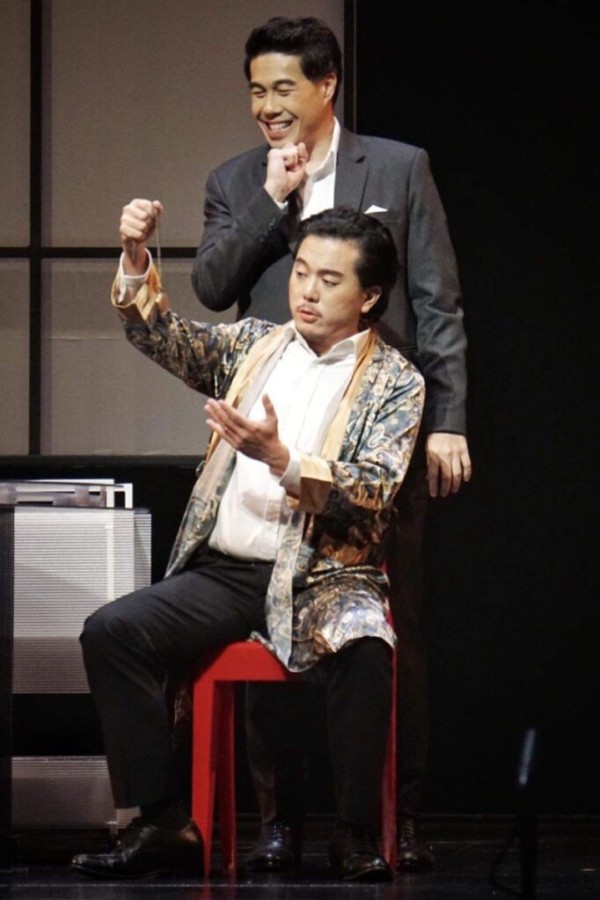
Die Fledermaus, Singapore
In Turandot, where the role of the Emperor is often taken by a person of local significance, she had the role sung off-stage, with only the emperor’s robe appearing on stage, standing in for him. For her Opera Hong Kong production of Mozart’s Die Entführung aus dem Serail, with its theme of taking the best revenge on your enemies by loving them, she made the opera not only comment on the current HK / China situation but also made an argument for a different kind of resolution than was currently happening.
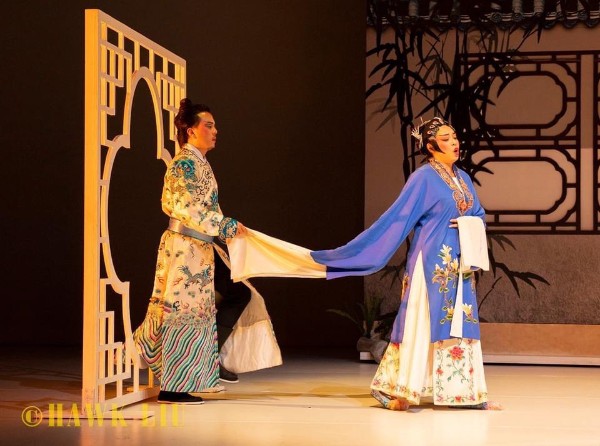
L’inganno felice (photo by Hawk Liu)
Turandot was a significant production for her. In 2023, she was asked by Opera Southwest, who had seen her L’inganno felice, to come and direct Turandot, little knowing that she had been listening to this opera since she was 9. The leitmotif for Princess Turandot was based on a traditional Chinese melody, ‘Mòlìhuā’ (茉莉花, ‘Jasmine Flower’), and so was familiar as it pervades every corner of the work. Every nuance of the opera was hers, and she was so confident when she went to direct this in the US that she didn’t even bring her score with her.
The conflict in Turandot is important, but in the end, it’s really all about love. With love, you can secure the world, and so the world changes for both Turandot and Calaf. One of the aspects of the opera that fascinated her was Calaf’s relationship with the other characters: when both his father and Turandot’s three advisors are attempting to dissuade him from his plans to be a suitor, he has very different music than when Liù comes to beg him to change his mind. Her beautiful aria is answered with his beautiful aria (and no, he doesn’t change his decision).
One important part of her direction of Turandot is about what to do about the incomplete ending. At Puccini’s death, Acts I and II were complete and orchestrated, but Act III stopped after Liù’s death and funeral cortege. Only incomplete sketches were left for the end of the opera, and Franco Alfano was chosen to complete the work. His first version was rejected by Puccini’s publisher and Arturo Toscanini, and so he did a second version. Ms Tang took advantage of the release of the opera from copyright to engage with a local composer to complete the work, using the music already provided by Puccini. She didn’t want the composer to compete with Puccini but to maintain his motifs and to keep the story the same. The connection with a local composer to complete Turandot happened first in the production where she assisted director Chen Xinyi in Beijing (with composer Hao Weiya) and for the Opera Southwest production (with composer Derrick Wang). The Opera Southwest collaboration was an idea of Opera Southwest, but which needed her acute knowledge of the score to bring to fruition.
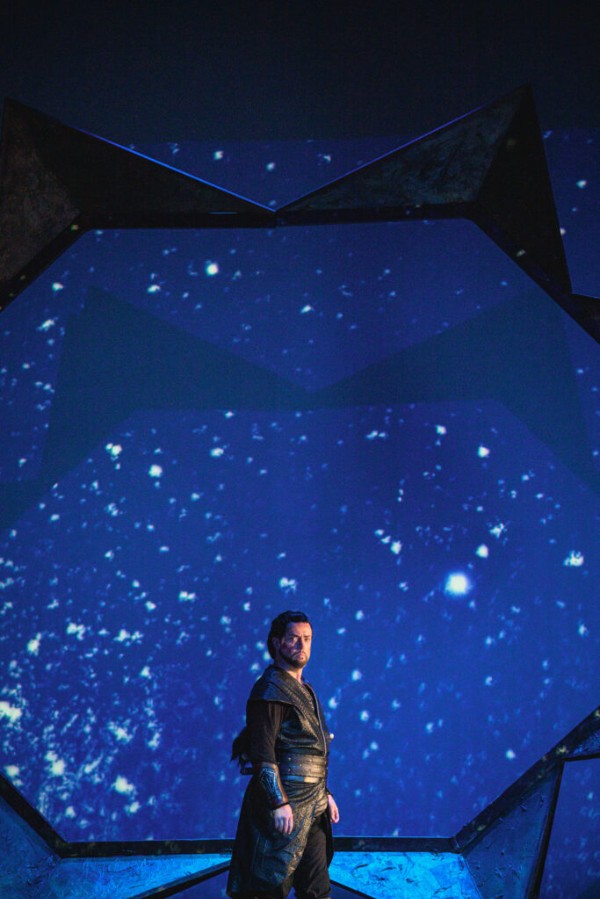
Turandot, Opera Southwest
When approaching an opera company as director, she’s aware that the singers on stage have done all this before. Her ideal company is only 50 per cent prepared for the performance. That gives her room to add her ideas. If everyone has the opera 100 per cent under their command, she has a much more difficult time inserting her vision. Although she may walk in with a complete plan, she’s always ready for inspiration to come during rehearsals. It has to be all about the singers. If you have a vision for a character, but the singer can’t meet that vision, then your vision has to come to a compromise and has to change.
Ms Tang also spoke about the difficulty of being a double minority in the opera director world: a woman and an Asian. She’s shown with her work that she can do more than just the ‘Chinese’ operas, such as Turandot, which she noted is not Chinese but really Italian. Her recent Don Pasquale in Singapore was given a glowing review by a notably difficult reviewer, and for her, that was a triumph.
Recently, in Singapore, she did a semi-staged production of Wagner’s Das Rheingold. Baritone Greer Grimsley was her ideal Wotan, and she was especially grateful to be able to do this production. She had seen the full Ring Cycle in Shanghai at the Grand Theatre, presented by Cologne Opera as part of the 2010 World Expo held that year in the city, and since then, had wanted to get her hands on Wagner. To deal with the semi-staging holes, she had projections done to show the character’s thoughts, augmenting what we’re told in Wagner’s music.
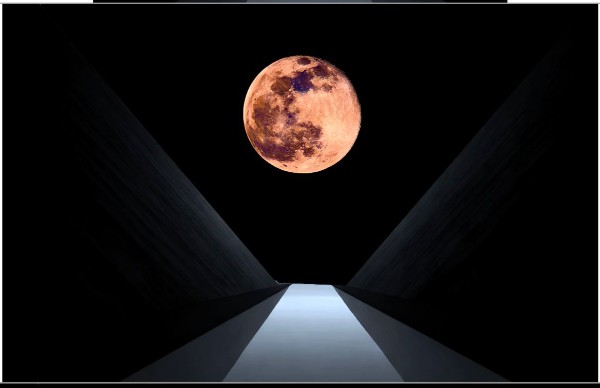
Das Rheingold, Act I projection
After Macbeth, she’s going to be doing the rarely heard opera by Aaron Copland, The Tender Land, and then Mozart’s last opera, La Clemenza di Tito, both in Singapore.
For Tang Xinxin, the music is the most powerful tool in her toolbox, and she knows how to help it speak to its greatest effect.
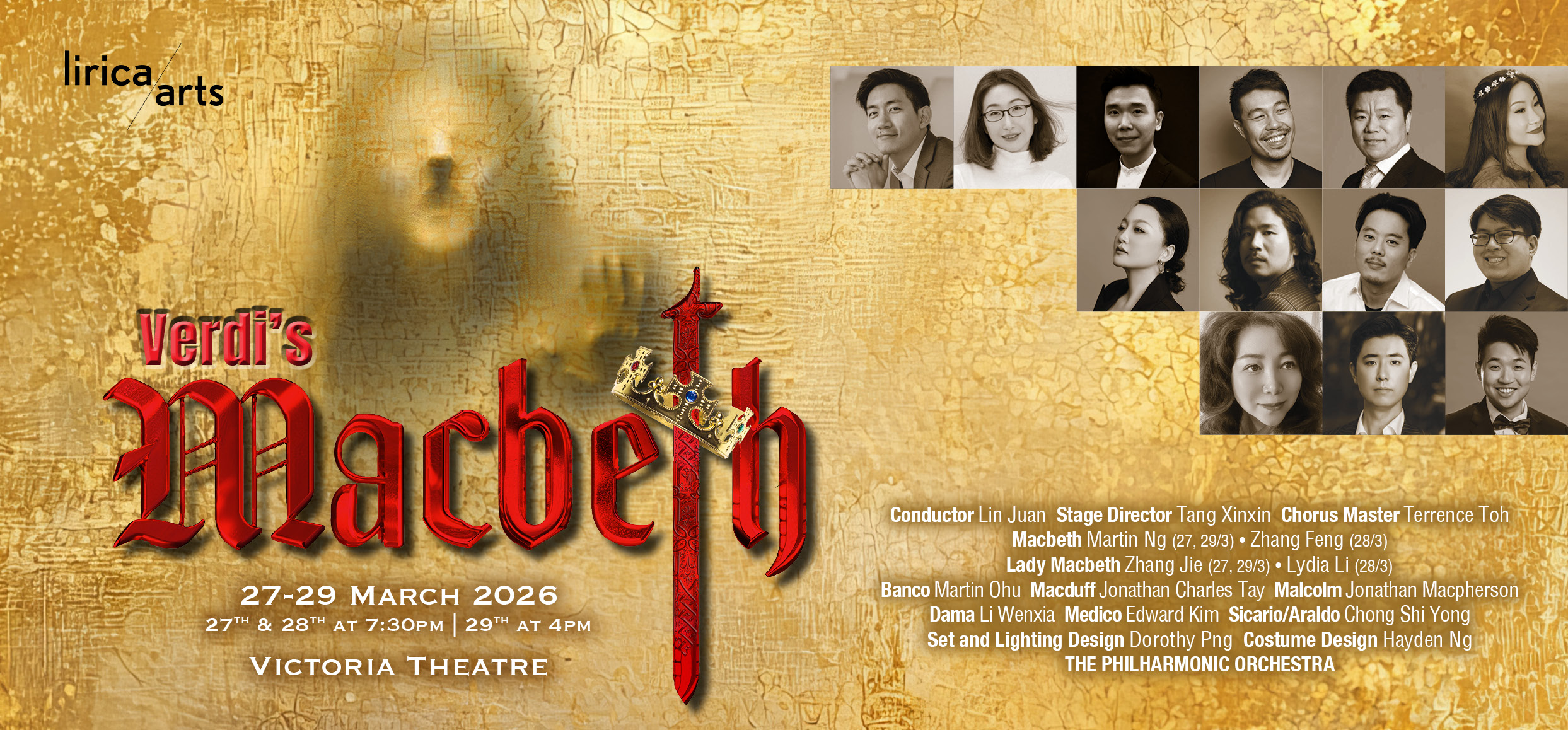
Verdi: Macbeth
Singapore: Victoria Theatre
Creative Team
Artistic Director: Martin Ng
Stage Director: Tang Xinxin
Conductor: Lin Juan
Chorus Master: Terrence Toh
Lighting and Set Designer: Dorothy Png
Costume Designer: Hayden Ng
Production Manager: Tay Huey Meng
With The Philharmonic Orchestra
Cast
Macbeth: Martin Ng (27/29 Mar), Zhang Feng (28 Mar)
Lady Macbeth: Zhang Jie (27/29 Mar), Lydia Li Yang (28 Mar)
Banco: Martin Ohu
Macduff: Jonathan Charles Tay
Malcolm: Jonathan Macpherson
Dama: Li Wenxia
Medico: Edward Kim
Araldo/Domestico/Sicario: Chong Shi Yong
For more of the best in classical music, sign up for our E-Newsletter