In our previous episode on forgotten Romantic piano concertos, we discovered unexpected and wonderful music by Berwald, Rimsky-Korsakov, Chaminade, Moszkowski and Paderewski.
These much-neglected nineteenth- and early twentieth-century piano concertos and concertante works have been brought to light in 87 volumes of recordings by the Hyperion label, released between 1991 and 2023.
This musical treasure chest holds plenty of musical riches, and it’s time to continue our exploration with a decidedly Russian twist, beginning with Mily Balakirev.
Mily Balakirev: Piano Concerto No. 2 in E-Flat Major (completed by S. Lyapunov) (Malcolm Binns, piano; English Northern Philharmonia; David Lloyd-Jones, cond.)
Mily Balakirev: Piano Concerto No. 2 in E-flat Major
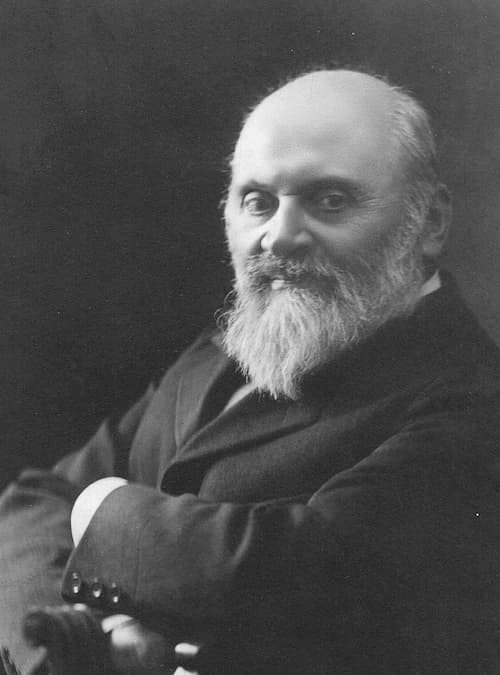
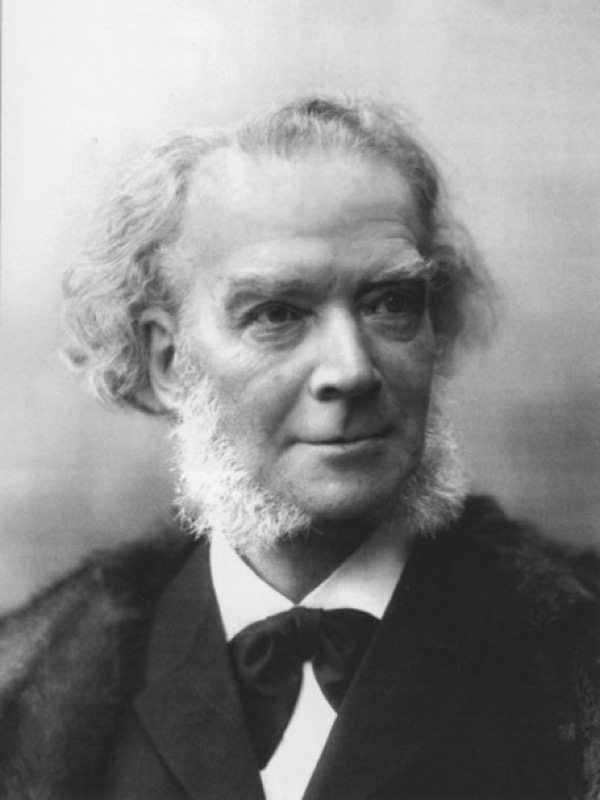
Mily Balakirev
Mily Balakirev (1837-1910) grew up in the provincial city of Nizhny Novgorod, but he quickly made his way to St. Petersburg. Highly ambitious, he determinedly rose to prominence in Russia’s cultural capital and became part of the group known as “The Five.”
Hard-working and highly organised, Balakirev rallied his fellow composers against the bourgeois musical establishment. In fact, he became the self-appointed leader of the group and ruled them with a dictatorial fist. Since he was the only professional musician of the group, he outright rejected any musical opinion that differed from his own.
While encouraging the group’s compositional efforts, their compositions sounded increasingly similar to his own. Balakirev suffered from intense bouts of depression, and eventually had a massive nervous breakdown. But not before he had composed his oriental fantasy Islamey, long reputed as “the most difficult work ever written for piano.”
His first piano concerto, composed entirely under the influence of Chopin, dates from 1855, and he started his second in 1861. Scored in E-flat major, the same key as Liszt’s first piano concerto, Balakirev also drew inspiration from Anton Rubinstein.
He completed the first movement in 1862; however, he then largely abandoned the composition for nearly forty years. Friends and his publisher asked him to return to the concerto in 1906, and Balakirev did complete the “Adagio,” but the Finale still existed only in sketches.
Before he died in 1910, Balakirev left instructions for his student Sergei Lyapunov to complete and orchestrate the finale, and the completed work received its premiere in Berlin. The work combines heroic grandeur with striking harmonic originality. The slow movement is based on a Russian Orthodox requiem chant, and the finale is full of energy and high spirits.
Anton Rubinstein: Piano Concerto No. 4 in D Minor, Op. 70 (Marc-André Hamelin, piano; BBC Scottish Symphony Orchestra; Michael Stern, cond.)
Anton Rubinstein: Piano Concerto No. 4 in D minor, Op. 70
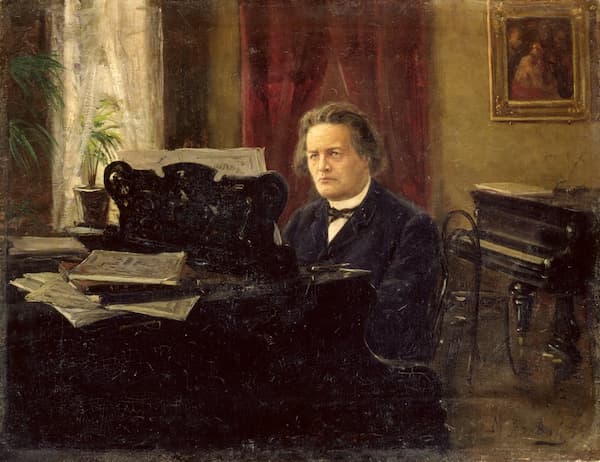
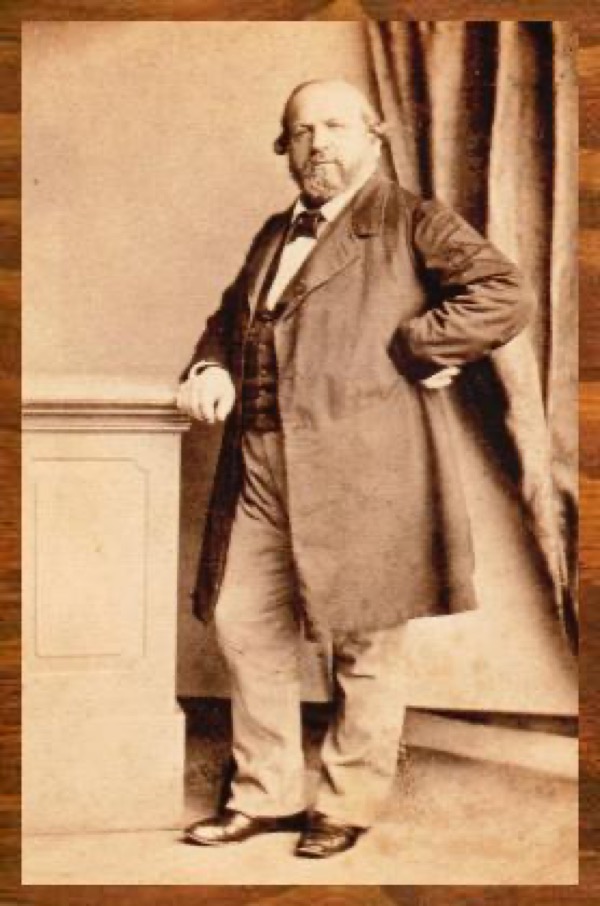
Portrait of Composer Anton Rubinstein by Michail Michailovich Yarowoy
The Russian pianist, composer, conductor, and teacher Anton Rubinstein (1829-1894) was one of the greatest pianists of the 19th century. His playing was compared with Liszt’s, and he combined a prodigious technique with musicianship, scholarship, and a richly poetic temperament.
Anton Rubinstein was highly influential in Russian musical circles, founding the Saint Petersburg Conservatory, where he taught, among many others, Pyotr Ilyich Tchaikovsky. Rubinstein was also a prolific composer, who wrote five piano concertos, six symphonies, solo piano works, and a substantial body of chamber music.
Throughout much of his life and career, Anton Rubinstein was at odds with several cultural and musical currents of his time. He steadfastly maintained that music could not be a vehicle for a national style, and he strongly rejected musical amateurism.
In all, Rubinstein composed eight works for piano and orchestra, and his five piano concertos were composed between 1850 and 1874. Sadly, some early piano concertos have been lost.
The featured D-minor concerto was in the repertoire of Paderewski and Rachmaninoff.
It has also been recorded by several great pianists, including Grigory Ginsburg, Friedrich Wührer, Oscar Levant and Raymond Lewenthal. But the most important recordings are two live performances by Josef Hofmann, Rubinstein’s only private pupil.
Scored in three movements, the opening movement is grand in scale and Romantic in spirit, and features a massive solo cadenza. The “Andante,” with an agitated middle section, is full of expressive warmth, and the fiery finale is a dance-inspired movement with touches of Schumann. There is every reason for this concerto to return to the concert hall, where it deserves a secure place in the standard concerto repertoire.
Anton Arensky: Piano Concerto in F Minor, Op. 2 (Stephen Coombs, piano; BBC Scottish Symphony Orchestra; Jerzy Maksymiuk, cond.)
Anton Arensky: Piano Concerto in F minor, Op. 2

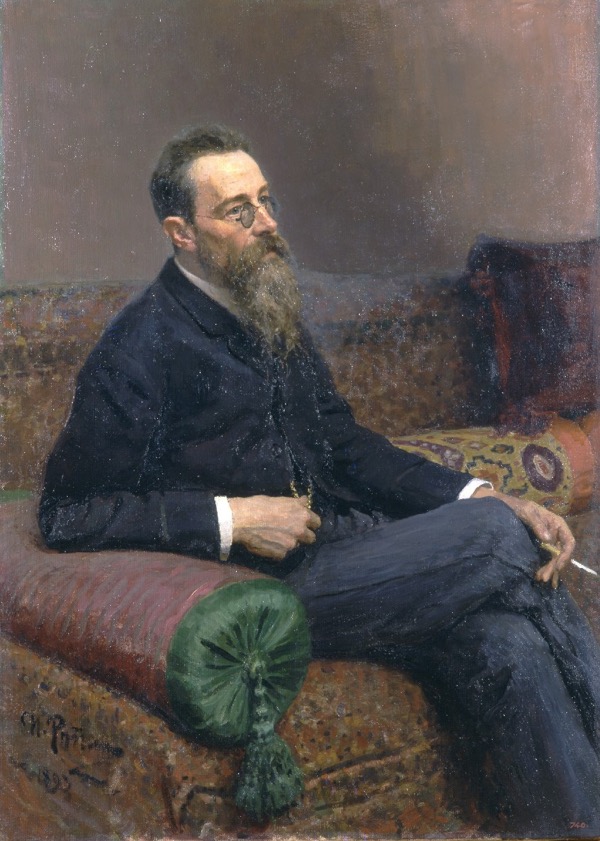
Anton Arensky
Just as Mily Balakirev, Anton Arensky (1861-1906) was also born in Nizhny Novgorod. One of the most gifted Russian composers of the generation between Tchaikovsky and Rachmaninoff, Arensky was not interested in musical folklore or in forging a specifically Russian musical identity.
Arensky never considered himself a musical rebel; he had an easy gift for melody, and some of his subtle musical nuances have been dismissively described as “too pretty.” He favoured a much more cosmopolitan compositional style, and his teacher, Rimsky-Korsakov, prophesied that he would quickly be forgotten.
Arensky was only nine when he entered the St Petersburg Conservatory and began his studies with Rimsky-Korsakov. He graduated in 1882 and composed his F-minor Piano Concerto that same year.
The concerto is clearly indebted to Chopin and Tchaikovsky, with the melodic grace of Mendelssohn and virtuoso passages borrowed from Liszt. The last movement begins sounding like the opening of Grieg’s Piano Concerto, and the work is full of delightful melodies.
The concerto was published in 1883 and was immediately successful. As a result, Arensky was appointed Professor of Harmony and Counterpoint at the Moscow Conservatory. The Arensky Piano Concerto captured the imagination of many pianists of the day.
Did you know that it was a favourite of the youthful Vladimir Horowitz, who needed a stylish barn-stormer to get his career started? In general, Arensky’s Concerto was overshadowed by the works in that genre by Tchaikovsky, Rachmaninoff, Scriabin, and Prokofiev. Arensky’s elegant and lyrical style came to be seen as conservative by the early twentieth century, and his music is now heard only occasionally.
Nikolai Medtner: Piano Concerto No. 1 in C Minor, Op. 33 (Dmitri Alexeev, piano; BBC Symphony Orchestra; Alexander Lazarev, cond.)
Nikolai Medtner: Piano Concerto No. 1 in C minor, Op. 33
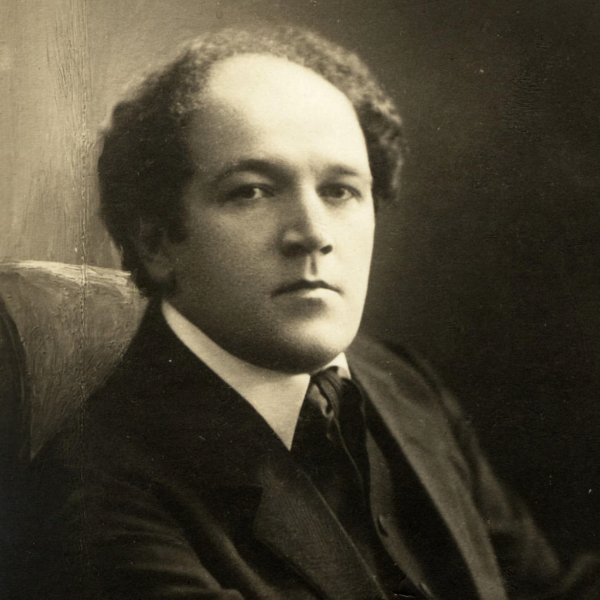
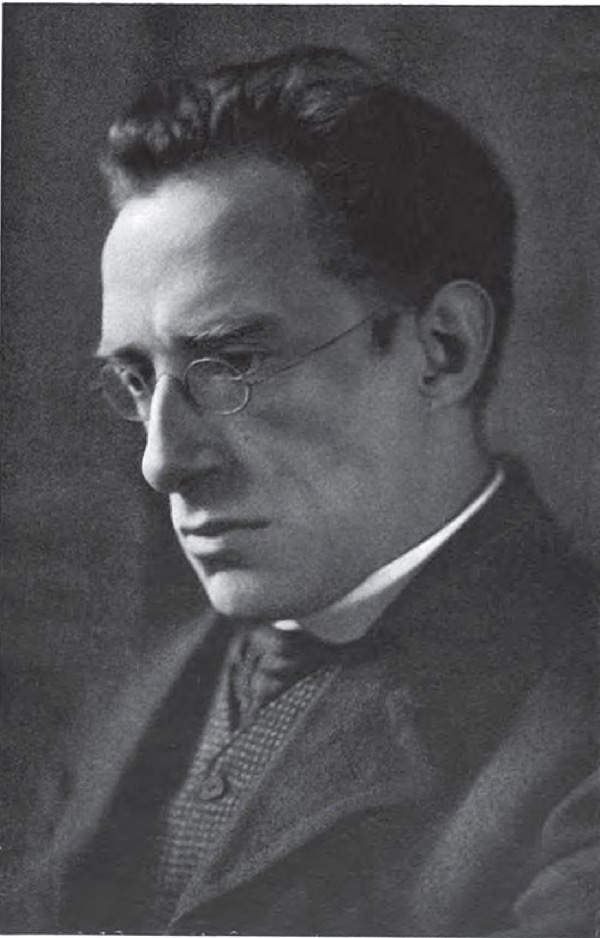
Nicolai Medtner
At the beginning of the twentieth century, Nikolai Medtner (1880-1951) was recognised in Russia as one of the most important composers alongside Rachmaninoff and Scriabin. He was a great pianist with a conservative taste in composition, modelling himself after Beethoven, Schumann and Brahms.
Yet, once Medtner was forced into exile by the Russian Revolution and settled in Paris. Later in London, he remained practically unknown to the general public in the West and spent most of his life in financial hardship.
Medtner detested modern trends in composition, and his own style changed remarkably little for more than half a century. While some praised his Russian soul and his ability to capture the atmosphere of Russia at the turn of the century, others considered him an heir to the great Germanic tradition. In short, he was widely regarded as an arch-conservative.
Medtner almost exclusively composed for the piano. Characteristically, rich and dark harmonies in the lower part of the keyboard are frequently adorned by melodic and harmonic inflexions borrowed from Russian folk music. However, what truly distinguishes Medtner’s music is a strong vein of classicism, evident in its tightly controlled structures and contrapuntal textures.
Together with his fourteen piano sonatas, three violin sonatas and the piano quintet, his three piano concertos display an astonishing degree of thematic integration and unity. Tellingly, his First Piano Concerto, Op. 33 is cast in a single-movement structure. One of his most outstanding works, he began composition in 1914, and the first performance took place in Moscow in 1918.
The thematic concentration of the music is remarkable, as the main theme serves as the source for two lyrical subjects and every other important section. A theme-and-variation cycle serves as the development, and fragments of all themes are treated polyphonically.
Over the past three decades, Medtner’s music has seen a significant revival, with today’s audiences increasingly receptive to rediscovering overlooked Romantic repertoire. There has also been a growing body of recordings, biographies, and critical editions.
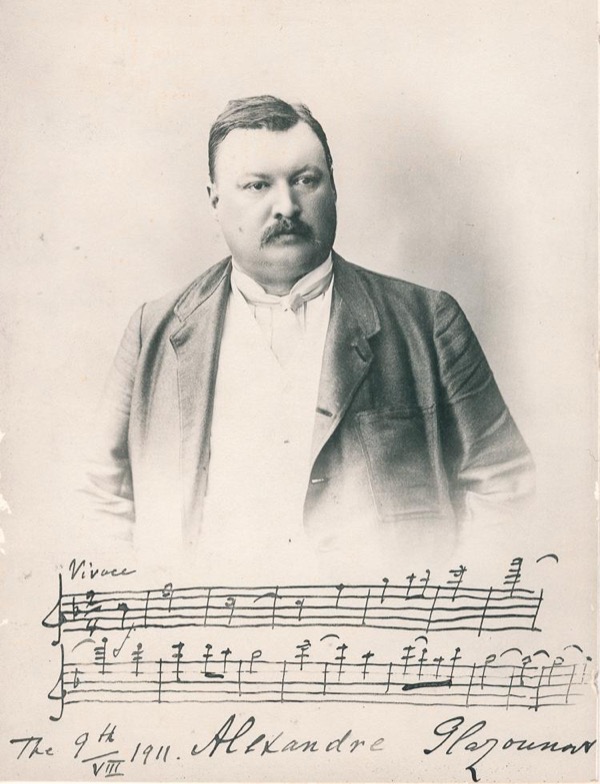
Alexander Glazunov
Alongside Pyotr Ilyich Tchaikovsky, Alexander Glazunov (1865-1936) was one of Russia’s greatest symphonists. He was not a concert pianist like his contemporary Rachmaninoff, but we do have a great description of his facility from his student Dmitry Shostakovich.
Shostakovich reports, “He didn’t have a real piano technique, and he often played without removing the famous cigar from between his third and fourth fingers. And yet he managed to play every note, absolutely everything, including the most difficult passages. Glazunov could also sight-read the most complicated score and make it sound as though an excellent orchestra were playing.”
Glazunov certainly was a pianist with a strong capacity for polyphonic voicing and projection, and his piano music reflects a deep connection to the Romantic tradition and Russian musical heritage. He only turned to the concerto genre late in his career, and his two piano concertos date from 1911 and 1917, respectively.
The featured concerto is a vibrant and lyrical work composed during the turbulent period in his life and in Russian history. The work unfolds in a single continuous movement, starting in the key of B major but ending in E major.
In terms of form and synthesis of movements, the model of Franz Liszt comes to mind, whereas the emotional sense of narration and introspection recalls that of Nikolai Medtner. Although it emerged amid political upheaval, it still exudes optimism and melodic richness.
We might call it one of Glazunov’s most understated works, and it remains rarely performed today. And while it lacks overt bravura and a dramatic profile, it is a radiant yet underappreciated work from a composer who never lost his melodic voice.
I hope you enjoyed these five forgotten piano concertos, which have been overtaken by changing fashions and shifting musical tastes. There are still dozens of forgotten piano concertos on offer, and some great discoveries are still to come. Please join me next time.
For more of the best in classical music, sign up for our E-Newsletter
Alexander Glazunov: Piano Concerto No. 2 in B Major, Op. 100 (Stephen Coombs, piano; BBC Scottish Symphony Orchestra; Martyn Brabbins, cond.)