For many artists, being an artist is not merely a profession. It is an essential part of their identity. A musician does not necessarily stop thinking of themselves as a musician when they leave the concert platform; a painter remains a painter even away from the studio; a writer may continue to inhabit an imaginative world even when not actively writing. Artistic identity can become so deeply embedded in our sense of self that it is difficult to separate what we do from who we are.
But what happens when circumstances prevent us from doing it? What does it mean to be an artist when the circumstances that allow us to practise and share our art are suddenly taken away?
This question lies at the heart of my debut novel, Facing the Music, which follows two ambitious, gifted young musicians – pianist Theo Browne and violinist Jonathan Lane-Fox – poised on the cusp of professional success in the summer of 1914.
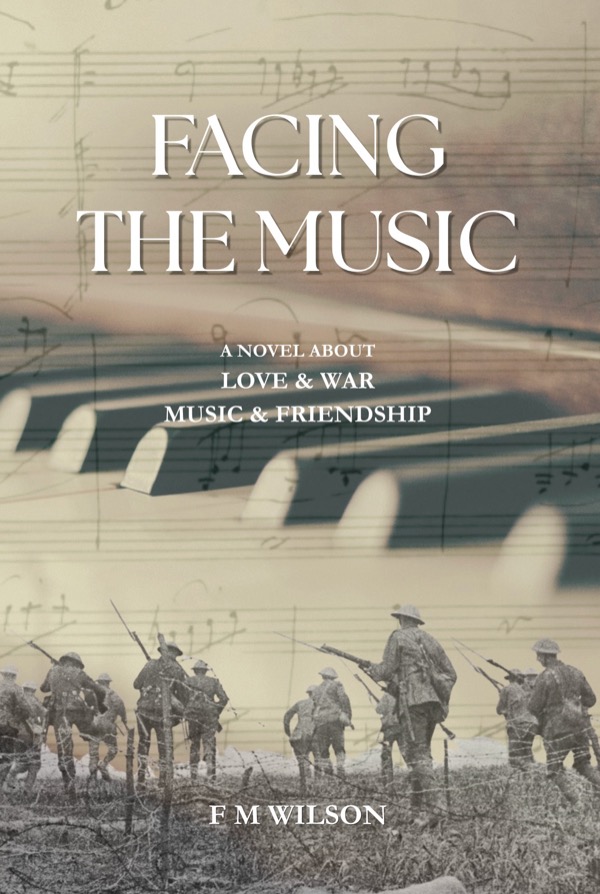
Facing the Music by F M Wilson
At the beginning of the novel, Theo’s sense of identity is absolute: he is a pianist. Years of study with his beloved teacher, Mr Hines, hours of disciplined practice, and his musical partnership with Jonathan have all been directed towards a professional career. Following a triumphant London debut in August 1914, that future appears assured.
Ludwig van Beethoven: Violin Sonata No. 5 in F Major, Op. 24, "Spring": I. Allegro (Robert Mann, violin; Stephen Hough, piano)
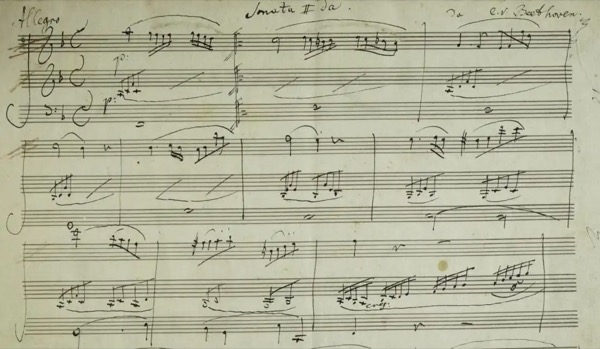
Autograph of the “Spring” Sonata
The First World War abruptly removes Theo and Jonathan from the world in which their artistic identities have been formed. Concert halls, rehearsals and lessons give way to military service and the brutal reality of the Western Front. Yet they do not cease to be musicians simply because they are no longer performing. Music persists through memory: in remembered works, in habits of discipline and listening acquired over years of study, and in the words of teachers whose influence has become part of their inner lives.
Although Facing the Music is set more than a century ago, my exploration of these ideas was influenced by a much more recent interruption to artistic life: the COVID-19 pandemic.
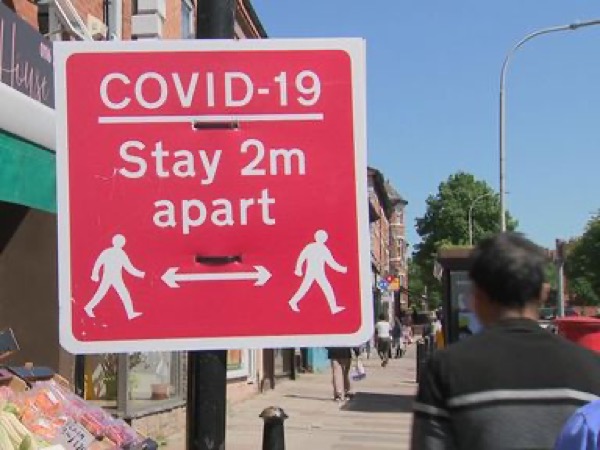
Covid sign
During the UK lockdowns, I spoke to several professional musicians about their experiences. Initially, some welcomed an unexpected break from performing and travelling, seeing it as an opportunity to practise, explore new repertoire, rest and reset. But as the months passed, the absence of concerts and live audiences became increasingly difficult to bear: spare time became an affliction rather than a source of gratification. Musicians spoke of feeling bereft and dislocated, and some began to wonder whether they would be able – or even want – to return to concert-giving when restrictions were finally lifted.
Johannes Brahms: Violin Sonata No. 3 in D Minor, Op. 108: II. Adagio (Christian Tetzlaff, violin; Lars Vogt, piano)
Concerts had disappeared, venues were closed, and collaborative music-making in its familiar form had become impossible. For people whose lives are so closely bound up with their art, this was far more than the loss of work. It raised questions about identity and purpose.
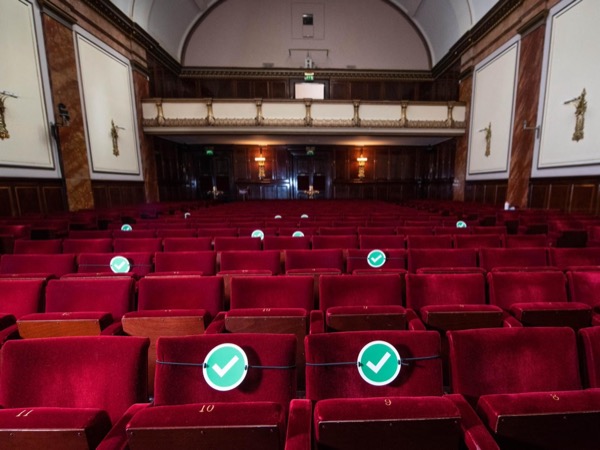
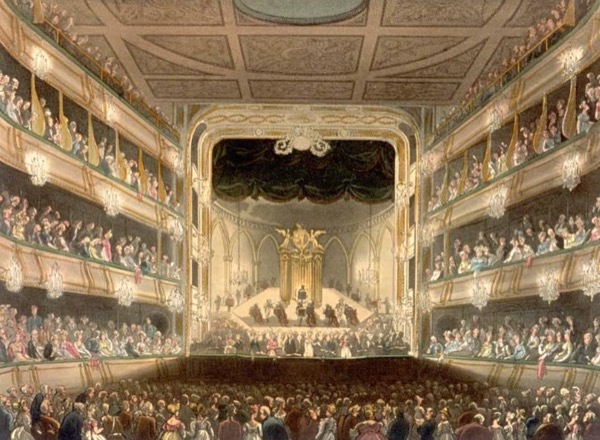
Wigmore Hall in preparation for re-opening on 1 August (Photo by Matt Crossick/PA Wire)
Those conversations made me reflect on the distinction between being a musician and working as one. If there is no audience, no concert and no engagement in the diary, are you still a performer? If circumstances prevent you from pursuing the career you had imagined, does that diminish your identity as an artist?
These questions found their way indirectly into Facing the Music, particularly into Theo’s story. The First World War and Covid are, of course, profoundly different historical experiences, and the novel does not seek to draw an equivalence between them. What interested me was something more universal: the experience of sudden interruption, the disappearance of familiar routines and expectations, and the necessity of adapting when circumstances beyond one’s control make the expected future impossible.
For Theo, and to a lesser extent for Jonathan, music endures through memory, friendship, teaching, thought and, eventually, performance. But Theo’s understanding of what it means to be a musician changes. Artistic identity can no longer be measured simply by prestigious engagements, public performance or professional success.
Ludwig van Beethoven: Piano Sonata No. 31 in A-Flat Major, Op. 110: I. Moderato cantabile molto espressivo (Igor Levit, piano)
The question facing him is no longer, “Can I still play?” It has become something more fundamental: “What does being a musician mean to me now?”
Facing the Music by F M Wilson is published by Nine Barrow Press and is available in paperback and eBook from Amazon.
For more of the best in classical music, sign up for our E-Newsletter