Philippe Hirschhorn won the 1967 Queen Elisabeth Competition with a performance of Paganini’s Violin Concerto No. 1 that many violinists still call the greatest ever recorded – and then all but vanished from the international stage.
The Soviet Union wouldn’t let him capitalise on the win, and politics kept him largely confined behind the Iron Curtain for six more years.
By the time he escaped to the West, married the girlfriend he’d left behind in Leningrad, and settled in Brussels, the moment that should have launched him was already receding. A brain tumour would cut his life short at fifty, before he could hit his professional stride.
This is the story of one of classical music’s great what-ifs: a career shaped by geopolitics, genius, and bad luck.
Philippe Hirschhorn’s Family and Early Life
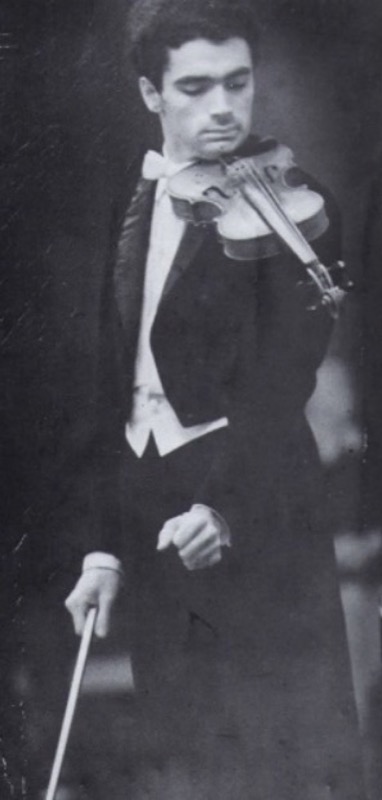
Philippe Hirschhorn
Philippe Hirschhorn was born on 11 June 1946 in Riga, in present-day Latvia.
When Philippe was four years old, his parents were listening to a recording of Beethoven’s third symphony when he came into the room. He was upset, in tears, and told his parents to turn the music off because it “was too beautiful.”
Hirschhorn began his violin studies that same year. At first, he wanted to play the piano, but his parents steered him toward the violin, believing its portability made it more practical.
Philippe Hirschhorn’s Early Musical Training
He proved to be a talented young boy. His first violin teacher was Valdemar Sturestel, a violinist in the Latvia Philharmonic, who retired in 1950 to focus exclusively on teaching.
Young Philippe blossomed under his tutelage. We don’t have a full picture of his student days, but he was clearly impressive. By his mid-teens, he was playing the Ballade from the third sonata of Eugène Ysaÿe, one of the repertoire’s more musically and technically challenging works.
Hirschhorn playing Bartók’s Sonata for Solo Violin
In May 1958, a musical celebrity arrived in Riga: American pianist Van Cliburn. The month before, he had made international headlines by winning the inaugural Tchaikovsky Competition in Moscow, despite the ongoing Cold War. His win included an extensive Soviet tour.
Cliburn was struck by the thoughtfulness of the 12-year-old violinist, relaying to a newspaper that Hirschhorn had given him a decorative plate featuring a portrait of Tchaikovsky that he’d gotten for his birthday.
Philippe Hirschhorn’s Conservatory Years
In 1963, the year he turned seventeen, Philippe Hirschhorn moved to Leningrad to study at the Leningrad Conservatory. There he began studies with violinist Mikhail Vaiman, who had taken second place at the 1951 Queen Elisabeth Competition.
He quickly became a star student, mesmerising his fellow students with his eerily perfect rendition of Paganini’s virtuosic first concerto.
In 1965, he entered the international Paganini Competition, held in Genoa, the composer’s hometown.
He won second place, after fellow Soviet violinist Viktor Pikaizen. The result caused some grumbling, but Pikaizen had prepared all twenty-four of Paganini’s 24 Caprices despite being required to prepare only three, and it impressed the judges. Otherwise, it is speculated, Hirschhorn would have placed first.
Hirschhorn playing Mozart’s Violin Sonata No. 18, K. 301
Winning the Queen Elisabeth Competition
Two years later, in 1967, Hirschhorn brought out Paganini’s first violin concerto again for another major competition.
This one was the Queen Elisabeth Competition in Brussels, and he won it with a historic performance many violinists feel is one of the greatest – maybe the greatest – ever recorded.
Hirschhorn’s performance of the Sauret cadenza to the first movement of Paganini’s Violin Concerto No. 1
In some ways, his win was the reverse of Cliburn’s win in Moscow in 1958: this time, a Soviet-trained performer triumphed in a prestigious Western competition, instead of the other way around.
The victory proved that Hirschhorn had the talent to enjoy a major international career. However, politics kept him ensconced in the Soviet Union.
He began to wonder what life outside its borders could be like. For the next six years, the government only let him leave the country once, to give several concerts in London.
The idea of being relegated to touring the Soviet Union was discouraging, so after his Queen Elisabeth win, he made an unusual career move. He returned to his hometown of Riga, resumed lessons with Valdemar Sturestel, and took a job with the Latvia Philharmonic as an orchestral player.
Leaving the Soviet Union
His restrictive professional situation was unsustainable. By 1972, he’d had enough, and he submitted emigration paperwork for himself and his parents. The family decided to relocate to Israel.
He knew this meant he’d likely never return to Russia, so he took one last trip to Leningrad to bid farewell to his friends and teachers. Inconveniently, while on the trip, he fell in love with a woman named Nina Alekseeva.
The new relationship was deeply promising, but it didn’t dissuade him from leaving, which he did in March 1972. He and Nina would end up communicating by public payphone; at the time, letters were too risky to exchange.
Hirschhorn playing the first movement of Mendelssohn’s Violin Concerto
The Hirschhorns soured on Israel quickly. Of the three, Philippe’s father was the only one who identified as fully Jewish, and during their time there, they experienced cultural clashes with Israelis. Not to mention, by the jet age, it was simply more convenient for a globetrotting virtuoso to be headquartered in Europe.
So Hirschhorn decided to move again, this time to Brussels, the same city where he’d had his Queen Elisabeth Competition breakthrough a few years earlier.
Marrying Nina Alekseeva
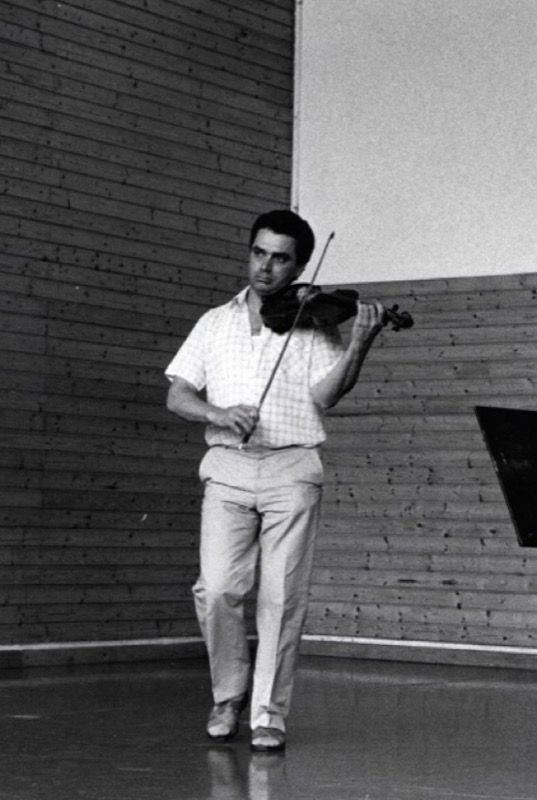
Philippe Hirschhorn
Although their relationship had been long-distance, Hirschhorn still loved Nina Alekseeva. Unfortunately, every effort to try to secure her emigration failed.
Hirschhorn met the King and Queen of Belgium after winning the Queen Elisabeth Competition, and after moving to Belgium, he asked them to help. They could – and did. You could therefore argue that she owed her arrival to Hirschhorn’s prize-winning performance.
The couple married just two months later, in October 1973. They would have two daughters, Véronique and Nina.
Life as a Conductor and Soloist
Hirschhorn playing Winter from the Four Seasons with the Royal Chamber Orchestra of Wallonia
In 1981, after years of working as a freelance musician, he decided to settle down more, joining the Royal Chamber Orchestra of Wallonia in Mons, Belgium, about seventy kilometres south of Brussels.
He was named both conductor and concertmaster. He obsessed over the role and began to get good results quickly, but the position lasted only two years.
Hirschhorn turned toward teaching to make his income, eventually splitting his time between Brussels and Utrecht. His students later spoke highly of him, remembering his desire for each violinist to develop and embrace their own musical identity.
He also began touring more again. In 1989, he was even invited back to Russia. His performing career – initially held back by his Soviet citizenship, and later his music directorship – seemed to be on an upward trajectory again.
It was welcome news, given that his only commercially available recordings were chamber music; the rest were bootlegs or radio broadcasts.
A Devastating Diagnosis
Hirschhorn playing Chausson’s Poème
In early 1994, Hirschhorn began experiencing strange symptoms.
These started with feeling unable to move his ring finger – a disaster for any violinist. Eventually he began getting excruciating headaches.
He was ultimately diagnosed with a brain tumour. Despite a poor prognosis, he underwent surgery. The disease went briefly into remission but returned with a vengeance in 1996.
In his final months, Hirschhorn gathered cassette recordings of his performances and analysed them, assessing his aborted career and searching for meaning. He’d always been a perfectionist, but he was reluctantly impressed with himself.
Because of circumstance and bad luck, he never enjoyed the kind of international career his initial Queen Elisabeth Competition win might have granted him if he had been from the West, or if the Soviet Union had allowed him to tour more often.
Philippe Hirschhorn died on 26 November 1996 at the age of 50. Queen Fabiola of Belgium granted the family permission to bury the body in the historic commune of Uccle in Brussels, where he was laid to rest.
Conclusion
Philippe Hirschhorn is one of those great what-ifs in the history of recorded classical music. Would he have joined the ranks of Perlman, Zukerman, Mutter, or other contemporaries, had he been able to build a career in the West after winning the Queen Elisabeth Competition in such spectacular fashion in 1967? What might have happened if his performing career had managed a second wind in the 1990s?
Obviously, we’ll never know. But regardless of the answers, Philippe Hirschhorn’s legacy will still live on among violin lovers. We will always have that astonishing Paganini concerto to look back on and enjoy.
An excerpt from the documentary The Winners, about music competition winners
For more of the best in classical music, sign up for our E-Newsletter