Pyotr Ilyich Tchaikovsky died fifteen minutes after three o’clock on the morning of 6 November 1893, according to the “Western calendar.” Newspapers printed announcements of the composer’s death, and his body lay in state for public viewing.
The Petersburg Gazette wrote, “A transparent shroud covered the body up to the neck, and only the presence near the head of someone continually touching the lips and the nostrils of the deceased with a bit of light-coloured material soaked in carbolic solution reminds one of the terrible illness that struck down the deceased.”
What killed the composer may never be known. Still, countless visitors offered their final respects, and the composer was buried at the Tikhvin Cemetery of the Alexander Nevsky Lavra on 9 November.
To mark the anniversary of Tchaikovsky’s death, let us look at his symphonic legacy: works that reflect a Russian national character while meeting the highest European standards of quality. Specifically, let’s listen to his Symphony No. 1 in G minor, Op. 13, composed between 1866 and 1868, subtitled “Winter Daydreams.”
Pyotr Ilyich Tchaikovsky: Symphony No. 1, Op. 13 “Winter Daydreams”
Symphonic Voice
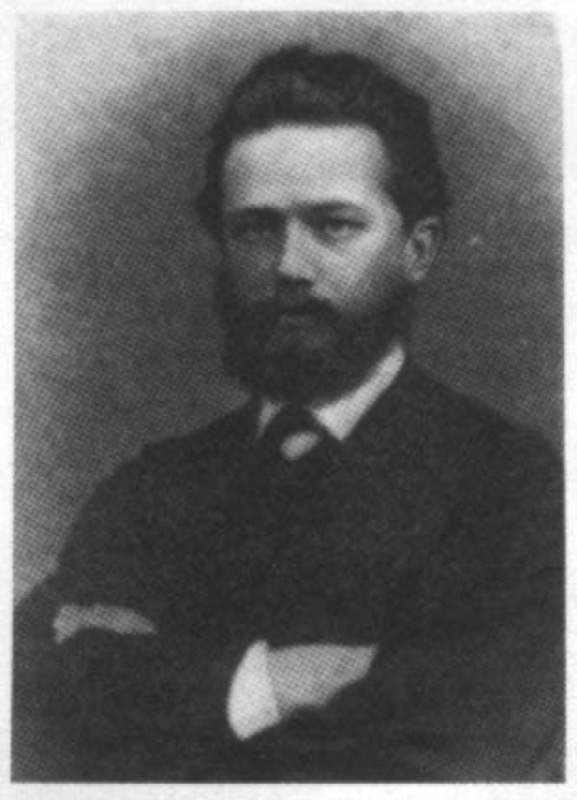
Pyotr Ilyich Tchaikovsky, about 1866
Tchaikovsky’s symphonies appealed to audiences worldwide with an immediacy and directness that was startling even in music. His timeless melodies, presented with eloquence and poise and matched by inventive harmony and orchestration, have ensured their universal appeal.
His Symphony No. 1 in G minor, Op. 13, subtitled “Winter Daydreams”, is one of the most important markers in the symphonic literature of the 19th century. In this work, the composer set out to create a lasting monument to Russian music.
One of the most irresistibly attractive first symphonies ever written, the work proved rather controversial in the end.
Born of Anxiety
Shortly after graduating from the St. Petersburg Conservatory, Nikolai Rubinstein offered Tchaikovsky a teaching position at the Moscow Conservatory in 1865. Prodigiously gifted as a composer, Tchaikovsky may well have felt the need to prove his abilities and justify his appointment, as he started work on his First Symphony in March 1866.
The work caused Tchaikovsky a good deal of stress, and he reported: “My nerves have been utterly upset again for the following reasons: 1) a lack of success in composing the symphony; 2) Rubinstein and Tarnovsky, who, noticing that I’m nervous, try to frighten me all day by various means; 3) the unshakeable thought that I’ll soon expire without even managing to finish the symphony successfully.”
According to his brother Modest, “it was the single work that gave him more anguish than any other.” On the one hand, his conservative, formalist teachers, including Anton Rubinstein, demanded classical conformity and refused to endorse or perform what they considered a work in progress.
Pyotr Ilyich Tchaikovsky: Symphony No. 1, Op. 13 “Winter Daydreams” (Adagio cantabile ma non troppo)
Caught Between Two Musical Worlds
On the opposite side of the artistic spectrum was a group of composers, including Mussorgsky, Borodin, Cui, Rimsky-Korsakov, and Balakirev, who were trying to define Russian musical culture as a distinctive indigenous entity, rather than allowing it to become a derivative of the German musical tradition.
Given these enormous pressures on the young, extremely sensitive and highly self-critical composer, it is a miracle that this symphony was completed at all. In fact, Tchaikovsky worked himself into complete nervous and physical exhaustion, with a doctor gravely declaring him “one step away from insanity.”
Tchaikovsky did complete the symphony in November 1866, but only two movements were accepted for inclusion in a symphony concert. He produced a second version in February 1868, but still not satisfied, he made the final revision in 1874.
Gift for Melody, Struggle with Form
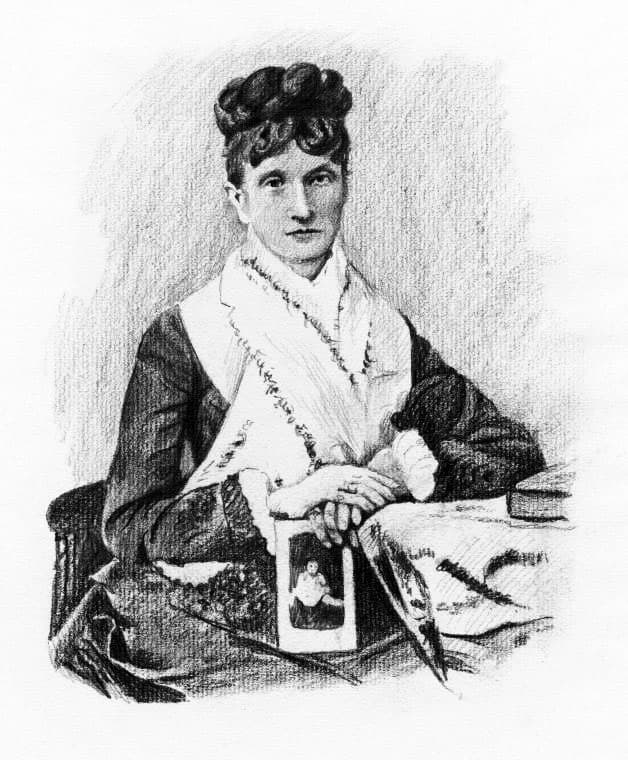
Nadezhda von Meck
Tchaikovsky confessed to his patroness, Nadezhda von Meck, that his First Symphony “is in many ways very immature, yet fundamentally it has more substance and is better than many of my other more mature works.”
At the heart of his struggles were not merely aesthetic differences, but questions of how to adapt formal convention, symphonic structure, and development to accommodate his exceptional sense of melody.
Writing later in life, Tchaikovsky reflected, “All my life I have been much troubled by my inability to grasp and manipulate form in music. I fought hard against this defect and can say with pride that I achieved some progress, but I shall end my days without ever having written anything perfect in form. What I write has always a mountain of padding; an experienced eye can detect the threads in my seams, and I can do nothing about it.”
Pyotr Ilyich Tchaikovsky: Symphony No. 1 in G Minor, Op. 13, “Winter Daydreams”: III. Scherzo: Allegro scherzando giocoso (Zürich Tonhalle Orchestra; Paavo Järvi, cond.)
A Winter Journey in Sound
In his first symphonic essay, Tchaikovsky found the melodic and structural confidence to mould a distinctly personal yet definitively Russian symphonic tradition. Tchaikovsky left no explanation for the subtitles he gave the symphony “Winter Daydreams,” or the first two movements “Daydreams of a Winter Journey” and “Land of Gloom, Land of Mist.” It’s entirely reasonable to assume that he envisaged a programmatic element in the work, which may not have survived into the completed version.
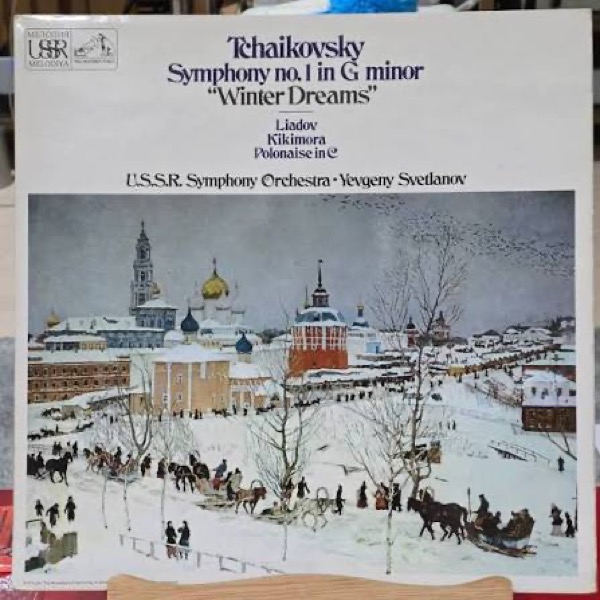
Tchaikovsky: Winter Daydreams
Marked “Allegro tranquillo,” the opening movement abounds with melancholy beauty as the flute and bassoon introduce the opening theme. As the movement gathers momentum, a secondary lyrical melody emerges, and distinctive horn calls propel the music into the drama of the central section.
Suddenly, the entire orchestra pauses, and the cellos and basses sound a chromatic meditation that wrestles the music back to the opening theme and key. Ingeniously, the coda gradually loses intensity and momentum as the movement nostalgically recalls the shimmering and hushed opening strains.
The mesmerising and gentle “Adagio” features one of the composer’s most attractive melodies, first heard in the oboe. Endlessly and softly flowing, the movement is built on subtle gradations and variations of this continuous, sentimental, and seductive tune.
Tchaikovsky salvaged the “Scherzo” from the third movement of a piano sonata he wrote as a student and replaced the trio with the first of his orchestral waltzes. For his concluding movement, Tchaikovsky draws on a Russian folksong in both the introduction and the “Allegro” proper.
Brilliantly orchestrated and unsurpassed in lyrical flow, instrumental energy and contrapuntal vigour, the movement creatively fuses Western symphonic logic with distinctively Russian subjectivity and gloom.
For more of the best in classical music, sign up for our E-Newsletter