Following a previous article, “Musical Friendships”, let us now turn our attention to the institutions, venues, and conservatoires that have shaped the history of Western classical music. Before the digitalisation of the world, these places were central to musical life. Musicians learned, developed and exchanged ideas within their walls, while audiences discovered new works through their concert programmes and performances. Some cities have played a greater role than others – such as Vienna, Paris or London – and what follows is a small selection of institutions and venues whose influence continues to be felt today.
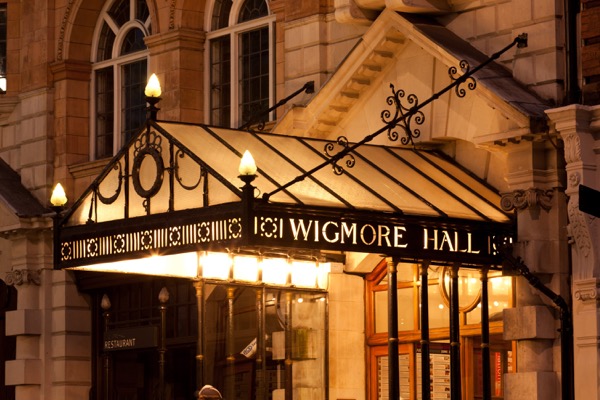
London has long been a cradle of the arts, particularly music. The Royal College of Music helped launch the careers of figures such as Britten, Webber, Williams, Holst and Sutherland, while the Royal Academy of Music counts conductor Simon Rattle among its distinguished alums – alongside artists as diverse as Elton John and Annie Lennox. The Guildhall School of Music & Drama has likewise produced generations of influential musicians, including Jacqueline du Pré and the so-called “Fifth Beatle”, George Martin. The British capital is equally rich in concert venues; from the Royal Albert Hall and the Royal Festival Hall to the Barbican, Wigmore Hall and Cadogan Hall, London has long provided a stage for some of the world’s greatest performers and premieres.
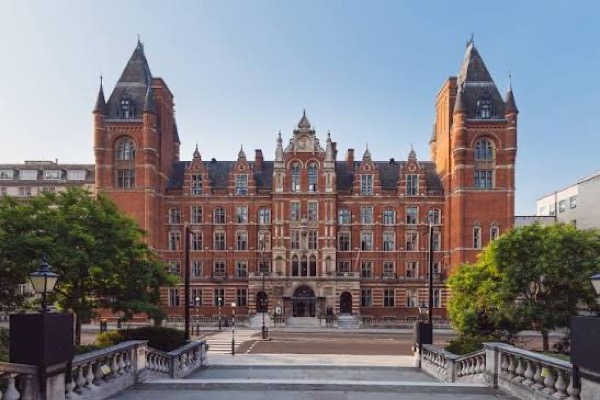
The Royal College of Music, London © encrypted-tbn0.gstatic.com
Across the Atlantic, New York occupies a similarly important position. The Juilliard School nurtured generations of musicians, from Academy Award-winning film composer John Williams to performers such as Yo-Yo Ma and Nina Simone, who would later take her formidable musical training into the world of jazz. Elsewhere in the United States, the Curtis Institute of Music helped shape the artistic development of Barber and Bernstein, while training virtuosos such as Lang Lang and Hilary Hahn. No discussion of American musical institutions would be complete without Carnegie Hall, of course. In many ways, its reputation was established from the very beginning. At its opening concert in 1891, Tchaikovsky conducted several of his own works, including the “Marche Solennelle”, immediately placing the venue among the world’s leading concert halls.
Carnegie Hall’s Opening Night 1891 (From the Carnegie Hall Archives)
France’s Conservatoire de Paris has welcomed some of the most influential figures in French music, including Debussy, Ravel, Bizet and later Messiaen. Many of its most celebrated students later returned as professors, helping shape subsequent generations of composers and performers. Paris is also home to one of the most famous moments in music history; the Théâtre des Champs-Élysées became immortalised in 1913 with the premiere of Stravinsky’s The Rite of Spring. Both the composer’s radical orchestral score and Nijinsky’s revolutionary choreography for the Ballets Russes provoked uproar. The unconventional rhythms, dissonances and choreography sparked shouting, arguments and even physical altercations in the audience, requiring police intervention. More than a scandal, the evening marked a decisive break from many established musical traditions and remains one of the defining moments of 20th-century music.
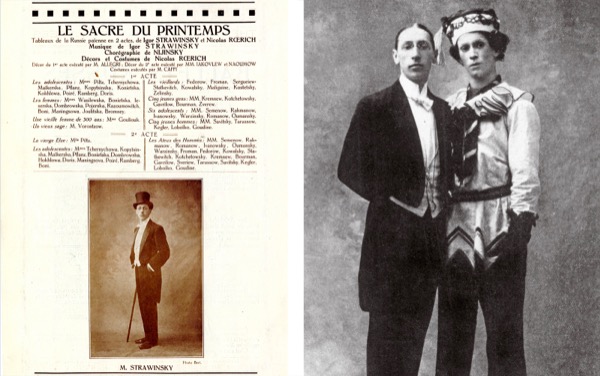
The 1913 Théâtre des Champs-Élysées programme for The Rite of Spring (left); Igor Stravinsky and Vaslav Nijinsky (right) © theatrechampselysees.fr
Vienna, meanwhile, remains inseparable from classical music history. The University of Music and Performing Arts Vienna has educated some of the most important conductors of the modern era, including Mehta, Abbado and von Karajan. The city’s Musikverein remains one of the world’s most revered concert halls and hosts the annual Vienna Philharmonic New Year’s Concert, an event watched by millions worldwide.

Sydney Opera House © fresher.ru
On the other side of the world, the Sydney Opera House has become a defining cultural landmark of the modern era. While often celebrated for its iconic architecture, it has also become one of the leading concert venues in the Southern Hemisphere. Similarly, the Walt Disney Concert Hall in Los Angeles has followed a comparable path, combining striking architectural innovation with a growing reputation as a major centre for contemporary musical performance.
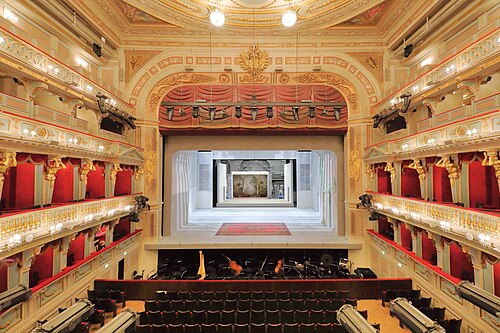
Theater an der Wien
Other venues deserve recognition for their unique contributions to music history; the Berliner Philharmonie, The Theatre an der Wien – the venue where Beethoven presented an extraordinary four-hour concert featuring the premieres of his fifth and sixth symphonies, his fourth piano concerto and the Choral Fantasy. Despite under-rehearsed musicians and an exhausted audience, it remains one of the most astonishing concentrations of creative genius ever unveiled in a single evening. The list could continue indefinitely… La Scala in Milan, the Concertgebouw in Amsterdam, the Grand Hall of the St. Petersburg Philharmonia, Leipzig’s Gewandhaus, Tokyo’s Suntory Hall and Hamburg’s Elbphilharmonie all occupy important places and continue to shape the future of classical music.
While composers and performers often occupy the spotlight, the institutions that nurtured them and the venues that presented their work are equally important to the story of Western classical music. They are the places where ideas were exchanged, careers were forged, and history was made. Long before the internet connected the world, these halls, schools and conservatoires formed the networks through which music travelled, evolved and endured.
For more of the best in classical music, sign up for our E-Newsletter