On Nov. 21, composer Alex Ho brings forth two concerts of new works at Wigmore Hall. Award-winning pianist Junyan Chen will present his piano pieces Knuckleduster (2021), torn, to the ground, exhausted, sobbing (2024), and After Byrd – Civitas Sancti Tui (2026). Following Mahler’s Das Lied von der Erde, Alex will premiere Then Shut Your Eyes, a chamber work featuring mezzo-soprano Fleur Barron and the Kaleidoscope Chamber Collective, with text by Singaporean poet Theophilus Kwek, co-commissioned by Wigmore Hall, Aldeburgh Festival, Brooklyn Art Song Society, and Glyndebourne. A Winner of the UK Critics’ Circle Young Artist Award, among other accolades, Alex Ho shares how the human voice, love and lament, cross-cultural pollination, and socially engaged music continue to inspire him.
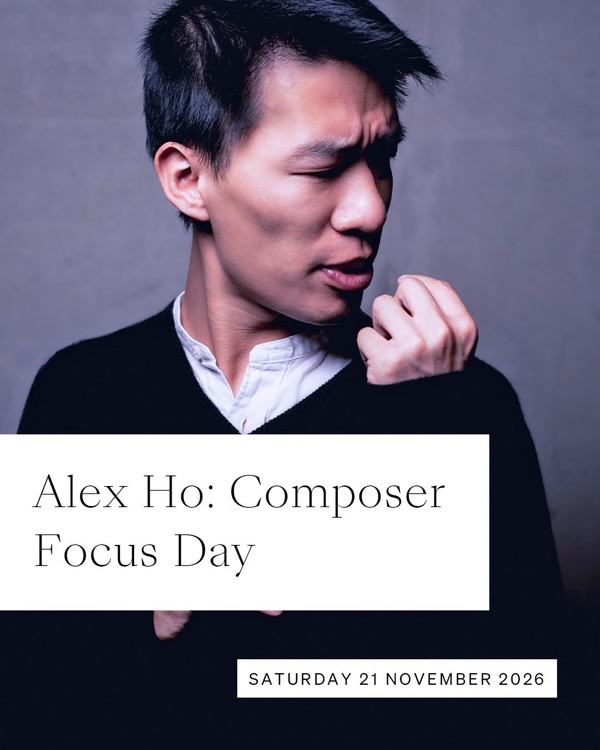
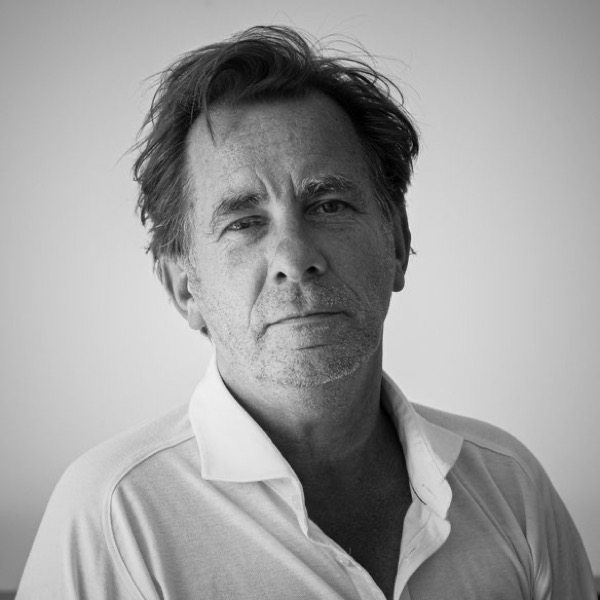
Alex Ho (Photo by Marcel Lennartz)
What inspired your new chamber work and why pair it with Mahler?
Then Shut Your Eyes is composed for mezzo-soprano and eight instruments. I work predominantly in opera and vocal music. For me, the human voice is a direct and emotive medium for conveying dramatic stories. This piece is also part of my ongoing exploration of Chinese cultures. I’m British-born Chinese, and my parents are from Hong Kong. What does it mean to bring Chinese culture into Western classical music? Is it even helpful to consider the two as separate entities? Cultural boundaries are becoming increasingly blurred and indeed interconnected.
One thing that drew me to create a response or companion piece to Mahler’s Das Lied von der Erde was his use of Tang dynasty poetry, translated first into French and then into German. Mahler’s settings depart considerably from the original texts, raising interesting questions: what is lost in translation, and what new meanings emerge? For my song cycle, I worked with Singaporean poet Theophilus Kwek, a long-time collaborator and university friend. I asked him to select and translate ancient and modern Chinese poems exploring companionship and reconnection.
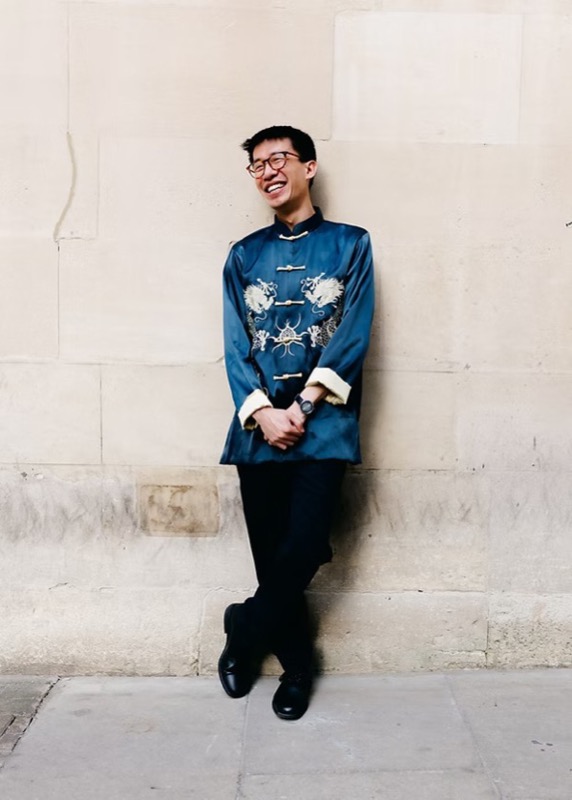
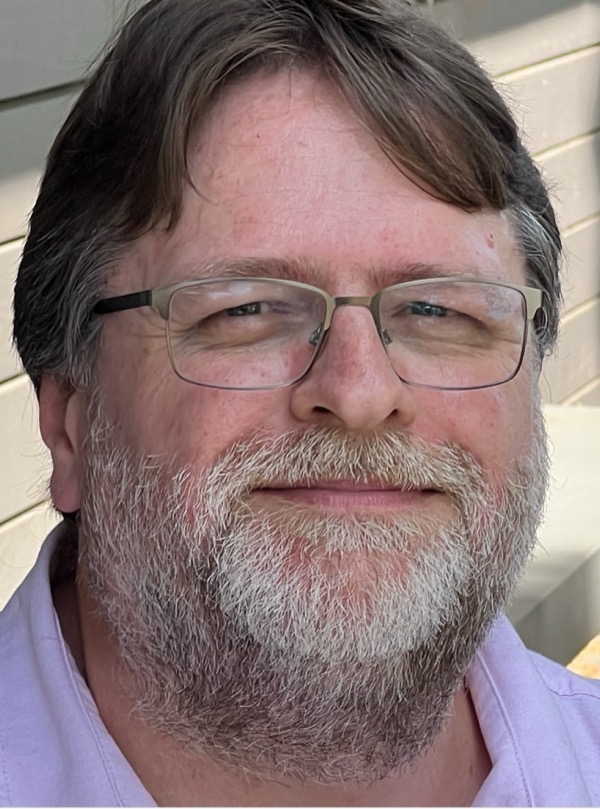
Alex Ho (Photo by Mike Skelton)
I see Mahler’s Das Lied von der Erde as fundamentally a lament, a sorrowful work about separation and loss, though not without moments of ecstasy and joy. My response approaches things from the other side: what does it mean to reconnect with the earth and those around us? Having experienced personal bereavement in recent months, I’ve been reflecting on grief as both a process of sadness and an act of love. I wanted my piece to inhabit the space between lament and love song, with Theo’s translations exploring connection, separation and reconnection.
The texts are all set at night. I began with Du Fu’s Dreaming of Li Bai, and another poem is called Night Music by Lin Huiyin, which is very Mahlerian. Night also carries particular associations in Chinese culture: the moon, the goddess Chang’e, introspection and reflection, and the possibility of dreams opening up an alternative reality. I wasn’t consciously drawing on Mahler’s musical language, though the piece includes one direct quotation for listeners to discover. Having listened extensively to Das Lied von der Erde, I suspect its influence also emerges subconsciously in the vocal writing and interplay of textures.
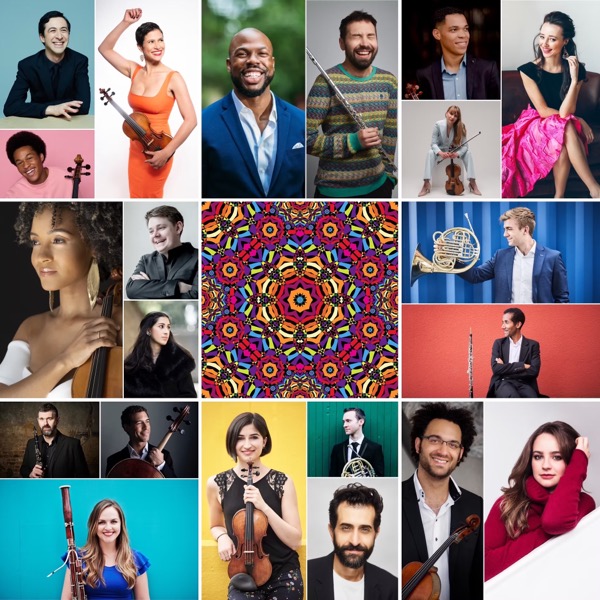
Kaleidoscope Chamber Collective (Associate Ensemble at Wigmore Hall)
I wonder whether the description of “musical influences from East and West” is useful, since you already used “China” as a plural noun in the 2025 BBC Music Magazine feature?
The whole East-meets-West paradigm is problematic and outdated, part of a colonial narrative. It treats cultures as separate, almost monolithic entities. But there’s a wider tendency to create false categories around the work of people of colour. I’m wary of these assumptions, and how useful they really are in analysing and appreciating music. I don’t go through my day thinking, “I’m Chinese at this time and English at this time.” The dichotomy doesn’t reflect my creative process or my cultural identity. The more interesting question is how we exist beyond East and West, seeing them not as mutually exclusive but as cultures that can share the same space. This feels increasingly relevant as diasporic identities become more common. It’s a new reality.
What I find more helpful is being specific about cultural references. One key source of inspiration in Then Shut Your Eyes is the suona, a loud, reedy traditional Chinese instrument played at both weddings and funerals. I find it fascinating that an instrument associated with two seemingly contrasting rituals can evoke, in both cases, a celebration of love. This idea informed my setting of Theo’s Maybe, a funeral dirge. In the final song, I evoke both wedding and funeral processions through the suona. The clarinet writing draws on its sound, while other textures draw on the Chinese sheng, a mouth organ often played alongside it.
Gongsun Ode by Alex Ho
Please give us a little preview of your piano compositions: Knuckleduster (2021), torn, to the ground, exhausted, sobbing (2024), and After Byrd – Civitas Sancti Tui (2026).
I’m really excited to be working with Junyan Chen, a phenomenal pianist and recent winner of the UK Critics’ Circle Award for Pianists. The three pieces draw on historical works and pay homage to the piano’s rich repertoire. I grew up playing the piano; it was my first instrument and my introduction to classical music. Whenever I write for piano, I’m keenly aware of the instrument’s rich tradition and how my own music responds to what came before.

Junyan Chen
Knuckleduster (2021) was written during the pandemic as a rather intense response to the racism faced by East Asian communities in the UK. Reported incidents had tripled compared with the previous two years, against a backdrop in which Chinese people already experienced the highest levels of racism (See references from https://www.independent.co.uk/news/uk/home-news/coronavirus-uk-hate-crimes-chinese-people-china-a9499991.html and https://www.theguardian.com/world/2017/nov/19/chinese-community-reports-highest-proportion-of-racial-harassment-in-britain). I developed the piece through conversations with my friend, pianist Aidan Chan, an Irish-Hong Kong pianist then studying at the Royal College of Music. We reflected on this shocking cultural moment and the problematic relationship between Western classical music and non-Western, particularly Chinese, cultures: how they are categorised and reduced to monolithic ideas that don’t reflect our lived experiences.
Subtitled “A Study to Unlearn”, it’s a six-minute piano study that takes the scales, arpeggios and finger patterns of conventional piano exercises and twists them, pulling them apart and putting them back together in disjointed patterns. I also ask the pianist to knock on the piano frame with their knuckles, creating a percussive, distinctly un-pianistic sound, almost like hitting a wooden box. It becomes increasingly intrusive as the piece progresses. The tension between the warped piano material and this non-pitched element responds to the violence I witnessed and experienced during that period.
Aidan Chan plays Knuckleduster by Alex Ho
Torn, to the ground, exhausted, sobbing (2024) is a piece inspired by Puccini’s Turandot, his final opera. Completed in 1926, it marks its hundredth anniversary this year. Turandot is a complex case study. The Italian composer essentially appropriates Chinese culture, taking folk melodies out of their original contexts and using them to evoke China. When the princess appears, for example, he plays Mo Li Hua—as if to say, “There, we know she’s Chinese.” It can feel quite garish. One moment I find particularly moving is the slave girl Liù’s aria. At the end of this beautifully orchestrated song, Puccini’s score instructs her to “fall to the ground, exhausted and sobbing.” The melody is another Chinese folk tune, which Puccini reportedly encountered through a music box. My corresponding piece is a twelve-minute piano fantasy that takes this same tune and reimagines it in various directions: thinking through Liù as a character and imagining what might happen if she weren’t simply left there. It’s an alternative reality for someone who has little agency in the opera.
My newest piece, After Byrd – Civitas Sancti Tui (2026), is inspired by a Renaissance motet by the English composer William Byrd, written when the English monarchy banned Catholicism. Byrd composed a series of choral works lamenting the suppression of his faith and his inability to practise it openly, some in collaboration with Thomas Tallis. Civitas Sancti Tui is one of these pieces: a beautiful, five-minute piece that can be heard as a kind of protest, with translated text from the original Latin: “Thy holy cities are deserted. Zion has become a wasteland, Jerusalem a desolation.” I’ve reimagined Byrd’s music for solo piano, drawn to this idea of quiet protest. Given the horrors unfolding in Palestine and Gaza, I felt a particular resonance with the text, especially its image of Jerusalem as a desolation. I wanted to pay homage to this, while reflecting on what music can say politically and what a small act of protest can mean today.
Tenebrae Choir sings Byrd’s Civitas Sancti Tui
You are the co-director of Tangram, an artist collective and an Associate Artist at LSO St Luke’s. Can you talk about your upcoming project?
ISLANDS is the project we’re working on right now. It’s a multidisciplinary production, very typical of Tangram, bringing together live music, Chinese and Western instruments, dance, scent, film, and set design. Led by one of Tangram’s in-house designers, Chang Meng, the project explores tea ceremonies and the spirituality of water. Through multi-sensory elements, we’re conjuring and reinterpreting the ritual of sharing tea and water across cultures. Tea is one of China’s biggest exports and has also become an important part of British culture, so we’re interested in exploring what sharing it means.
The music is scored for flute, cello and guzheng. We’ve arranged a piece by Renaissance composer Palestrina for the trio, alongside works by Chopin and Debussy, as well as pieces by contemporary Chinese composers written for the guzheng—a traditional Chinese plucked zither. We’re keen to showcase the instrument, which is strongly associated with water: some of its sounds are reminiscent of waterfalls, making it a particularly fitting part of the production. We’ll perform in Nottingham on 3 February, in Manchester on 10 February, and at LSO St Luke’s on 27 February.
Tangram Voices 4 | On Silk and Paper by Alex Ho
Can you share your experience being selected as one of the Classical: NEXT 2026 Fellows?
The fellowship, which finished earlier this year, was sponsored by the PRS Foundation, a UK music charity, and enabled me to attend Classical: NEXT, an international conference in Budapest focused on innovation and new music. It was a valuable opportunity to connect with artists and organisations from across Europe and beyond, discover new projects and reconnect with familiar faces. Especially in the aftermath of Brexit, maintaining these international connections feels vital.
You have studied with Huang Ruo and mentioned influences such as Witold Lutosławski. Who else, and how, have their works shaped you?
Two composers I find endlessly inspiring are Huang Ruo and Du Yun, both brilliant Chinese-American composers. As I work predominantly in opera and theatre, I’m particularly drawn to their holistic approach to storytelling and the way they engage with cultural issues. Their work shows that making music, and especially making opera, is about much more than composing notes or sounds. It means engaging with stories, cultures and wider discourses. In that sense, they’ve really opened my mind to what it means to be an artist in the 21st century. I also find the way they speak about their work incredibly illuminating, and both have supported me personally over the past few years, which means a great deal.
Another important reference for me is Lutosławski, one of my favourite composers, whose symphonies, string quartets and orchestral works I return to constantly. I’m equally inspired by the way he thought and spoke about music, from interview materials by Steven Stucky and Charles Bodman Rae. One idea I particularly love is his description of composing as an act of “soul fishing”: writing music for no one but himself, making the music he wanted to hear, while hoping to “catch” others who shared his aesthetic and sensibility. I find that an illuminating way of thinking about composition.
https://www.alexhocomposer.com/dates
For more of the best in classical music, sign up for our E-Newsletter