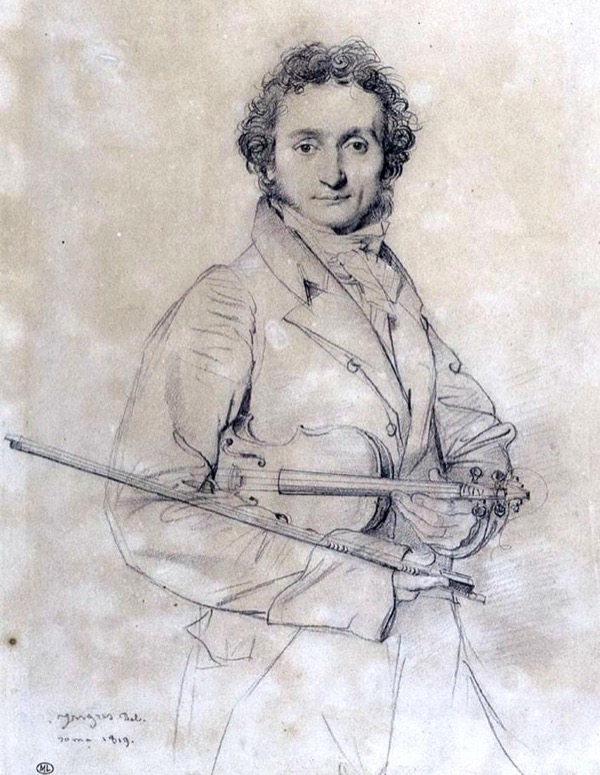
Western classical music has evolved in an intriguing way — almost cyclic in its nature, like many things in life. In its earliest forms, the composer was a complete musician: composer, performer, conductor, and often teacher all at once. Figures like Vivaldi, Bach or Mozart embodied this ideal. Music was not divided into roles; it was lived as a whole. Historically, many composer-performers were also virtuosos. Paganini, Chopin, Liszt, Schumann, Saint-Saëns, and Rachmaninoff built their reputations as much on their performance as on their compositions. Virtuosity was not separate from creation; it was part of it — a natural extension of the musical voice. The stage and the writing desk were not two separate worlds, but one continuous space of expression. Over time, however, this unity began to fragment. As ensembles expanded and orchestras grew in size and complexity, specialisation became inevitable. The composer was gradually pushed away from performance, and conducting emerged as a distinct and necessary role. By the time of Beethoven, and even more so with the large-scale visions of Wagner and Mahler, the distance between composing and performing had widened significantly. Eventually, the composer disappeared almost entirely from the stage, becoming little more than a name on a programme — while the orchestra and conductor took centre stage.
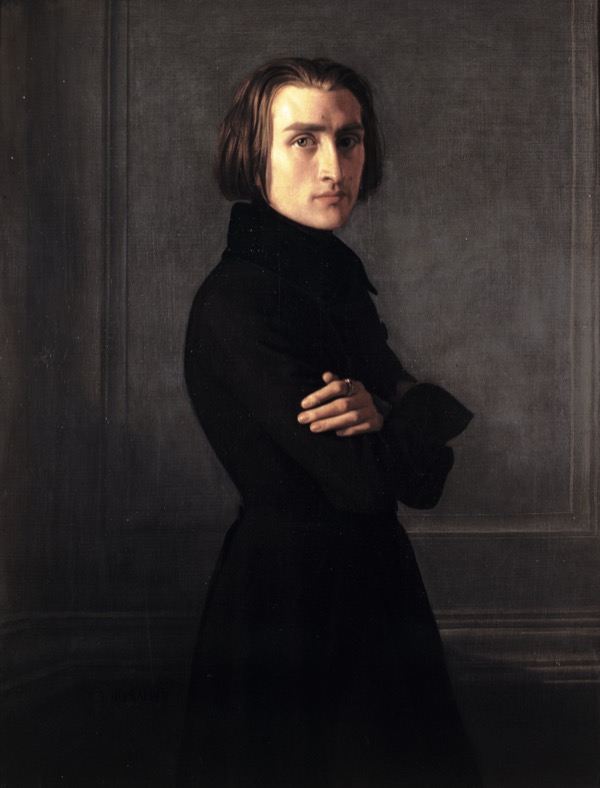
Franz Liszt
Looking back, the greats of the past were not exceptions but the norm of their time. It would have been almost inconceivable for a musician then not to compose, perform, and understand their craft in its entirety. Their artistic identity was inseparable from their practical activity. To be a musician meant to embody all aspects of music-making.
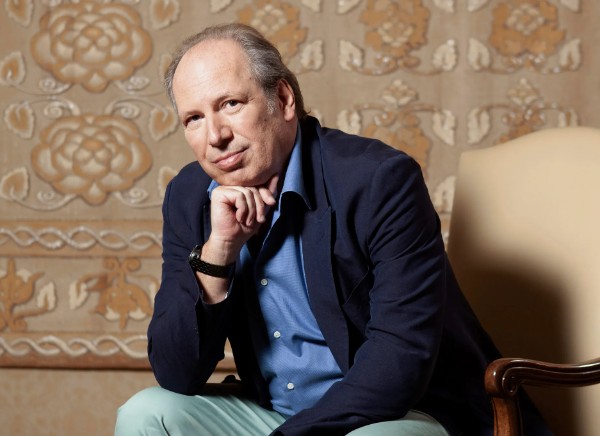
Hans Zimmer
The modern musical landscape has often pushed this separation even further. While the past decades have produced globally successful composers such as Williams, Zimmer or Richter, and equally celebrated performers like Itzhak Perlman, Martha Argerich, Yo-Yo Ma or Lang Lang, only a few have managed to achieve prominence in both worlds simultaneously. The industry itself has reinforced this divide, shaping distinct career paths that rarely intersect.
Ludovico Einaudi – Pathos (Live at The Royal Albert Hall)

Ludovico Einaudi © Decca/Ray Tarantino
Yet, in recent decades, something has shifted once again. Perhaps out of financial necessity, or perhaps out of a desire for artistic ownership and independence, the composer has started to return as a performer. Technology has played a crucial role in this transformation. The piano, keyboards, and digital tools have allowed composers to regain control over the full creative process — from writing to performing to producing. Composers and pianists like Einaudi, Frahm and Arnalds illustrate this return vividly: self-sufficient musicians shaping their sound directly through their instruments, often outside of traditional institutional frameworks. This shift also reflects a broader change in how music is created and consumed. Smaller ensembles, home studios, and direct distribution platforms have made it possible for composers to reconnect with performance without the need for large infrastructures. In a way, the limitations of the past have become the freedoms of the present.
Ólafur Arnalds – Only The Winds (Official Music Video)
Today, we may be witnessing a quiet return to that earlier model — albeit in a different form. As ensembles shrink, as production becomes more accessible, and as artists seek greater autonomy, music is once again being created at the instrument rather than solely on paper. The composer is no longer confined to the desk but reclaims a place in the act of performance.
If history does move in cycles, then perhaps this is not a reinvention, but a return — a modern reimagining of the complete musician.
Leonard Bernstein – Young People’s Concert “What is Melody”
Interestingly, this raises another question: will we witness the return of the composer-conductor? The 20th century offered powerful examples in the figures of Bernstein, Mahler, Stravinsky, Strauss, Boulez and Britten — musicians who maintained a direct link between creation and interpretation. Today, however, such figures are rarer, perhaps because the scale and economics of orchestral music make this dual role more difficult to sustain. And yet, if the current trajectory continues, it may only be a matter of time before that bridge, too, is rebuilt.
For more of the best in classical music, sign up for our E-Newsletter