
Classical music history is often seen as dignified and serious – all powdered wigs, solemn portraits, and stuffy concert halls.
But scratch the surface, and the past turns out to be far stranger.
Behind some of the most revered composers in Western music are stories that sound like modern internet myths: fan hysteria bordering on mass delusion, obscene jokes set to immaculate counterpoint, creative breakdowns cured by hypnosis, murder plots abandoned at the last minute, and lifelong obsessions with things like trains and numerology.
Remarkably, these stories aren’t apocryphal. In many cases, they’re documented in letters, memoirs, contemporary reports, and firsthand accounts.
Here are ten classical composer facts that sound fake – but are completely true.
1. Franz Liszt caused celebrity hysteria.
Evgeny Kissin – La Campanella (Liszt)
During the 1840s, Franz Liszt inspired a phenomenon that writer Heinrich Heine famously dubbed Lisztomania, which can be compared to the Beatlemania of the twentieth century.
Audiences screamed, fainted, and picked up his cigar stumps in the street.
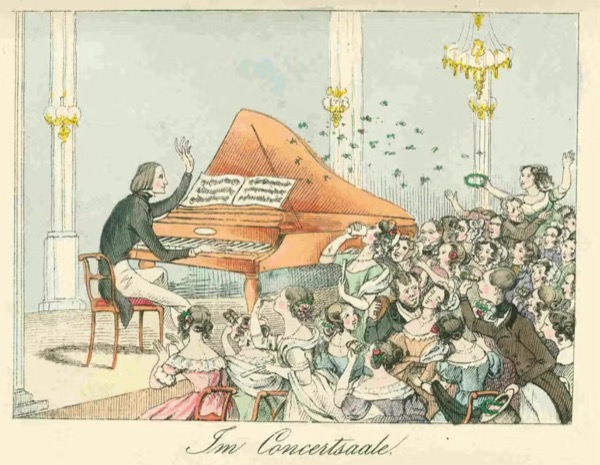
Liszt concert cartoon
Lisztomania even had an impact on fashion: women wore cameos with his portrait, made his piano strings into bracelets, and collected his discarded gloves and handkerchiefs.
Thanks to his virtuosity, Liszt became an international celebrity decades before visual mass media, creating a template for the fame of musical superstars of the future.
2. Wolfgang Amadeus Mozart wrote a canon whose text is literally “lick me in the arse.”
Mozart: Leck mich im Arsch
Mozart‘s scatological humour is well documented, and one of his canons bears the unforgettable title Leck mich im Arsch (K. 231) (“Lick me in the Arse”).
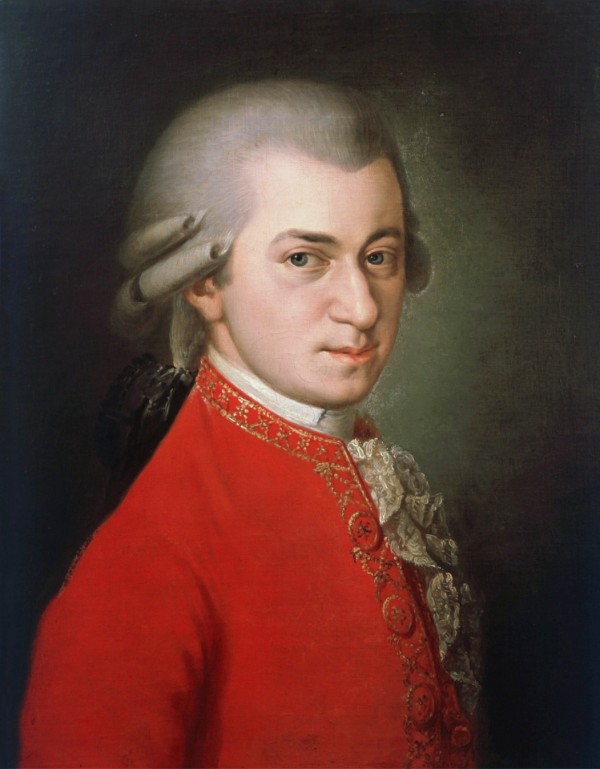
Barbara Krafft: W. A. Mozart, 1819 (Gesellschaft der Musikfreunde)
Historians have surmised that it was a party piece for a group of friends to sing together.
The canon is harmonically correct, neatly constructed – and unapologetically vulgar.
After Mozart’s death, when his remaining work was being catalogued and published, the publisher changed the lyrics to “Let Us Be Glad!” The original text was rediscovered in 1991.
3. A full performance of Erik Satie’s Vexations can last 18 to 24 hours.
Satie‘s Vexations consists of a short, eerie piano phrase with the instruction that it be repeated 840 times.
When taken at a slow, meditative tempo – as Satie may have intended – a complete performance can last nearly an entire day.
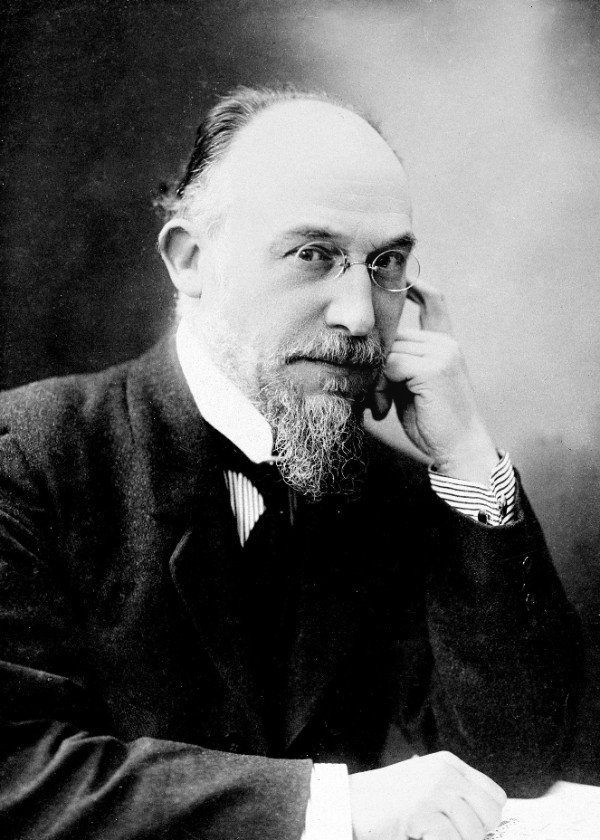
Erik Satie
The first full performance took place in 1963 and was organised by composer John Cage. It involved multiple pianists rotating in shifts, with audience members coming and going throughout the night.
That performance lasted for eighteen hours. One audience member heard the entire thing.
4. Johann Sebastian Bach once walked 250 miles just to hear an organist.
Bach – Passacaglia in C minor BWV 582 – Smits | Netherlands Bach Society
In 1705, the 20-year-old Johann Sebastian Bach walked roughly 250 miles from the town of Arnstadt to the town of Lübeck to hear the legendary organist Dieterich Buxtehude.
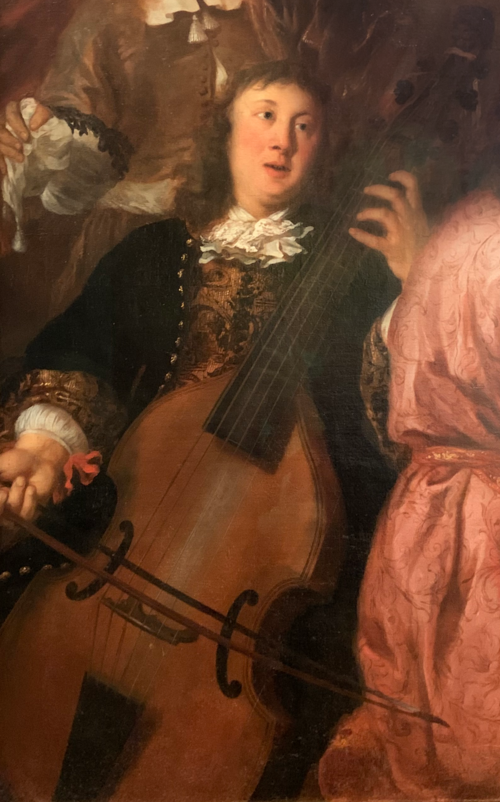
Depiction of Dieterich Buxtehude in the painting “The Musical Party” 1674 by Johannes Voorhout
That year, Buxtehude was scheduled to lead weekly performances of his music during the Advent season. At least one performance included a 25-member violin section, a brass section, and multiple choirs, so it’s easy to see why Bach would be so interested in hearing it.
Bach was granted a short leave from his job to experience this event, but he overstayed it by several months, studying Buxtehude’s playing and compositional style.
The journey would have permanently shaped Bach’s approach to music, expanding his idea of what was possible.
5. Hector Berlioz, composer of the Symphonie fantastique, once planned a triple murder.
Berlioz : Symphonie Fantastique
After composing his famous Symphonie fantastique, based on his fixation with actress Harriet Smithson, Hector Berlioz turned around and fell in love with a virtuoso pianist named Camille Marie Moke, and the two became engaged.
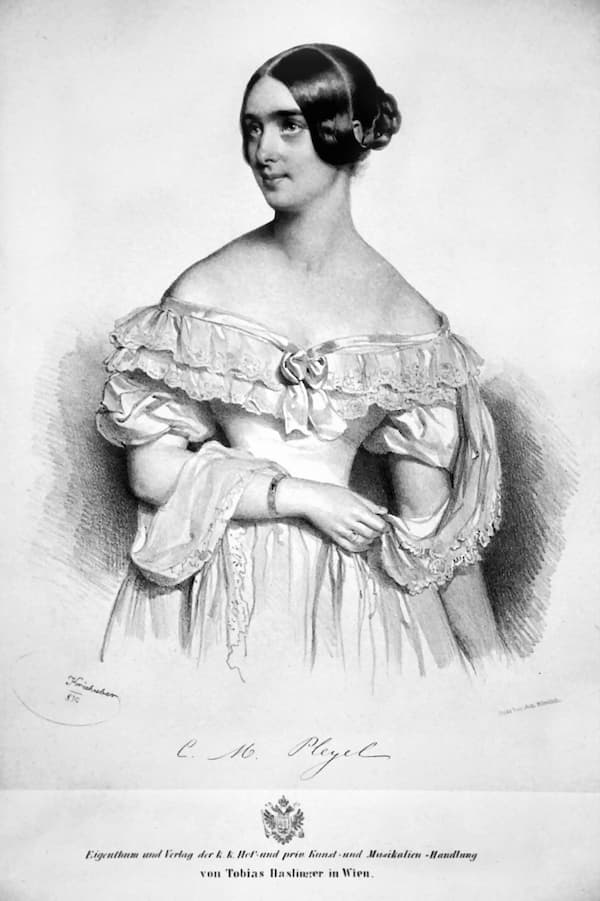
Marie Pleyel
Around the same time, Berlioz won the prestigious Prix de Rome and, as part of his prize, travelled to Rome to live and compose.
One day, he got a letter letting him know that Moke had married a wealthy piano manufacturer instead of him.
Blinded by rage, he devised a detailed plan to murder Moke, her mother, and her husband before killing himself. He even acquired poison and a disguise (a maid’s costume).
Fortunately, the plan collapsed before it could be carried out. He wrote in his memoir that he didn’t follow through because he didn’t want to deprive the world of his music.
It’s one of the more disturbing pieces of trivia in the history of classical music.
6. Sergei Prokofiev died the same day as Stalin.
Prokofiev: Symphony No. 7 / Gergiev · London Symphony Orchestra
Prokofiev died of a cerebral haemorrhage on March 5, 1953 – the exact same day as Joseph Stalin.
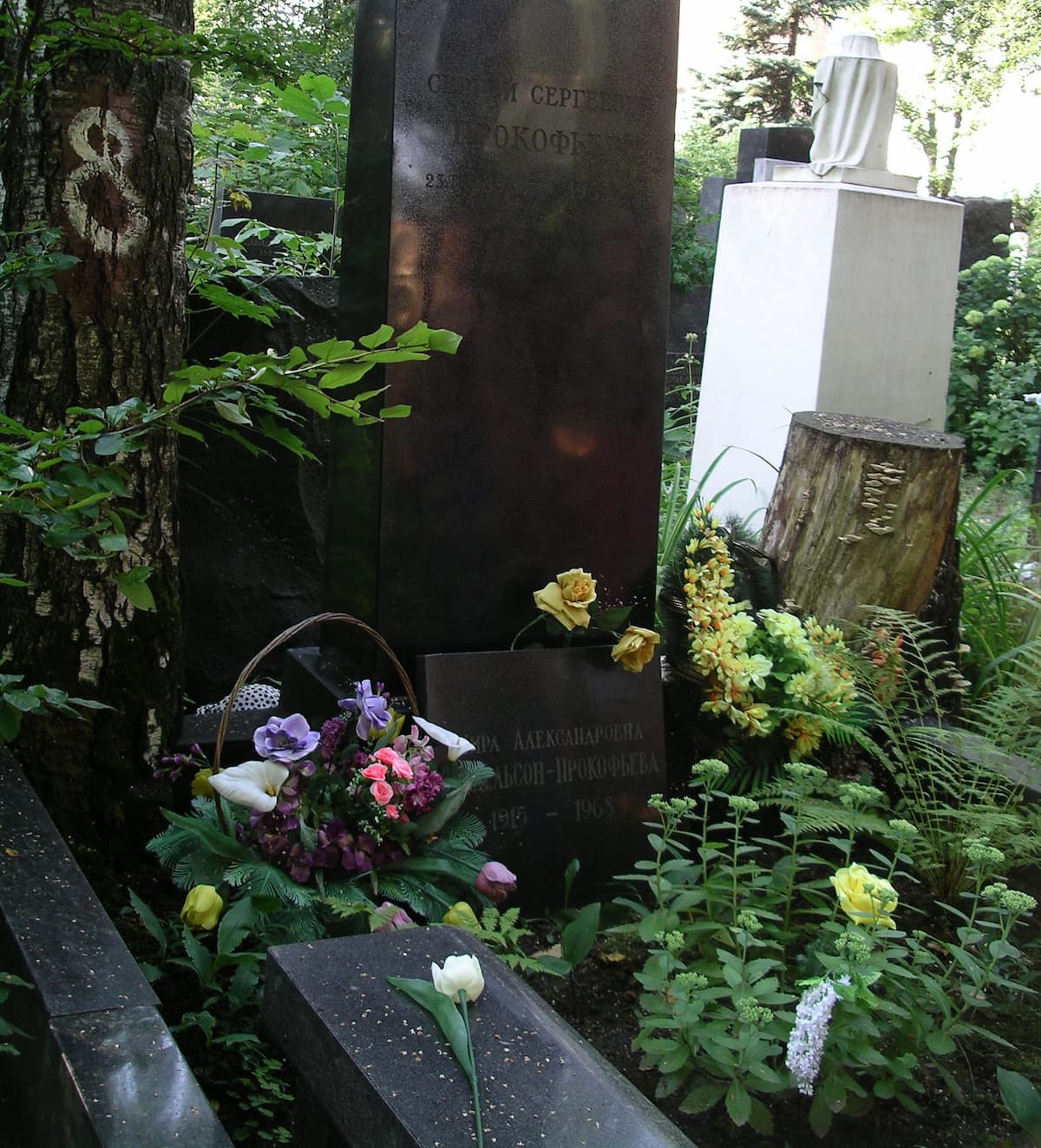
Grave of Sergei Prokofiev
The dictator’s death dominated Soviet media, leaving Prokofiev’s passing largely unnoticed. (In fact, one Soviet music periodical didn’t include a notice of his death until page 116; all preceding pages were devoted to Stalin.)
Prokofiev’s funeral only drew thirty mourners, including his sometimes-rival Dmitri Shostakovich.
Prokofiev’s ex-wife Lina – who was living in a Siberian gulag at the time – only heard about her husband’s death months later, via the radio.
7. Arnold Schoenberg was terrified of the number 13.
Arnold Schoenberg: Verklärte Nacht
Schoenberg suffered from severe triskaidekaphobia (i.e., a fear of the number thirteen).
Throughout his life, he did things like avoiding hotels with 13 floors and altering the title of his opera from Moses und Aaron to Moses und Aron to avoid writing an opera with 13 letters.
His anxiety became worse as he aged. He was especially despondent when he turned 76, because seven plus six equals thirteen.
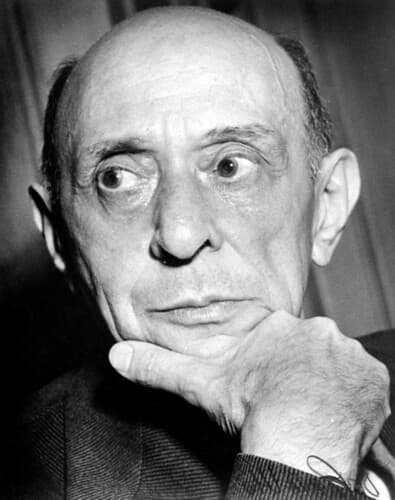
Arnold Schoenberg
That said, maybe his fear was justified. He died on 13 July 1951 – just 13 minutes before midnight – having reportedly spent the entire day in terror. He was 76.
We wrote about Arnold Schoenberg‘s terror of the number here: https://interlude.hk/friday-the-13tharnold-schoenberg-and-triskaidekaphobia/.
8. Wolfgang Amadeus Mozart could memorise and recreate entire works after one hearing.
Miserere mei, Deus – Allegri – Tenebrae conducted by Nigel Short
At age 14, Mozart attended a performance of priest and composer Gregorio Allegri’s Miserere in the Sistine Chapel: a piece whose score was closely guarded and forbidden to copy.
After hearing it once, Mozart wrote the entire work down from memory. He later returned to correct minor details.
The Vatican ultimately praised the feat rather than punishing him.
We wrote about Mozart’s famous feat of transcription here: https://interlude.hk/mozart-diaries-14-april-1770-contredance-b-flat-major-k-123/.
9. After the disastrous premiere of his first symphony, Sergei Rachmaninoff needed hypnosis to write again.
Yuja Wang: Rachmaninoff Piano Concerto No. 2 in C minor Op. 18
The premiere of Rachmaninoff‘s First Symphony in 1897 was a catastrophe, partly due to a poorly rehearsed and inebriated conductor.
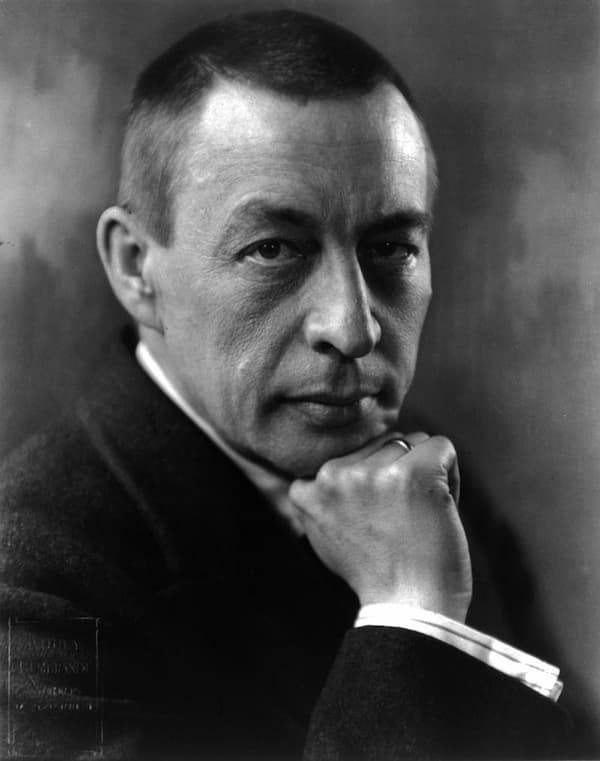
Kubey-Rembrandt Studios: Sergei Rachmaninoff, 1921
The failure plunged the composer into a deep depression and creative paralysis that lasted several years.
Rachmaninoff eventually underwent hypnotherapy, which helped restore his confidence, leading directly to the composition of his wildly successful Piano Concerto No. 2. Today, that concerto is one of the most popular ever written.
He even dedicated the score to his therapist in gratitude for the help.
10. Antonín Dvořák had a hyperfixation with trains.
Dvořák: 9. Sinfonie (»Aus der Neuen Welt«) ∙ hr-Sinfonieorchester ∙ Andrés Orozco-Estrada
Antonín Dvořák was intensely fascinated by trains.
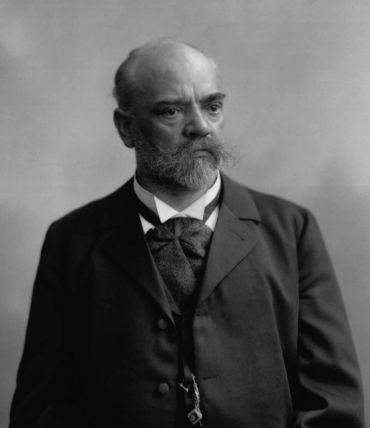
Antonín Dvořák, 1904
He memorised timetables, kept a journal of his train travels, spent hours at stations watching engines arrive and depart, and could identify individual trains by sight and sound.
He even once famously remarked that he would have given up all of his symphonies to have invented the locomotive.
Conclusion
Taken together, these stories reveal something essential about classical music history: it is far messier, funnier, darker, and more human than the myths suggest.
The same figures who wrote sacred masses, symphonies, and operatic tragedies were also capable of crude jokes, obsessive fixations, emotional collapses, and spectacular lapses in judgment.
History doesn’t need embellishment to be fascinating. Sometimes, the truth is already stranger than fiction.
For more of the best in classical music, sign up for our E-Newsletter





A good entertaining article that is well-written to boot.