In the annals of operatic history, George Frideric Handel‘s Deidamia (1741) occupies a bittersweet position. As the composer’s forty-second and final opera, it marked the end of a momentous era for Italian opera in London. For centuries, it was often dismissed as a peripheral work, overshadowed by the monumental oratorios that followed. However, a closer examination of the libretto by Paolo Rolli and Handel’s musical characterisation reveals a work of exceptional dramatic intelligence. Rather than a mere farewell, Deidamia is a sophisticated exercise in irony and psychological realism, offering a nuanced departure from the rigid conventions of the opera seria.
Identity and the Play of Disguise

Achilles on Skyros by Nicolas Poussin,1656
The narrative foundation of Deidamia—the legend of Achilles hiding in female disguise on the island of Scyros—was a popular subject for 18th-century dramatists. Yet, the treatment of this theme in Handel’s version is notably distinct. The central conceit of Achilles (disguised as the maiden “Pyrrha”) creates a layer of theatricality within the theatre that Handel exploits with great sensitivity.
In the original 1741 production, the role of Achilles was assigned to a female soprano. This choice was not merely a matter of vocal expediency but a deliberate dramatic tool. It highlights the adolescent, unformed nature of the hero. Achilles is presented not as the terrifying warrior of the Iliad, but as a youth hovering between the domestic world of the Scyrian court and the call of martial glory. His disguise is more than a costume; it is a representation of a soul yet to be touched by the complexities of passion or the gravity of fate. Handel’s music for Achilles remains light and agile, intentionally avoiding the profound emotional depth of his earlier heroes, thereby maintaining the character’s youthful—and perhaps slightly callow—innocence.
Irony and the Deconstruction of Heroic Norms
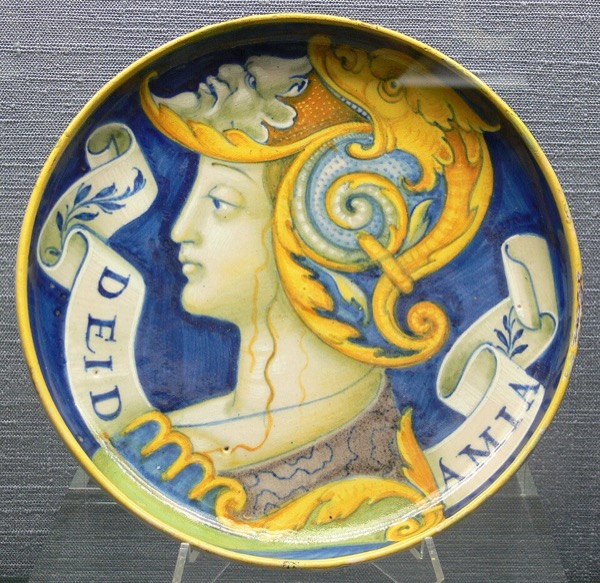
Representation of Deidamia on a 16th-century bowl (1525) Kunstgewerbemuseum Berlin
The brilliance of the opera lies in its pervasive use of dramatic irony, which shifts the opera from the realm of grand tragedy to that of sophisticated comedy. Paolo Rolli’s libretto engages in a clever dialogue with the audience’s knowledge of classical mythology. When Achilles dismisses the oracle of his death at Troy as a mere fabrication by the priest Calchas, the audience—well aware of his impending fate—perceives a poignant irony.
This ironic tone extends to the portrayal of Ulysses. Traditionally, the cunning hero, Ulysses, is here presented with a transparency that verges on the cynical. He is a master of political expediency, and his interactions with the other characters are devoid of genuine emotional stakes. Handel’s decision to give the primo uomo (Ulysses) six arias, none of which are driven by romantic love, was a significant departure from operatic norms. Ulysses advances the plot through intellect and artifice rather than the “passions” that typically fuel an opera seria. This structural choice reflects a world-weary perspective: the grand machinery of the Trojan War is set in motion not by noble ideals, but by the cold calculations of a diplomat.
Deidamia: The Emotional Anchor
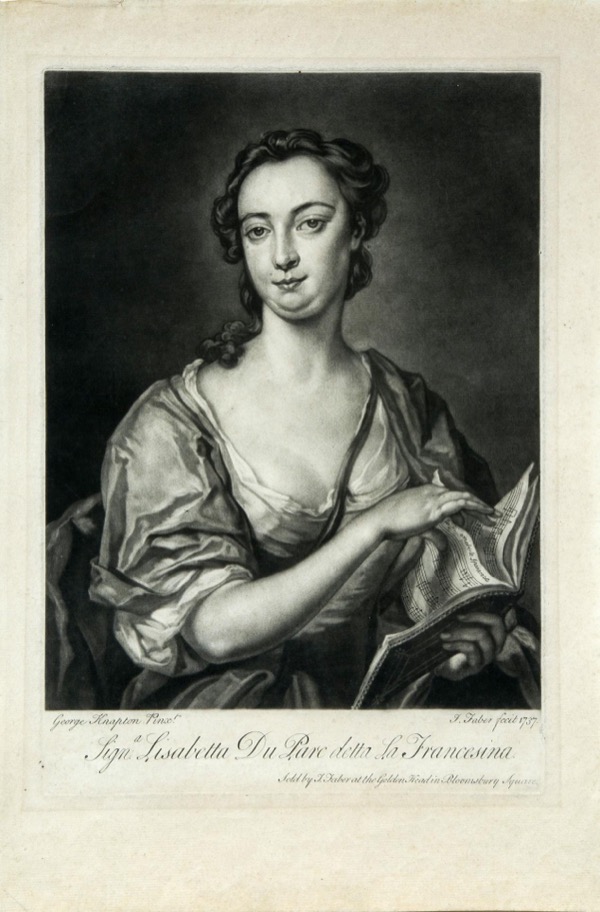
Élisabeth Duparc, who created the role of Deidamia in premiere
Amidst the clever disguises and political manoeuvres, the character of Deidamia provides the opera’s essential emotional gravity. If the male characters are defined by their roles and masks, Deidamia is defined by her vulnerability and her evolving consciousness. She is, as musicologists have often noted, the only shining exception in a world of superficiality.
Handel reserves his most expressive and progressive music for his heroine. Her journey from the tranquil, private joys of her secret love in Act I to the concentrated despair of the later acts is charted with remarkable precision. In her Act II aria, Se il timore, the starkness of the musical texture—often reduced to unison violins and continuo—mirrors her internal isolation.
Her psychological climax occurs in M’hai resa infelice, where she confronts Ulysses. Here, Handel’s writing breaks free from conventional forms to capture her indignation. It is a moment of profound realisation: she understands that her personal happiness is being sacrificed to the larger, impersonal forces of history. Her curse upon Ulysses—wishing him storms and delays on his return to Ithaca—is a masterful narrative bridge to the Odyssey, grounding the mythological epic in a very personal sense of betrayal. Deidamia represents the human cost of the heroic age; she is the one who experiences the true weight of the destiny that the men so lightly pursue.
The Legacy of a Final Act
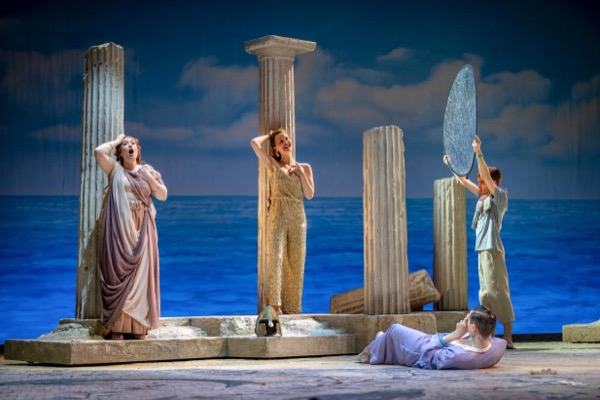
Göttingen International Handel Festival 2026 Production of Deidamia (Credit: Alciro Theodoro da Silva)
The initial failure of Deidamia in the 1740s can perhaps be attributed to its refusal to conform to the age’s expected heroic tone. It was a work that looked backwards at the lighter, ironic traditions of Venetian opera while simultaneously looking forward toward a more flexible, character-driven dramatic form.
Today, we can appreciate Deidamia as a testament to Handel’s enduring curiosity as a dramatist. Even at the twilight of his operatic career, he was unwilling to simply repeat successful formulas. Instead, he chose to explore the shadows of the heroic myth—the irony of the hero’s youth, the coldness of political necessity, and the enduring resilience of a woman’s heart. Deidamia is not merely an ending; it is a sophisticated, deeply human meditation on the masks we wear and the truths that remain when they are finally removed.
Recommended Recording:
Handel: Deidamia – Conducted by Alan Curtis (Virgin Classics / Erato, 2003). For home listening, the late Alan Curtis’s recording with Il Complesso Barocco remains the easiest choice. Curtis was a pioneer in rescuing Handel’s late operas from obscurity, and his reading of Deidamia is a masterclass in stylistic elegance and dramatic pacing. The stellar cast includes Simone Kermes.
George Frideric Handel: Act I: Aria: Nasconde l’usignol’ in alti rami il nido (Simone Kermes, soprano; Il Complesso Barocco; Alan Curtis, cond.)
Live Performance:
The recent co-production between the Göttingen International Handel Festival 2026 and Wexford Festival Opera is the recent modern staging to seek out. Directed and conducted by the acclaimed Baroque specialist George Petrou, this production breathes fresh theatrical life into Handel’s swan song. The production features the sensational high-sopranist Bruno de Sá as Achilles, paired with Sophie Junker’s brilliantly intelligent portrayal of the title role. The live radio complete capture may be heard with the following link:
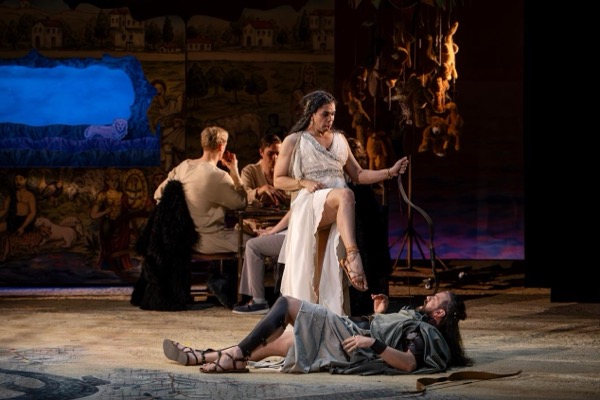
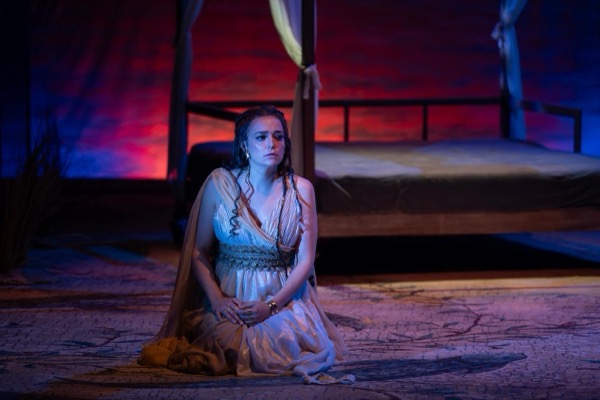
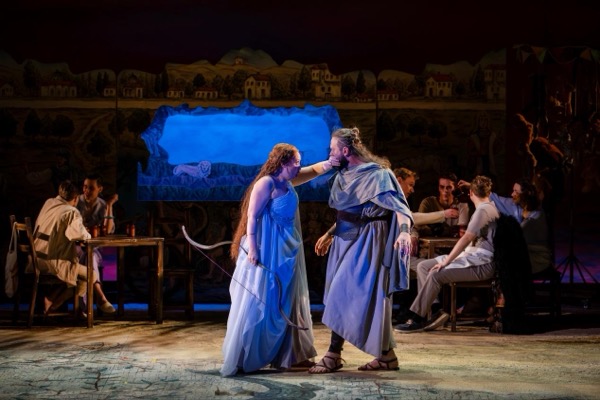
Göttingen International Handel Festival 2026 Production of Deidamia (Credit: Alciro Theodoro da Silva)
For more of the best in classical music, sign up for our E-Newsletter