
Johannes Brahms is not usually thought of as a composer who wears his heart on his sleeve.
In Brahms, emotion rarely erupts outright. Instead, it appears in subtler forms: with hesitant melodies, restless harmonic shifts, or themes that seem to question themselves.
That reticence makes the moments when he was emotionally demonstrative all the more striking. He may never have done so with the operatic flair of Wagner and Strauss, or the bombastic theatricality of Tchaikovsky and Mahler, but there were certainly moments in his output when he truly bared his soul to audiences.
Today, we’re looking at six works from across Brahms’s career that trace his emotional vulnerability.
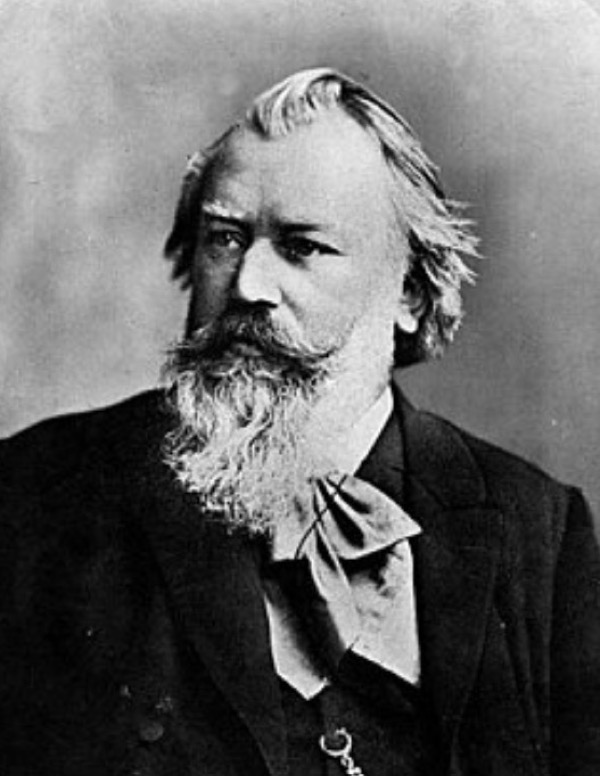
Johannes Brahms
Piano Concerto No. 1, Movement 2 (1858)
Brahms’s first piano concerto emerged from a time of crisis.
Brahms began writing it in 1854, the year he turned 21. Over the following months, the work would evolve from a piano sonata into a piano concerto.
He felt under tremendous pressure. The year before, he’d been publicly hailed by Robert Schumann as the future of German music, became a trusted friend of the Schumann family, witnessed Robert’s mental and physical collapse that culminated in his death, and even fell in love with Clara Schumann.
It was a huge amount of stress and heartbreak for a young composer to experience.
The second movement of the concerto is a response to the chaos: it is devotional, hymnlike music meant to evoke Clara’s character and his complicated feelings toward her.
Marked adagio, it unfolds gently, like a private prayer. The music is reverent, idealistic, and unusually emotionally naked for Brahms. He never wrote another work quite like it again.
A German Requiem (1868)
Brahms wrote this German-language requiem between 1865 and 1868. Historians have theorised that he may have been inspired by the death of his beloved mother, which happened in 1865.
Though raised Lutheran and inspired by Lutheran scripture for the text, Brahms held complicated views about religion. He may even have been personally agnostic.
Still, that didn’t keep him from writing a requiem. Unlike in traditional Catholic requiems of the era, Brahms avoids fire and brimstone, instead opting to emphasise consolation for the mourners left behind.
The “Denn alles Fleisch” movement (“For all flesh, it is as grass”) has a funereal atmosphere, but it offers gentle comfort to survivors rather than judgmental theological messages about the high drama of heaven or hell.
Alto Rhapsody (1869)
If one piece reveals Brahms at his most personally raw, it may be his Alto Rhapsody, a work for contralto, male chorus, and orchestra.
The orchestral opening is dark and inward. The solo voice sings of isolation and wandering despair. Only at the end does a male chorus enter, offering a measure of solace.
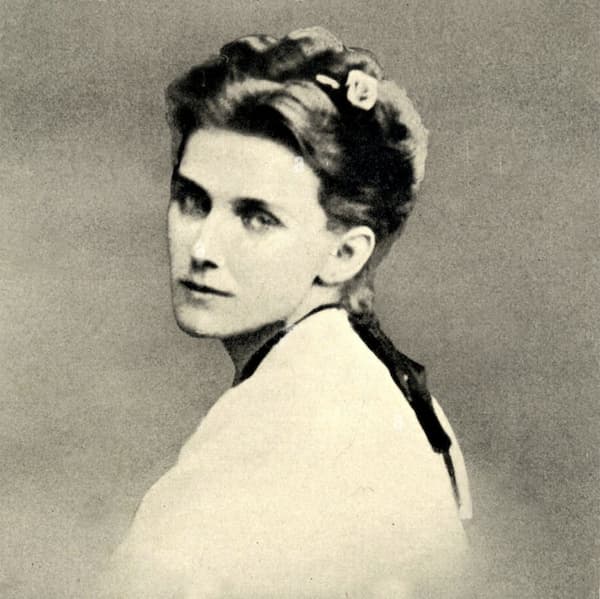
Julie Schumann
It was written in 1869 as a wedding gift for Robert and Clara Schumann‘s daughter, Julie Schumann. Brahms had quietly fallen in love with Julie, though she appears never to have known it, and her engagement to an Italian count left him devastated.
He poured his feelings into this gift. Its atmosphere of isolation and longing makes it one of the most autobiographical pieces he ever wrote.
Julie died in 1872 from complications of her third pregnancy. With hindsight, the work feels eerily prophetic: what began as a wounded wedding gift reads, after her death, almost like a farewell.
Piano Quartet No. 3 (1875)
Brahms began work on what became the third piano quartet around the same time as his first piano concerto. By the time he returned to the quartet in 1875, Brahms was older and more mature.
It has earned the nickname the Werther Quartet, as Brahms wrote to his publisher that the music reminded him of Goethe‘s The Sorrows of Young Werther, the story of a doomed love affair between a young man and his unrequited love for an unavailable woman. The parallels between his own situation and the way he’d fallen in love with the happily married Clara as a very young man are obvious.
Although he never married (perhaps partly because of his attachment to Clara), throughout his adulthood, he felt a deep creative and emotional bond with her, both during her marriage and widowhood.
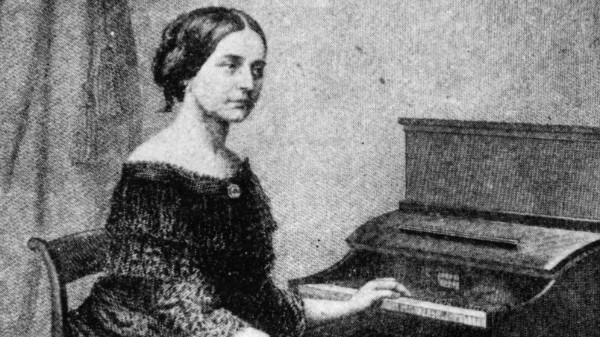
Clara Schumann
Musicologists believe that the notes of themes in the work refer to the letters in Clara’s name. There is also a transposition of a theme that Robert used that has been dubbed the “Clara theme” – he is hiding his complicated, history-laden feelings for her in plain sight.
Here, Brahms’s Clara-related vulnerability is no longer tender, as it was in the first piano concerto. Rather, it is tragic and maybe even a touch bitter.
Symphony No. 3, Movement 3 (1883)
Few melodies in Brahms’s entire output are as quietly emotional as the third movement – the “Poco allegretto” – from his third symphony.
It does not erupt. It does not demand attention. On the contrary, the bittersweet sighing melody possesses a push and pull that suggests a profound emotional hesitation.
This symphony is sometimes interpreted as Brahms’s reckoning with entering older age; it dates from 1883, the year he turned fifty, and around the time when Brahms had fully settled into the bachelor life he had long claimed to prefer.
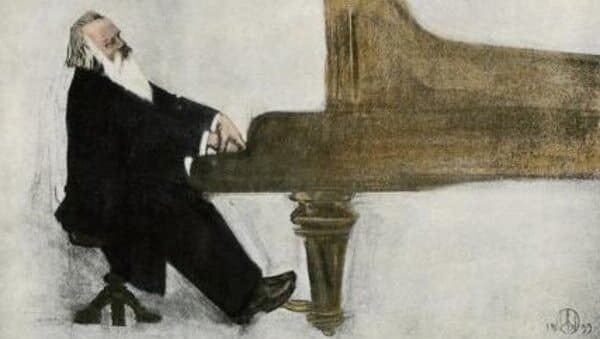
Brahms at the piano
Brahms wrote this sentiment into the symphony. The opening movement begins with a three-note statement – F-A♭-F – that stands for Brahms’s longstanding personal motto, frei aber froh (free but happy): a reference to his decision to embrace a solitary lifestyle in order to devote himself to work.
However, by this stage in Brahms’s life, after multiple failed romances, that motto had gained a bittersweet connotation. Unlike most of his friends, he had indeed remained free – but was he happy? Judging by his music, the answer seems complicated.
Intermezzo in A major, Op. 118, No. 2 (1893)
This may be the most vulnerable piano piece that Brahms ever published – and, not surprisingly, it also relates to Clara Schumann.
This work was written in 1893 as part of a set of six pieces for solo piano. At the time, Brahms and Clara Schumann had been feuding. Both were also aging (Brahms was 60 and Schumann was 74) and struggling with health troubles.
In an unusual move, Brahms apologized to Clara by giving her the gift she valued most: new music from him. But he kept the pieces short and simple so that she could play them herself, despite her advancing arthritis.
The Intermezzo unfolds dreamily, almost shyly. It feels unbearably nostalgic. A middle section darkens the harmony before the opening returns again, whisper-soft.
There is no orchestra here. No grand statement. No audience implied, even. It’s just a deeply affectionate musical conversation between two brilliant creative partners that we listeners are lucky enough to get to listen in on.
Conclusion
When we talk about Brahms’s most vulnerable music, we aren’t talking about grand orchestral spectacles or operatic breakdowns, like we might if we were talking about Wagner, Strauss, Tchaikovsky, or Mahler. We’re talking about something else: Brahms’s emotions, revealed through his carefully crafted restraint.
From the prayerful intimacy of the adagio of the Piano Concerto No. 1 to the communal grief in A German Requiem, from the exposed nerve of the Alto Rhapsody to the autumnal resignation of A major Intermezzo, Brahms’s vulnerability was a constant across his lifetime.
That vulnerability – and the emotional ambiguity that accompanies it – sets Brahms apart from his fellow Romantic composers. The tension between a piece’s structure and the feelings it attempts to convey is exactly where the humanity of Johannes Brahms can most often be found, and perhaps one reason why his music continues to appeal to modern audiences who revel in complicated stories and emotional ambiguity.
For more of the best in classical music, sign up for our E-Newsletter






Who is the pianist in the Intermezzo in A? Excellent!
Russian pianist Ilya Rashkovskiy.
Excellent truly insightful article re Brahms