It is quite common — and somehow expected — for composers to seek new sounds. Sometimes these sounds come from what surrounds them; sometimes they come from what appears distant, unfamiliar or even exotic. Throughout history, composers have been drawn to instruments and sound sources that fall outside the usual orchestral palette, adapting traditional musical forms to unusual and unexpected instrumentation.
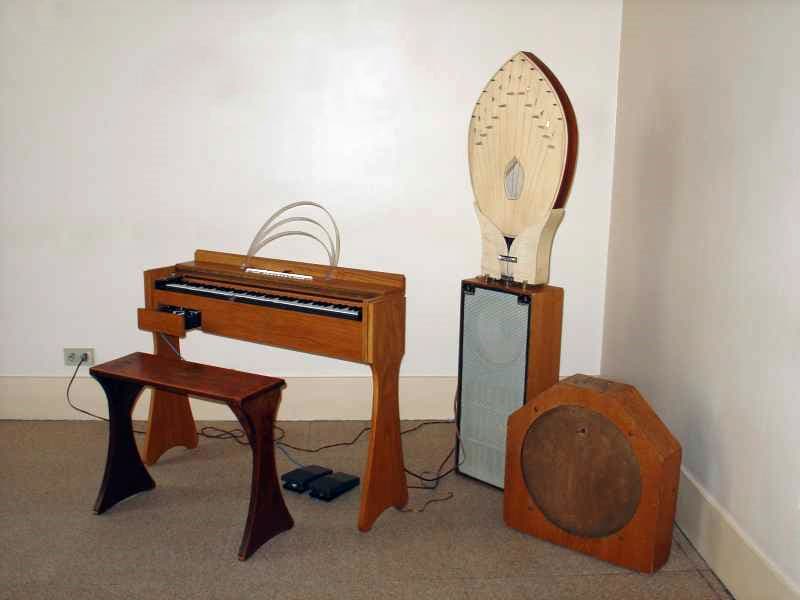
Ondes Martenot
There are many examples of this curiosity at work. Some are relatively discrete experiments, such as Mozart writing for the glass harmonica, an instrument whose ethereal tone fascinated audiences of the time. Others are more adventurous, like Jolivet, exploring the possibilities of the ondes Martenot. And then there are the truly surprising gestures: Anderson famously incorporates a typewriter as a rhythmic instrument, or Akiho writes music that involves ping-pong players as performers.
Some of the most imaginative examples come from the avant-garde. Ligeti created the wonderfully absurd Poème Symphonique, a piece written entirely for one hundred mechanical metronomes ticking at different speeds. In his opera Le Grand Macabre, the opening even features a bizarre “prelude” performed on car horns. Moments like these remind us that music can sometimes emerge from the most unexpected sources.
Matthias Würsch performs Mozart’s Adagio in C Major for glass harmonica, K.617a
György Ligeti’s Poème Symphonique for 100 metronomes
Beyond individual instruments, composers have also looked outward to the wider world for inspiration. Cultural encounters have played a major role in shaping modern musical language. Debussy and Ravel drew inspiration from Spanish idioms and the sounds of Southeast Asia. Holst and Glass explored musical ideas rooted in Indian traditions. Reich famously studied drumming in Ghana, while Cage found deep inspiration in Japanese aesthetics and philosophy.
Popular music has also attempted to bridge the gap between its own traditions and classical forms. One notable example is Jon Lord’s Concerto for Group and Orchestra, written for the band Deep Purple and a symphony orchestra. While the experiment met with mixed reactions at the time, it helped open the door for electric instruments to appear within orchestral contexts. Today, composers such as Turnage, Dessner, and Penderecki have all integrated amplified instruments into orchestral works.
If one musical form has been particularly receptive to unusual instruments, it is the concerto. Since its origins, the concerto has been built around the idea of a solo voice standing in contrast with an ensemble. In its earliest incarnations — from Vivaldi, who wrote more than five hundred concertos, to Bach, Haydn, and Mozart — the genre focused mainly on familiar soloists such as the violin, the cello or the keyboard. These works helped establish a vast repertoire that now counts in the tens of thousands.
Over time, however, the concerto expanded far beyond those traditional instruments. Today, there are concertos for bandoneón — championed by Astor Piazzolla — for balalaika, as in the music of Tubin, for koto in works by Cowell, and for sitar through the compositions of Ravi Shankar. Other composers have drawn inspiration from entire musical traditions, as Harrison did with gamelan ensembles. There are even concertos for instruments as unusual as the didgeridoo.
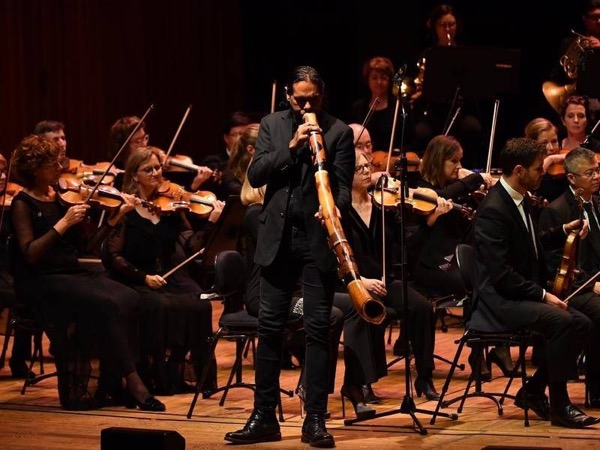
A didgeridoo soloist performs with orchestra © cdn.nit.com.au
The list of inventive examples continues to grow. Tan Dun wrote a Water Concerto using water as a central sound-producing element. Schnittke explored choral writing in his Concerto for Choir, pushing the idea of the concerto into new territory.
Tan Dun – Water Concerto – Adagio molto misterioso (Orchestra della Toscana)
Some instruments, traditionally used only for special effects, have also stepped into the spotlight. The theremin, for example — with its eerie, voice-like sound — has appeared in works such as Aho’s theremin concerto and Martinů’s Fantasia for Theremin. The ondes Martenot, another electronic instrument from the early twentieth century, plays a prominent role in Messiaen’s monumental Turangalîla-Symphonie.
Martinů’s Fantasia for Theremin, Oboe, String Quartet, and Piano (Apollo Chamber Players with thereminist Carolina Eyck)
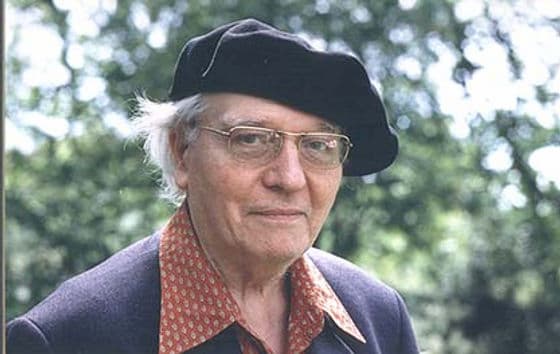
Olivier Messiaen
Sometimes, unusual instruments are used simply to evoke vivid imagery. Saint-Saëns’s The Carnival of the Animals features the celesta in the movement “Aquarium”, creating a shimmering underwater atmosphere. Today, the celesta is relatively common, but at the time, its sound was strikingly new. Large-scale orchestral works have also made use of theatrical effects: wind machines and thunder sheets appear in Strauss’s An Alpine Symphony, and similar devices can be heard in Olivier Messiaen’s Des canyons aux étoiles…. Perhaps the most spectacular example remains the use of cannons in Tchaikovsky’s 1812 Overture, where they serve both rhythmic and dramatic purposes.
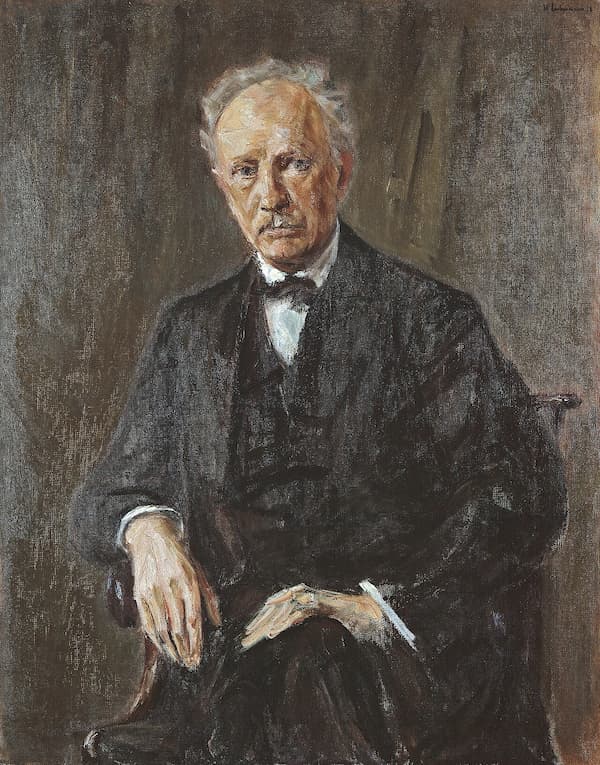
Portrait of Richard Strauss
What is fascinating is how quickly the strange becomes familiar. Instruments once considered exotic gradually find their way into the regular toolkit of composers. The orchestra itself has never been a fixed entity; it constantly evolves as new sounds enter the musical vocabulary.
Today, technological progress is accelerating this process. Composers increasingly blur the boundary between acoustic instruments and electronic sound, between traditional instruments and simple sound-producing objects. The orchestra is no longer limited to strings, winds and percussion — it can now include computers, sensors and digital processing.
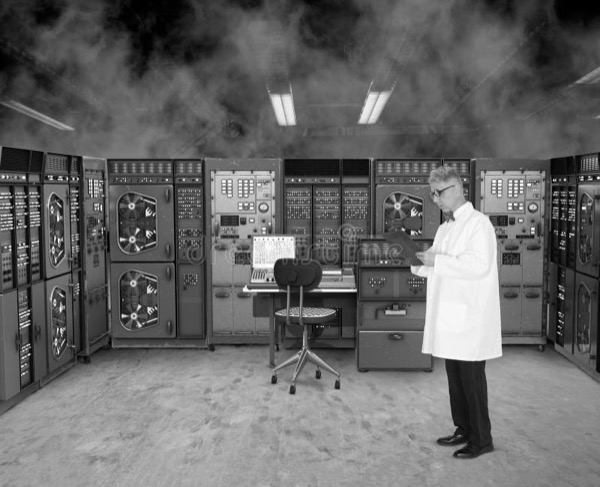
Computers and electronic equipment © thumbs.dreamstime.com
At this pace, one might reasonably wonder: when will the first concerto for computers appear? Perhaps it already has. And if not, it is probably only a matter of time.
For more of the best in classical music, sign up for our E-Newsletter