Stradivari violins may be the most thoroughly analysed musical instruments ever made.
We have taken photographs and videos of them. We have put them into CT scanners and under electron microscopes. We have scientifically analysed the wood cell by cell, studied the varnish at a molecular level, and even studied seventeenth-century Italian forestry.
And yet we still can’t explain – let alone replicate – what Antonio Stradivari accomplished in his attic workshop in Italy 300 years ago.
About 650 of 1100 Stradivari instruments survive today. Each is worth millions and coveted by players, collectors, and financiers the world over. And every single one is irreplaceable.
Why?
Who Was Antonio Stradivari?
Violinist Charlie Siem plays Brahms on a 1715 Stradivari
Antonio Stradivari was born around 1644 in Cremona. We believe he apprenticed with master Cremonese violin-maker Nicolò Amati before founding his own workshop sometime in the late 1660s.
In the first fifteen years or so of his career, he only made around 18 instruments (that we know of).
He didn’t hit the peak of his craft for decades, but when he finally reached his Golden Age around 1700, his output became legendary. His Golden Age ended around 1725, when he was around 80.
He died in 1737 in his early nineties, having made an indelible mark on music history.
Over that long career, Stradivari had the luxury of time to study and obsessively hone his craft. He took Amati’s design and added his own innovations, experimenting with elements like body length, varnish composition, f-hole shapes, arching angles, and dozens of other carefully calibrated tweaks.
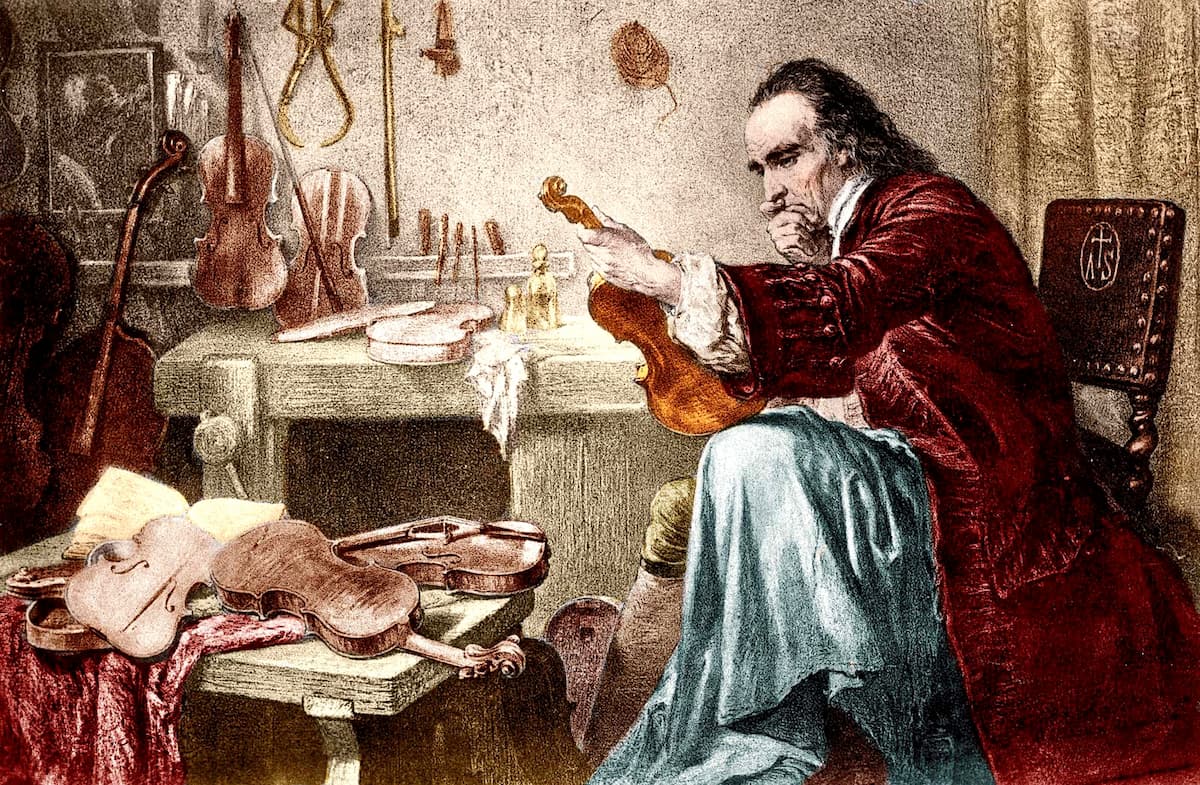
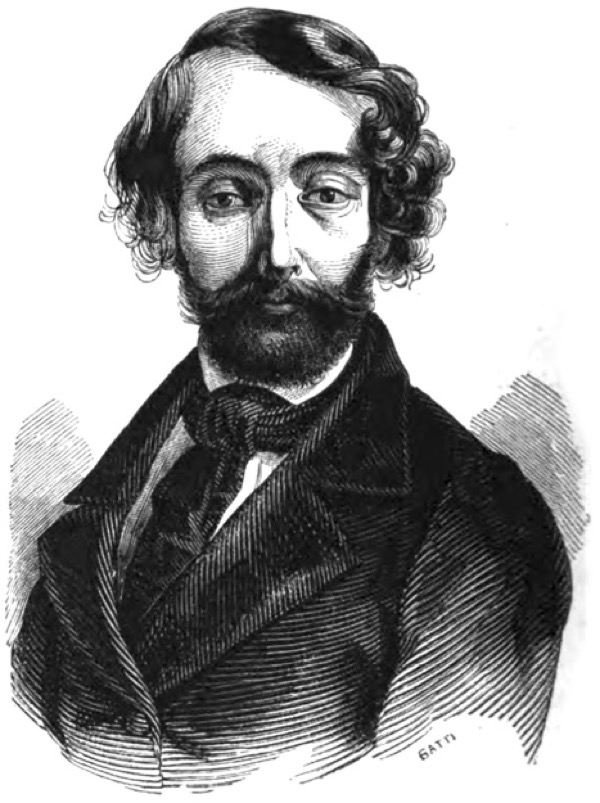
Antonio Stradivari © Encyclopædia Britannica
What Makes a Stradivarius So Special?
First, their sound is both focused and piercing, easily able to cut through the dozens of other string instruments onstage during a concerto performance. Played well, a Stradivari will throw its voice and sound extremely present even at the back of a large hall.
Second, they are extraordinarily responsive. Any alteration in bow pressure, sounding point (the place where the bow hair hits the string), or vibrato speed: Strads are famous for responding immediately to all of these changing variables. That sensitivity opens up endless interpretive possibilities.
Apart from their sonic qualities, they are works of art in and of themselves – sometimes described as works of art that create other works of art – with well-documented provenances.
For centuries, Strads have been at the front lines of classical music history, played by the greatest and most influential violinists who ever lived. Being connected in a tangible way to this history and lineage is deeply meaningful to many artists.
The Science: What Have Researchers Actually Found?
Mini documentary about scanning a Stradivari
Modern scientists have tried to pin down what exactly makes Stradivari instruments so special. They’ve come up with a number of possibilities.
Theory 1: The Wood
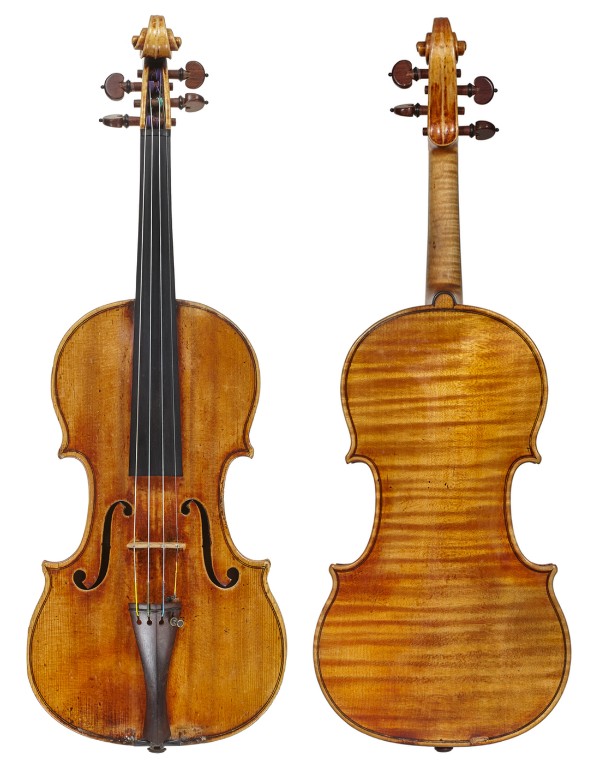
1713 “ex-Sancy” Stradivarius
Maybe Stradivari’s genius was an accident of geography.
The spruce and maple that Stradivari used in his instruments grew during the Little Ice Age, a time period that lasted roughly between 1300 and 1850. Colder temperatures in European forests meant slower tree growth and more consistent wood density.
Skeptics point out that contemporaneous violin-makers in France and Germany also lived through the same Little Ice Age – but the Italian instruments of the era are widely viewed as superior.
Theory 2: The Varnish
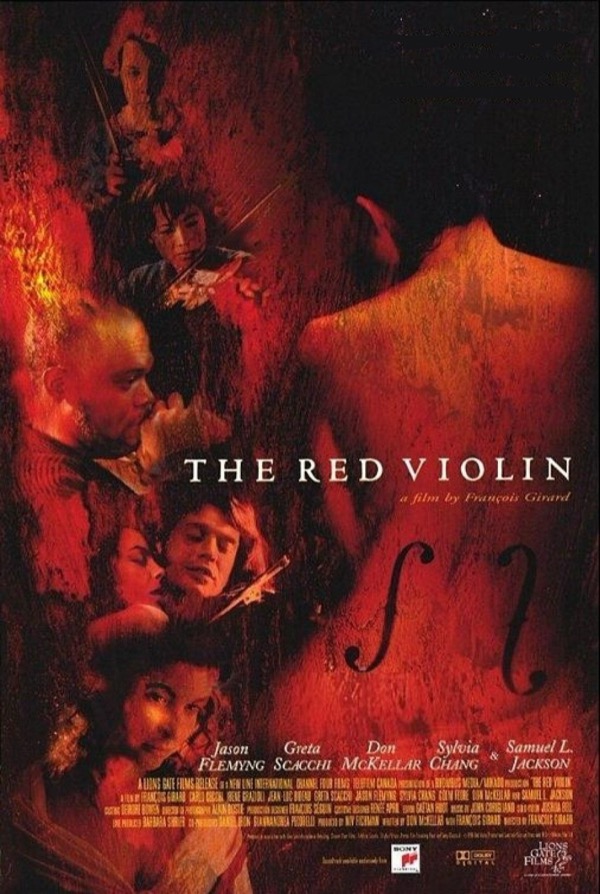
The Red Violin
Theories about the composition of Stradivari’s varnish have ranged from secret formula ingredients to preservatives applied by the loggers who sold him the wood – with proposed culprits including aluminium, copper, and calcium.
One particularly grisly possibility was raised in the 1998 movie The Red Violin, which took inspiration from Stradivari: the fictional maker of the titular red violin used varnish tinged by his dead wife’s blood. (Thankfully, there’s no evidence Stradivari did the same.)
Theory 3: The Craft
Stradivari never wrote down an instruction manual, so we don’t know everything we wish we did about his methods.
Skilled craftsmen working at Stradivari’s level tend to develop a sixth sense, an instinct, for what they’re doing.
The knowledge may have been more kinetic, living in Stradivari’s hands, than in anything that could ever be replicated by any instructional manual.
The Twist: What Have Blind Tests Found?
In 2012, one of the most interesting – and consequential – studies on the topic took place in an Indianapolis hotel room.
That year, in a double-blind study, professional violinists at the International Violin Competition of Indianapolis played six instruments – two Stradivaris, a Guarneri, and three modern violins.
The players played the instruments in a dim room, wearing goggles so they couldn’t make judgments based on an instrument’s aesthetics. The researchers even spritzed perfume on the chin rests so the instruments’ scent wouldn’t impact the preferences.
Another portion of the experiment involved Indianapolis concertmaster Zachary DePue playing instruments in a hall in front of 1500 people. The participants were then asked which instruments they preferred.
In the end, the most preferred violin was by a modern maker. The least? One by Stradivari.
Audio test: Can you tell which instrument is a Stradivari?
Critics noted that concert violinists don’t traditionally play in dim rooms wearing goggles, and that the limited availability of Stradivari instruments meant the sample was necessarily small – leading Ariane Todes, editor of The Strad magazine, to caution that sweeping conclusions were difficult to justify.
Regardless, it certainly raises the question: if most listeners and players can’t hear the difference, what exactly are collectors paying $15 million for?
So Why Can’t We Replicate Stradivaris?
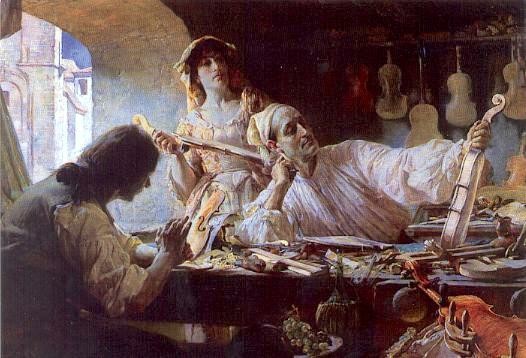
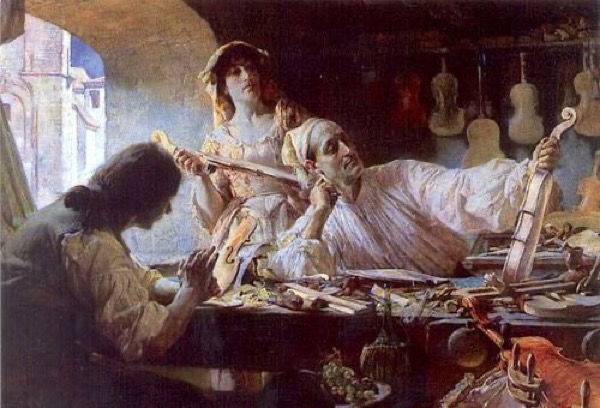
Antonio Stradivari, by Edgar Bundy, 1893: a romanticized image of a craftsman-hero
The short answer: given all these variables, it’s impossible.
Replication would require duplicating dozens of circumstances. The wood would have to be from the Little Ice Age. The varnish recipe would have to be scientifically analysed and manufactured. More knowledge about Stradivari’s specific craft would have to be discovered – which might require Stradivari and his sons to be raised from the dead.
It would also require 300 years of playing. As violinists know, a violin that is played for hundreds of years, vibrating frequently, ages in a different way from a violin that is kept unplayed in a closet or museum.
In the end, the Strads that survive aren’t just objects that a single man made. They’re objects that three centuries of music-making have made. And that’s history that can never be replicated in any workshop.
For more of the best in classical music, sign up for our E-Newsletter