The violin sonata is one of the most intimate forms in classical music: two instruments, face to face in conversation.
The best violin sonatas are not merely showcases for the violin; they are conversations between equals.
This list covers ten of the greatest violin sonatas ever written, spanning three centuries of music from the Baroque era to the mid-twentieth century.
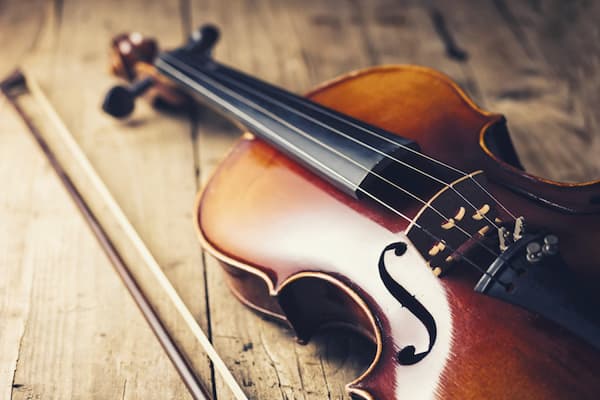
Tartini – Devil’s Trill Sonata (c. 1740s)
Italian composer Giuseppe Tartini once made a shocking claim: that the devil had appeared to him in a dream and played him a violin sonata.
Tartini woke up and wrote down everything about the music that he could remember.
The result – the Devil’s Trill Sonata – is arguably the most famous violin sonata of the Baroque era.
Even so, Tartini considered it inferior to what he’d heard in the dream.
The sonata gets its nickname from its virtuosic calling card: the final movement’s cascading double-stop trills.
Violinist Fritz Kreisler made a famous transcription of the work, modernising it for violin and piano around 1905. This is the version most often heard today, but the original (above) is worth celebrating in all its Baroque glory, too.
Mozart – Violin Sonata No. 21 in E minor, K. 304 (1778)
Mozart wrote 36 violin sonatas over the course of his life. Only one of his mature sonatas is written in a minor key, and it’s this one.
It was written in 1778 – the year Mozart was in Paris with his mother and looking for a job, when she suddenly fell ill and died. He was 22.
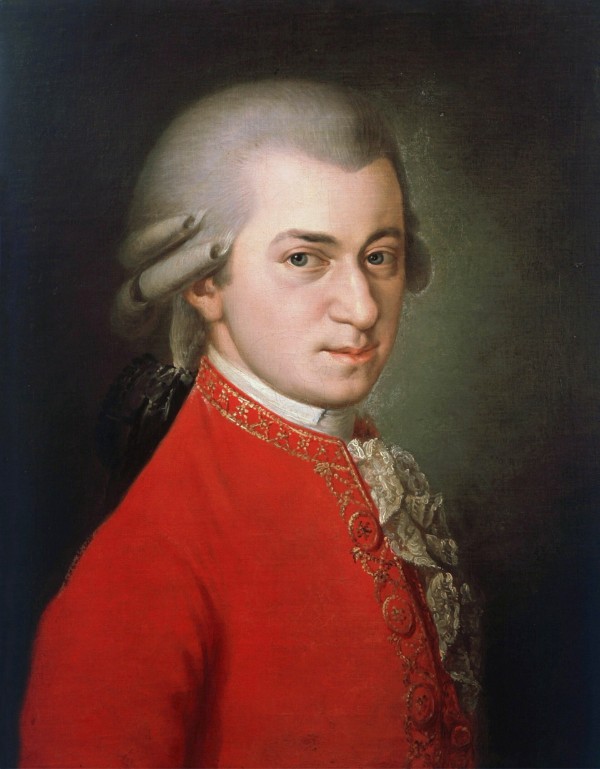
Wolfgang Amadeus Mozart
This violin sonata dates from this year and is unusually sombre and restrained for Mozart. The first movement is shadowy and searching; the second is a minuet that never shakes off its sadness.
At barely fifteen minutes, it is one of the most tersely concentrated emotional statements in his entire catalogue.
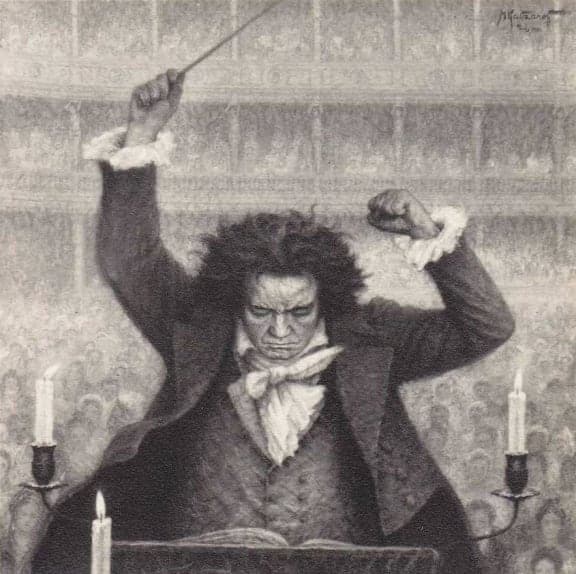
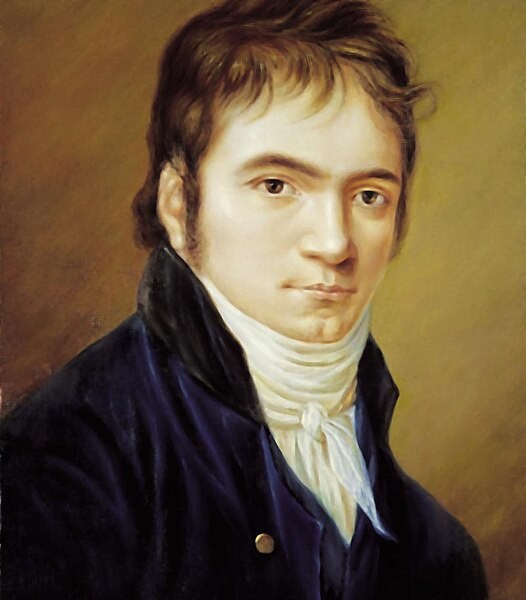
Beethoven – Violin Sonata No. 9, “Kreutzer” (1803)
Contrary to what its name suggests, the “Kreutzer” Sonata was not written for violinist Rodolphe Kreutzer.
It was actually composed for George Bridgetower, a mixed-race violinist born in Poland to an African father, who premiered it with Beethoven in Vienna in 1803.
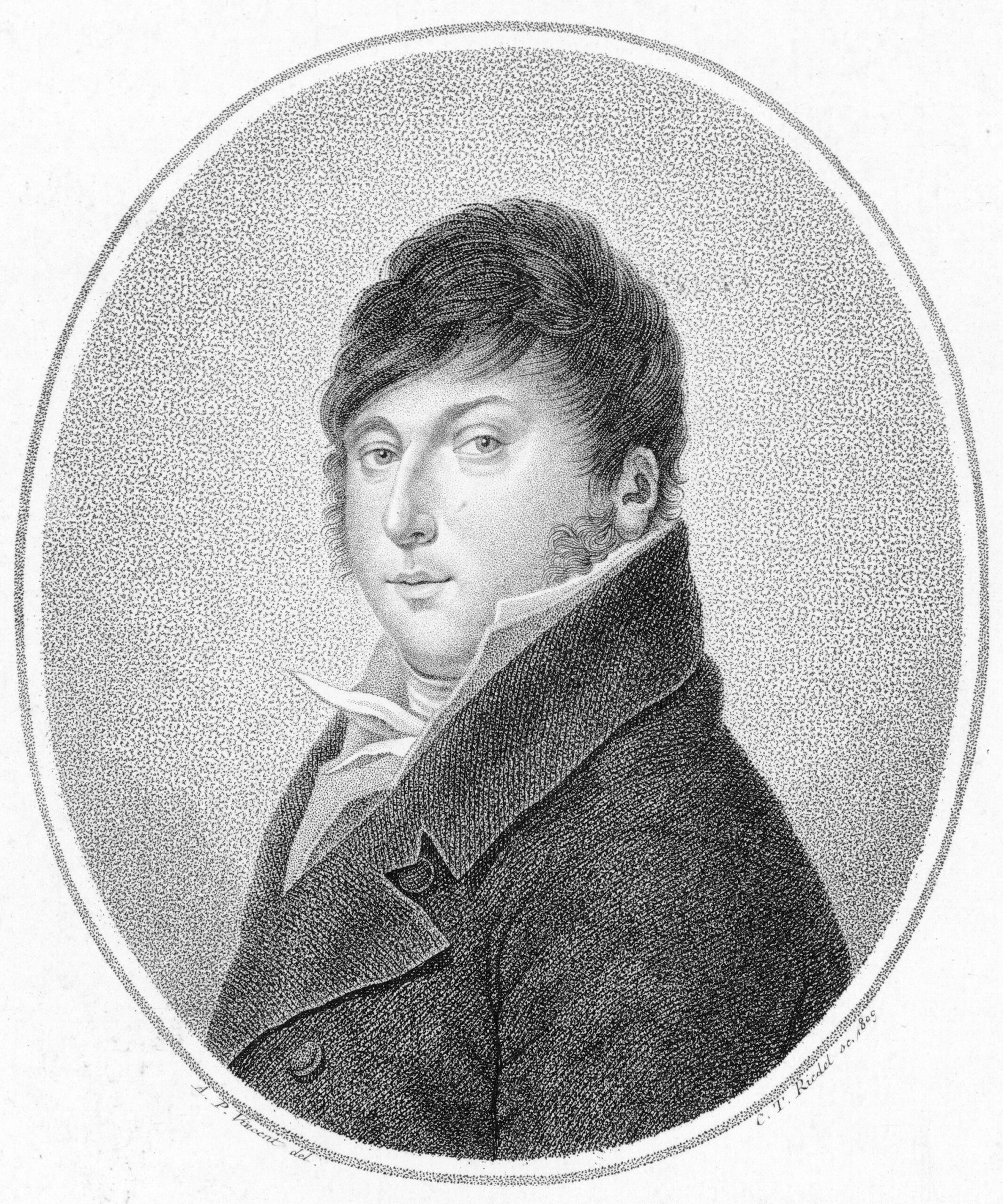
Rodolphe Kreutzer
By all accounts, the performance was a triumph. But the two men fell out afterwards – reportedly over a woman – and Beethoven changed the dedication to Kreutzer, a French violinist who reportedly found the piece incomprehensible and never played it.
The sonata itself is one of the most celebrated chamber works ever written, famous for its massive scope and unconventional solo violin opening.
We wrote about Beethoven and Bridgetower here: https://interlude.hk/george-bridgetower-the-biracial-violinist-who-inspired-beethovens-kreutzer-sonata/
Schumann – Violin Sonata No. 2 (1851)
By 1851, Robert Schumann‘s health was in decline. The mental illness that would eventually consume him was accelerating, and he had only three years left before his attempted suicide and institutionalisation.
That year, he wrote the Violin Sonata No. 2 in D minor, right after his first.
His wife, great pianist Clara Schumann, played the work with violinist Joseph Joachim in 1853. Joachim provided a wonderful summary of the passionate, volatile work:
“I consider it one of the finest compositions of our times in respect of its marvellous unity of feeling and its thematic significance. It overflows with noble passion, almost harsh and bitter in expression, and the last movement reminds one of the sea with its glorious waves of sound.”
Brahms – Violin Sonata No. 3 (1886–1888)
Over the course of his career, Brahms wrote three violin sonatas. The third and final one, written between 1886 and 1888, is his most autumnal.
The opening movement features a sighing melody that alternates between restlessness and high drama, while the second movement, Adagio, portrays a heartbreaking nostalgia.
The mysterious third movement scherzo is by turns elusive and emphatic, and the finale wraps the work up with its determined, intimidating double-stop passages.
Throughout all four of these movements, the music is infused with feelings of yearning and loss.
Franck – Violin Sonata (1886)
César Franck wrote his violin sonata in A major in 1886 as a wedding gift for the great Belgian violinist Eugène Ysaÿe.
It was an extraordinary gift. The sonata became one of the most beloved works in the entire violin repertoire: lush, cyclical, and emotionally overwhelming in a way that feels almost orchestral in scope.
The famous final movement, a canon between violin and piano, is one of the most sheerly beautiful things ever written for the two instruments.
Its premiere was given informally for the wedding guests, after a quick rehearsal.
Janáček – Violin Sonata (1914)
Janáček wrote his only violin sonata in the summer of 1914, right as Europe was teetering into World War I. He later wrote, “In the 1914 Sonata for violin and piano I could just about hear the sound of the steel clashing in my troubled head.”
You can hear this unsettled, martial quality throughout the sonata. It consists of striking, unsettling, spiky moments, interspersed with stretches of eerie, austere beauty.
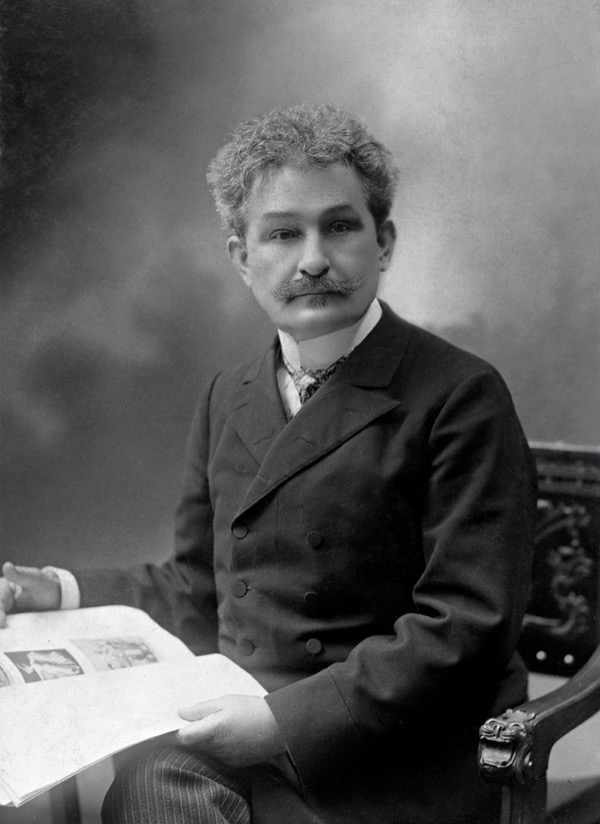
Leoš Janáček (1904)
Janáček’s signature speech-melody technique – consisting of short, jagged phrases modelled on the rhythms of human speech – gives the work a psychological immediacy unlike anything else on this list.
It is one of the first great violin sonatas – maybe the first – that announces the death of the sentimentality of the Romantic era.
Ravel – Violin Sonata (1923–1927)
Maurice Ravel worked on his Violin Sonata in G major for four years, completing it in 1927. He was based in Paris, but throughout the decade, listened to imported American jazz music with great interest.
This influence of American music is audible throughout, especially in the second movement, marked “Blues,” where the violin bends notes and slides between pitches.
There are two fabulous movements on either side of that iconic Blues movement: first, a lyrical opening that calls to mind flowing water, and second, a finale that is a bustling, virtuosic perpetual motion.
Prokofiev – Violin Sonata No. 1 (1938–1946)
Prokofiev began his Violin Sonata No. 1 in 1938 and did not finish it until 1946 – eight years that encompassed the Second World War, the Nazi invasion of the Soviet Union, and Prokofiev’s own increasingly fraught relationship with the Soviet state.
The interruption shows in the music, which has a haunted, searching quality unlike anything else in his catalogue.
The opening movement is bleak and spectral; Prokofiev famously compared it to “wind passing through a graveyard.” The second is ferocious and mechanical. The third is one of the most achingly beautiful slow movements he ever wrote. The finale is tense, leaving the listener with a feeling of unease.
The first and third movements were played at Prokofiev’s funeral in 1953 – an under-attended event, given that Stalin had died the same day as Prokofiev.
Bacewicz – Violin Sonata No. 4 (1949)
Grażyna Bacewicz was a Polish composer and violinist who deserves to be far better known today.
She was an accomplished violinist, serving as concertmaster of the Polish National Radio Symphony Orchestra during the 1930s, as well as one of the most significant composers of the mid-twentieth century.
As a woman working in postwar Poland, recognition came slowly. But her Violin Sonata No. 4, written in 1949, won first prize at the Polish Music Festival in 1951.
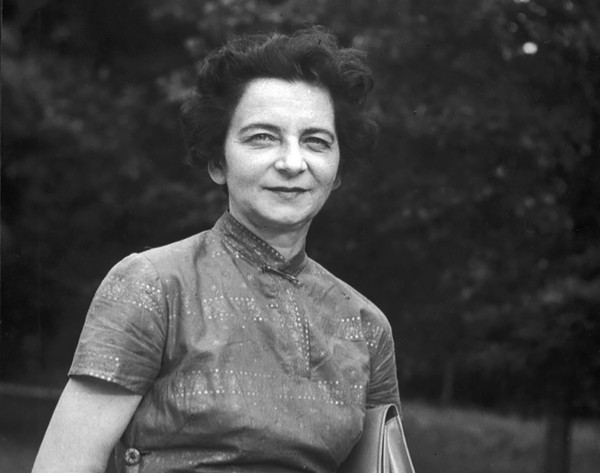
Grażyna Bacewicz
It is easy to hear why: the work is vigorous, rhythmically sophisticated, and emotionally wide-ranging, with a slow movement of particular depth and beauty.
Bacewicz knew exactly what she was writing for; along with Tartini and Mozart, she is the only professional violinist on this list.
Conclusion
The ten works on this list represent the pinnacle of the violin sonata repertoire – but they are only a starting point.
The genre is vast, and there are countless other remarkable works waiting to be discovered: the dark late sonatas of Schumann, the lush nationalism of Grieg, the searing modernism of Bartók.
If any of the pieces above are new to you, start there, then be sure to keep listening!
For more of the best in classical music, sign up for our E-Newsletter