In the world of string-instrument making, the 17th-century masters from Cremona, Stradivari and Guarneri, top the list. They made not just violins but also violas, cellos, and guitars, which have become legacy instruments passed down from generation to generation. To keep track of them and to trace lineage, the instruments are named, either for their owners, their players, or their history.
For example, the violinist André Rieu owned a 1667 Stradivari violin called the ‘ex-Captain Saville’, named for the man who owned it in the early 20th century; as it was too small for him, he sold it to a Korean violinist. Now he plays a 1732 larger violin.
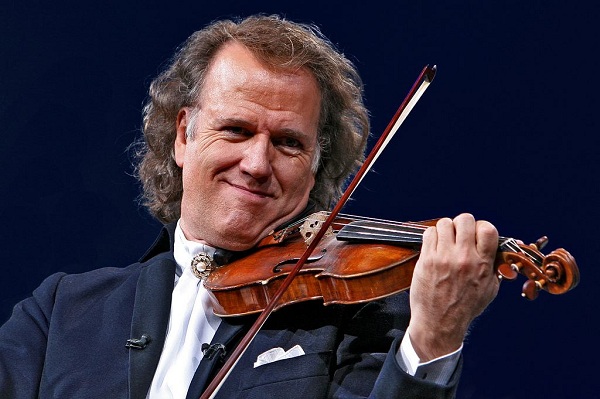
André Rieu and his 1732 Strad
Isabelle Faust plays the 1704 Stradivari known as the ‘Sleeping Beauty’, but which is owned by L-Bank of Stuttgart. The instrument was named after the German castle where it was discovered in the late 1800s, after being forgotten there for a century and a half.
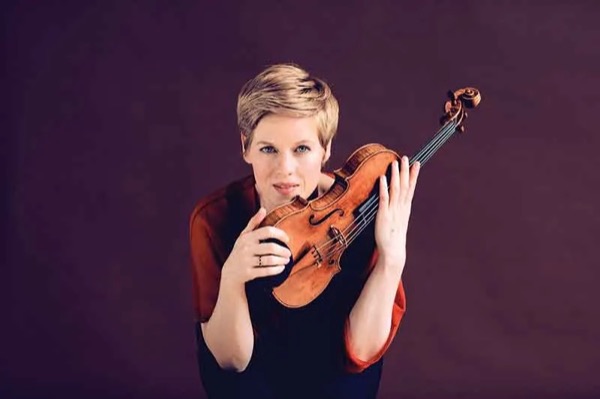
Isabelle Faust and the Sleeping Beauty.
Joshua Bell owns the 1713 ‘Gibson’, which used to be owned by Polish violinist Bronisław Huberman (from whom it was stolen twice), and Norbert Brainin, the first violinist of the Amadeus Quartet.
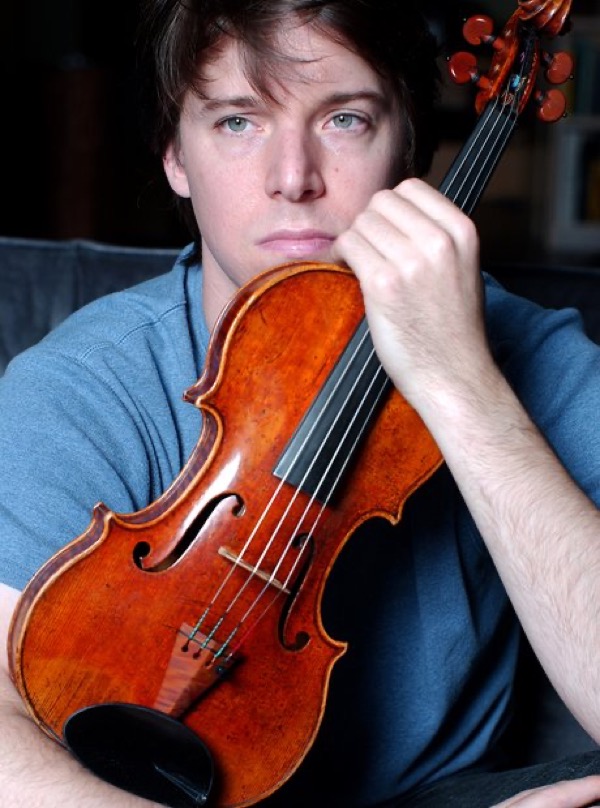
Joshua Bell and his 1713 Gibson
A similar list of names and owners exists for the Guarneri instruments.
When you get to Stradivari cellos, some have very distinguished lineages: The 1673 cello known as the ‘ex-Du Pré; ex-Harrell’, was owned by Jacqueline du Pré, then by Lynn Harrell, and is now in the hands of Hungarian cellist István Várdai, loaned to him by an anonymous benefactor.
The ‘Davidov’, from 1712, is a cello that Russian cellist Count Matvei Wielhorski (1794–1866) originally owned, then by Karl Davidov, another Russian cellist, and finally by Jacqueline du Pré. The cello is currently on loan to Yo-Yo Ma.
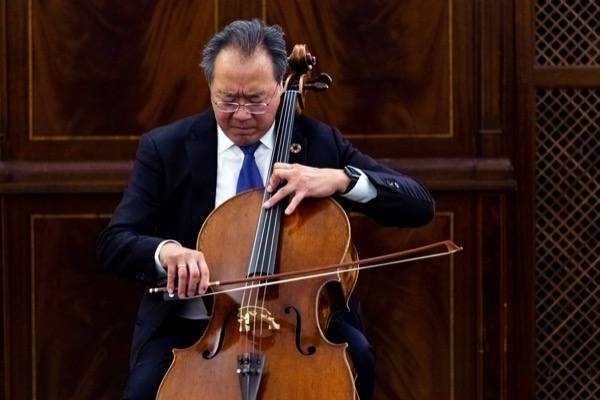
Yo-Yo Ma and his 1712 Davidov
As tastes change, the instruments are changed as well – the fingerboards, necks, and other parts may be extended or replaced if damaged, etc. The Sleeping Beauty, mentioned above, is one of the few Stradivari violins to retain its original neck.
What can a composer do with stories like this? The 1720 Stradivari violin known as the ‘Red Mendelssohn’ inspired the 1998 film The Red Violin.
The Red Mendelssohn takes its colour name not only from the red varnish on the violin but also from the red stripe on the instrument’s front.
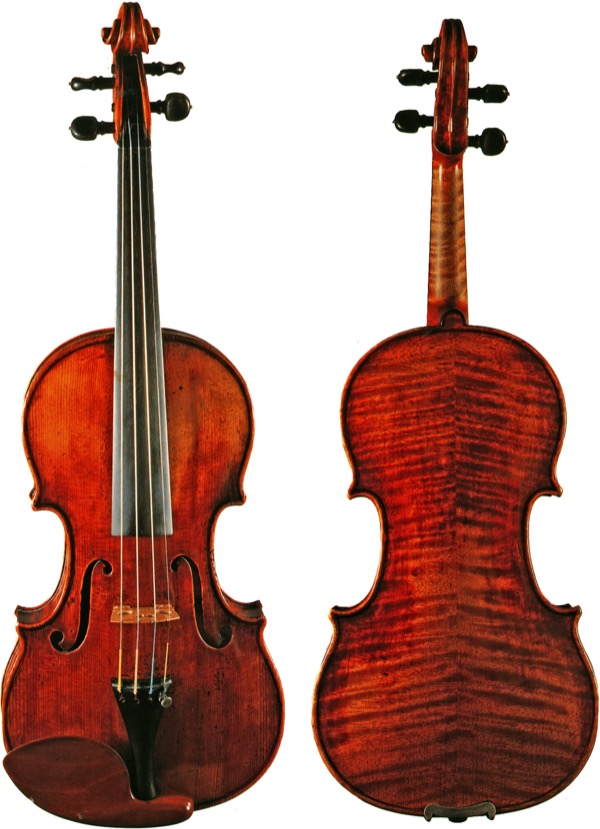
The 1720 Red Mendelssohn
The ‘Red Mendelssohn’ was owned by Joseph Joachim (who at one time owned at least 7 Stradivaris (including ones from 1698, 1714, 1715, and 1720). It was bought by the von Mendelssohn family in Berlin in the 1930s as part of a quartet of Stradivaris, before it moved to New York in 1956. The anonymous owner, a New York industrialist, put the violin up for auction at Christie’s in London in 1990, when it was bought by the grandfather of the then–16-year-old violinist Elizabeth Pitcairn. She was only a senior in high school in Pennsylvania at the time and has since become not only a solo artist and international performer but also the President and Artistic Director of the Luzerne Music Centre in Lake Luzerne, New York.
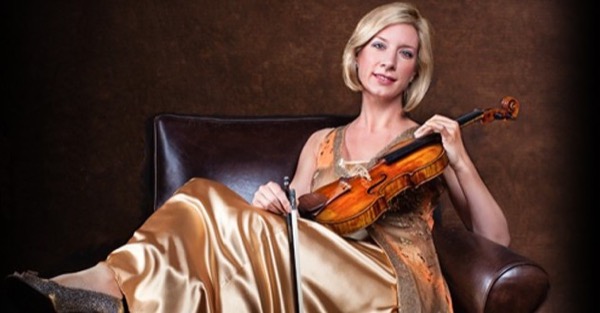
Elizabeth Pitcairn and her violin (photo by Joy Strotz)
The Red Mendelssohn has a red varnish, hence its name. In the movie The Red Violin, the fictional maker Nicolò Bussotti is making a new violin in 1681 in Cremona when his wife and child die. He varnishes the new violin red in their memory; it is the last violin he will make.
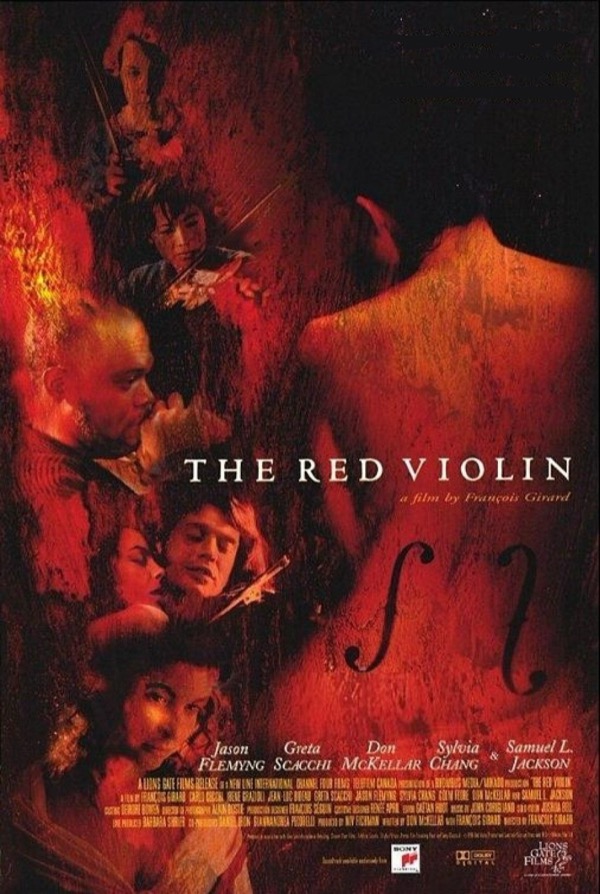
The Red Violin
The violin makes its way to Vienna and in 1783 is in the hands of an orphan, the young violin prodigy Kaspar Weiss. Just as he’s about to play for Prince Mannsfeld, he dies from his heart defect. Weiss is buried in Vienna with his violin, but grave robbers steal it and take it to England. From Oxford in the 1880s, it’s taken to Shanghai, where by the late 1960s, it’s in danger from the Red Guards, who are destroying symbols of Western bourgeois life. The violin is hidden and then sent by the Chinese government to Canada in the 1990s for appraisal and sale. The red violin is brought to the appraiser, who recognises the instrument as the fabled last instrument made by Bussotti 300 years earlier. When the red violin comes up for auction, it is sold, but not before the appraiser switches the original for a copy he’d bought earlier. He gifts the violin to his daughter in New York (and the whole cycle can begin again).
John Corigliano wrote the film’s music, and the violin in the soundtrack was played by Joshua Bell, who also has a cameo in the Oxford part of the movie.
The music for the film had to encompass three hundred years of musical style and was, in a very Paganini-esque way, compressed by the composer into the Red Violin Caprices. The opening theme is ‘troubadour-inspired’, and the variations take it through all the places that the violin wandered: the Baroque era, Gypsy music, and ‘arch-Romantic’ styles all have their place.
In the programme note for the caprices, the progression of owners is summarised thusly:
Bussotti, a fictional 18th-century violin maker, crafts his greatest violin for his soon-to-be-born son. When tragedy claims his wife and child, the grief-stricken Bussotti, in a gesture both ardent and macabre, infuses the blood of his beloved into the varnish of the instrument. Their fates thus joined, the violin travels across three centuries through Vienna, London, Shanghai and Montreal, passing through the hands of a doomed child prodigy, a flamboyant virtuoso, a haunted Maoist commissar, and at last a willful Canadian expert, whose own plans for the violin finally complete the circle of parent and child united in art.
The theme, song-like and lyrical, has an innate melancholy.
John Corigliano Jr.: The Red Violin Caprices: Theme (Philippe Quint, violin)
The first variation takes us to the world of Paganini: virtuosity and double-stopping.
John Corigliano Jr.: The Red Violin Caprices: Variation 1 (Philippe Quint, violin)
The second variation is the Gypsy flavoured song, with typical flamboyant flourishes: multi-stopping, extravagant slides, and explorations in micro-tonality
John Corigliano Jr.: The Red Violin Caprices: Variation 2 (Philippe Quint, violin)
Variation 3 takes us to a folk-style song, plangent and emotional.
John Corigliano Jr.: The Red Violin Caprices: Variation 3 (Philippe Quint, violin)
The ‘folk song’ of the third variation is expanded in the fourth variation into an aria. The song is delicately expanded and moves into the upper part of the violin’s voice.
John Corigliano Jr.: The Red Violin Caprices: Variation 4 (Philippe Quint, violin)
The final variation is the bravura ending. Rhythm and virtuosic effects come to the fore, with the original theme emerging note by note from a bewildering and moving sound world.
John Corigliano Jr.: The Red Violin Caprices: Variation 5 (Philippe Quint, violin)
One of the discoveries made about the violin when it’s brought to Canada comes when the experts analyse the varnish and find its red colour comes from human blood: Bussotti had infused the blood of his dead wife and child into his final instrument. Dramatic as this discovery is, it’s just film hyperbole – Stradivari made several instruments with red varnish, not just the Red Mendelssohn.
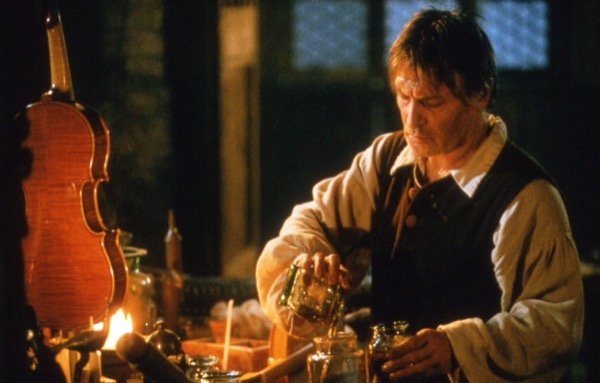
Bussotti (Carlo Cecchi) mixes his varnish
Using a single musical instrument to trace the history of Europe and the Americas over 300 years was a bravura exercise in itself. It lets us think about the history inherent in any old object we own, be it an instrument, a piece of furniture, or even an old book.
For more of the best in classical music, sign up for our E-Newsletter