The 1800s were the golden age of the piano concerto. Composers were pushing the form in radical new directions, from Beethoven‘s revolutionary opening gambits to Brahms‘s symphonic sprawl.
Here is our pick for the best piano concerto from each decade of the 1800s. It’s a totally subjective list, but each one is worth getting to know and love, and taken together, they paint a striking portrait of the development of the art.
1800s
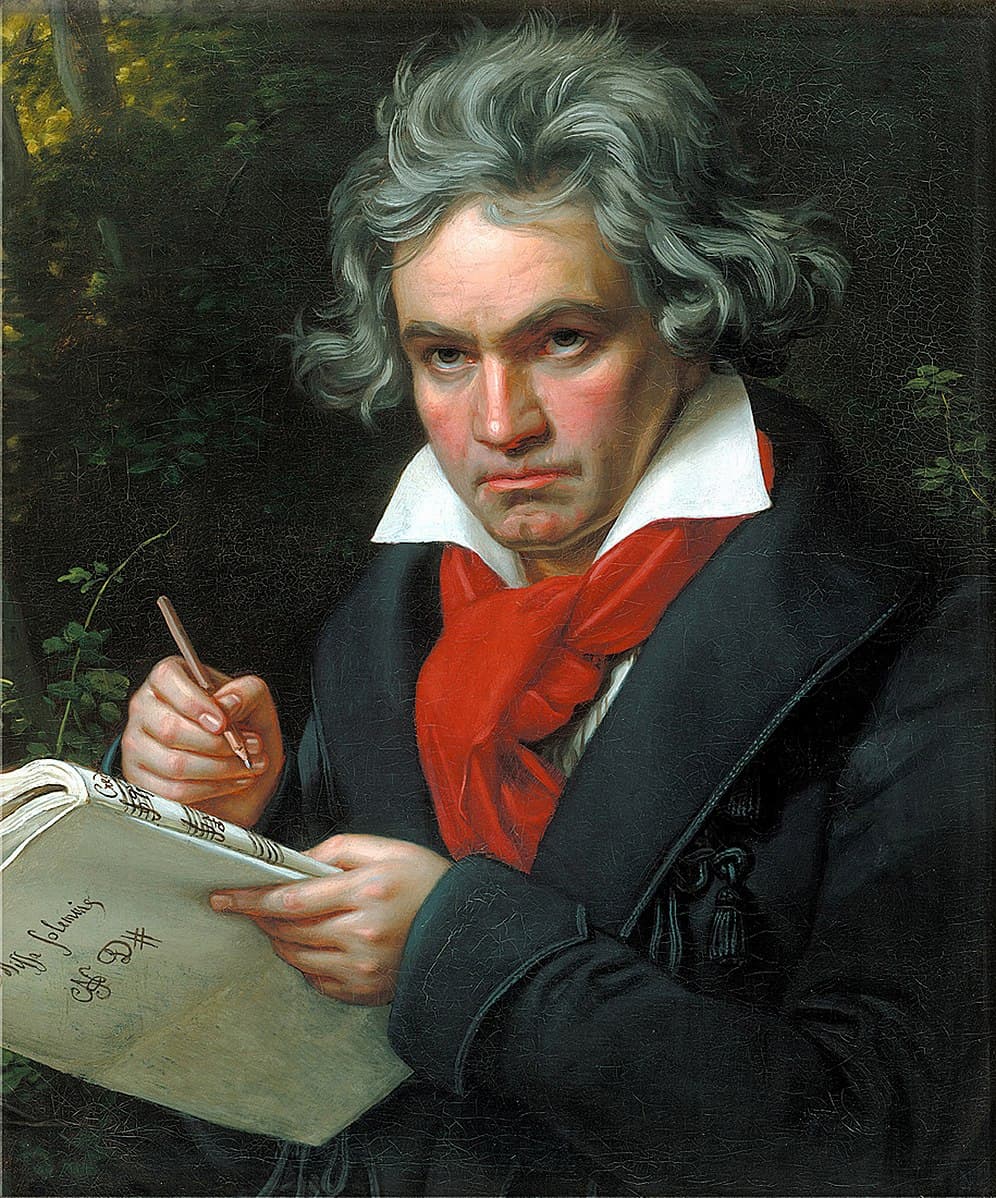
Ludwig van Beethoven – Piano Concerto No. 4 in G major (1805–1806)
Beethoven composed his fourth piano concerto between 1805 and 1806. It was a quietly revolutionary way to kick off a century of concerto writing.
Before Beethoven’s fourth, virtually every major concerto opened with an orchestral introduction. But here, Beethoven has the solo piano begin the work – alone.
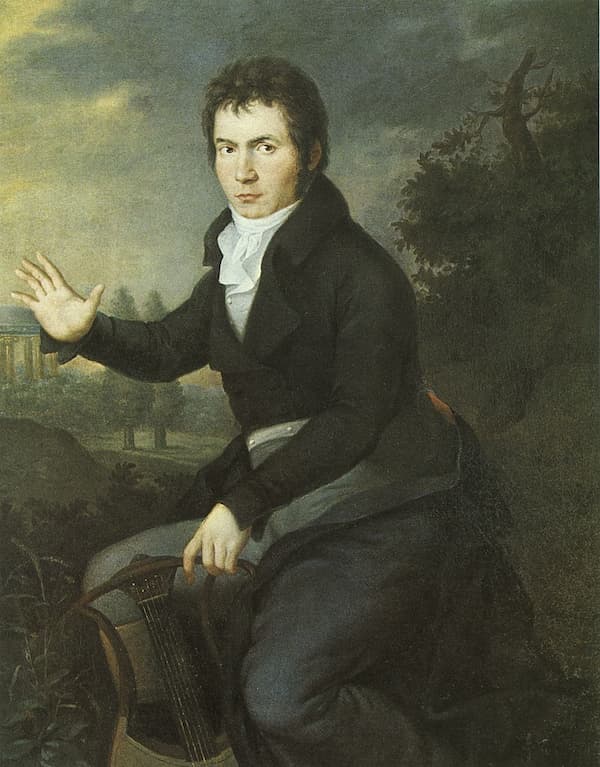
Joseph Willibrord Mähler: Ludwig van Beethoven, ca 1804–1805 (Vienna Museum)
When the orchestra finally does enter, it does so in an unexpected key. The ensuing conversation between soloist and ensemble is utterly unlike its 18th-century predecessors.
During the slow movement, a bold orchestra and lyrical solo piano part negotiate an uneasy peace.
Every composer who followed up this work had to reckon with the way Beethoven had played – and in some cases, flouted – convention.
1810s
Ludwig van Beethoven – Piano Concerto No. 5 in E-flat major (1809–1810)
Including two Beethoven concertos in a single list might seem like overkill, but his influence really was that all-encompassing.
Where the Fourth is intimate and conversational, the Fifth (nicknamed the Emperor) is a declaration. It was composed between 1809 and 1810 while Napoleon‘s army was shelling Vienna.
It opens with three massive orchestral chords, each one interrupted by a cadenza-like flourish from the piano. There is no slow introduction or gradual buildup; the soloist just arrives fully formed and in command.
The Emperor helped to establish the idea of the heroic Romantic piano concerto. It was a template that later greats like Schumann, Tchaikovsky, and Grieg would flesh out.
1820s
Carl Maria von Weber – Konzertstück in F minor (1815–1821)
Weber completed the Konzertstück in 1821, on the morning of the premiere of his opera Der Freischütz.
That’s fitting, because Weber envisioned a narrative program in the work. A crusader’s wife waits alone in her castle, fearing her husband dead, before he returns in triumph.
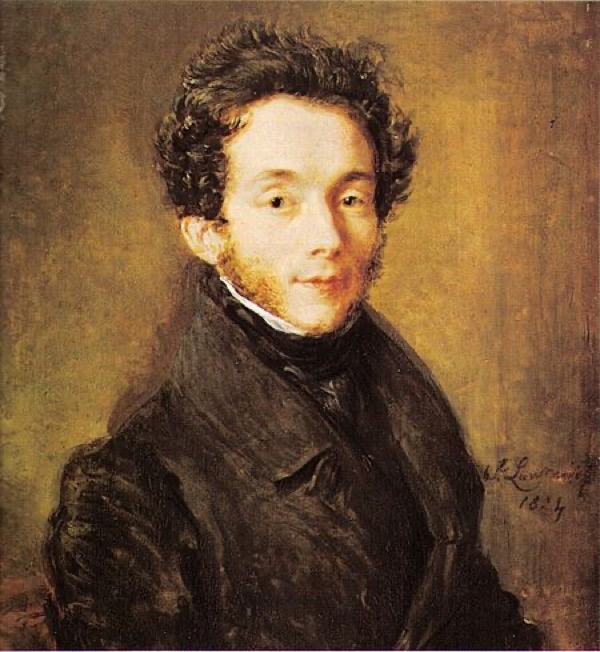
Carl Maria von Weber, 1814 (painting by Thomas Lawrence)
Weber’s decision to build a single-movement concerto around a dramatic story predates the symphonic poem by decades. Liszt, who later created his own revision of the solo part, took cues from Weber’s example when subverting expectations about form himself.
The Konzertstück didn’t just influence what pianists played; it changed how composers thought about structure.
1830s
Frédéric Chopin – Piano Concerto No. 1 in E minor (1830)
Chopin wrote his first piano concerto in 1830 at the age of twenty, just months before leaving Warsaw for Paris. War, ill health, and political unrest kept him from ever returning to Poland again.
This was his last major work written on Polish soil, and it has a kind of poignant nostalgia to it. The slow movement is particularly wistful and tender.
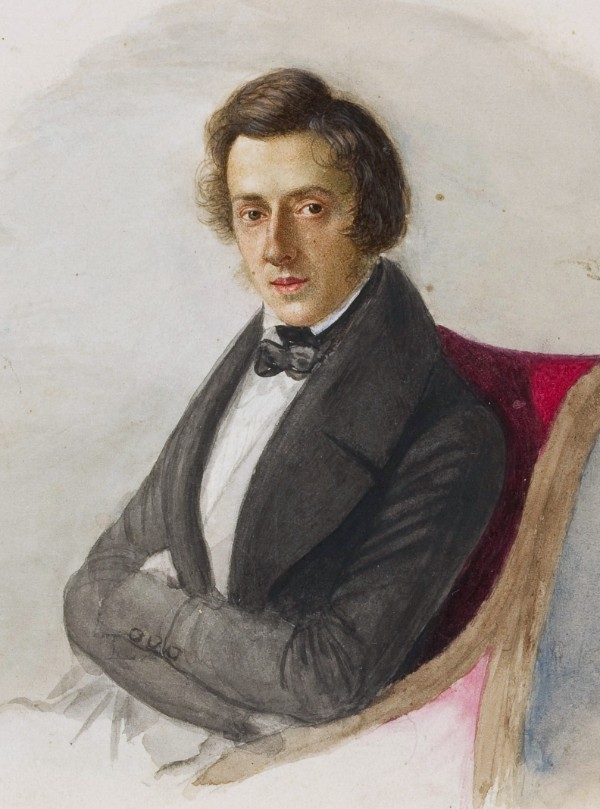
Maria Wodzińska: Frédéric Chopin, 1836 (Wasaw: National Museum)
Meanwhile, the orchestration is spare; it is clear that Chopin’s primary interest here was exploring the expressive abilities of the solo instrument.
Beethoven had reimagined the relationship between pianist and orchestra back in 1805; Chopin responded by deprioritising that relationship and going his own way. The result is undeniably magical.
1840s
Robert Schumann – Piano Concerto in A minor (1845)
Robert Schumann composed the first movement of his piano concerto in 1841 as a standalone Concert Fantasy for his new wife Clara, one of the greatest pianists of the century.
Four years passed before he added two additional movements, turning it into a proper concerto.
Clara premiered the finished work and remained its most important early champion, especially after Robert died in 1856.
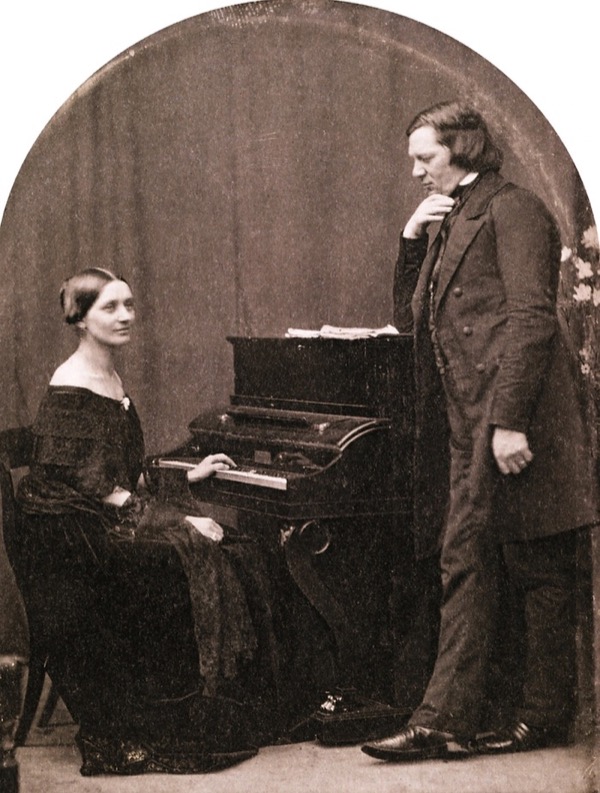
Clara and Robert Schumann
The concerto is remarkable for the intensity and intimacy of the relationship between piano and orchestra. (It’s fitting, given the relationship between composer and interpreter.)
The result is a piece in which the piano and orchestra finish each other’s thoughts with an impressive ease. It was a marked departure from the Chopin approach of assigning all the expressivity to the solo piano – and it set the stage for the high Romantic era.
1850s
Franz Liszt – Piano Concerto No. 1 in E-flat major (1830–1856)
Liszt’s first piano concerto has the most unusual origin story of any work on this list.
He began sketching it in 1830, the same year as Chopin’s first concerto. But instead of publishing and moving on as Chopin had done, he kept revising and withholding it on and off for a quarter century.
He finally premiered it in 1855, and even then he kept tweaking it until its publication in 1856.
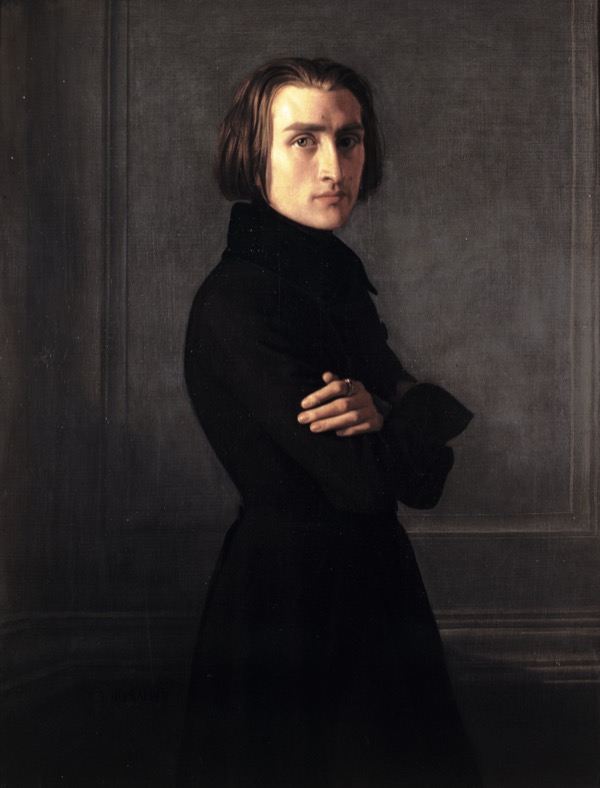
Franz Liszt
Liszt wouldn’t finalise the work until every structural question was resolved to his satisfaction – questions that concerto composers had been circling for half a century.
What he arrived at was genuinely radical: a single-movement structure in four connected sections, with themes that transform and return throughout the work.
It’s a solution that meshes with the ideas of Richard Wagner, whose operas were making waves across Europe at this same time.
1860s
Edvard Grieg – Piano Concerto in A minor (1868)
Grieg wrote his Piano Concerto in A minor in 1868 when he was 24, completing it over the course of a single inspired summer.
He had recently heard Schumann’s concerto, and the influence is obvious from the opening bars: the dramatic descending chords echo Schumann’s own concerto very closely.
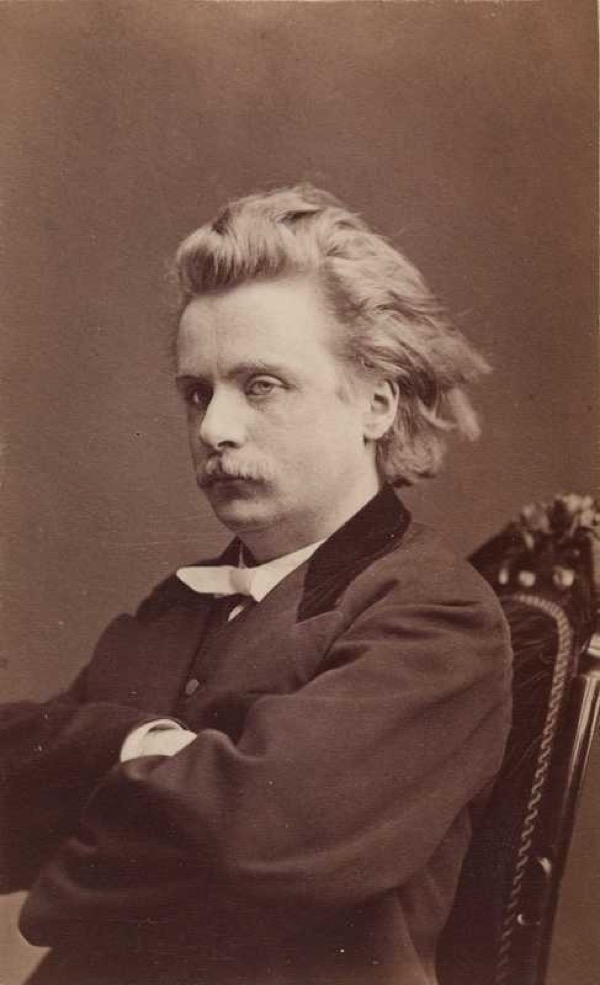
Edvard Grieg
But Grieg wasn’t a copycat. He imbued the work with his own voice, featuring melodies rooted solidly in Norwegian folk music and yearning harmonies unlike anything in the German tradition.
Grieg revised the concerto repeatedly across his lifetime, but its dramatic essence never changed.
1870s
Pyotr Ilyich Tchaikovsky – Piano Concerto in B-flat minor (1874)
Tchaikovsky completed his first piano concerto in 1874. That Christmas, he excitedly shared his new creation with his colleague and mentor Nikolai Rubinstein – who promptly called it unplayable.
Tchaikovsky was shattered by the criticism but refused to change a note. Instead, he pointedly dedicated the work to German conductor and pianist Hans von Bülow, who premiered it in Boston in 1875 to acclaim. Eventually Rubinstein admitted he’d been wrong.
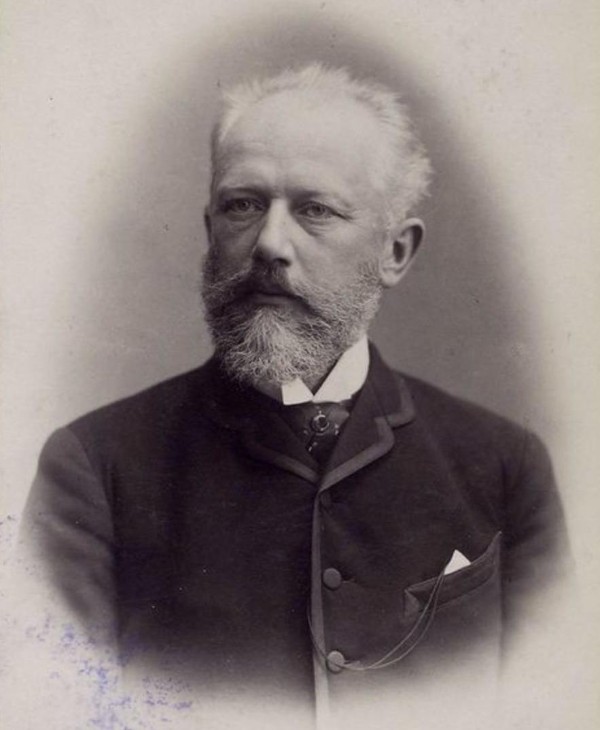
Pyotr Ilyich Tchaikovsky
The backstory says something important about the concerto: it is a work of defiant confidence, from the famous opening, with its horn calls and smashing chords, to its folk-inflected finale.
It may well be the most popular piano concerto not just of the decade, but of the century.
1880s
Johannes Brahms – Piano Concerto No. 2 in B-flat major (1881)
Brahms completed his second piano concerto in 1881, when he was in his mid-forties and at the height of his powers.
It is autumnal and expansive, consisting of four movements instead of the standard three, that run close to an hour in performance. With characteristic sarcasm, Brahms once described it as a “tiny piano concerto.”
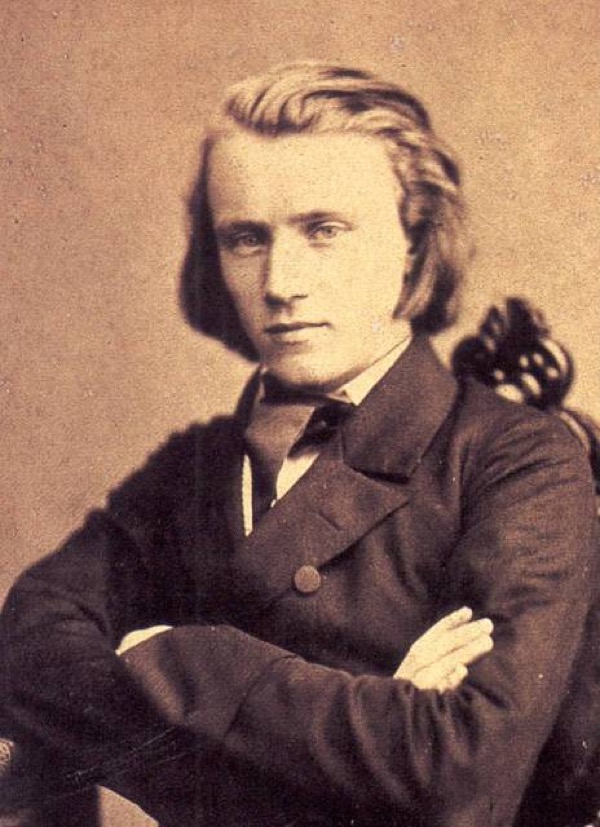
Johannes Brahms, 1853
The opening horn melody, answered gently by the piano, sets a tone of unhurried intimacy that never entirely leaves the work, even in its most demanding passages.
A long cello solo opens the slow movement and remains one of the most quietly devastating things Brahms ever wrote.
Throughout the concerto, Brahms makes extraordinary technical demands of the soloist — demands that must be conquered without a single iota of fussiness or show. It was the culmination of late Romantic-era German piano writing.
1890s
Amy Beach – Piano Concerto in C-sharp minor (1899)
American composer Amy Beach completed her piano concerto in 1899. It is one of the most unjustly neglected works in the repertoire.
Astonishingly, Beach was largely self-taught as a composer. She was a virtuoso pianist who married a much older man when she was 18. The marriage was happy, but it would have been a silent indictment of his ability to provide if she’d made a career as a performer.
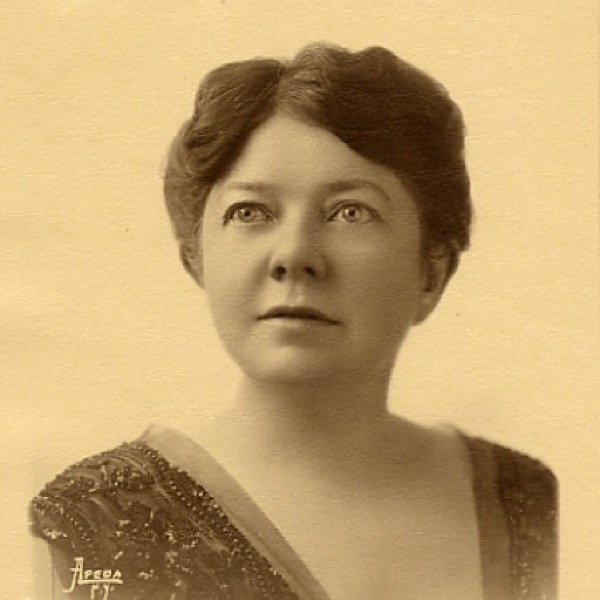
Amy Beach
Composing, however, was a field that was more open to her. The culmination of her self-study was her Mass, her Gaelic Symphony, and this piano concerto.
After her husband died in 1910, she began touring more and more. She often brought this work with her. Unfortunately, despite its quality, it was perhaps too little, too late, and it disappeared from concert programs for most of the 20th century before being reassessed in the 21st.
Conclusion
What’s striking, looking across the full century, is how these composers ended up being in dialogue with one another across the generations. Beethoven wanted to write a musical conversation. Chopin was leaning more toward a monologue. Liszt wanted to remake the structure of the concerto. Brahms wanted to expand it.
These works don’t always agree with one another, but every one has become precious to pianists and listeners alike.
The 1800s gave us more great piano concertos than any other century – and this list barely scratches the surface.
For more of the best in classical music, sign up for our E-Newsletter