Famous stories have frequently been turned into operas by different composers. “Romeo and Juliet” was set to music by Vincenzo Bellini in 1830 as I Capuleti e i Montecchi, with Charles Gounod composing his version in 1867.
Giovanni Paisiello composed The Barber of Seville in 1782, but Gioachino Rossini’s version of 1816 became the enduring masterpiece. “Joan of Arc” was adapted by Giuseppe Verdi in 1845 and later by Pyotr Ilyich Tchaikovsky in 1881.
The novel Manon Lescaut by Abbé Prévost actually inspired at least three operatic settings. Daniel Auber crafted an early French comic-style treatment of the tragic romance, but the two most famous versions come from Jules Massenet and Giacomo Puccini, respectively.
To commemorate the death of Jules Massenet on 13 August 1912, let us compare the two great operas that share the same ill-fated heroine.
Jules Massenet: Manon, “Je suis encore tout étourdie”
The Common Source
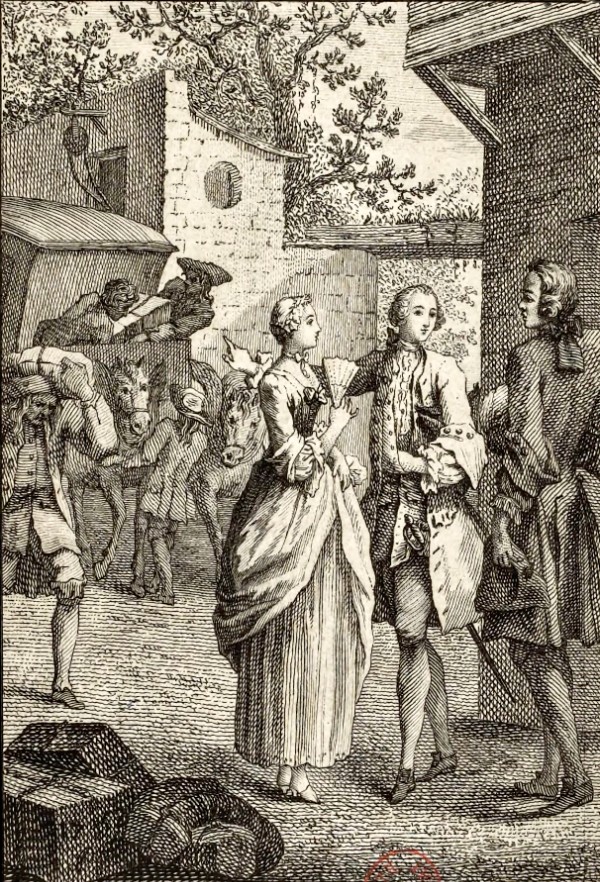
Manon and des Grieux’s first meeting, illustrated in the 1753 edition of The Story of the Chevalier des Grieux and Manon Lescaut
Both Massenet and Puccini adapted the same 1731 novel by Abbé Prévost titled “Histoire du Chevalier des Grieux et de Manon Lescaut.” Set during the reign of French King Louis XV in 1721, the story follows the beautiful young Manon, who is destined for a convent, but she elopes with the Chevalier des Grieux.
The lovers are discovered in Paris by Manon’s brother Lescaut and de Brétigny, who also loves Manon. Informed that Des Grieux has little money, Manon is persuaded to accept de Brétigny as her lover. When Manon later learns that Des Grieux is about to take the vows of a priest, her love resurfaces, and she hastens to the church of Saint-Sulpice.
Jules Massenet: Manon, “Adieu, notre petite table”
The Tragic Tale
Des Grieux yields to her will, and the pair return together to their old, indulgent ways. In a gambling salon, Des Grieux wins a considerable sum from Guillot, who accuses Des Grieux of cheating and denounces Manon as his accomplice.
The couple is jailed, and while Des Grieux is released owing to his father’s influence, Manon is condemned to deportation. Des Grieux and Lescaut make desperate efforts to rescue her, but when they succeed it is too late. As Des Grieux clasps Manon in his arms, she implores pardon for her past follies and errors, avows her real love for him, and dies.
Jules Massenet: Manon, “Je marche sur tous les chemins”
Massenet’s Manon (1884)
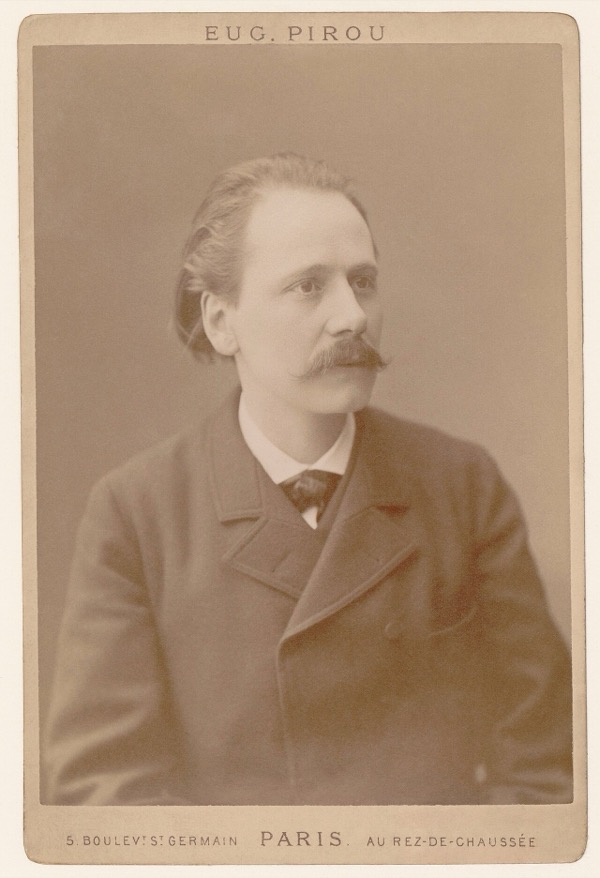
Jules Massenet (by Eugène Pirou)
This particular subject had already been set to music by Fromental Halévy as a ballet in 1830, and by Daniel Auber for an opéra comique in 1856. Twenty years later, Jules Massenet suggested a collaboration on a setting to the French dramatist and opera librettist Henri Meilhac.
As Massenet writes in his autobiography, “The idea of writing this work had haunted me for a long time… How pleased I was in this collaboration with Meilhac, and Philippe Gille shared in this useful alliance from time to time.” The final libretto simplifies the plot and avoids all elements of social criticism, with the scene of Manon’s death transferred from the swamps of Louisiana to a road in Le Havre.
Massenet’s setting premiered on 19 January 1884, and it was a huge success. When Massenet died in 1912, the Opéra Comique alone had staged 700 performances, and that number would rise to 2,000 by 1950.
Jules Massenet: Manon, “En fermant les yeux”
The Eternal Feminine
Within a year of the premiere, the opera played in Liverpool in the UK and at the Academy of Music in New York. The conductor Thomas Beecham famously stated, “I would give the whole of Bach’s Brandenburg Concertos for Massenet’s Manon and would think that I had profited by the exchange.”
With his character “Manon,” Jules Massenet created a portrait of the eternal feminine. As has been pointed out, this male view of seductive womankind is decidedly one-sided. However, it is the quintessential example of the charm and vitality of the music and culture of the Parisian Belle Époque.
The musical style is essentially retrospective, and the mélodrame is faultlessly handled at a technical level. There are only a few lines of spoken dialogue, but an overreliance on narrative values makes the work nearly three hours long. For scholars, “Manon is essentially a highlight opera lacking cohesion and economy, but those highlights were seldom surpassed in the composer’s oeuvre.”
Jules Massenet: Manon, “Saint-Sulpice Duet”
Puccini’s Gamble
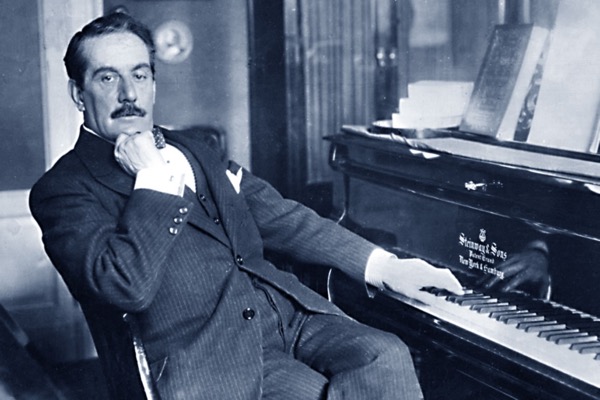
Giacomo Puccini at the piano
Giacomo Puccini’s opera Edgar, premiered at La Scala in 1889, was poorly received. Despite several revisions, the opera lacked dramatic cohesion and ultimately became Puccini’s only true failure. For his next project, Puccini turned towards Manon Lescaut, well aware of Massenet’s hugely popular work.
Even his publisher Ricordi tried to tell Puccini to drop the subject, but Puccini was determined. As he argued, “Why shouldn’t there be two operas about Manon? A woman like Manon can have more than one lover. Massenet feels it as a Frenchman, with powder and minuets. I shall feel it as an Italian, with desperate passion.”
Giacomo Puccini: Manon Lescaut, “Donna non vidi mai”
A Libretto in Turmoil
Puccini’s effort had an unusually troubled and collaborative libretto history. Unhappy with his earlier librettist Ferdinando Fontana, Puccini initially engaged playwright Marco Praga. Since he was inexperienced in opera, the poet Domenico Oliva was brought in to handle the versification.
However, Puccini found the text unsatisfactory, and with Praga refusing to restructure the text, Ruggero Leoncavallo was brought in, but he also left the project. Finally, in the autumn of 1891, Luigi Illica was engaged to overhaul the entire libretto, but now Oliva was unhappy with the changes. In the end, Manon Lescaut was the beginning of a long and fruitful collaboration with librettists Luigi Illica and Giuseppe Giacosa.
Giacomo Puccini: Manon Lescaut, “In quelle trine morbide”
Themes of Destiny
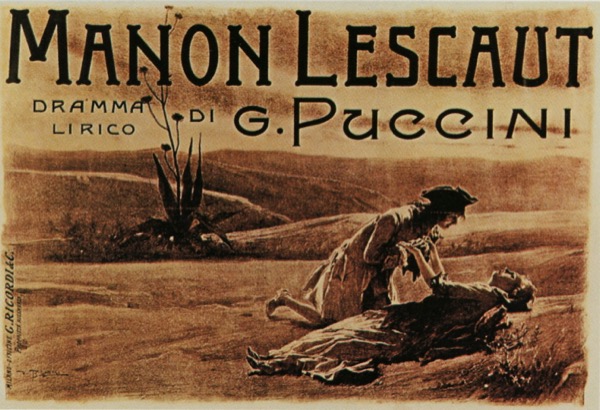
Manon Lescaut poster
Musically speaking, Manon Lescaut represented an early opportunity for Puccini to experiment with orchestral colour and structure, providing a sense of seamless musical continuity.
Essentially, Puccini drew from Wagner’s idea of the leitmotif and combined it with the Italian dramma in musica, advancing the integration of music and drama. As such, Puccini uses recurring themes to represent the emotions and destinies of his characters.
Manon’s theme is repeated throughout the opera, symbolising the heroine’s fate and relationship with her lovers. He also incorporated a decidedly symphonic element, which was entirely new in Italian musical dramaturgy. According to scholars, “Puccini’s skilful use of symphonic structures and thematic relationships pushed the boundaries of the operatic genre.”
Giacomo Puccini: Manon Lescaut, “Sola, perduta, abbandonata”
French Charm vs Italian Passion
The Massenet and Puccini settings are roughly complementary, but they illuminate different sides of the same story. Massenet presents sparkling, lyrical melodies, with the orchestra delicately supporting the emotions described. Puccini, on the other hand, presents a passionate, chromatic reading, with the orchestra often carrying the emotional weight.
As for the heroine, Massenet’s Manon is charming and coquettish. She is a somewhat naïve young woman torn between love and luxury. She is a more sympathetic character, with genuine warmth, and her fall from grace stems from weakness.
Puccini’s Manon is more complex and conflicted from the very beginning. She is strong-willed and sensual, and although she genuinely loves des Grieux, she cannot resist luxury. She is portrayed as selfish and tragic, and her final moments are marked by great desperation and dignity.
Massenet’s charming and stylish setting represents the pinnacle of French lyric opera and was extremely popular in France. For Puccini, Manon Lescaut was his first major international success, establishing the lush, emotional style that would subsequently define Tosca and Madama Butterfly.
For more of the best in classical music, sign up for our E-Newsletter