On 14 October 2026, we celebrate a very special 100th birthday. Our birthday bear is friendly and steadfast, and though he is a little slow and naïve, he often comes up with clever ideas.
Our celebrity is also a talented poet and storyteller, and occasionally he even composes a song. Have I given you enough clues to guess our birthday bear’s identity?
Enough suspense already! Today, we celebrate the 100th anniversary of the publication of Winnie-the-Pooh, the lovable fictional teddy bear created by the English author A. A. Milne and brought to life by illustrator E. H. Shepard.
Sherman/Sherman: “Winnie the Pooh”
From Winnipeg to the Hundred Acre Wood
Winnie-the-Pooh is actually a collection of stories about a good-natured honey-loving bear who lives in the Hundred Acre Wood, a fictional place modelled on Ashdown Forest in East Sussex, England.
The lovable bear was inspired by a stuffed toy Milne bought for his son Christopher Robin, and by a bear named Winnie they visited at the London Zoo. Thus, Winnie-the-Pooh was essentially inspired by a real bear.
The bear story begins in Canada, where an officer of the Canadian Army Veterinary Corps named Harry Colebourn adopted an orphaned female bear cub in White River, Ontario. He named the cub Winnipeg, or Winnie for short, after the Canadian city of Winnipeg, where he was based.
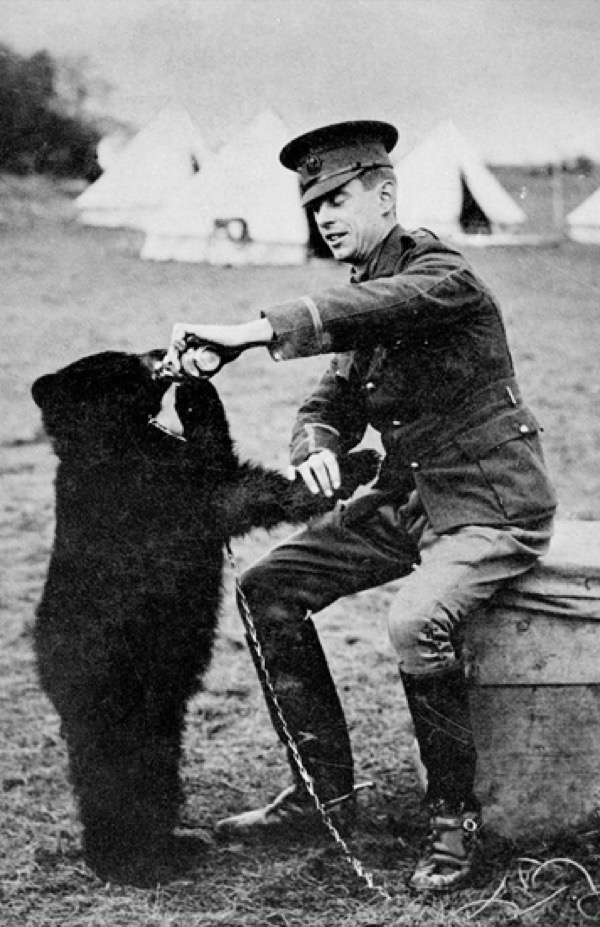
Harry Colebourn and Winnie
Lopez/Lopez: “The Tummy Song”
From Zoo to Literary Fame
When Colebourn’s regiment came to England, he brought Winnie with him, and she soon became the regiment’s unofficial mascot. When Colebourn left for the front, he placed Winnie at the London Zoo, and she quickly became a crowd favourite.
One of those visitors was Christopher Robin Milne, who was so taken with Winnie that he renamed his teddy bear after her. Originally, the name Pooh belonged to a swan that Christopher Robin visited and fed. And thus the fictional Winnie-the-Pooh was born.
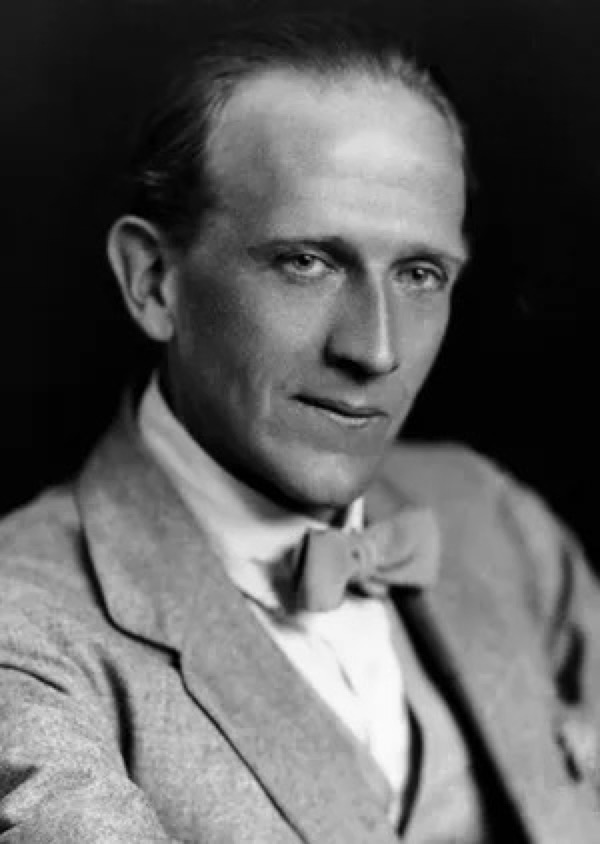
A. A. Milne, 1920
The first collection of stories under the title “Winnie-the-Pooh” was published in 1926, and the sequel “The House at Pooh Corner” appeared in 1928. Since we have already met Winnie-the-Pooh, it’s now time to introduce Pooh’s companions in the forest.
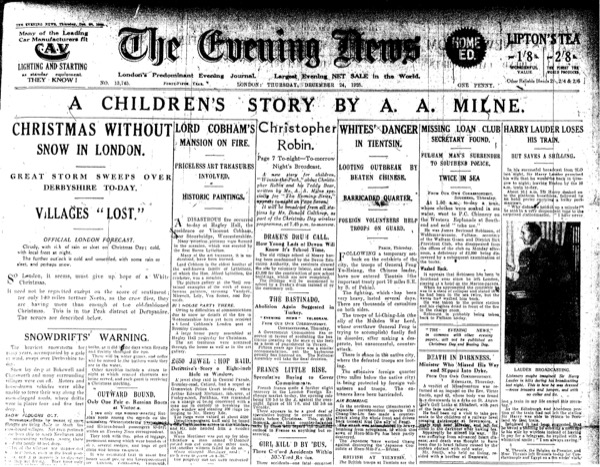
Winnie-the-Pooh, Evening News
Lopez/Lopez: “A Very Important Thing to Do”
Meet the Gang
Of course, Christopher Robin is the boy who shares his name with Milne’s son. He is the benign master of the forest, and the animals turn to him when a problem gets too big for them.
He leads their expedition to the North Pole, and when Pooh gets stuck in Rabbit’s doorway, Christopher reads to him for over a week until Pooh has grown thin enough to escape through the doorway.
And then there is the old and grey donkey “Eeyore,” a kind but always self-deprecating creature. Odd mishaps seem to follow him around, as his missing tail is found at the Owl’s house, and Pooh and Piglet accidentally dismantle his stick house.
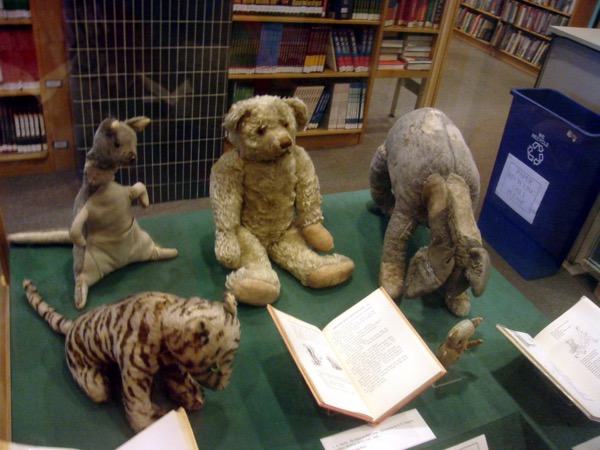
The original Winnie-the-Pooh toys
One of Pooh’s closest friends is “Piglet,” a small and often nervous creature who is fiercely loyal. One day, he sets out to give Eeyore a balloon for his birthday but accidentally pops it. Never mind, he still brings the remains as a gift. “Piglet” is very brave and even stands up to such creatures as a Heffalump, a creature resembling an elephant.
Sherman/Sherman: “Like a Rather Blustery Day”
Wisdom, Bounce & Trouble
“Owl,” predictably, is an expert on almost everything, and always ready with a story or piece of advice. “Owl” lives in a splendid house at the Chestnuts, and even has a doorbell that rings inside.
The exuberant tiger bounding around on his tail first appeared in the 1928 book. Called “Tigger,” he joins many adventures and boasts that he can climb trees. Amusingly, he discovers that getting down is much harder than getting up.
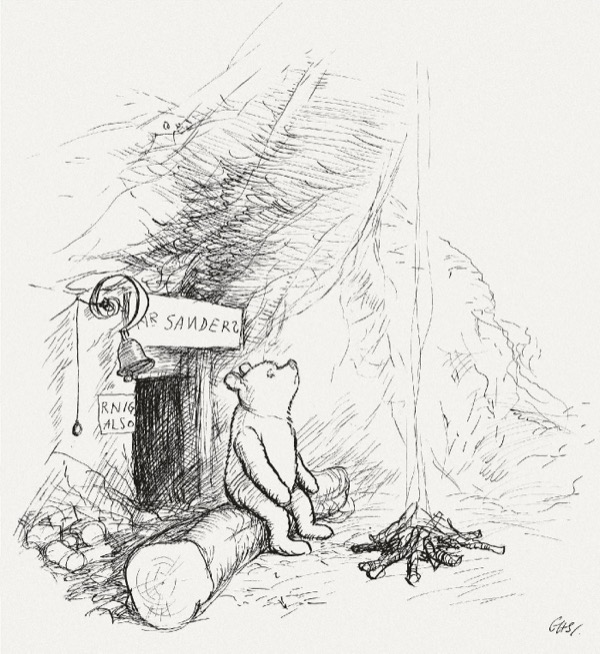
Pooh (Shepard, 1928)
“Roo” is a baby kangaroo riding in his mother’s pouch, and it’s all fun and games. When “Roo” falls into a stream, he discovers that he can swim, and he even gets stuck up a tree with Tigger.
His mother “Kanga” is the fastest animal in the woods and is known for keeping track of every detail. She certainly is very practical and attentive, and later looks after Tigger as well.
“Rabbit” is an expert thinker who is convinced that he can solve almost any problem. When he gets annoyed at Tigger bouncing around, he leads him deep into the forest to disorient him, but in the end, it is “Rabbit” who loses his way.
Sherman/Sherman: “The Wonderful Thing About Tiggers”
A Few Simple Lines
And thus, the stage is set for “Winnie-the-Pooh” to get himself into all kinds of sticky situations. The 1926 book contains 10 chapters that recount his various adventures. Milne insisted that Ernest H. Shepard illustrate these stories.
Shepard had long been working as a book illustrator, and he was also a full-time cartoonist at Punch, focusing on political cartoons. He also collaborated with Milne on the publication of When We Were Very Young in 1924.
His illustrations were always inspired by life itself. He often carried a sketchbook and observed everything from landscapes to children’s toys. As such, his drawings for “Winnie-the-Pooh” are delightfully light and natural, with a few simple lines suggesting personality and environment.
Lopez/Lopez: “It’s Gonna Be Great”
Pooh Goes to Hollywood
Milne quickly understood that Shepard’s contribution made the books a great success, and Shepard received a share of the royalties. As a result, “Winnie-the-Pooh” became a huge success and the book was translated into countless languages.
Walt Disney acquired the screen rights to Milne’s Pooh stories in 1961, and the character made his Disney animated debut in the 1966 featurette Winnie the Pooh and the Honey Tree. Originally, the screen characters were based on Shepard’s illustrations, but were subsequently adapted. Interestingly, Shepard called the Disney animation a travesty in 1966.
Two more short features followed, and all three were later combined into a feature-length animation titled The Many Adventures of Winnie the Pooh in 1977. Yet, living with the resounding success of Winnie-the-Pooh proved difficult for the people behind it. A. A. Milne was frustrated that his bear story overshadowed his plays, novels, and essays.
Lopez/Lopez: “Everything is Honey”
May His Songs Never End
Illustrator Ernest H. Shepard developed a similar resentment as his Pooh drawings became more famous than the rest of his work. And Christopher Robin Milne was mercilessly teased by his classmates over his fictional counterpart. As an adult, he tried to distance himself completely from the character.
Of course, “Winnie-the-Pooh” is a rather musical bear, so the original Disney productions featured songs by the Sherman brothers. For the 2011 “Winnie the Pooh” film, Henry Jackman composed the background score, while new songs were written by the songwriting team Kristen Anderson-Lopez and Robert Lopez.
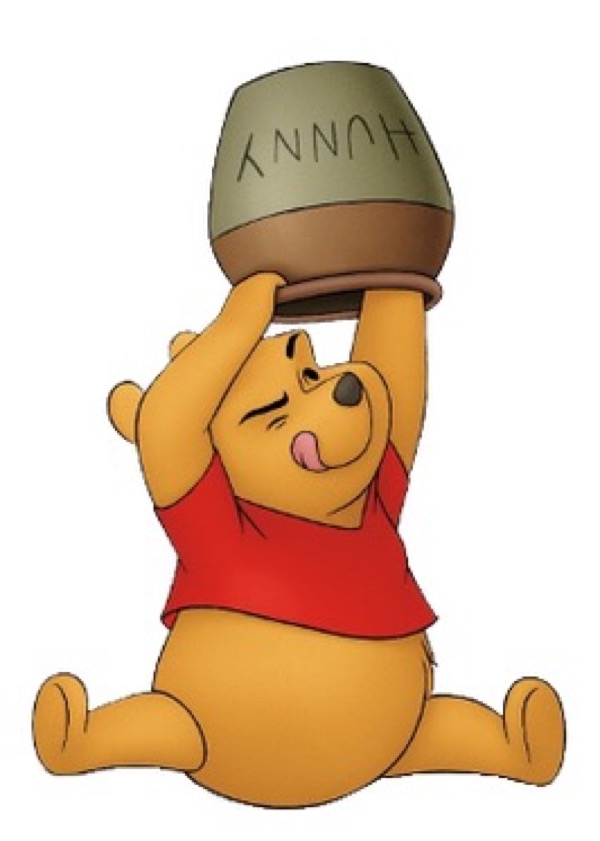
Winnie the Pooh
A hundred years after Winnie-the-Pooh first appeared in print, he still gets stuck in doorways and stumbles into wild adventures with his friends. This jolly bear has made children and adults smile for 100 years and may his honey pots always be full and his songs never end.
For more of the best in classical music, sign up for our E-Newsletter