Antonio Stradivari was the greatest violin-maker to ever live.
Over the course of a seven-decade career, he made around a thousand instruments, with roughly 650 surviving today.
Those instruments have become the most sought-after on the planet, selling for millions and millions of dollars. Read more from “The Stradivarius: Why No One Has Ever Made a Better Violin“.
Mini documentary on Stradivari violins
Despite his fame, we know surprisingly little about his life – or the lives of his two wives, Francesca and Antonia.
Both of their stories are remarkable – his first wife’s life marked by a story of violence and survival, his second wife’s marked by devotion – and a will that raises more questions than it answers.
Unfortunately, the historical record surrounding the trio and their children is infamously spotty. But here’s what historians have pieced together based on surviving documents.
Francesca Ferraboschi: A Story of Murder, Survival, and Reinvention
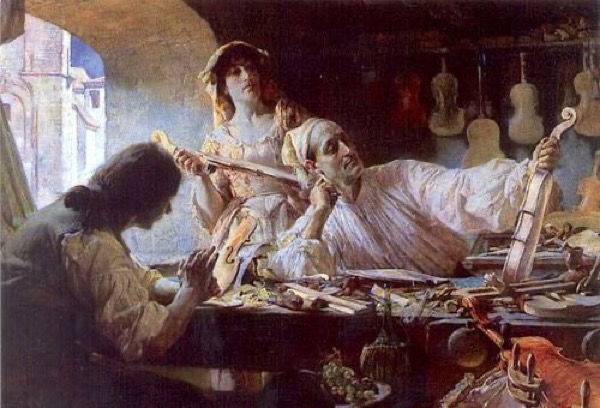
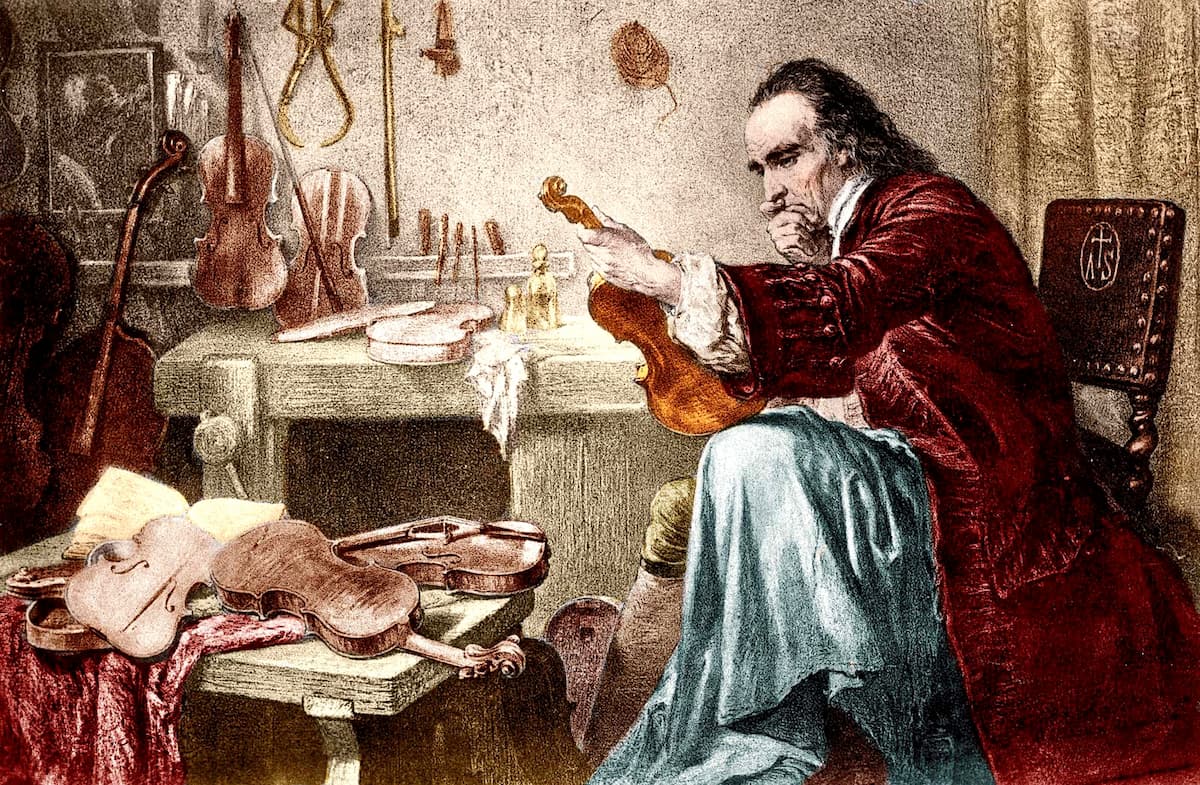
Antonio Stradivari by Edgar Bundy, 1893
Antonio Stradivari’s first wife, Francesca Ferraboschi, was born in 1640 in Cremona.
Antonio was her second husband. Her first husband was a burgher named Giacomo Capra, son of prominent architect and inventor Alessandro Capra.
She and Capra had two children together.
Historians have surmised that their marriage was unhappy. In the spring of 1664, Francesca’s brother Giovanni shot Giacomo with an arquebus – a type of long gun – in the Piazza Santa Agata.
In the book Stradivari’s Genius, author Toby Faber goes so far as to speculate that the murder may have been done at Francesca’s request.
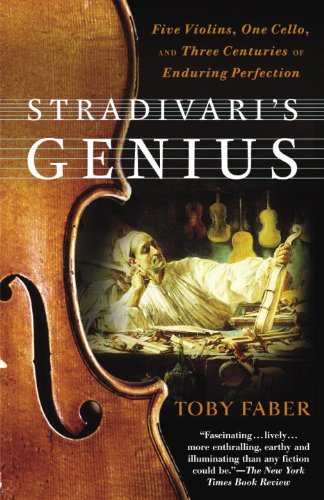
Stradivari’s Genius: Five Violins, One Cello, and Three Centuries of Enduring Perfection by Toby Faber © Amazon
Given the severity of the crime, her brother Giovanni’s punishment was light: no capital punishment, and just three years’ exile from Cremona.
Capra’s father Alessandro attempted to seize custody of Francesca’s young daughters. She fought back. She also sued for the return of her dowry – and won.
How Francesca Ferraboschi Became the First Wife of Antonio Stradivari
Francesca lived four doors down from the Amati violin-making family, where Antonio apprenticed as a young man. It seems possible that this is how they met.
The couple had a somewhat unusual age difference for the time. Records of Stradivari’s birth year are contradictory – he was likely between 18 and 23 when they met – while Francesca was 27.
In the spring of 1667, she became pregnant. They married in July 1667 at the Church of Santa Agata – the church adjacent to the plaza where her first husband had been killed.
The unlikely young family moved to the Casa Nuziale, in Francesca’s parish, and their first child, Giulia, was born in December 1667.
Over the next thirteen years, they had six children together. One son died in infancy in 1670, but their sons Francesco and Omobono would grow up to join their father’s trade.
Antonio was not a particularly prolific luthier during this period. As best we know, he only made eighteen violins: not enough to live on. It is possible he worked for other makers or woodworkers during this time, or came into his own money; we don’t know.
Around 1680, the family moved to the house where Antonio would spend the rest of his career. He worked in the attic.
Francesca died in the spring of 1698, at the age of 58.
Either she was deeply beloved or the family wanted to make a statement about their wealth (or both), because five days after her death, they held a lavish funeral for her. Dozens of religious figures were present, and the ceremonies included torch-bearers and gravediggers.
What Happened After Francesca Died
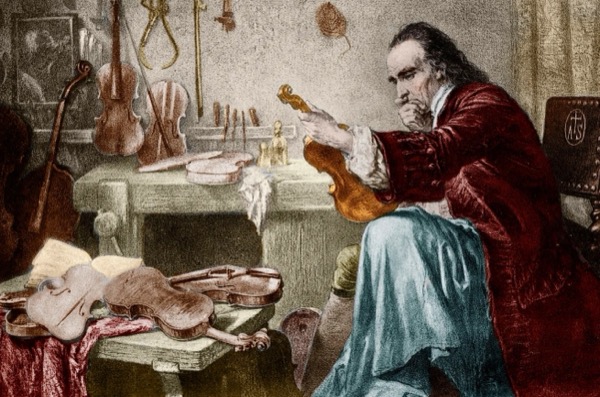
Antonio Stradivari
Without diaries or letters, we are left to speculate about what Antonio’s life as a widower was like.
However, Antonio’s will, drafted decades later, offers one intriguing clue. It mentions that in the year after Francesca’s death, Antonio and Francesca’s youngest son Omobono Stradivari, just eighteen years old at the time, left Cremona to establish himself in Naples.
We don’t know whether this was related to his mother’s death or conflicts with his father or brothers, or all of the above, but it’s certainly tempting to wonder.
Omobono’s sojourn lasted around two years. He eventually decided to return home. By the time he did, his father had remarried – and started a second family.
Antonia Zambelli: The Wife Who Witnessed Stradivari’s Golden Years
Antonio Stradivari’s second wife Antonia Zambelli was born in February 1665. She was 34 years old, twenty years younger than Antonio, when they married in August 1699.
Antonia came from a wealthy family. Her dowry included jewellery, clothing, and even twenty paintings – all suggestive of a level of material comfort and social standing.
Antonia became pregnant a few months after the wedding and gave birth to their first child – a girl – in September 1700. They named her Francesca, likely a tribute to both Antonia’s mother, Francesca, and Antonio’s late wife.
Itzhak Perlman talks about his relationship with the 1714 “Soil” Stradivari
All in all, between 1700 and 1708, they had five children together. The youngest, Paolo, was born when Antonio was in his early sixties.
Antonia’s arrival coincided almost exactly with the start of Stradivari’s so-called Golden Period, which lasted from 1700 to 1725.
During this time, he made hundreds of instruments. It is intriguing to wonder if the domestic stability she made possible – or perhaps the unexpected second chance at fatherhood – helped to breathe new life into the family business.
What Stradivari’s Will Reveals About His Marriage to Antonia
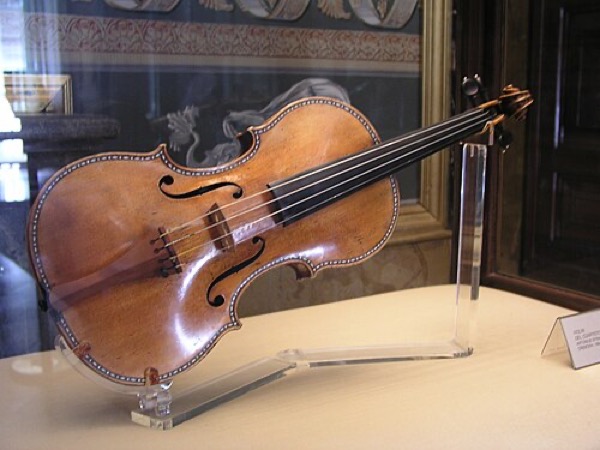
Stradivari violin
In 1727, Antonio and Antonia’s son Giovanni Battista Martino – who scholars believe may have worked in the workshop alongside his brothers – died at 24.
The grief from the loss may have turned Antonio’s mind to his own mortality. In 1729, he bought a tomb and drafted his will.
Antonio Stradivari’s will is a telling document. It included eight family beneficiaries.
Giacomo Francesco – Francesca’s son, who had been born in 1671 and worked with his father – was praised as someone “in whom Antonio especially confides.”
His youngest brother Omobono – the one who had briefly struck out on his own to work in Naples – was sidelined for leaving the business. Tools were left for him, but they were not to be removed from the workshop: Antonio’s precise pettiness preserved in legal language.
The drafts of Antonio’s will also paint a complicated picture of his marriage to Antonia. In the first draft, she received nothing, only being allowed to remain in the house.
However, in the amended draft, Antonio ordered that her sons, Giuseppe and Paolo, pay 1,000 lire to support her. She was also permitted to keep half of her jewellery. Antonio framed this as recognition of her “affection.”
There was also a remarriage clause: if she remarried, she’d lose everything.
It is unclear how much Antonia knew about these provisions. Although she was much younger than her husband, she died in March 1737, before Antonio.
What Happened to the Stradivari Family After Antonio Died
Elderly spouses often pass away in close succession, and Antonio was no exception. He didn’t survive a full year after his wife, dying in December 1737.
Tragically, it wasn’t long before his children passed away, too. Omobono Stradivari died in 1742, and Giacomo Francesco died in 1743.
Their deaths marked the end of the potential Stradivari violinmaking dynasty.
Of Antonio’s eleven children, only one had kids of his own: Paolo, a cloth merchant who had been born in 1708. All surviving Stradivari descendants trace their line to him.
Ironically, the greatest violin maker in history, who had surrounded himself with family and potential heirs to his craft, was survived not by luthiers but by a cloth merchant and his bloodline – and, of course, by the instruments that still sing in concert halls all around the world today.
For more of the best in classical music, sign up for our E-Newsletter