Many great composers had sisters, and those sisters shaped them more than most biographies say.
They taught them piano, nursed them through fatal illness, and carried their family’s finances.
Some of these women were musicians themselves. Others were nuns, teachers, or mothers.
All of them lived in the shadow of a brother’s fame – and few of them are recognized as the inspirations and influences they were.
Here are seven of their stories.
Rosalie Wagner Marbach, Richard Wagner’s sister
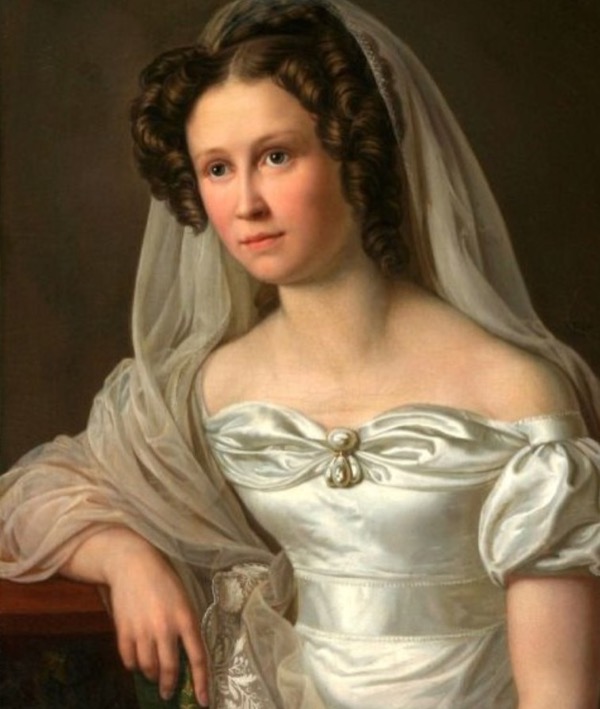
Rosalie Wagner Marbach
Richard Wagner (born in 1813) and his older sister Rosalie (born in 1803) grew up in a theatrical family. Their biological father died in 1814, and shortly after, their mother remarried an actor, author, and artist named Ludwig Geyer. That marriage lasted for seven years, until Geyer also died in 1821.
Before he died, Geyer oversaw the beginning of Rosalie’s acting career. She began working as a teenager, making her debut in a play by her stepfather, playing a character based on and named after her.
She took a job at the Dresden court in 1820, moved to Prague in 1826, then to Hamburg in 1828, before returning to her hometown of Leipzig in 1829. She was the family breadwinner, saving Wagners from destitution.
She turned down multiple proposals from wealthy Leipzig men, preferring to stay onstage, until she fell in love with a poor but brilliant professor named Gotthard Oswald Marbach, whom she married on 24 October 1836.
Less than a year later, on 7 October 1837, she gave birth to a daughter – also named Rosalie – and died five days later.
Wagner adored his sister and stayed in touch with Marbach for decades.
Rosalie was a major reason why the Wagner family was economically stable during his childhood – and, importantly, she provided him with an example of someone making a career in the performing arts.
Ludwika Chopin Jędrzejewicz, Frédéric Chopin’s sister
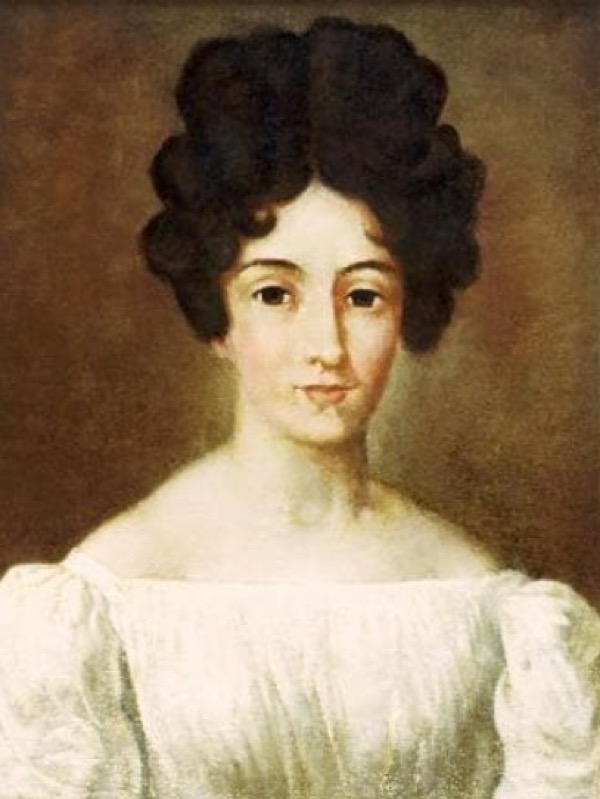
Ludwika Chopin
Ludwika was born in 1807, three years before her brother Frédéric. As children, she helped teach Frédéric piano, and later they both studied under the same music teacher, Wojciech Żywny.
According to a letter Chopin sent to a friend in 1825, Ludwika was composing mazurkas by the age of 18, describing them as “a kind that Warsaw has not yet danced to.”
She was also interested in literature and co-wrote a popular book with her younger sister Izabella called Mr Wojciech: An Example of Work and Economy.
Frédéric left Warsaw for Paris in 1830 and, because of the deteriorating political situation, never returned. Meanwhile, Ludwika married lawyer Kalasanty Jędrzejewicz in 1832; the marriage was unhappy, and he was jealous of the bond she still shared with her brother.
When it became clear that Chopin’s tuberculosis infection would be terminal, he wrote to Ludwika, asking her to come to Paris to be with him. She immediately rushed to his side, took care of him during his final sickness and death, and went through his papers. She also ignored his instructions to burn his unpublished works, including his now-famous Nocturne in C-sharp minor.
Frédéric Chopin: Nocturne in C-Sharp Minor, Op. posth. (Meng-Chieh Liu, piano)
Per his final wishes, she travelled back to Poland with Chopin’s heart in a cognac bottle to avoid border scrutiny.
She died in 1855.
We wrote about her story in-depth here: https://interlude.hk/what-happened-to-chopins-beloved-composer-sister-ludwika-jedrzejewicz/.
Marie Wieck, Clara Wieck Schumann’s half-sister
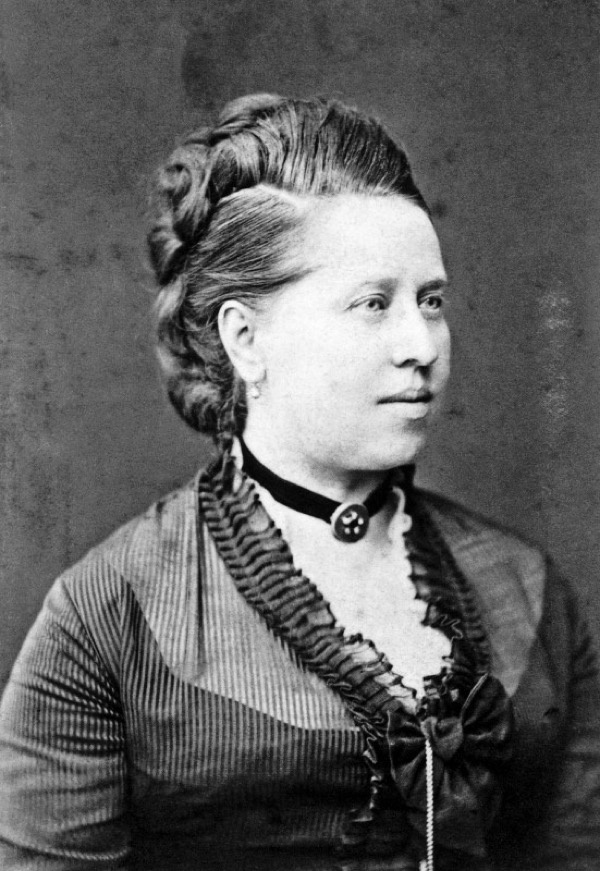
Marie Wieck
Clara Wieck was born in 1819 to piano teacher Friedrich Wieck and his singer wife Mariane. Friedrich was infamously controlling and abusive, and Mariane fled the marriage in 1824.
Friedrich remarried a much younger student named Clementine. In 1832, Clementine gave birth to Marie, making the baby thirteen years younger than her half-sister Clara.
By then, Clara was already a celebrated child prodigy with a calendar of international engagements. She and Friedrich disappeared and reappeared in Marie’s life during Clara’s education and travels.
Friedrich began teaching Marie piano in 1838. In the background, family tension simmered; he and Clara were falling out over her relationship with Robert Schumann, whom she’d eventually marry in 1840. After the estrangement from Clara, Friedrich pinned all of his hopes on Marie – but he was perpetually disappointed.
He kept a first-person journal written from Marie’s perspective. In one heartbreaking entry, he takes Marie’s role and writes, “I am as dim-witted, stupid and lazy as Clara” – scathing evidence of his fury at Clara and impatience with Marie.
Marie grew up to be a talented pianist, but she wasn’t the incandescent, generation-defining talent that Clara had been. Marie became a piano teacher and eventually reunited with Clara, occasionally appearing in concert with her half-sister and teaching Clara and Robert’s daughter piano.
After their father died, she also wrote about his methods, providing an important window into Wieck’s pedagogy for historians seeking to understand the Schumanns better.
She died in 1916.
Aleksandra Tchaikovskaya Davydova, Pyotr Ilyich Tchaikovsky’s sister
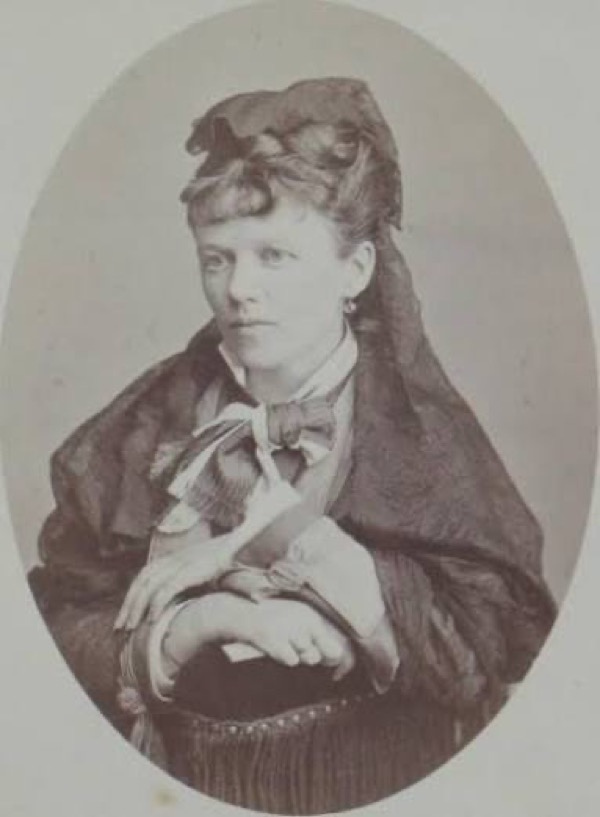
Aleksandra Tchaikovskaya Davydova
Aleksandra Tchaikovskaya was born in late December 1841 (using the Old Style of Russian dates) or January 1842 (using the New Style), making her a year and a half younger than her older brother Pyotr.
She married a landowner named Lev Davydov in 1860 and had seven children with him. Tchaikovsky spent much time at the Davydov estates and composed there. (In appreciation of her love and hospitality, he dedicated his Valse-Scherzo, Op. 7 to her.)
Pyotr Ilyich Tchaikovsky: Valse-scherzo No. 1 in A Major, Op. 7 (Michael Ponti, piano)
In 1871, she gave birth to a son named Vladimir, nicknamed Bob. The family believed he bore a striking resemblance to his uncle Pyotr, and the two shared a close bond from the child’s infancy.
As Bob grew up, Pyotr grew increasingly close to him emotionally. That connection became especially charged after Aleksandra, who had developed a morphine addiction, died in 1891.
Tchaikovsky began writing a symphony to dedicate to Bob; it premiered in November 1893 as his sixth, his Pathétique.
He had a program in mind as he wrote it, but he never shared what it was – and nine days later, he died, with Bob at his side. It’s impossible to know if the secret program had anything to do with his sister’s son.
We wrote about Bob here: https://interlude.hk/how-tchaikovskys-fascinating-family-preserved-his-legacy/.
Pyotr Ilyich Tchaikovsky: Symphony No. 6 in B Minor, Op. 74, “Pathétique” (Polish National Radio Symphony Orchestra; Antoni Wit, cond.)
Justine Mahler Rosé, Gustav Mahler’s sister
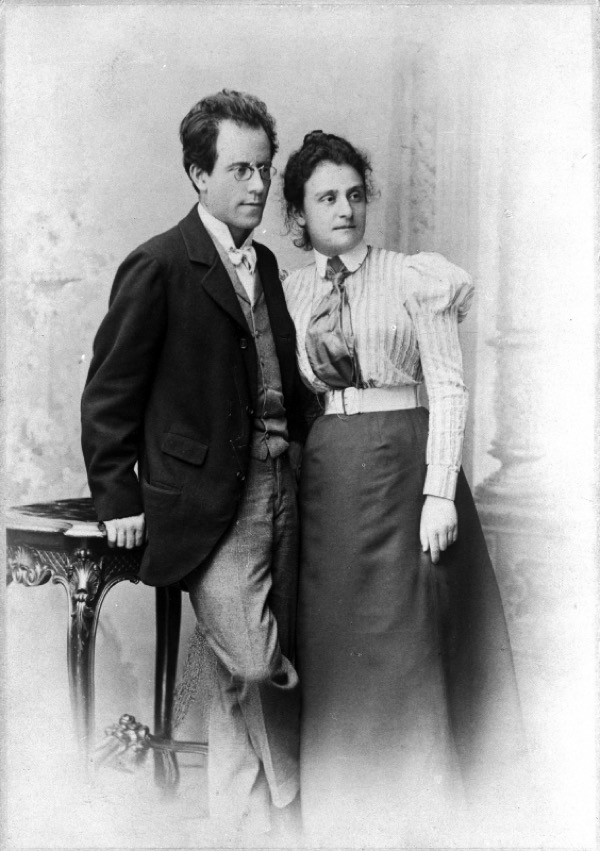
Justine Mahler Rose
Justine Mahler was born in 1868, eight years after Gustav. Their shared childhood was full of trauma and grief; eight of the fourteen Mahler children died young. Justine and Gustav bonded during the tragedies and became each other’s favourite siblings.
Both of their parents died in 1889, when Justine was 21. Gustav, the oldest son, felt responsible for his surviving siblings and rented an apartment in Vienna for three of them, including Justine.
She’d later follow him to Hamburg during his tenure as opera director there, between 1891 and 1897.
In 1897, his career trajectory changed permanently when Gustav secured one of the most prestigious music jobs in the world: director of the Vienna Court Opera.
Practising Jews would not have been allowed to take the position, and Gustav was baptised into the Catholic church in February 1897. Justine was baptised the same day, then followed her brother to Vienna to keep house for him.
There she fell in love with violinist Arnold Rosé, the concertmaster of the Vienna Philharmonic, but resolved not to marry until her brother did.
In late 1901, he met, fell in love with, and quickly became engaged to a young woman named Alma Schindler; they married on 9 March 1902. The following day, true to her word, Justine married Arnold.
Justine had two children, Alfred in 1902 and Alma in 1906.
Gustav died in 1911, and Justine in 1938.
Linda Sibelius, Jean Sibelius’s sister
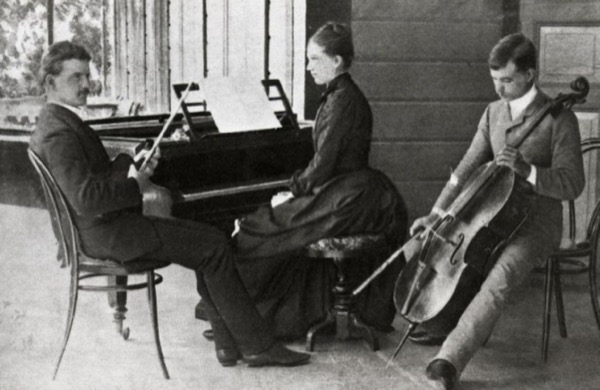
Linda Sibelius
Few people know about Linda Sibelius, born in 1863, two years before her composer brother Jean. Even today, there is very little information available about her compared to the other women on this list – perhaps by design.
As children, they bonded through playing chamber music. Linda played piano, Jean played violin, and their brother Christian played cello. Some of his first works were pieces for the three of them to play together.
Jean Sibelius: Piano Trio in A Minor, “Haftrask”, JS 207 (Sibelius Piano Trio)
Linda trained and worked as a teacher. In the early 1900s, she travelled to Tunisia to work as a missionary but ultimately returned to Finland.
The details are fuzzy, but soon after her return, she apparently began showing signs of mental illness, potentially bipolar disorder.
Christian, who by this point was a well-respected psychiatrist in charge of Helsinki’s mental hospital, had her committed. She remained institutionalised until she died in 1932.
Both brothers stayed in contact with her, with Jean sending her his music. But he was terrified of the illness that Linda came to represent. “I see my own fate in hers,” he confessed to his diary. He also called her the “madwoman.”
In newspaper articles celebrating his fiftieth birthday in 1915, Linda was actually cropped out of photos from his childhood. It wasn’t until around the turn of the 21st century that scholars found out when she died – even though she’d been one of his first interpreters.
Iginia Puccini, Giacomo Puccini’s sister
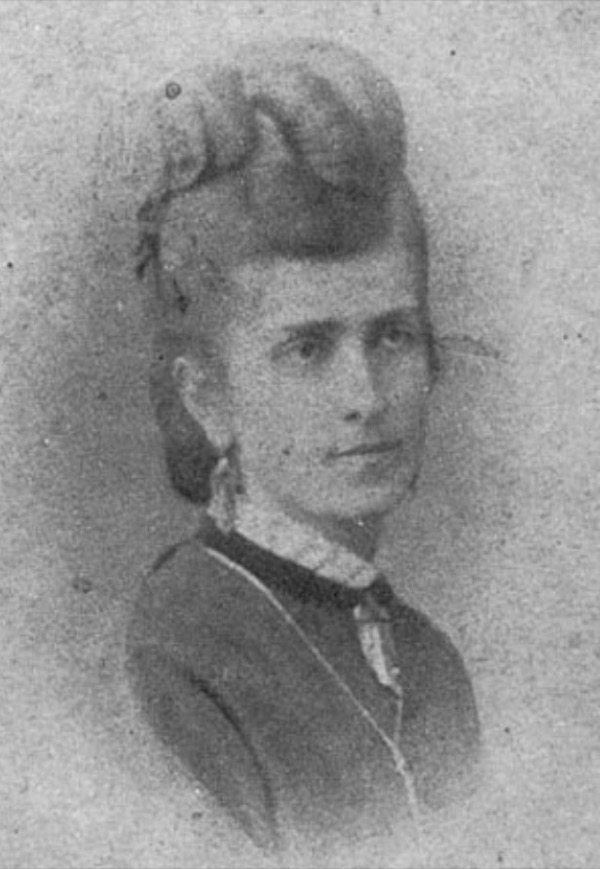
Iginia Puccini
In total, the Puccini family had nine children. Iginia was born on 19 November 1856 in Lucca, Italy, two years before her younger brother Giacomo.
She began attending a convent school in 1863, the year she turned seven. As a teenager, she decided to become a nun, and she took her first vows in 1875.
She took the name Sister Giulia Enricchetta. She eventually became Mother Superior at the Augustinian convent of Vicopelago, near Lucca.
Despite their very different lives, Puccini stayed in touch with his sister and even spent some of his vast fortune supporting her convent. He also sent her sheet music for the organ.
After the husband of Puccini’s mistress, Elvira, died in 1903, Iginia urged her brother to marry his mistress so their young son, Antonio, could be legitimised.
In 1918, he composed a one-act opera set in a convent called Suor Angelica (Sister Angelica). While writing it, he discussed convent life with Iginia, wanting to create the most authentic atmosphere possible. There is a rumour that he even previewed the work for the sisters on the organ at Iginia’s convent, but this is unconfirmed.
Iginia died in October 1922, and Giacomo died soon after, in November 1924.
Conclusion
Unfortunately, composers’ sisters are rarely written about, even though their stories help contextualise the music we know and love.
Wagner’s passion for the theatre hits differently when you know Rosalie’s passion for the stage. Chopin’s nocturne in C-sharp minor is even more poignant, knowing that he wanted it destroyed, and his sister saved it. And Puccini’s Suor Angelica is even more impactful, knowing that it was shaped by Puccini’s long correspondence with his cloistered sister.
These stories help us to see these composers – and their music – with new eyes.
For more of the best in classical music, sign up for our E-Newsletter