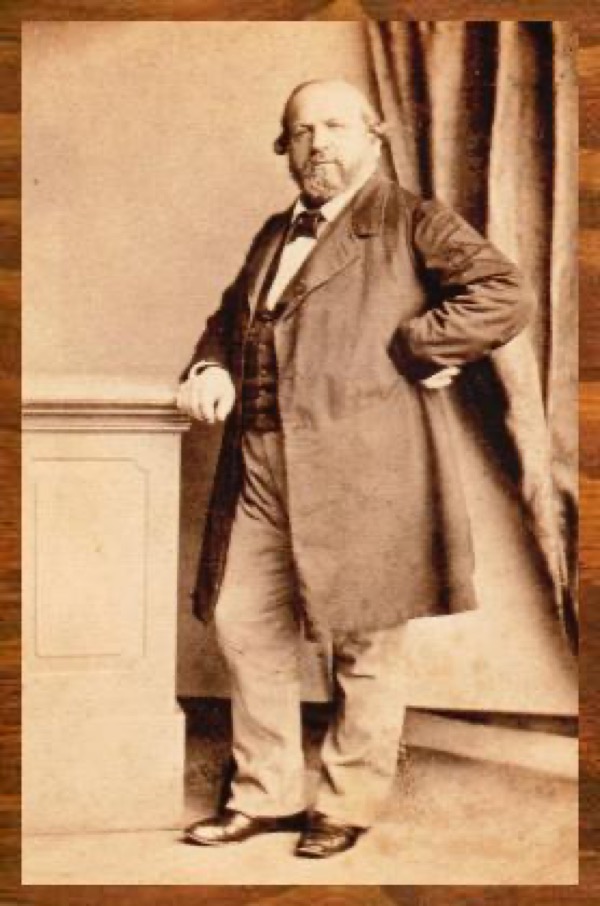
You may not know that the tuba has quite an expressive range and versatility, with a sound that is deep, rich, and full-bodied. The tuba, the big boy of the brass section, will sometimes throw its weight around. The tuba can weigh from 35 to 50 pounds (15.88kg to 23kg), and it’s a huge instrument. For those starting out, smaller tubas are made at ¾ size, and they are much easier to handle.
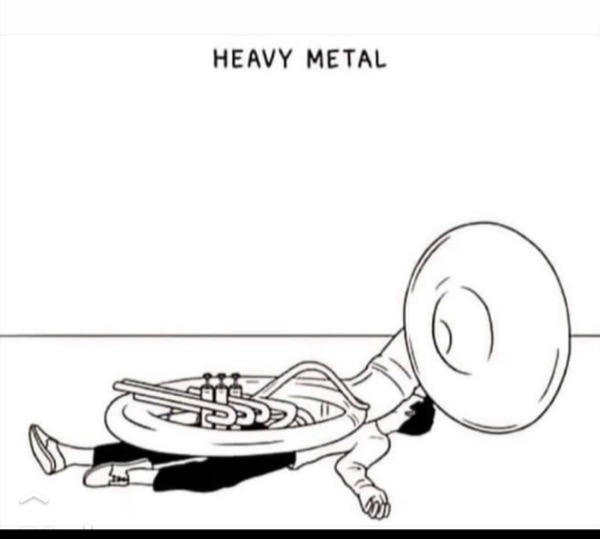
Tubas range from BBb, the largest, favoured by Austrian, German, and Russian orchestras; the CC, used most often outside Germany and Russia; the Eb tuba, more frequently used in military or brass bands; and the F tuba, which is often used when the player performs higher and soloistic parts.
Like other members of the brass family, the sound is produced by buzzing with the lips and utilising quite a lot of air. A tuba can play several notes open, i.e. just with the player’s lips, but when using the valves in different combinations and slide adjustments, it allows the tuba player access to all the notes. The Minnesota Orchestra principal tuba Steve Campbell explains.
Guide to the Orchestra: Tuba Demonstration | Minnesota Orchestra
Prokofiev‘s Symphony No. 5 is one of my favourite symphonies. The above-mentioned solo is about 10 minutes in.
Sergei Prokofiev: Symphony No. 5 in B-Flat Major, Op. 100: I. Andante (Cleveland Orchestra; Lorin Maazel, cond.)
The tuba player uses the slides when pulled out to adjust intonation. You might ask, “how low can a tuba go?” Really low—to a low A flat, which is lower than a piano keyboard. These extremely low notes require the player to pump a great deal of air.
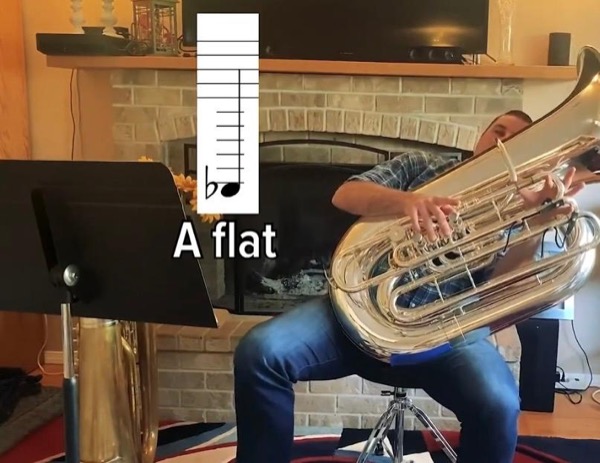
Low A-flat — below the piano keyboard
But please don’t underestimate smaller players!
Ride of the Valkyries, Tuba Excerpt!
There is typically only one tuba in the orchestra representing the bass voice, and those low registers really rumble. The tuba contributes to the rhythm of the brass section, too, and the orchestra as a whole. But the tuba player is called upon in the orchestra to play lyrically as well as fast passages. Obviously, as a solo instrument, if they mess up, the audience really hears it.
One of the more famous solos is Bydlo from Modest Mussorgsky‘s Pictures at an Exhibition in Ravel‘s orchestration. It’s dirge-like, while warm and tender.
Modest Mussorgsky: Pictures at an Exhibition (arr. M. Ravel for orchestra): IV. Bydlo (Ukraine National Symphony Orchestra; Theodore Kuchar, cond.)
There are several composers who did use two tubas, such as Richard Strauss in his Alpine Symphony and Also Sprach Zarathustra. Hector Berlioz uses two tubas in his Symphonie Fantastique and Damnation of Faust. The Hungarian March from Damnation of Faust Op. 24 Part I Scene 3 is one of the top excerpts requested on a tuba audition.
Hector Berlioz: La damnation de Faust, Op. 24, Part I Scene 3: Marche Hongroise (Hungarian March) (International Festival Orchestra; Milan Weber, cond.)
Here is a beautiful excerpt from Berlioz’s Symphonie Fantastique. What a stunning setting, with the bells tolling.
Berlioz: Symphonie fantastique / Jansons – Berliner Philharmoniker
There are several types of tubas. The sousaphone is designed for a specific purpose: marching. While the tuba is conical in shape and compact, the sousaphone wraps around the player’s body in a circular design, which allows the player to rest the instrument on his or her left shoulder and actually march with it. And it’s much easier to carry.
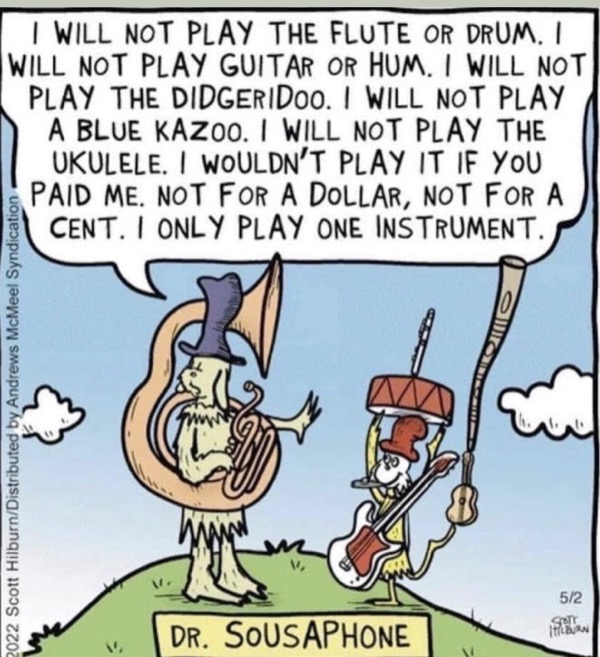
Sousaphones have a forward-facing bell for greater projection, which also allows for more attack.
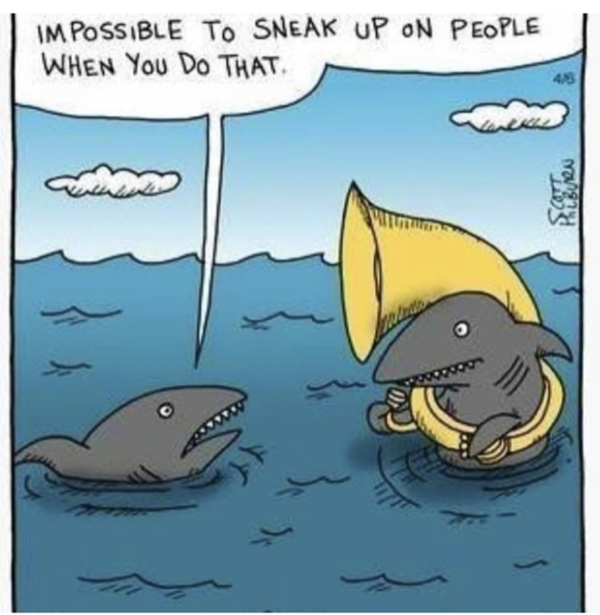
The bell of an orchestra tuba faces upwards and produces a more blended, focused, melodic and rich sound for ensembles.
The euphonium is a tenor-voiced instrument in Bb with a smaller body that is easier to hold. It’s lighter but also has a conical bore, while the tuba, the bass-voiced instrument, is often twice the size. Euphoniums or tenor tubas, therefore, play a higher register, usually the melody, while tubas may also be present playing the foundation in a lower tessitura.
In the movement Mars from Gustav Holst‘s The Planets, the solos are written for Euphonium or “tenor tuba”, and you can hear the euphonium about 3 minutes in.
The Planets – I. Mars, the Bringer of War – Gustav Holst
Now, for the sake of comparison, let’s hear the famous tuba solo Bydlo from Modest Mussorgsky’s Pictures at an Exhibition again, with four different tubas in four performances, so you can hear the differences.
Comparing 4 different “Bydlo” on 4 different instruments
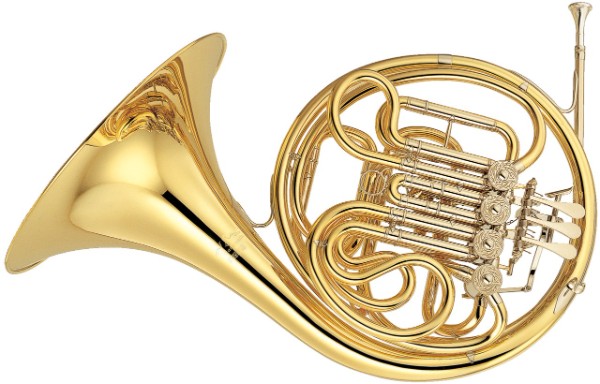
The so-called Wagner Tuben sounds somewhere between the French horn and a trombone. Its sound is less sharp and penetrating than a horn and is used for dramatic, somber moments in late-Romantic music when the mood is solemn and haunting.
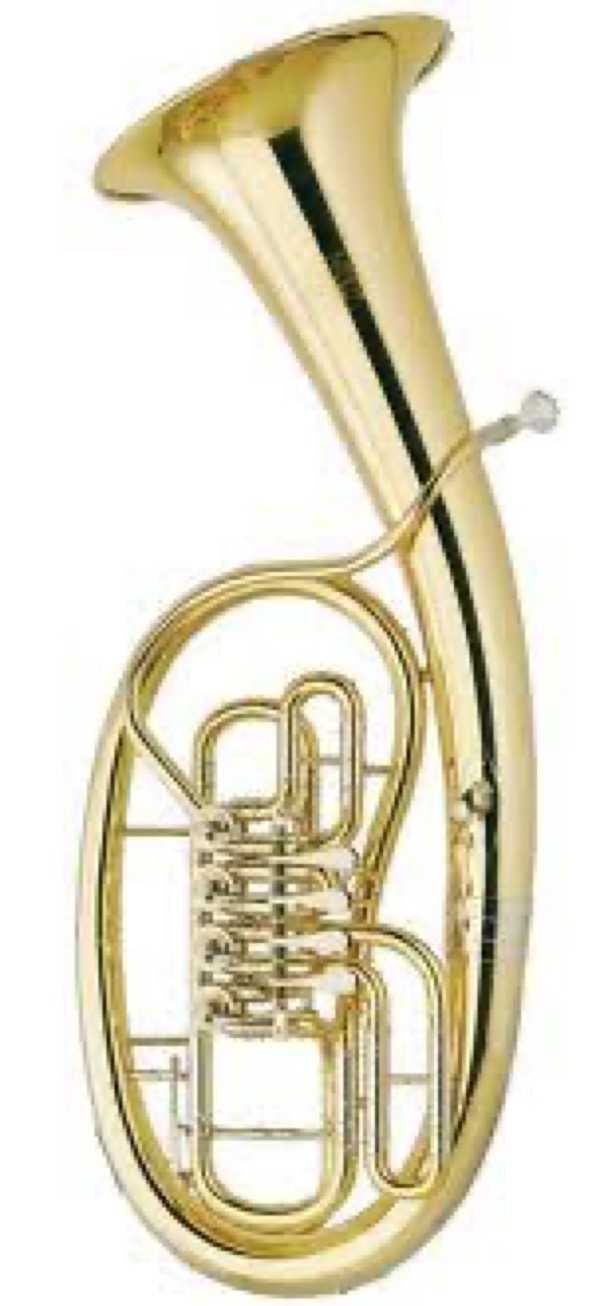
Wagner tuben
Composer Anton Bruckner was the first to use the tuben in the orchestra. Its shape is different with its elongated, longer bell, and it creates a unique, more mellow, and dark sound. Here’s an explanation:
Wagner Tuba Demonstration
Incidentally, Bruckner’s Symphony No. 7 in E Major is a vast and epic piece, seventy-five minutes or more with the slow movement, a poignant adagio, that clocks at twenty-two minutes and I would argue the centerpiece of the symphony. Before we listen to the entire movement, here’s a closeup view of these regal instruments in the slow movement.
Bruckner | Symphony No.7 | 2nd movement (excerpt) | Thielemann – Wiener Philharmoniker
Here’s the second movement of Bruckner Symphony No. 7 that highlights the gorgeous but solemn tuben chorale.
Anton Bruckner: Symphony No. 7 in E Major, WAB 107: II. Adagio. Sehr feierlich und sehr langsam (Bavarian Radio Symphony Orchestra; Bernard Haitink, cond.)
Changing moods drastically, George Gershwin‘s An American in Paris is an infectious piece incorporating jazz elements and instruments such as the saxophone, and a car honking in the percussion section. The tuba lines frequently appear in auditions. Can you hear the tuba at 2:20 and all alone at 15:20?
George Gershwin: An American in Paris (St. Louis Symphony Orchestra; Leonard Slatkin, cond.)
Finally, to end with dazzling tuba virtuosity, listen to Carnival of Venice for tuba and orchestra.
For more of the best in classical music, sign up for our E-Newsletter
Jean-Baptiste Arban: Carnival of Venice (arr. Ø. Baadsvik) (Øystein Baadsvik, tuba; Musica Vitae Chamber Orchestra; Bjorn Sagstad, cond.)