The seven most-watched Yo-Yo Ma videos on YouTube span over twenty years of his career.
Some are official music videos backed by a major label’s marketing budget. Others are live recordings that found an audience on their own, with no press push behind them at all.
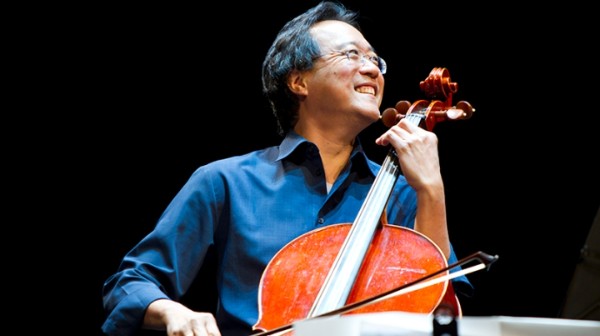
Yo-Yo Ma
Nearly every entry on this list comes attached to a story about who he was playing with, why the piece mattered to him, or what moment in his career it marked.
Here are Yo-Yo Ma’s most popular YouTube videos, ranked by total views – along with the stories behind each performance.
Cello Suite No. 1
5.2 million views
Yo-Yo Ma has been playing solo Bach since he was four. He began learning the Prelude from the Cello Suite No. 1, a measure at a time, under his father’s supervision.
He recorded the six cello suites for the first time in 1983 (an outing that won him a Grammy) – again in 1997 as part of a multimedia project pairing each suite with another art form like architecture, drama, and skating – and a third (and he says final) time in 2018 for his recording Six Evolutions.
Ma’s long relationship with the works was on full display at the 2015 BBC Proms, when he performed all six suites in a single sitting at the Royal Albert Hall. The concert lasted for two and a half hours: a remarkable technical and emotional achievement.
This version of the first cello suite comes from that 2015 performance. The commitment of both performer and audience comes through in this video, from the first wave of grateful applause to Ma’s gentle smile acknowledging it.
Cello Concerto, Movement 1
5.8 million views
Elgar wrote his Cello Concerto in 1919, in the shadow of World War I. The premiere was a disaster, undermined by insufficient rehearsal time, and the piece languished in relative obscurity for decades.
In 1965, Jacqueline du Pré’s dramatic recording – famous for its expressive, heart-on-sleeve devastation – turned the concerto into one of the most beloved works in the cello repertoire. In 1967 and 1970, du Pré made two more recordings of the concerto with her husband, conductor Daniel Barenboim, before a multiple sclerosis diagnosis forced her to retire in 1973.
This Ma performance dates from 1997 – a time when du Pré’s interpretation was still looming especially large. To his credit, Ma turns in a very different performance, following his own instincts and ideas.
The first movement is more understated and private than du Pré’s; it feels like the memory of a loss, rather than the first shock of loss itself. This approach makes it a worthy complement to the greatest versions on record.
The conductor here is Daniel Barenboim, adding a poignant sense of generational transition to the performance.
Wexford Carol
6.8 million views
The Wexford Carol comes from Ireland – more specifically, Enniscorthy, County Wexford – and survived for centuries through oral transmission before organist William Grattan Flood transcribed it from a local singer’s performance around the turn of the 20th century. It ultimately appeared in 1928’s influential Oxford Book of Carols.
Ma recorded a version of it for his 2008 holiday album, Songs of Joy & Peace, alongside bluegrass singer and violinist Alison Krauss, with Natalie MacMaster on fiddle.
It’s an unusual collaboration: a classical cellist, a bluegrass vocalist, and a Cape Breton fiddler, but its warmth and sincerity make it seem completely natural. It sounds like a handful of musicians enjoying a jam session after Christmas dinner – accompanied by bagpipes!
Triple Concerto, Movement 2
13.4 million views
Beethoven’s Triple Concerto, written around 1803, is a strange entry in his catalogue of compositions: a concerto for violin, cello, and piano together, a combination he never revisited.
The piece has been dismissed as lesser Beethoven, overshadowed by the blockbuster symphonies and piano concertos he was writing in the same period.
Still, Ma has a long history with the work. In 1980, when he was just 25, he recorded it with Anne-Sophie Mutter, pianist Mark Zeltser, and Herbert von Karajan conducting the Berlin Philharmonic.
Forty years later, in 2019, Ma and Mutter reunited to record it again, this time with Daniel Barenboim conducting from the piano bench, leading the West-Eastern Divan Orchestra.
The occasion held triple significance: Beethoven’s 250th anniversary, the orchestra’s 20th anniversary, and the four decades since Ma and Mutter last recorded the concerto.
Ave Maria
Johann Sebastian Bach / Charles Gounod
15.8 million views
The “Ave Maria” that bears both Bach’s and Gounod’s names is really two pieces.
Bach wrote the Prelude in C Major from The Well-Tempered Clavier in 1722 as a keyboard exercise. In 1853, Charles Gounod took that prelude and superimposed a new vocal line over it, setting the Latin Ave Maria text. Combined, they’re the work of two composers from two generations in dialogue with each other.
Ma recorded it in 2015 with pianist Kathryn Stott for the album Songs from the Arc of Life.
Stott’s piano carries Bach’s original prelude almost unchanged, arpeggios rippling steadily underneath, while Ma’s cello takes the vocal line that Gounod added. The final result is warm, expansive, and unhurried.
Prélude from Cello Suite No. 1
Johann Sebastian Bach
25.6 million views
This is Ma’s official music video for the Prelude from the Cello Suite No. 1, released in 2018 to promote his third complete recording of the Bach suites, Six Evolutions.
Unlike a standard performance clip, the video opens with a title card reading “Culture – the way we express ourselves and understand each other – can bind us together as one world.”
The camera then cuts between Ma playing in New York City and clips of artists demonstrating what brings them joy and creative satisfaction – a potter at her wheel, a tailor at his workbench, dancers, skaters, and others.
The video served as the launch point for The Bach Project, Ma’s 2018–2020 tour to perform all six suites in thirty-six locations across six continents, each concert paired with a “Day of Action” involving local artists and educators.
It’s a very different use of the piece than the solo recording from the Proms of the full suite, and the video’s crowdsourced footage is likely one reason why it has found an audience much larger than just classical music lovers.
“The Swan” from Carnival of the Animals
25.8 million views
Saint-Saëns wrote “The Swan” in 1886 as part of his orchestral suite Carnival of the Animals, a piece he composed for fun and that he didn’t allow to be published in full during his lifetime, for fear it would overshadow his other “serious” work.
However, Saint-Saëns did allow “The Swan” to be performed and printed separately – and it went on to overshadow his other “serious” work.
Ma recorded this version with pianist Kathryn Stott for their 2015 album, Songs from the Arc of Life, a collaboration commemorating their thirty-plus years of professional partnership.
The album was built around a set of pieces that trace the emotional arc of a life, arranged in roughly chronological order from childhood to old age.
“The Swan” appears late in that sequence, its long, unbroken melodic line floating over rippling piano figuration meant to suggest water.
It’s the most-viewed video on this list, and, fittingly, a tribute to Ma’s enthusiasm for partnership and collaboration.
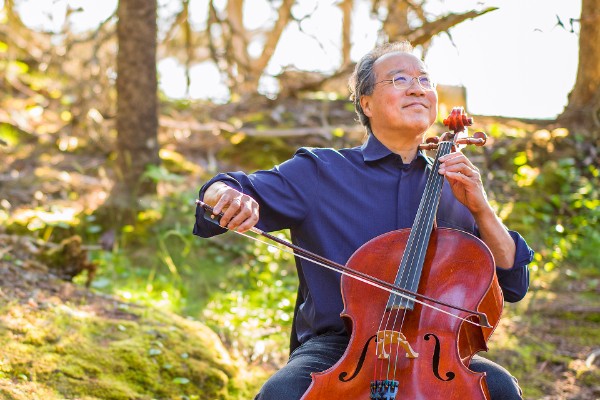
Yo-Yo Ma
Conclusion
Taken together, these seven videos trace two through-lines in Ma’s career: he treats a four-minute salon piece and a two-and-a-half-hour marathon of solo Bach with the same seriousness, and he’s spent thirty-plus years returning to the same handful of collaborators (Stott, Mutter, Barenboim), deepening his connection with them each time.
Together, these qualities go a long way in explaining his popularity.
For more of the best in classical music, sign up for our E-Newsletter