
Classical music has never been as conservative as its stereotypes suggest.
Long before experimental music became a genre, composers were already employing unexpected objects on the concert stage: tools, machines, noisemakers, and more.
Here are some of the strangest instruments composers have written for – and the surprisingly serious music they appear in. Some of these instruments appear briefly; others dominate entire movements. All challenge our expectations of what belongs in a concert hall.

Glass Harmonica
Wolfgang Amadeus Mozart – Adagio and Rondo, K. 617
Invented in the 1760s and once believed to cause depression and anxiety, the glass harmonica produces an eerie, floating sound by rotating glass bowls touched with wet fingers.
The instrument fascinated Enlightenment thinkers, but eventually unnerved Romantic-era music lovers.
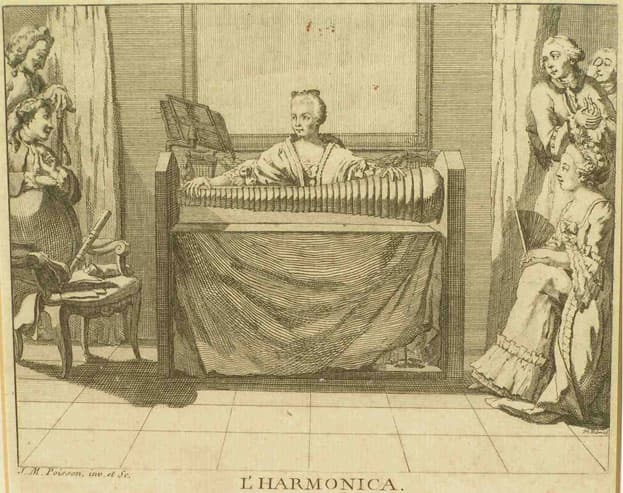
Glass harmonica
In the music journal Allgemeine musikalische Zeitung, a musicologist warned that the glass harmonica “excessively stimulates the nerves, plunges the player into a nagging depression and hence into a dark and melancholy mood, that is an apt method for slow self-annihilation.”
Late in his life, Mozart embraced the instrument, writing the Adagio and Rondo in C minor, K. 617 – one of the most haunting chamber works of the Classical era.
The glass harmonica’s pale, disembodied tone gives the piece an almost supernatural stillness. Its timbre is still unsettling, even today.
Cowbells
Mahler – Symphony No. 7
Cowbells might seem rustic or even comical, but in the hands of late-Romantic composers, they evoke ideas of distance, memory, and the natural world.
Gustav Mahler famously used cowbells in both his sixth and seventh symphonies, instructing that they be played offstage.
That offstage effect is uncanny: a reminder of alpine landscapes and emotional isolation, ringing out from a misty, mysterious place beyond the orchestra.
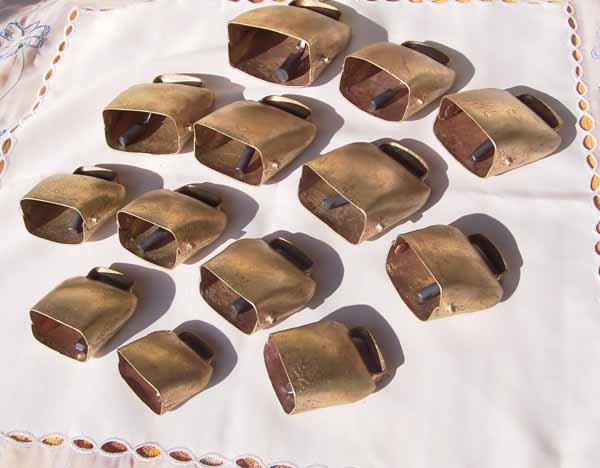
A set of tuned cowbells
Cowbells were also employed in Richard Strauss‘s An Alpine Symphony, written about ten years after Mahler’s two symphonies. They help evoke the vastness – and perhaps indifference – of the mountains.
Typewriter
Leroy Anderson – “The Typewriter”
Likely the most charming office equipment ever to appear in a concert hall, the typewriter became a star thanks to composer Leroy Anderson.
His short orchestral novelty piece “The Typewriter” turns clacks, dings, and carriage returns into a rhythmic solo part backed by an orchestra.
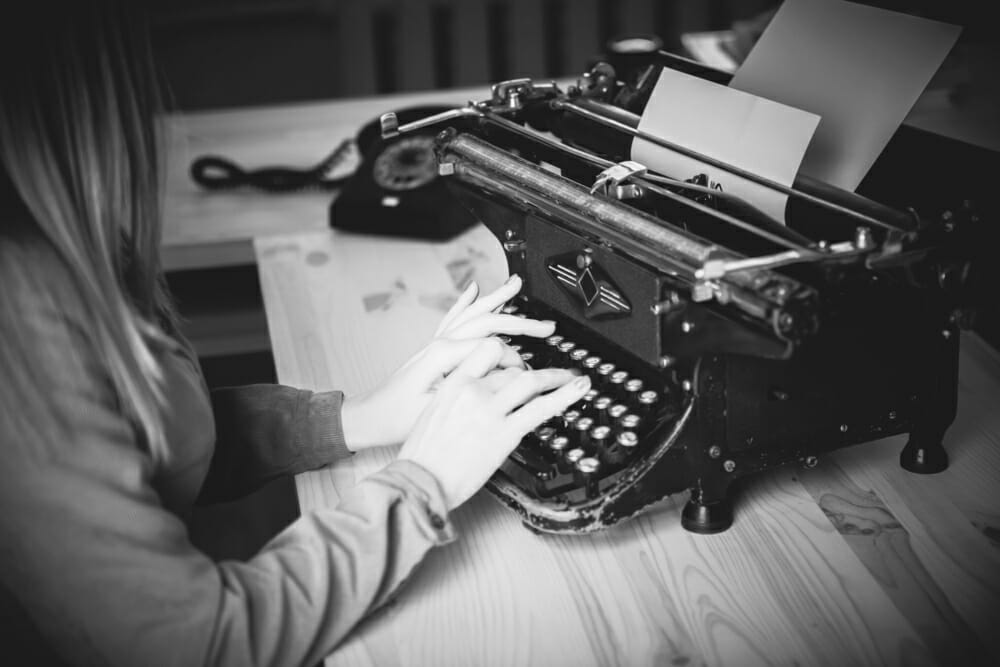
A typewriter
The piece is witty, impeccably timed – and far harder to perform than it looks!
Anvil
Verdi – Il trovatore
The anvil entered classical music as a symbol of labour – and of the Romantic era’s transition from agrarian life to industrialisation.
In Giuseppe Verdi‘s opera Il trovatore, the famous “Anvil Chorus” uses real anvils struck onstage, anchoring the music in physical work and communal rhythm.
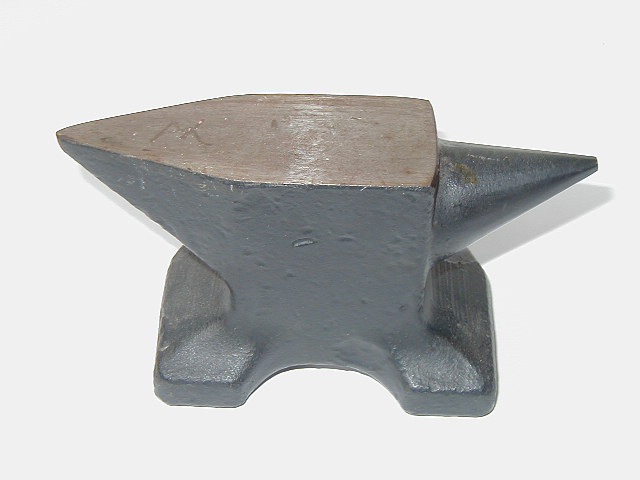
Small anvil
Richard Wagner went even further in his opera Das Rheingold, where multiple anvils create the thunderous soundscape of the hellish underground Nibelheim forge.
Footage of Das Rheingold anvils
Wind Machine
Strauss – An Alpine Symphony
Before sound effects went digital, composers had to invent them.
The wind machine – a rotating drum covered in fabric – appears prominently in Strauss’s Alpine Symphony, where Strauss depicts storms, altitude, and exposure with cinematic realism.
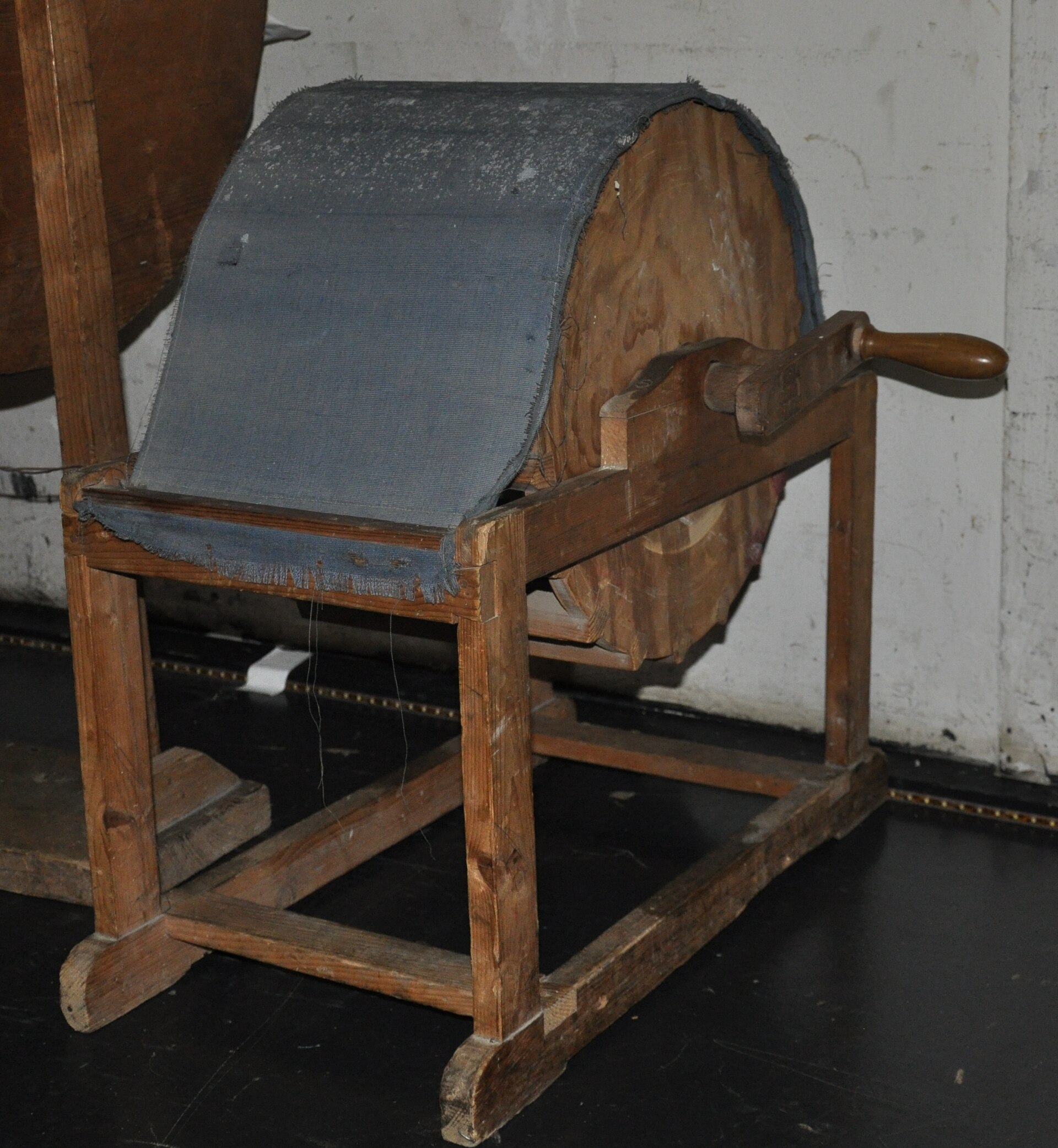
A historical wind machine (c. 1900) at the Konzerthaus in Ravensburg, Germany
It also shows up in Giacomo Puccini‘s La fanciulla del West, heightening the drama of the American frontier with howling wind.
Alphorn
Daetwyler – Alphorn Concerto
The alphorn, a long wooden horn associated with Swiss mountain traditions, has occasionally been featured in classical repertoire.
Swiss composer Jean Daetwyler (1907–1994) wrote multiple serious works for alphorn, integrating its raw, open intervals into orchestral and chamber contexts.
The sound is simultaneously noble and primitive, and unmistakably tied to the rural landscape.
Giant Hammer
Mahler – Symphony No. 6
By the early 20th century, unusual instruments were no longer just evoking landscapes; they were being asked to represent fate itself.
Few instruments in classical music carry as much symbolic weight as the hammer in Mahler’s Symphony No. 6.
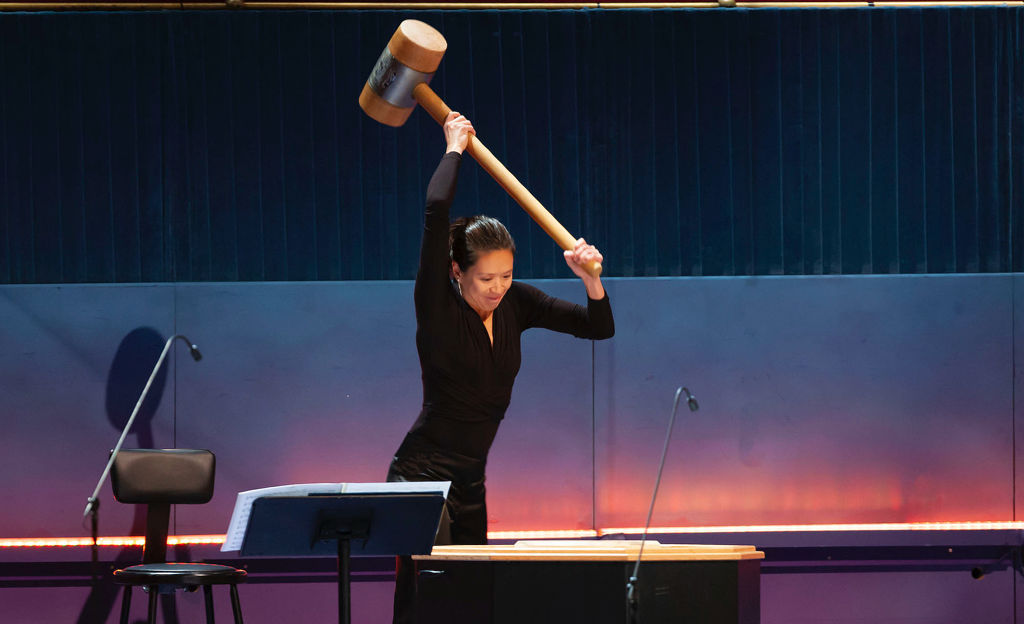
During a 2008 tour stop at London’s Royal Albert Hall, Cynthia Yeh, principal percussion, wields the hammer of fate as the Chicago Symphony Orchestra performs Mahler’s Symphony No. 6. Photo credit: Todd Rosenberg
Mahler called for a massive wooden hammer striking a resonant box, each blow representing a catastrophic stroke of fate.
Performances in this segment vary widely, with orchestras building custom hammers to achieve the right balance of force and resonance.
In the context of the symphony, it’s way more than a sound effect; it’s a catalyst of existential terror.
Theremin
Martinů – Fantasia
One of the earliest electronic instruments, the theremin, is played without physical contact, using hand movements to control pitch and volume.
Its wavering, voice-like tone would later become associated with science fiction soundtracks, but in early 20th-century concert music, it carried a stark, modernist intensity.
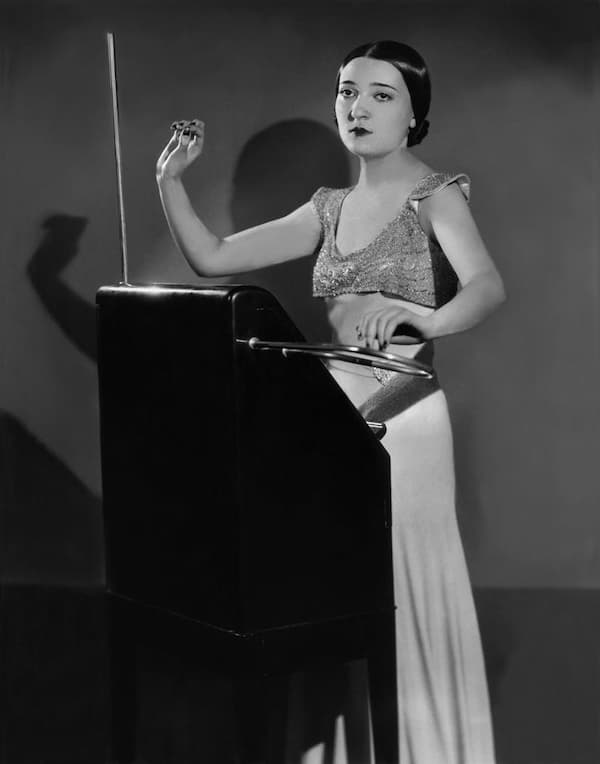
Clara Rockmore playing the theremin
Bohuslav Martinů wrote a Fantasia that incorporated the theremin into a work both lyrical and modernist.
Ping Pong Table
Akiho – Concerto for Ping Pong, Percussion, Violin, and Orchestra
During the 21st century, experimental instruments have fully entered the mainstream.
In 2017, composer Andy Akiho wrote a Concerto for Ping Pong, Percussion, Violin, and Orchestra, turning paddles, balls, and tables into legitimate solo instruments.
In this sense, Akiho’s concerto belongs to a long lineage of composers redefining what counts as an instrument.
The result is virtuosic, theatrical, and unexpectedly expressive.
We wrote all about it here.
Sirens (Mechanical or Hand-Cranked)
Arthur Honegger – Pacific 231
Sirens – a sound borrowed from factories and civil defence – became powerful symbols of modernity in early 20th-century music.
Arthur Honegger’s Pacific 231, named after a train, uses mechanical effects to evoke the sheer mass and motion of a steam locomotive.
Varèse also employed sirens in Amériques and Ionisation, where they cut through dense percussion textures like alarms from an industrial future.
The effect is jarring and metallic: a deliberate intrusion of the modern world into the concert hall.
Conclusion
These strange instruments aren’t gimmicks. They reflect composers pushing against the limits of orchestral sound, searching for realism, symbolism, or entirely new sonic worlds.
Classical music has always been experimental. Sometimes it just needs a hammer, a typewriter, or a ping pong table to prove it.
For more of the best in classical music, sign up for our E-Newsletter





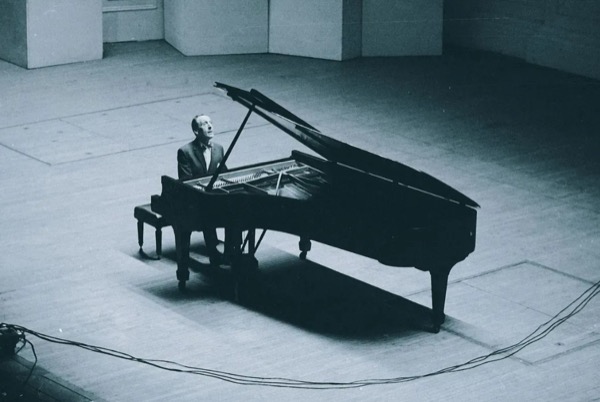
Liszt also suggested a wind machine and coloured slides to accompany his Dante Symphony. However, he abandoned these before the work reached it’s final version due to excessive costs.
Why choose Mahler’s 7th (only) when his 6th ALSO asks for cowbells?