Darius Milhaud, esteemed member of the ingenious group of French composers known as Les Six, embraced popular idioms alongside modernist techniques in his music. In all probability, it was jazz that left the most decisive imprint on his imagination.
Milhaud first encountered authentic jazz in London, after which he visited the United States to hear more of it. The direct result of this encounter was one of his most celebrated compositions, the ballet La Création du monde, composed in 1923.

Darius Milhaud (1923)
To commemorate his death on 22 June 1974 in Geneva, Switzerland, let’s have a closer listen to a work that bridged African-American musical culture and European art music traditions.
Darius Milhaud: La Création du monde
Preamble
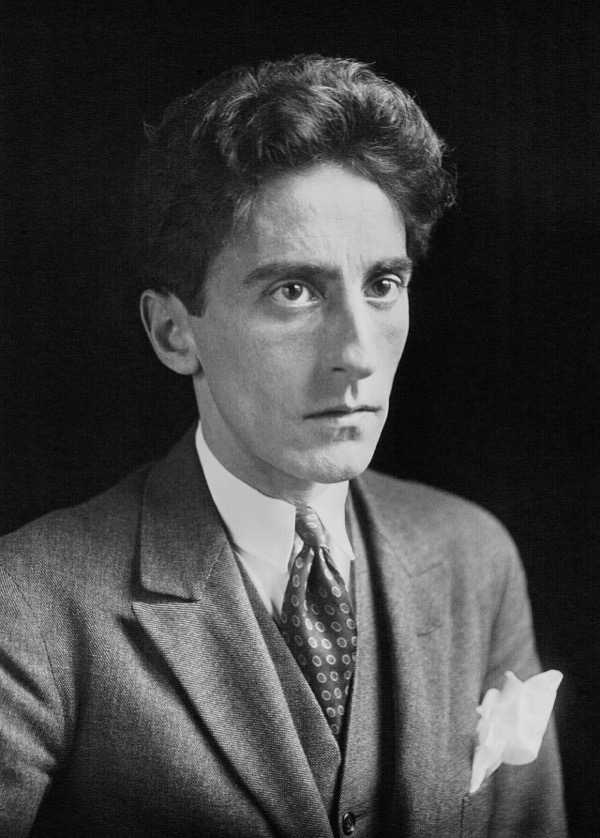
Jean Cocteau (1923)
In 1918, the poet, essayist, novelist, filmmaker, painter, and actor Jean Cocteau proclaimed that the aim of French music was to free itself not only from the vapours of Debussy and Mallarmé but also from German influences and the Russian trap.
Rejecting veiled aural symbolism, dramatic mythological gigantism, and cubist primitivism, Cocteau urged musicians to find inspiration in the music of everyday life. This young French music, by drawing upon all the popular musical resources Paris had to offer, should combine clarity, directness, brevity, lightness, simplicity and, above all, good humour.
These specific attributes were readily found in the sounds of the music hall, the café-concert, and the circus. Reinforced by popular styles from America and the revival of the virile French traditions of the seventeenth and eighteenth centuries, these trends provided the stimulus for a new French simplicity in music.
In 1920, Milhaud heard the Billy Arnold Jazz Band, recently arrived from New York, in London. He was immediately inspired, noting the subtle use of timbre and the complex rhythmic vitality, to write a shimmy titled Caramel Mou. Two years later, on tour in the United States, he heard the Paul Whiteman Band, and on his return composed the Trois rag caprices.
Darius Milhaud: “Caramel Mou”
Harlem Encounters
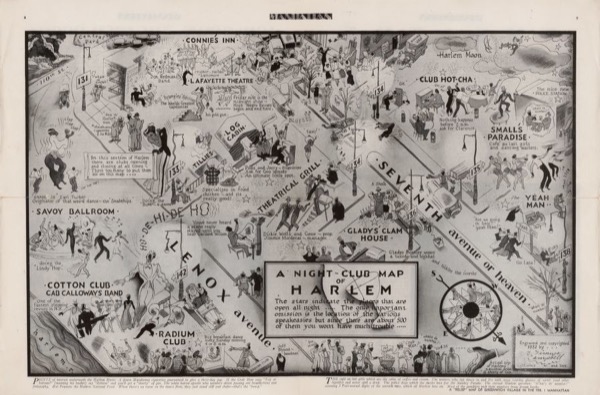
Harlem night clubs
Darius Milhaud, most likely in October or November 1922, arrived in New York from Paris. He quickly found himself in the vibrant clubs of Harlem, listening to “melodic lines criss-crossed in a breathless pattern of broken and twisted rhythms.”
As he later recalled, “When I arrived in New York, I had told the newspapermen interviewing me that European music was considerably influenced by American music. But whose music? They asked me, MacDowell’s or Carpenter’s? Neither the one nor the other, I answered, I mean jazz.” (Appold, Darius Milhaud and the Americas, 2020)
There is another noteworthy statement from that time, and it comes from an interview for the Harvard Crimson in 1923. “It is my desire and my purpose,” Milhaud explained, “to infuse a new spirit, the spirit of jazz, into the classic art of music. […] I am firm in my belief that jazz will constitute the basis of the future schools of American and European music.”
“Jazz has many redeeming features, for in it there is a certain warmth, an enthusiasm, a dissonant quality, a vitality of rhythm, which is not foreign to the newer musical tendencies of Paris.” (Appold, Darius Milhaud and the Americas, 2020)
Darius Milhaud: Trois rag caprices
From Harlem to the Ballet Stage
Milhaud’s stay in the United States was relatively brief, and he returned to France in the early part of 1923. Immediately, he began to compose in what he called a jazz idiom, and La Création du monde was cast as a ballet in six continuous parts.
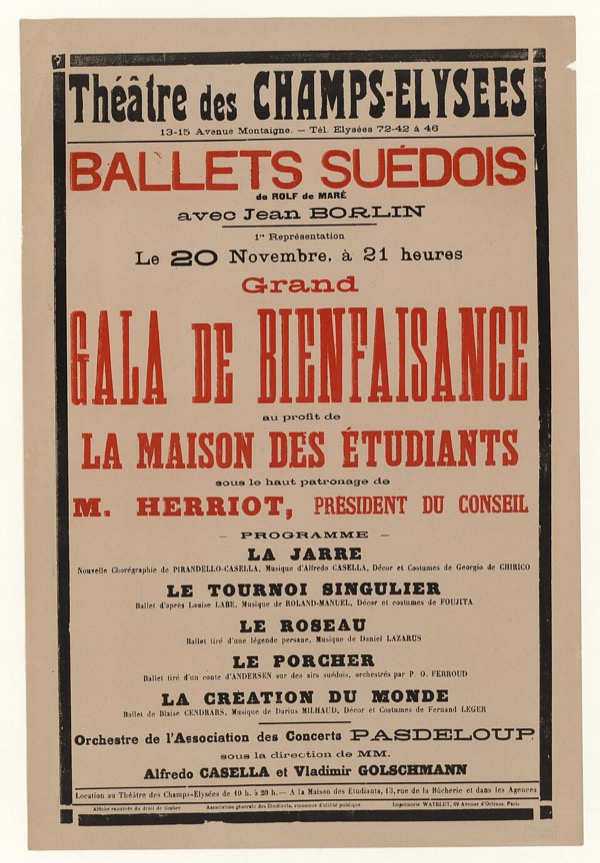
The work was commissioned by the “Ballets Suédois,” a predominantly Swedish dance ensemble based in Paris under the direction of Rolf de Maré. Contemporary with Diaghilev’s “Ballets Russes,” the company performed throughout Europe and the United States between 1920 and 1925, earning a reputation as a “synthesis of modern art.”
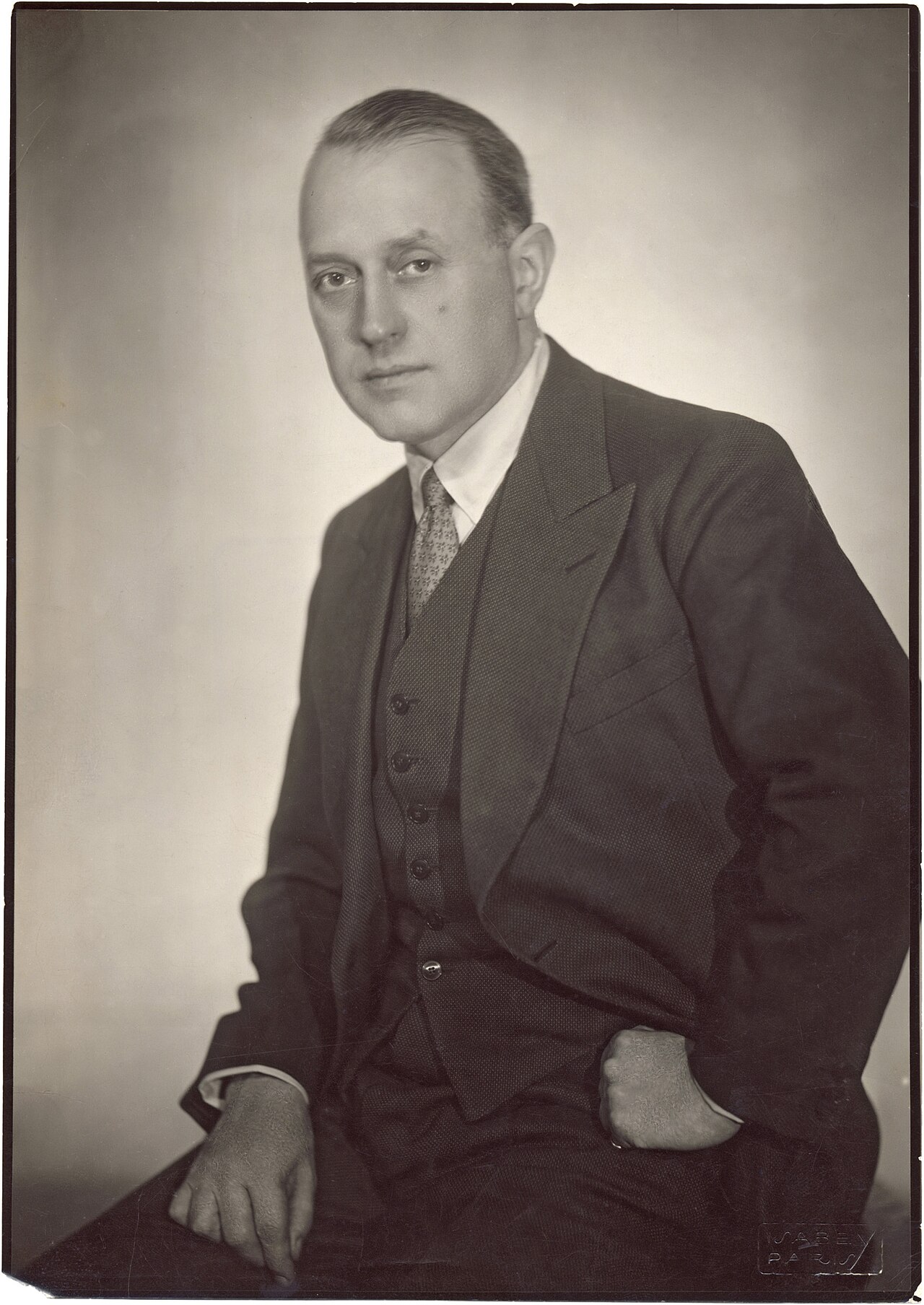
Rolf de Maré
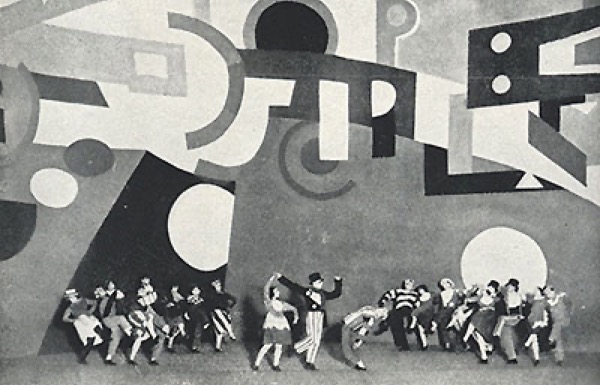
Ballets Suédois
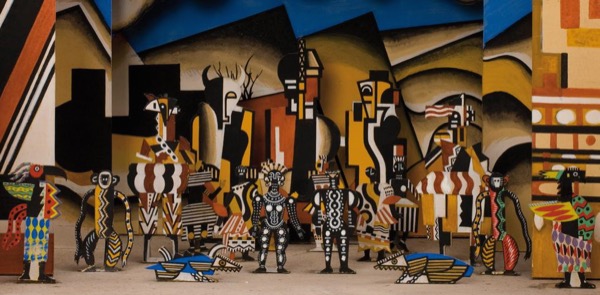
La Création du monde was inspired by an African creation myth taken from Blaise Cendrars’ Anthologie nègre of 1921. Together with the painter Fernand Léger, Cendrars proposed a “ballet nègre” to Rolf de Maré.
“The ballet’s narrative, which resembled the biblical story of Genesis, purportedly drew from myths of the Fang peoples of West Central Africa, then part of the French Congo. This theme of creation linked the French colonial enterprise with the regeneration of the nation in the aftermath of World War I.” (Bellow, La Création du monde, 2016)
Darius Milhaud: La Création du monde, (arr. Milhaud for Piano Quintet)
The Sound of Creation
La Création du monde
When crafting his ballet score, Milhaud adopted the same orchestra of seventeen solo instrument he had heard in Harlem. The music unfolds in six continuous sections, starting with an “Overture.” This provides a languorous introduction, occasionally making use of two simultaneous tonalities, with the distinctive voice of the saxophone emerging above a subdued ensemble texture.
“The Chaos before Creation” becomes more agitated as it presents a lively fugal section that is typical of the composer’s approach to timbre. Fragmented rhythms and dense counterpoint suggest a world in disorder, with the blues-inflected melody near the end returning us to the opening tune.
In the “Creation of Plants and Animals,” Milhaud combines several previously heard tunes into a more fluid and lyrical statement. Characterized by blues-inflected melodies, all culminating in a short blues statement, Milhaud evokes the gradual emergence of life.
As expected, the “Creation of Man and Woman” becomes much more animated and rhythmically driven. Essentially, it imitates a dance called the cakewalk, which originated during the days of slavery.
We find some of the most overtly jazz-inspired passages in the scene called “Desire,” which builds from a rhythmic piano accompaniment supporting melodic fragments of previously heard tunes. The role of attraction and awakening is given to a number of sensuous solos, particularly to the clarinet.
The ballet concludes with a gentle resolution in a section variously titled “Spring,” “The Calm”, or “The Kiss.” Much calmer in character, the voices drop out until only the soprano remains. In a brief percussive coda, Milhaud refers to the opening music and brings the work full circle.
A Scandalous Success
Théâtre des Champs-Élysées, Ballets Suédois
The ballet freely mixed African and African-American cultural references, as it grew out of European primitivism and typified the “negrophilia,” which pervaded high and popular culture in the 1920s.
First performed on 25 October 1923 at Théâtre des Champs-Élysées in Paris, La Création du monde was more a “succès de scandale” than a true success. The costumes designed by Fernand Léger still survive in museums and galleries, while the music has taken its place in the concert repertoire.
Milhaud’s score, with its layered melodies and harmonies in multiple keys, fuses classical structures with the syncopated rhythmic energy of jazz. Leonard Bernstein, who frequently conducted the piece, famously observed that it “emerges not as a flirtation but as a real love affair with jazz.”
For more of the best in classical music, sign up for our E-Newsletter