
The piano concerto was the supreme musical mistress of the 19th-century. Composers-pianists from Beethoven to Rachmaninoff have left us unforgettable masterpieces that still dominate concert halls today. But what is hiding behind those familiar favourites?
This question brings me to one of the most remarkable series ever recorded. Between 1991 and 2023, the Hyperion label released 87 numbered volumes devoted to neglected nineteenth and early twentieth-century piano concertos and concertante.
As I started to listen, I frequently wondered why these works disappeared in the first place. Sure, not every concerto is a masterpiece, but works by Scharwenka, Bortkiewicz, Litolff, and Stojowski offer plenty of musical riches.
With summer already upon us, I thought it might be fun to spend the next couple of weeks exploring this treasure chest together. Who knows, maybe we’ll discover a new favourite concerto or even a new favourite composer. Are you ready to discover something unexpected and wonderful?
Sergei Bortkiewicz: Piano Concerto No. 1, Op. 16
Are you ready to get started with a blast? Actually, the music of Sergei Bortkiewicz (1877-1952) has experienced a wonderful resurgence in the 21st century. His piano music is increasingly heard in modern recordings and in recitals, and even his concertos are being programmed for performance.
Born in Kharkiv, Ukraine, then part of the Russian Empire, Bortkiewicz was of Polish descent and studied at the conservatories in St Petersburg and Leipzig. By his 20s, he was a star in Berlin and around Europe, but World War I and the Russian Revolution turned his world upside down.
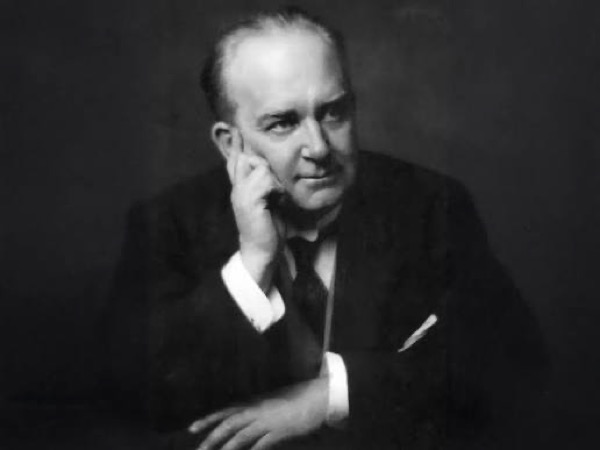
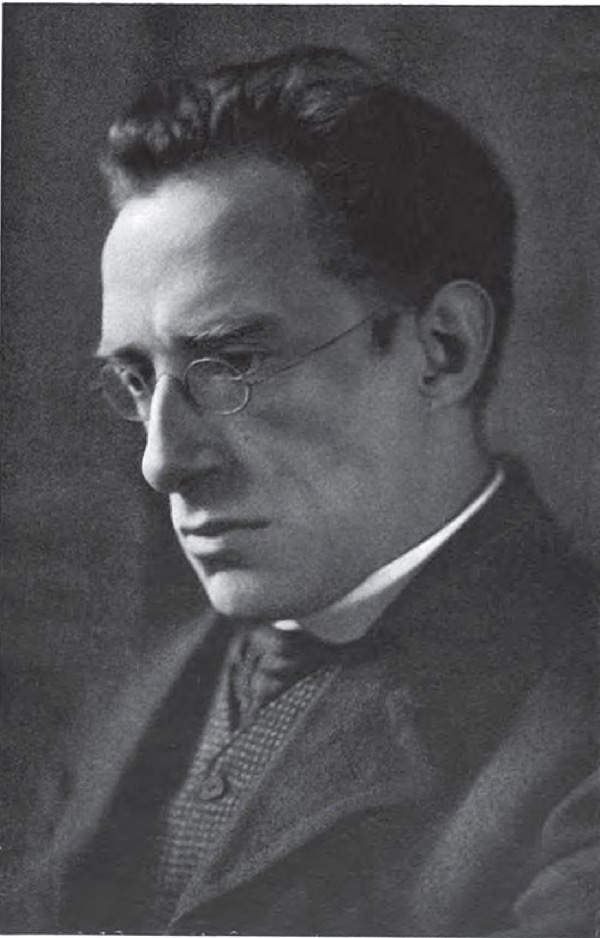
Sergei Bortkiewicz
Bortkiewicz had a decided aversion to what he called modern, atonal, and cacophonous music, and instead considered himself a romantic and a melodist. He had a very colourful and delicate imagination and great sensitivity to his musical ideas.
Combined with his undisputed gift for melody and his idiomatic piano-writing, he created an instantly recognisable and attractive musical style. Bortkiewicz composed a total of 5 concertos, 3 for piano, 1 for violin, and 1 for cello, all captivating listeners with their timeless charm.
Xaver Scharwenka: Piano Concerto No. 2 in C minor, Op. 56
I promised you some music by Franz Xaver Scharwenka (1850-1924), and here is his 2nd piano concerto. He was born in Posen, but the family moved to Berlin when he was fifteen years old. He was a promising piano virtuoso and started concert tours around Germany.
As a composer, he was strongly influenced by Schumann, and his first piano concerto received a warm welcome in Berlin and London. His second piano concerto was completed in 1880, and it remained a staple of the repertoire for more than a generation.
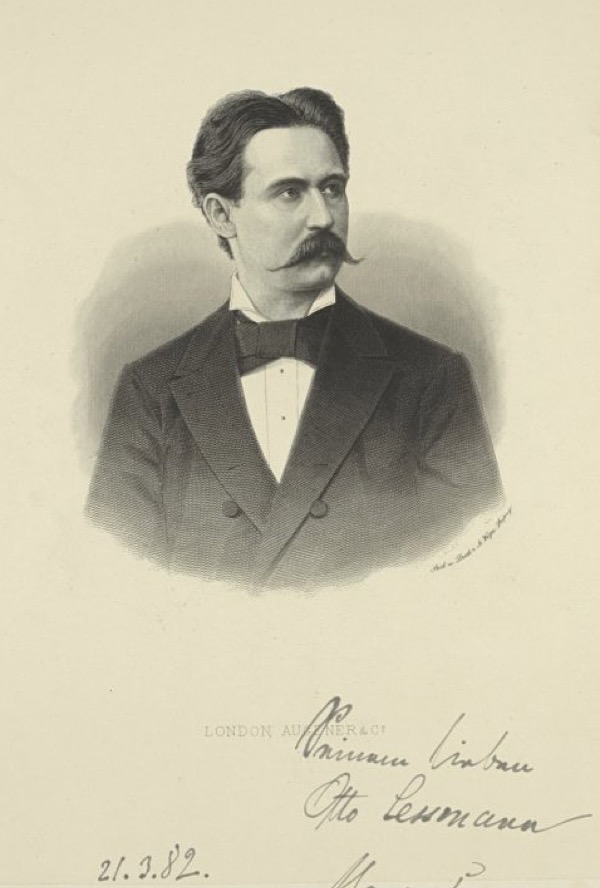
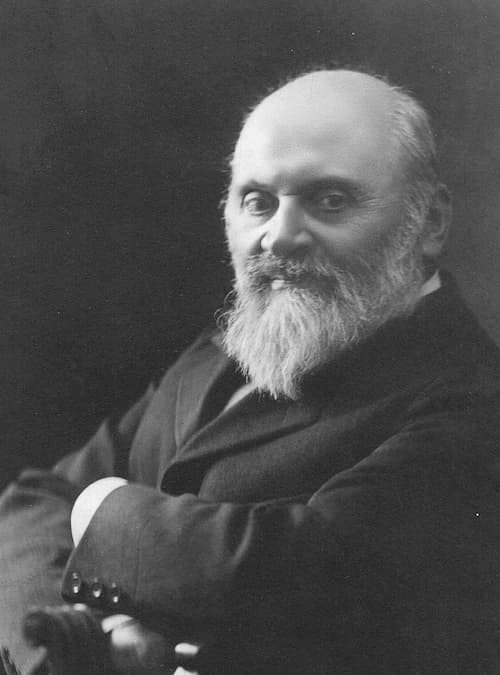
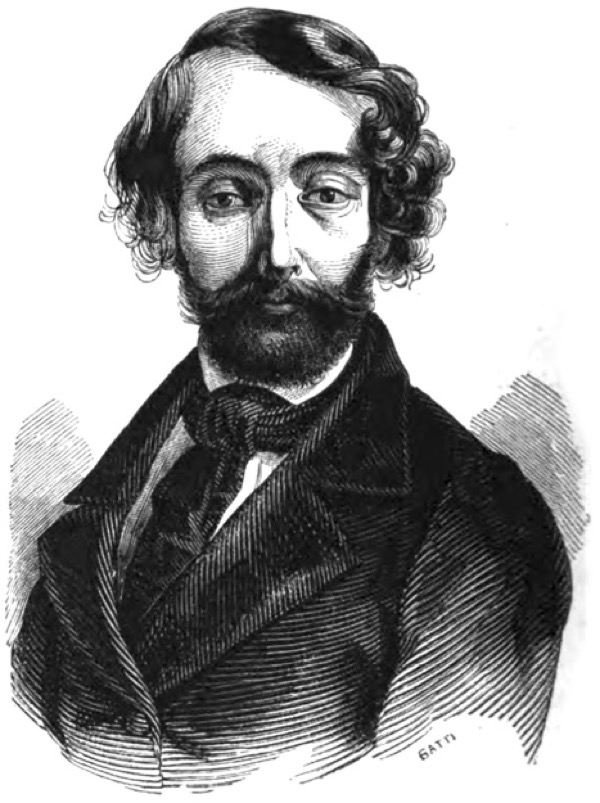
Xaver Scharwenka
Here we find a concerto that is essentially symphonic in character and scored in three movements. We hear plenty of rhetorical flourishes and countless exciting bravura passages. This seems like a concerto that is as much fun to play as it is to hear.
Scharwenka composed 4 piano concertos and, interestingly, opened his own conservatory in Berlin. He even opened a branch in New York, forming a joint venture with the Klindworth Conservatory. He was always popular as a performer and even got his opera performed at the Metropolitan in New York in 1907. World War I sadly brought an end to his travelling.
Xaver Scharwenka: Piano Concerto No. 2 in C Minor, Op. 56 (Michael Ponti, piano)
Amy Beach: Piano Concerto in C-sharp minor, Op. 45
When Amy Marcy Cheney, later famous as Amy Beach (1867-1944), celebrated her 75th birthday, a critic wrote, “she has always been a romantic in the best sense of the word—a devotee of beauty and a follower of the gleam. She has not been tempted into impressionism or atonality, nor has she strayed into the jungle of discords. Her music has a timelessness that should make it enduring.”
Beach started work on her piano concerto in 1897, and the first performance took place in Symphony Hall, Boston, on 7 April 1900 with the composer as soloist. She once wrote that composition could be a veritable autobiography, and the piano concerto contains such elements.
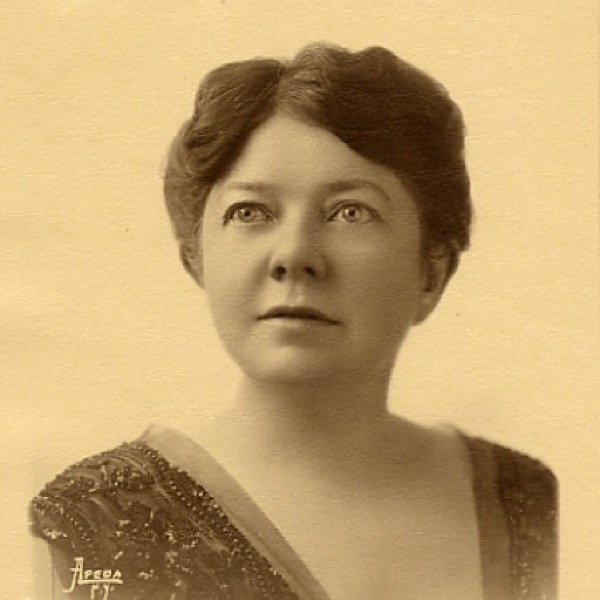
Amy Beach
Several of the themes are quotations from earlier songs, but her own programme note on the work is very straightforward. The work is in four movements, the last two being connected. According to Beach, the first movement is serious in character and features a richly worked-out cadenza, while the second movement is a piquant etude.
The slow movement is a dark and tragic lament which passes directly into a bright, vivacious rondo. Beach was profoundly influenced by the German Romantic tradition, and she tirelessly studied the musical scores of Bach and Brahms. However, she eventually looked beyond the masters and fashioned a work original in style and composition.
Amy Beach: Piano Concerto in C-Sharp Minor, Op. 45 (Danny Driver, piano; BBC Scottish Symphony Orchestra; Rebecca Miller, cond.)
Cipriani Potter: Piano Concerto No. 2 in D minor
Cipriani Potter (1792-1871) was born in London and studied with Joseph Wölfl, the Austrian pianist and composer and rival of Beethoven, who had settled in London in 1805. He soon established himself as a pianist and composer, with the Philharmonic Society commissioning two works.
Potter had always wanted to meet Ludwig van Beethoven in person, and he travelled to Vienna to meet the master. Apparently, Beethoven admired Potter’s talent and advised him on some of his scores. Potter would later record his impressions in his “Recollections of Beethoven.”
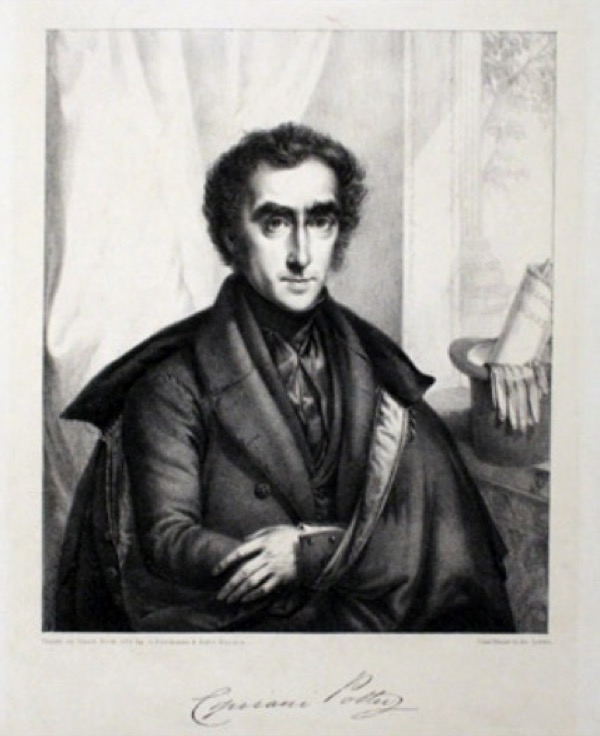
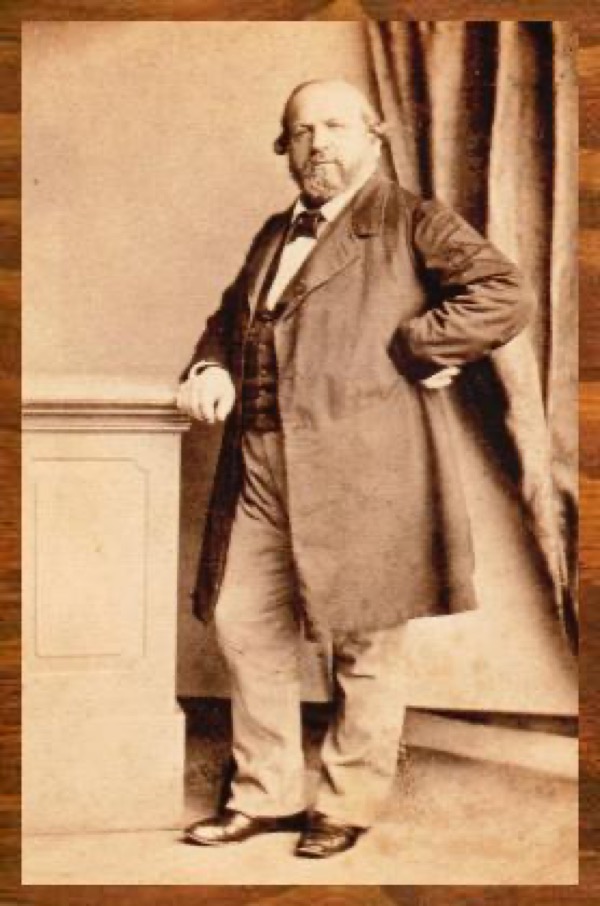
Cipriani Potter
Once he made it back to London, via Italy, Potter established himself as a virtuoso pianist, committed to performing the piano concertos of Mozart and Beethoven. Potter’s D-minor concerto was completed in 1832, and draws us into the dramatic sound world of Don Giovanni.
Scored for a Classical orchestra with the unusual addition of the trombone, this concerto is rich in orchestral colour. An expansive first movement features unexpected thematic returns and a sense of Romantic drama. The slow pastoral movement seamlessly merges with an energetic Sonata-Rondo finale. Potter taught at the newly founded Royal Academy of Music, and his star student was William Sterndale Bennett, who composed six piano concertos in total.
Cipriani Potter: Piano Concerto No. 2 in D Minor (Howard Shelley, piano; Tasmanian Symphony Orchestra; Howard Shelley, cond.)
Charles-Marie Widor: Piano Concerto No. 2 in C minor, Op. 77
Charles-Marie Widor (1844-1937) is famous for a single movement, the “Toccata” from his 5th Organ Symphony. It certainly ranks among the most famous organ pieces of all time. His ten organ symphonies are all inspired by the magnificent Cavaillé-Coll organ at Saint-Sulpice in Paris, and Widor revolutionised the art of organ playing and composition in France.
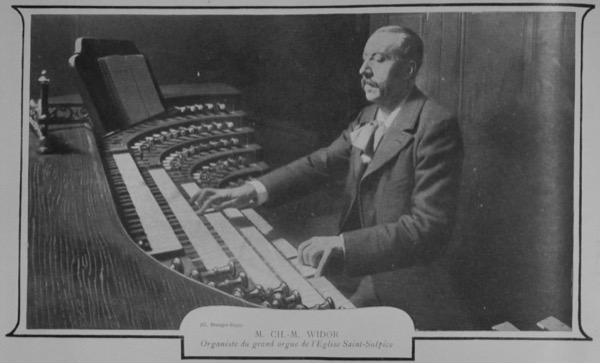
Charles-Marie Widor
However, Widor also left behind a substantial number of compositions for a variety of instrumental and vocal combinations, including 2 piano concertos. The first concerto premiered in 1876, and it was enthusiastically received.
Widor composed a second piano concerto in 1905, and its premiere was performed by Isidore Philipp. The critic Jules Jemain was full of praise, “What emerges from this concerto is an impression of remarkable passion, grandeur, and richness… M. Widor’s concerto won all the votes, and the composer and interpreter were rightly and lengthily acclaimed.”
Clearly, the work was well received and admired, but since it failed to establish itself in the repertoire, it eventually disappeared almost completely. Isidore Philipp was well-known in France, but he did not have the international pull to keep the work alive. Did you know that this concerto was never commercially recorded until 2011?
One thing becomes clear when listening to these five concertos. They are not forgotten because of a lack of inspiration or craftsmanship. Rather, they were overtaken by changing fashions and shifting musical tastes.
There are still dozens of forgotten piano concertos on offer, and some great discoveries are still to come. Please join me next time.
For more of the best in classical music, sign up for our E-Newsletter
Charles-Marie Widor: Piano Concerto No. 2 in C Minor, Op. 77 (Markus Becker, piano; BBC National Orchestra of Wales; Thierry Fischer, cond.)





Marvelous information and musical excerpts.