Beethoven’s Violin Sonata No. 9 in A major, Op. 47 – better known as the Kreutzer Sonata – is one of the most famous pieces of chamber music ever written.
The history of its reception is long and storied.
It was written for a man who never received the dedication. It was named for a man who hated it and never played it. It inspired a banned Russian novella, a Czech string quartet, and a Pulitzer Prize-winning poetry collection. And somewhere along the way, it became a symbol of the dangerous erotic power of music.
This is the story of Beethoven’s most scandalous violin work – and three of the works it set in motion.
George Bridgetower and the Premiere That Almost Wasn’t
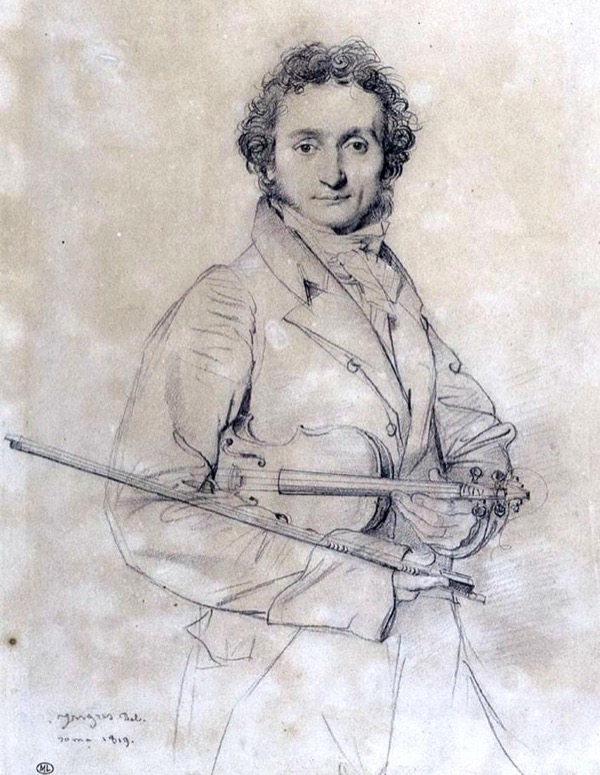
George Bridgetower was a rarity in Beethoven’s aristocratic social circle: a half-Black, half-white violinist whose father was likely from the West Indies and mother from Poland.
He was born in 1778. When he was ten, he moved to London, where he impressed the future George IV, taking lessons with leading teachers and musicians of the era, and concertizing widely.
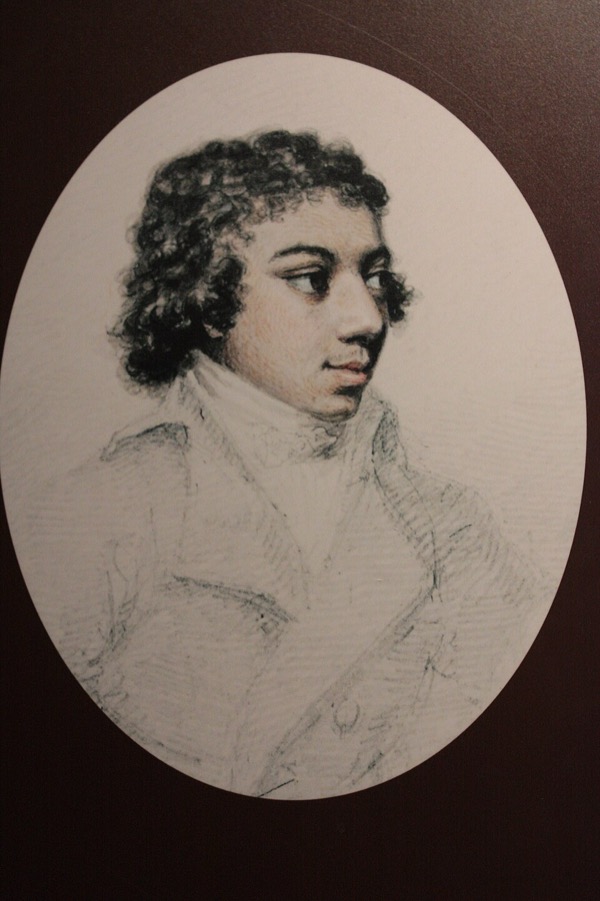
George Bridgetower
In 1803, when he was 25, he arrived in Vienna, where he met, befriended, and performed with Ludwig van Beethoven.
Beethoven was so impressed that he wrote his ninth violin sonata for him. The composer penned an enthusiastic, comic dedication to his new friend, translated as “Mixed-race sonata composed for the mixed-race Bridgetower, madman and mixed-race composer.”
Mini documentary on Bridgetower and the Kreutzer Sonata
The premiere performance took place on May 24 during a morning concert at the Augarten, a public garden in Vienna. Beethoven was on the piano.
During the performance, Bridgetower was forced to sightread the second movement over the composer’s shoulder. Bridgetower made some alterations on the fly, which Beethoven was thrilled by, demanding an encore of that movement in particular.
Beethoven’s friendships were infamously volatile, and unfortunately he and Bridgetower quarreled soon after their joint triumph. Bridgetower later told a friend that they’d argued over a woman.
When Beethoven went to officially publish the work, he dedicated it to leading French violinist Rodolphe Kreutzer, who – awkwardly – had no desire to play the work, and never took it into his repertoire. He even went so far as to label it “outrageously unintelligible.”
The Unsettling Plot of Tolstoy’s The Kreutzer Sonata
The sonata resurfaced in literature in 1889, when Leo Tolstoy, during the moralistic late stage of his long career, wrote a novella titled The Kreutzer Sonata.
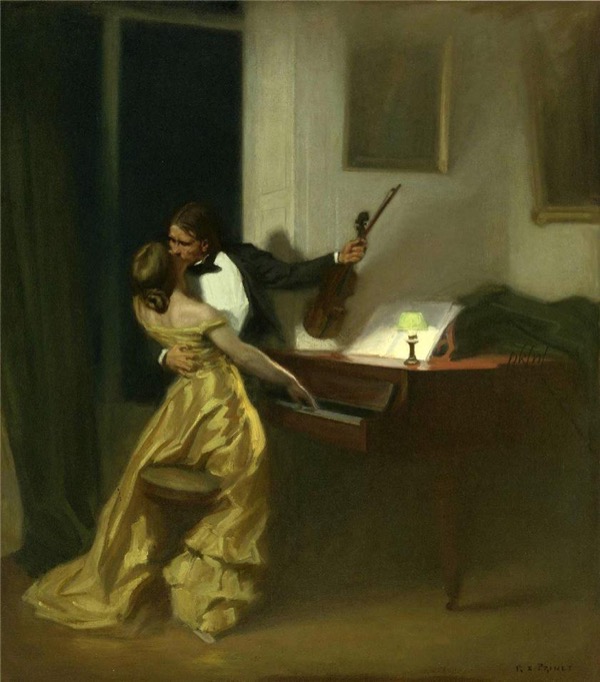
Painting based on the novella, by René-Xavier Prinet
In it, a narrator named Pozdnyshev makes a variety of bitter complaints about women, decrying their ability to tempt men sexually and hold power over them. He describes how he and his wife grow apart after having five children together.
Pozdnyshev’s wife – a pianist – befriends a male violinist, and they perform the Kreutzer Sonata together while Pozdnyshev watches.
Beethoven’s Kreutzer Sonata
Pozdnyshev comments, “A terrible thing is that sonata, especially the presto! And a terrible thing is music in general.” Why? Because it causes the players and listeners to lose their logical faculties.
He goes on:
“For instance, should they be allowed to play this ‘Kreutzer Sonata,’ the first presto, – and there are many like it, – in parlours, among ladies wearing low-necked dresses, or in concerts, then finish the piece, receive the applause, and then begin another piece? These things should be played under certain circumstances…”
In this passage, Tolstoy draws an explicit line between the Kreutzer Sonata and eroticization.
Clearly, this will only end badly for all involved. Pozdnyshev leaves on a trip, but returns early to find them sitting at a table. Jealous out of his mind, he stabs his wife, letting her recital partner escape.
He ultimately is acquitted because it is widely assumed she was committing adultery. At the novella’s close, he asks for the reader’s forgiveness.
The Reception of Tolstoy’s Kreutzer Sonata
The novella and its graphic plot and violent ideas didn’t pass censorship until one of Tolstoy’s family members spoke to the Emperor about it.
Tolstoy wanted the work to demonstrate the emotional tidiness – and indeed preferability – of chastity, contrasting it with the mess caused by carnal desire.
Readers weren’t necessarily impressed. In fact, Theodore Roosevelt labelled Tolstoy a “sexual moral pervert.”
It’s not much of a surprise that Tolstoy’s own marriage had soured, especially after his late-in-life turn to religion and didacticism.
Tolstoy’s long-suffering wife Sophia Tolstaya (a woman who, among other accomplishments, wrote out long-hand drafts of War and Peace, as well as birthing thirteen of Tolstoy’s children) felt attacked by the novella. She actually wrote two novellas of her own in response to The Kreutzer Sonata about insensitive husbands – but they weren’t published until 2000.
Janáček’s String Quartet: The Woman’s Perspective
It was only a matter of time before a composer would interpret the novella. Czech composer Leoš Janáček took up the challenge in 1923.
Like Tolstoy, he was in his own unhappy marriage; it had always been rocky, thanks in no small part to his emotional and at times financial neglect.
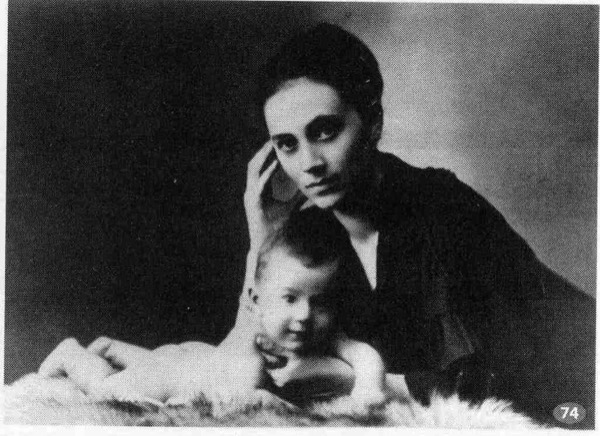
Kamila Stösslová with her son
However, it began crumbling badly in 1917, when Janáček became obsessed with a woman named Kamila Stösslová. She was 38 years his junior, married, and a mother.
Stösslová would go on to become his muse and inspire his greatest late works.
Janáček’s String Quartet No. 1, “Kreutzer Sonata”
In 1923, Janáček composed his first string quartet, subtitled “The Kreutzer Sonata.”
Janáček wrote in one of his 700 unsolicited letters to Stösslová, “I was imagining a poor woman, tormented and run down, just like the one the Russian writer Tolstoy describes in his Kreutzer Sonata…”
Unlike Tolstoy’s thoroughly masculine narrative, Janáček’s music is written from the murdered woman’s perspective.
The quartet offers rich and complicated psychological material, not just about Beethoven and Tolstoy, but about the composer.
Janáček took Tolstoy’s misogynistic story and – consciously or subconsciously, working through his own complicated feelings about women, wives, and sex – turned it into a narrative sympathetic to the wife rather than justifying the abusive husband.
Rita Dove and the Return to Bridgetower
This cross-discipline conversation about the Kreutzer Sonata has continued into the 21st century.
In 2009, United States poet laureate Rita Dove published Sonata Mulattica, a collection of poems about George Bridgetower.
An interview with Rita Dove about Sonata Mulattica
Her poem “The Bridgetower” asks a simple question: what if Beethoven had found True Love, and never quarrelled with Bridgetower over the nameless woman nobody remembers?
Presumably, the sonata would have kept its original dedication. Consequently, instead of the occasional Black musician “sprinkled here and there” in classical music history, Dove imagines “rafts of black kids scratching out scales on their matchbox violins” so that someday they might play the impossible: Beethoven’s Sonata No. 9, also known as ‘the Bridgetower.'”
It’s a modern conclusion that returns us to where the story began: a quarrel over a nameless woman, a retracted dedication, and a Black musician that history nearly forgot.
Conclusion
Rodolphe Kreutzer never played a note of the sonata that bears his name. George Bridgetower, who did play it – who sight-read it over Beethoven’s shoulder at eight in the morning in a park – spent the rest of his life in comparative obscurity.
The Kreutzer Sonata outlasted all of them. It outlasted Beethoven’s fury, Tolstoy’s moralising, Janáček’s obsession, and two centuries of changing tastes. It is still being performed, still being argued about, and still inspiring new work today.
For more of the best in classical music, sign up for our E-Newsletter