What if Mozart had lived to teach Beethoven? What if Gershwin had written his “American symphony”? What if Debussy had finished his mysterious Poe operas?
Classical music history is filled with “what-ifs,” but few are as haunting as the early deaths of its greatest composers.
Today we’re looking at ten of the most impactful composer deaths of all time, and the tantalizing projects and possibilities that died with them.
Of course, it’s an inexact measurement, but we’re going in reverse countdown order. Read on to find out who we think was the single most impactful composer death in classical music history.
10. George Gershwin
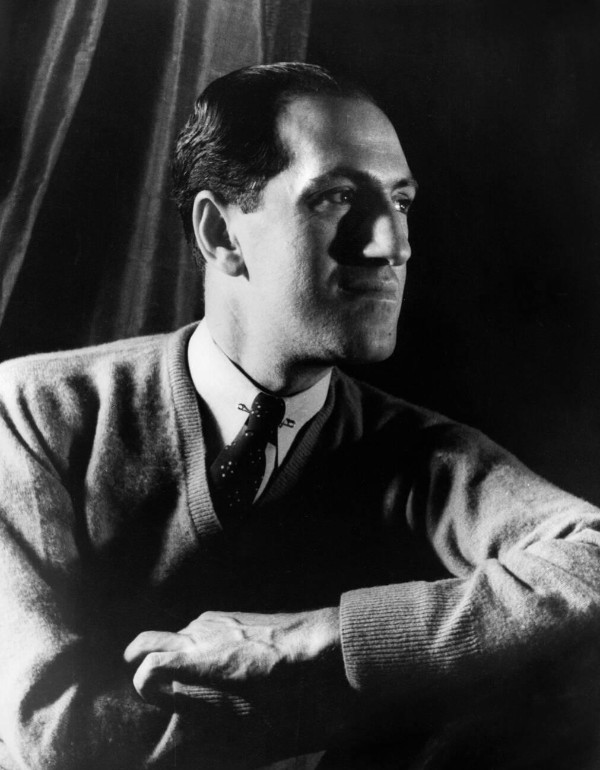
Portrait of George Gershwin
Glioblastoma cut short George Gershwin’s groundbreaking career in the summer of 1937, when he was just 38.
Over the course of his brief but bright career, he bridged the gaps between classical music, jazz, and popular song in works like his Rhapsody in Blue and Porgy and Bess.
His sister Frances remembered him saying, “I just want to work on American music: symphonies, chamber music, opera. This is really what I want to do. I don’t feel I’ve even scratched the surface.”
Gershwin’s Promenade (Walking the Dog), 1937
Future projects he was considering included a symphony, an opera about the clashes between Mexican and American culture in the Southwest, and even setting Abraham Lincoln’s Gettysburg Address to music.
Had Gershwin lived longer, it’s likely he would have realized some or all of these projects, transforming American music by continuing to erase the line between “high” and “popular” art.
It’s mind-boggling to consider what influential works an 80-year-old Gershwin, living until 1978, might have written after 1937.
9. Felix Mendelssohn
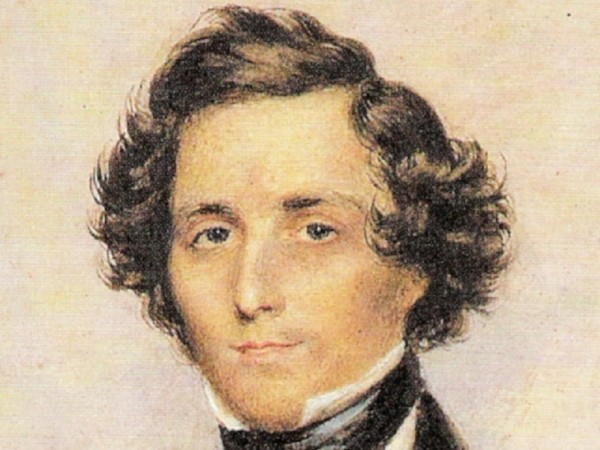
Felix Mendelssohn
Felix Mendelssohn’s death in 1847 at the age of 38 was a major loss to the Romantic Era.
By the 1840s he was an influential composer-conductor, famed for reviving Bach’s music and writing new work that balanced Classical Era form with Romantic lyricism and emotion.
The time he died was pivotal: ideological battle lines were being drawn by revolutionary composers like Franz Liszt, Hector Berlioz, and Richard Wagner (all of whom, as it turned out, would live a long time).
Meanwhile, composers like Mendelssohn and Schumann, who generally preferred writing more conservative works, died young, leaving Johannes Brahms to do much of the heavy lifting for their cause.
Felix Mendelssohn’s String Quartet No. 6, 1847
At the time of his death, Mendelssohn was about to write an opera called Lorelei, based on German legends (grounds that Wagner, of course, would soon mine extensively).
Mendelssohn’s Lorelei, featuring a leading role debuted by superstar singer Jenny Lind, could have altered the course of nineteenth century opera in ways we can’t begin to imagine today.
8. Fanny Mendelssohn Hensel
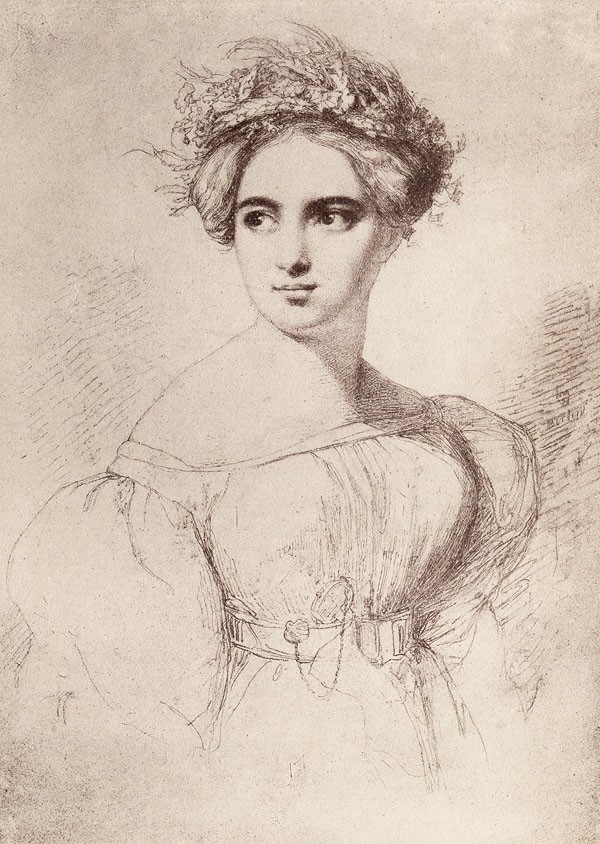
Fanny Mendelssohn-Hensel
Fanny Mendelssohn Hensel – Felix’s older sister – was a composer who was arguably just as talented as he was. She died at 41 of a stroke, just months before Felix.
Her death not only devastated him, but also robbed the broader musical world of a prodigious female composer at a time when women’s voices were often being suppressed.
Fanny’s career trajectory was on an upswing during the year of her death, suggesting she could have made major contributions to the art had she lived.
She had only begun publishing her own music under her own name in the last year of her life, as publishing was considered to be uncouth for a woman. (Even so, the decision involved much hand-wringing, since publishing was considered to be an uncouth and immodest thing for a well-off woman to pursue.)
Because of these societal constraints, most of her hundreds of works were reserved for private performance. A handful were published under Felix’s name.
But between 1846 and 1847, she finally published a few collections of her own work (including songs, piano pieces, a piano trio) and received public recognition for them.
Fanny Mendelssohn Hensel’s Piano Trio (Movement 1), 1840
This newfound confidence could have led her to publish more, or given her the opportunity to pursue writing bigger works like symphonies or operas…but she died of a stroke in the spring of 1847 before any of those possibilities could be realized.
If she’d lived, she might have helped to open the door to hundreds of other women composers in the second half of the nineteenth century.
She also, alongside her brother, would have served as a stylistic bulwark against the revolutionary Wagnerian wing of music.
7. Vítězslava Kaprálová
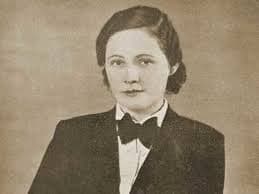
Vítězslava Kaprálová
Vítězslava Kaprálová’s death at only 25 in 1940 was a devastating blow to Czech music and women in composition alike.
A prodigy composer and conductor, Kaprálová was celebrated during her brief life.
She conducted the Czech Philharmonic at 22 and earned admiration from contemporaries like Bohuslav Martinů (who fell deeply in love with her).
Her career trajectory was sharply on the rise before it was cut short by typhoid fever during World War II.
By her early twenties Kaprálová had composed an impressive portfolio, including a prize-winning Military Sinfonietta (1937) and a Piano Concerto premiered in Brno.
Kaprálová’s Dubnová Preludia, Movement 2
She pushed Czech music forward in the generation after Dvořák, blending modern influences with Czech folk elements.
She also became well-respected as a conductor: an impressive feat for someone in her early twenties, and triply impressive for a woman working in 1930s Europe.
It is tempting to believe that had she lived longer, she would have made it more acceptable for both women composers and women conductors to pursue careers.
6. Gustav Mahler
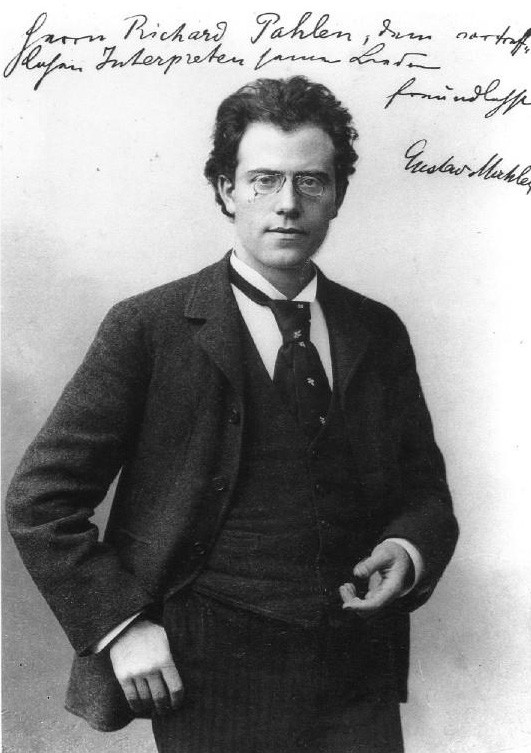
Gustav Mahler
Gustav Mahler’s death at age 50 in 1911 marked the end of an era. His music served as a kind of bridge between the Romantic tradition and emerging modernism.
As a composer, Mahler had just pushed the symphony to new levels of both extroversion (his monumental Symphony No. 8 required hundreds of performers) and introversion (in works like the Das Lied von der Erde and Symphony No. 9).
He accomplished much, but one wonders what other musical responses he would have had to the world, given the societal and artistic shakeup that was to come after World War I.
Mahler’s Symphony No. 9, 1908-09
Several indicators show where Mahler might have headed creatively had he lived even a decade longer.
At his death, Mahler was partway through his Tenth Symphony – a work that, judging by the surviving sketches, was venturing into bold new harmonic territory with unprecedented dissonances.
There’s also the question about whether he could have finally written an opera, after having conducted so many while working at the Vienna Court Opera and Metropolitan Opera.
He also would have continued working as a conductor, serving as champion and mentor of the new generation of composers. Who would he have chosen to elevate? Would it have changed the twentieth century canon? It’s very possible.
5. Lili Boulanger
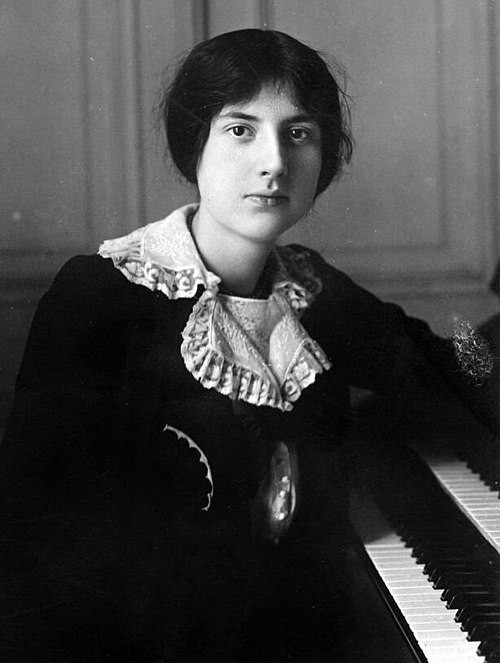
Henri Manuel: Lili Boulanger, 1913
Lili Boulanger’s life was tragically brief; she died at the age of 24.
Yet her achievements would be astounding for a composer of any age, and her potential was heralded by everyone who heard her music.
In 1913, at the age of 19, she became the first woman to win the prestigious Prix de Rome in composition.
Her death during World War I from the complications of Crohn’s disease cut short a career that could have rivaled or even surpassed those of Debussy or Ravel.
Lili Boulanger’s D’un matin de printemps, 1918
Lili devoted much of her final years to an opera, La Princesse Maleine, based on a Maeterlinck play. She had met Maeterlinck in 1916 to secure permission to compose the opera, and worked diligently despite her declining health.
Had she lived to complete La Princesse Maleine, it would have been a path-breaking work. Its quality would have been an encouragement to more women to consider composing professionally, and potentially could have helped to lead to greater gender parity in the modern classical music canon.
It’s also important to note that Lili’s older sister Nadia Boulanger became the most influential music teacher of the century. It is no exaggeration to say that every major composer of the mid-twentieth century took lessons from Nadia. Would Lili have joined her sister in her pedagogical work?
4. Claude Debussy
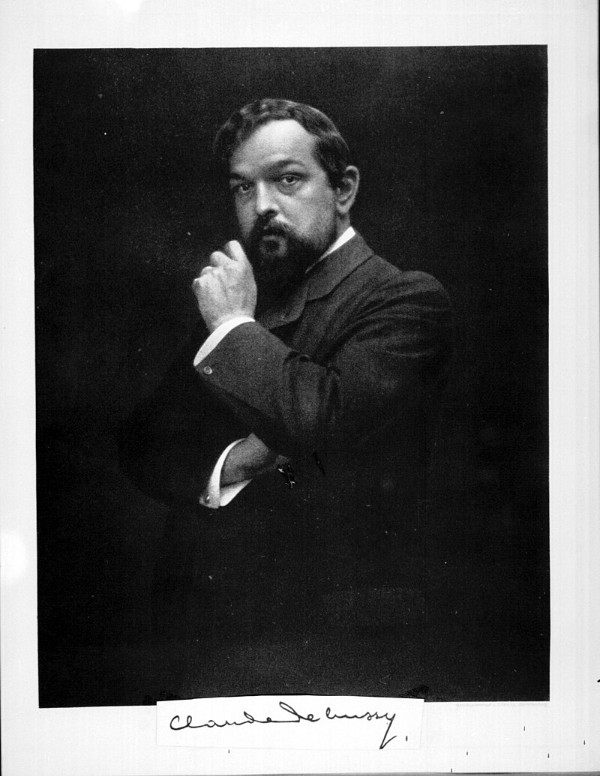
Portrait of Claude Debussy
Claude Debussy died at the age of 55, not especially young compared to some other composers, but his death of cancer in 1918 came at a time of global turmoil and left a frustrating number of forward-looking projects unfinished.
Over the course of his career, Debussy had already revolutionized harmony and form. Yet his late works hint at his eagerness to continue experimenting.
By the mid-1910s he was settling on a more abstract, pared-down style that never got a chance to come into full flower.
At the time of his death, he was working on two operas inspired by Edgar Allan Poe. He started the comic opera Le Diable dans le beffroi (“The Devil in the Belfry”) around 1911 and the darker La Chute de la maison Usher (“The Fall of the House of Usher”) in 1916 – the latter he toiled on until nearly the end of his life. Both were incomplete upon his death.
Debussy’s Violin Sonata, 1917
Between 1915 and 1917, as he was battling cancer, Debussy wrote a set of brilliant late sonatas that embrace both radical simplicity and striking harmonies.
Although he died after writing just three, he originally planned to write six (one likely for oboe, one involving trumpet and piano, and a final one combining instruments from earlier sonatas).
His illness, the war, and death meant they remained unwritten. If Debussy had completed all six, they would have formed a landmark set, and could have altered the direction of twentieth century chamber music.
3. Ludwig van Beethoven
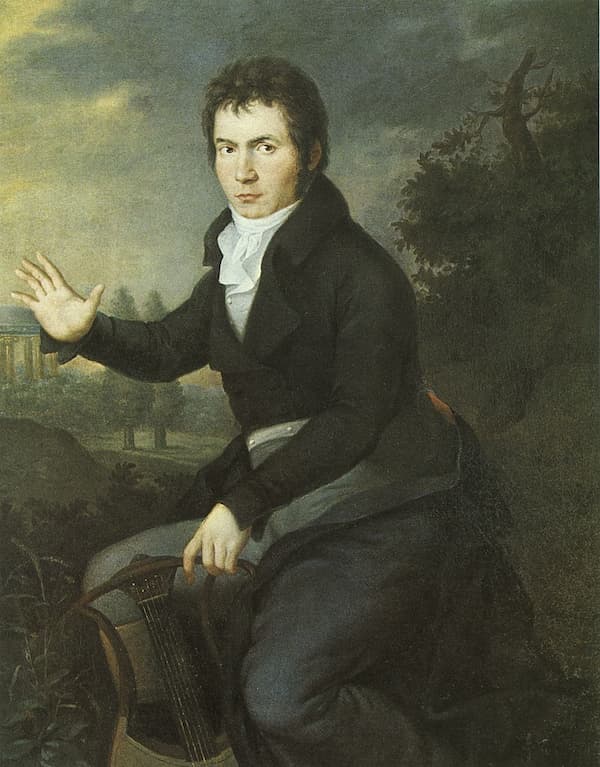
Joseph Willibrord Mähler: Ludwig van Beethoven, ca 1804–1805 (Vienna Museum)
Beethoven’s death at the age of 56 was much later than many of the composers on this list, but he left various important projects unfinished and ideas unrealized.
We have clues about what Beethoven was contemplating next.
Probably most significantly of all, he’d begun work on a tenth symphony. Unfortunately, only fragmentary sketches remain – enough that musicologists have attempted unsatisfying reconstructions. One completion done by AI is especially horrific.
The Scherzo from Beethoven’s tenth symphony, as finished by AI
These sketches suggest that Beethoven was exploring new keys and possibly more contrapuntal textures.
It is tempting to imagine a work that combines a choral element with the gritty otherworldliness of the late quartets. After his other nine symphonies, such a work would have had profound consequences to future generations.
It’s also tantalizing to note that Beethoven died just as many of the great Romantic composers were starting their careers (in the decade between 1803 and 1813 alone, Mendelssohn, Chopin, Schumann, Liszt, Wagner, and Verdi were all born).
If Beethoven had lived two decades longer, until 1847, he would have seen them all reach the height of their powers. It’s fascinating to consider how they all would have interacted.
2. Wolfgang Amadeus Mozart
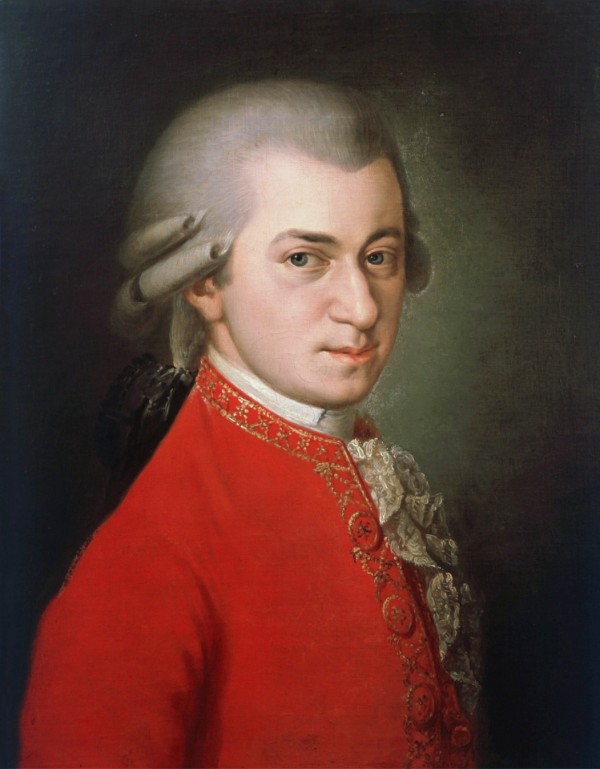
Barbara Krafft: W. A. Mozart, 1819 (Gesellschaft der Musikfreunde)
Of course, Mozart’s early death at 35 is one of the most famous tragedies in music history.
Mozart was at the height of his powers in 1791, composing masterpieces in every genre with an effortlessness that begs belief.
What would have happened if he’d lived into the nineteenth century? Based on his late-career trajectory, we can make a few guesses.
First off, he would very likely have laid even firmer foundations for Romantic Era opera.
In 1791, just a few months before his death, he premiered The Magic Flute. It seems that Mozart might have continued writing Singspiele (German operas with spoken dialogue), tapping into a broad public audience and pushing at the boundaries of the genre.
The Queen of the Night’s aria from The Magic Flute, 1791
His last three symphonies, dating from a wildly productive summer in 1788, are viewed today as the pinnacle of Classical Era orchestral writing…but what if he’d had a chance to return to the genre? He surely would have innovated here, too.
It’s also worth noting that if Mozart had been alive in Vienna in the 1790s and 1800s, he could have taught Beethoven or other young composers, potentially altering their development.
The entire dynamic of the Viennese school might have shifted: Beethoven might not have been seen as the lone successor of Haydn and Mozart, but rather as a colleague or even competitor to an older Mozart.
And that’s not even getting into the possible contributions of the final composer on this list, the one we think was the most impactful composer death in the entirety of classical music history…
1. Franz Schubert
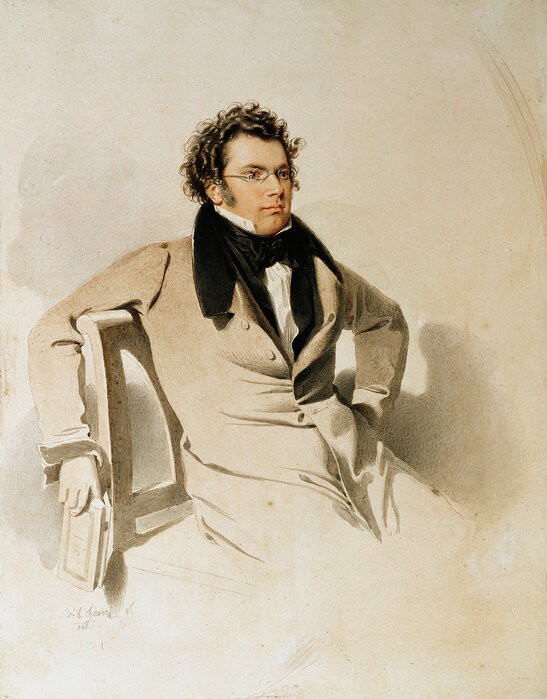
Franz Schubert
Franz Schubert’s death at 31 was one of the greatest tragedies in the history of classical music.
Over the course of his short life, Schubert composed over 600 songs, numerous chamber works, piano sonatas, and several symphonies…yet much of his work remained unpublished and under-appreciated until decades after his death.
Schubert died the year after Beethoven, but there is a sense that he could have been Beethoven’s musical heir had he lived.
Even during the last weeks of his life, in October and November 1828, Schubert was sketching a new symphony.
Sketches suggest he was incorporating more counterpoint in this work, seeking to produce a work of greater complexity.
Franz Schubert: Symphony No. 10 in D Major, D. 936a (arr. B. Newbould) (Scottish Chamber Orchestra; Charles Mackerras, cond.)
If he had succeeded, and his Symphony No. 10 had been completed and performed, it might have raised his reputation during his actual life, much as the rediscovery of the massive Symphony No. 9 did posthumously in the late 1830s.
He also longed to write another opera, and was showing more and more interest in vocal music in his final year. A hit Schubert opera in the 1840s or 1850s would have been a fascinating document alongside Wagner’s from the same decades.
And what exactly would a mid-century War of the Romantics look like with a 60-year-old Schubert still churning out masterpieces? Could he have somehow managed to synthesize Beethoven’s legacy with an authority that would have tamped down later disagreements between figures like Brahms, Wagner, and Liszt? Would he have joined one side or the other? Or would his later music have triggered even more ideological splinters and approaches to music?
The combination of Schubert’s youth, the enormity of his talent, and the specific pivotal post-Beethovenian moment on the musical timeline at which he died all combine to make him, in our opinion, the most impactful composer death in classical music history.
Who do you think was the most impactful composer death in classical music history?
For more of the best in classical music, sign up for our E-Newsletter