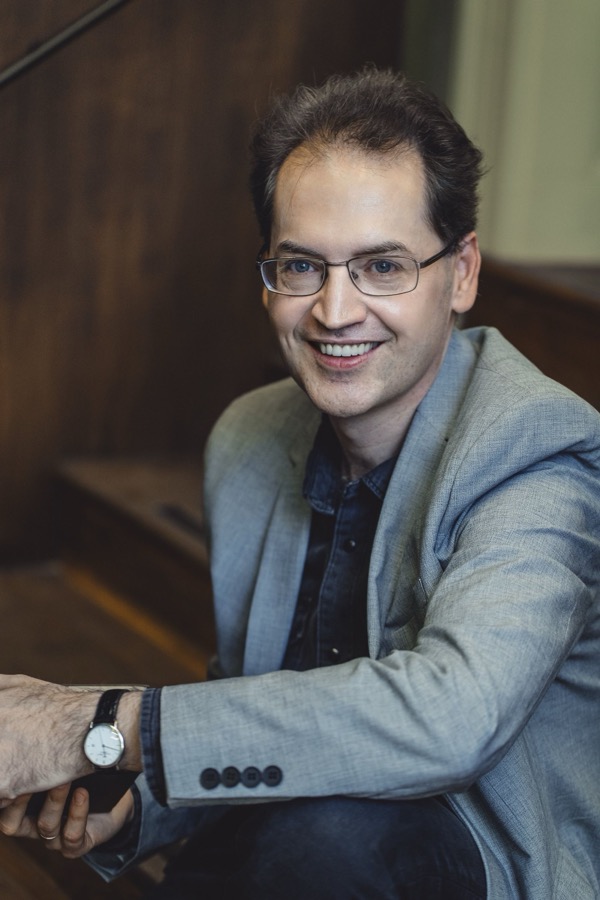
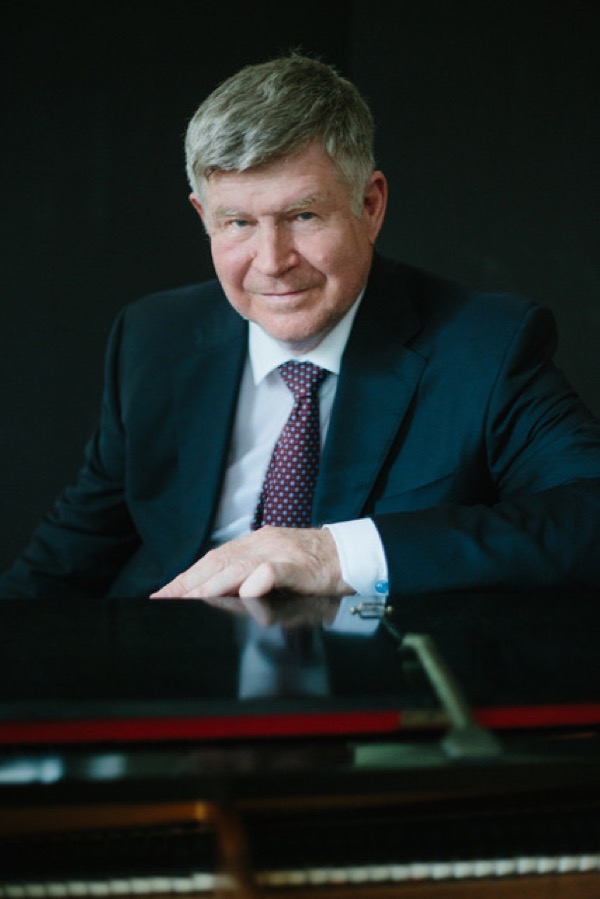
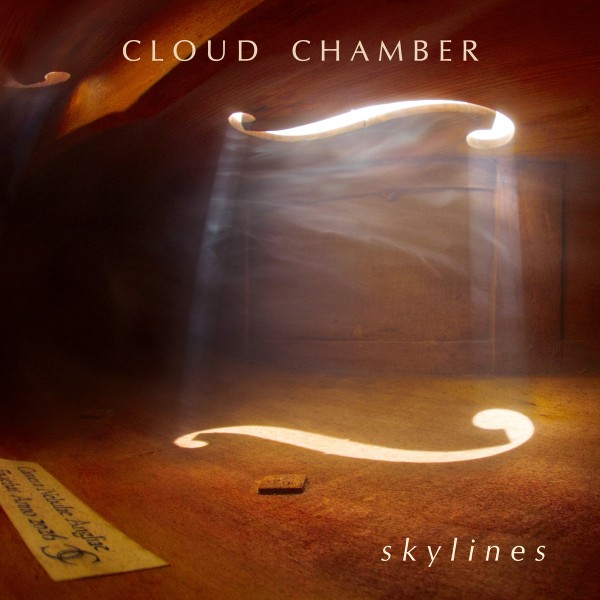
In his new musical documentary, Thibaut Garcia: A Guitar with a View, French filmmaker Bruno Monsaingeon took up an instrument outside his usual realm. Famed for his documentaries on musicians, including Glenn Gould, Sviatoslav Richter, David Oistrakh, Yehudi Menuhin, Grigory Sokolov, and Maurizio Pollini, he was outside his usual realm of piano and violin. At first look, the guitar was too static, but as he explored its world, he discovered something interesting in the instrument.
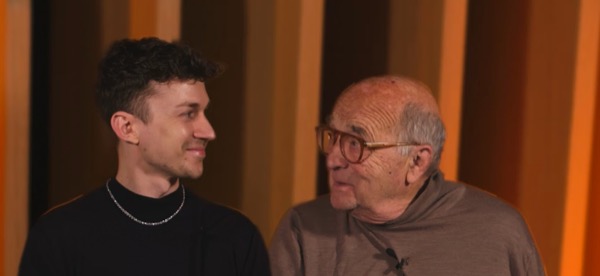
Bruno Monsaingeon and Thibaut Garcia
French guitarist Thibaut Garcia (b. 1994) started playing guitar at age 6, instructed by his father and then Paul Ferret. At age 16, he continued on to the Paris Conservatoire, where he studied with Olivier Chassain and also with Judicaël Perroy.
He won his first competition in 2008 (1st prize at the international competition “Valle de Egues” (Spain)) and continued to be awarded first prize for the next few years in Germany, Romania, and Spain. It was the awarding of first prize at the Guitar Foundation of America competition in 2015 that lifted him onto the concert stage. As he noted in the documentary, this ended his competition career and began his concert career: in the first year, he gave 12 concerts, 30 the second year, and then 60, with tours of North America from Mexico to Canada. That marked the end of his student life and the start of his professional career.
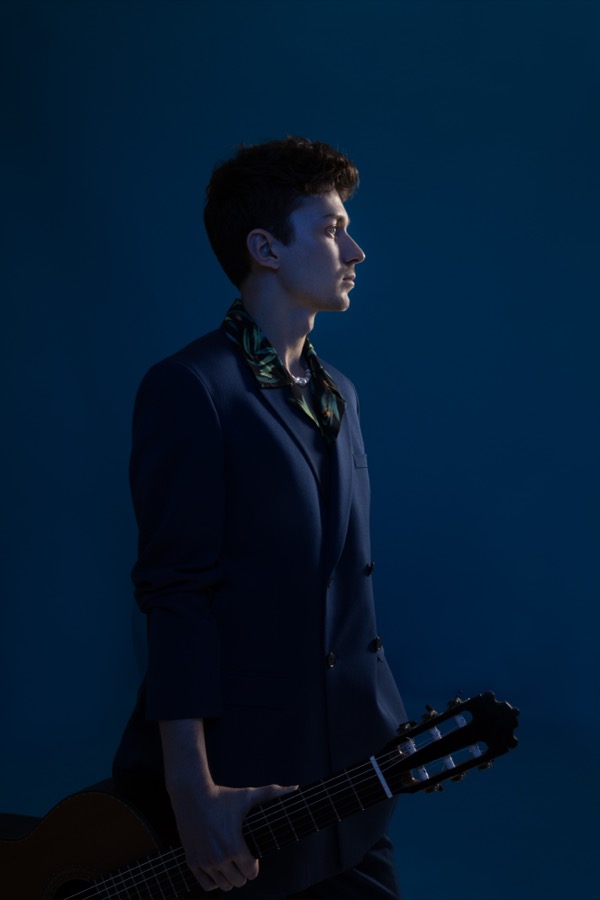
Thibaut Garcia (photo by Simon Fowler)
In Thibaut Garcia, Monsaingeon found an eloquent and thoughtful musician who joins his virtuosic skills with the ability to analyse his technique and sound to produce what he hears in his mind. Monsaingeon had originally regarded the guitar as an instrument whose greatest days had ended in the 18th century, owing to its strong influence from the lute. None of the great composers from Mozart to Chopin had written for the instrument, and he thought of it as an instrument that mostly had its role in accompaniment. In addition, its small sound meant that it was not an instrument for large halls. Monsaingeon considers the first modern guitarist
to have been Segovia, and thought his charisma was an important part of his fascination.
Agustín Barrios Mangoré: La catedral: I. Preludio (Thibaut Garcia, guitar)
When Monsaingeon was in the Warner/Erato offices in Paris, he met Erato performing artist Garcia. Each had heard of the other, but they’d never met. That meeting eventually turned into late-night conversations, and Monsaingeon came away with the idea of Garcia being ‘a great musician’ and that he had to film him. He immediately started writing a script for a potential documentary and then had to figure out how to sell this idea to his producer. They had just completed the documentary on the conductor Klaus Mäkelä (Towards the Flame), and Monsaingeon didn’t think he could face another struggle searching for funding, etc.
In talking with his producer, Monsaingeon highlighted Garcia’s humanity and expressed how impressed he was with the young musician. In the end, it was the producer who came up with the idea for the documentary, based on Monsaingeon’s persuasive description.
Manuel de Falla: 7 canciones populares españolas (arr. M. Llobet Solés and E. Pujol for cello and guitar): III. Asturiana (Edgar Moreau, cello; Thibaut Garcia, guitar)
For Monsaingeon, the documentary is a double portrait: that of the musician and that of the instrument. As a musician, we are treated to Garcia’s detailed and interesting discussion on the difference of sound based on the placement of fingers (do you play on the right side or left of the finger and what the difference in sound this causes) or how a player’s nails can change the sound with not only length but the season. It’s a revelation to hear such an eloquent teacher on the finer details of his art.
Joaquín Rodrigo: Concierto de Aranjuez: I. Allegro con spirito (Thibaut Garcia, guitar; Orchestre national du Capitole de Toulouse; Ben Glassberg, cond.)
An interesting section was his time at the Abbaye Saint-Pierre in Solesmes, France. He went there with his best friend, guitarist Antoine Morinière. They’ve known each other since they were both young guitar students, meeting at guitar camp and entering the Conservatoire the same year. They had performed as a duet until their personal careers took off separately. A new project, the Bach Goldberg Variations for two guitars, brought them together again. Garcia did the arrangement.
The Abbaye Saint-Pierre is a silent monastery, so the two guitarists had to communicate through gesture and example. By keeping to the monastery’s rules, the two musicians’ rehearsal became something different. Deeper. More communication, but on a subliminal level. The result is something very special in the world of Goldberg Variations. As Garcia notes in the documentary, a keyboard can play more notes more quickly than a guitar, so the arrangement was sometimes a difficult matter of trying to convey Bach’s music through a different medium while still seeking to convey the idea of a single instrument. Listening to each other without talking, they could sense each other’s intention, even before a finger was set to a string.
There’s also time spent with the luthier who created guitars for both Garcia and Morinière. This is the second half of the documentary, exploring the instrument and its world. The luthier, Hugo Cuvilliez, talks about the 100-year-old rosewood used for their nearly twin instruments, its qualities, and demonstrates how he ‘plays’ the wood to find its inherent sound. The instruments are nearly twins in that the faces of their instruments use different spruce boards, a deliberate choice by the luthier to distinguish the instruments. In the high registers, Morinière’s instrument has a unique sustain that Garcia’s lacks. Garcia speaks of passing a musical line to Morinière, yet feeling as if he were still playing; the transfer was so seamless.
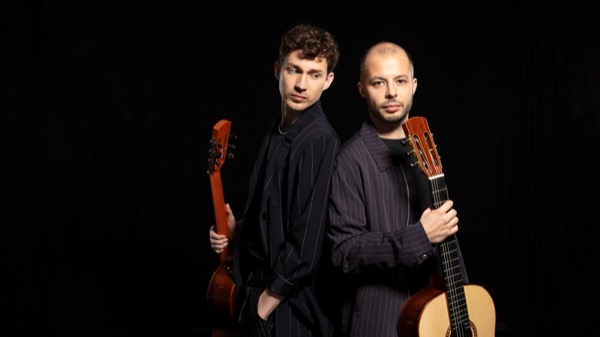
Thibaut Garcia and Antoine Moriniere
The two guitarists play video game soccer, and in real life with the Conservatoire’s soccer team (Garcia’s shirt says ‘Le Golden Boy’), called the Tremolo Football Club, for the guitarists who participate. Sport is important because it develops teamwork, and Garcia’s coach told him when he was 10 that the point wasn’t just scoring goals but also passing the ball – the altruism of the sport makes the team successful. Garcia has taken this as an important life lesson.
A session with the Arod Quartet, playing Boccherini’s Guitar Quintet in D major at Wigmore Hall, shows Garcia with a larger ensemble where each voice is important. He also learned how the quartet uses their discussion of intonation, articulation, and how they put a work together, and applied it to his own approach to music. There’s a great deal of humour in the performance, especially when Jérémy Garbarg, the cellist, lays his instrument aside to add some castanets to the sound. For more on the Arod Quartet, see Monsaingeon’s 2022 documentary Le Quatuor Arod, Ménage à 4.
John Dowland: Flow, my tears, fall from your springs (Philippe Jaroussky, countertenor; Thibaut Garcia, guitar)
A surprising dance rehearsal with the dancer Aure Wachter shows yet another aspect of music for Garcia. Combining contemporary dance with his music allows exploration of the grey area between his music and her dance. He also dances, and she sings, and he learns a different way of movement. As he says, ‘I’m used to sitting on a chair’, and the movements challenge him to follow her movements and to discover the same feeling of connection he has in music when their actions correspond. In an experimental action where she whirls around, holding his guitar at arms’ length by the headstock, you can see his fear (what if she loses her grip) and his delight as she turns fast enough for the strings to start to sing on their own.
Through the movie, Garcia’s delight comes through again and again – as he watches his early competitions and as he watches his family films (and Monsaingeon catches a wonderful sequence of Garcia playing the same work (Regondi’s Introduction and Caprice) from age 10 – 11 – 12 – 13 – and as a professional).
For such a skilled filmmaker as Monsaingeon to follow a young guitarist through his development from, as Garcia puts it, from guitarist to musician to artist. He poses himself the question ‘What is an artist?’ and answers it ‘Being an artist is allowing yourself to imagine anything, a concept, a vision, an image, a sound, creating something that didn’t exist from scratch’. Garcia continually challenges his artistic position so he can do more in the arts.
Monsaingeon’s documentary even takes us where no one ever sees, inside the guitar, to show how the right hand plays the strings, viewed from the other side. Through the documentary, the concentration on the different things accomplished by the right hand versus the left hand gives us an expanded vision of both the player and the instrument.
We’re glad that Bruno Monsaingeon found such a perfect subject for his art. For his 101st documentary, he was able to step out of his comfort zone and showed us the true mastery of a virtuoso and how he thinks about his instrument, his music, and his future.
Another project that has recently been released is the 61-disc set of violinist David Oistrakh’s complete Warner Classics catalogue, remastered by Bruno Monsaingeon in HD from the original sources, with the addition of rare audio and video recordings that Monsaingeon had been collecting for the past 30 years. David Oistrakh (1908–1974) had a distinguished career, first as a violinist and later in life, after 1959, as a conductor.
Monsaingeon pointed out that Oistrakh had, in essence, two different careers: one in the Soviet Union and one in the West. In seeking out performances recorded by the state television stations and preserved in their vaults, Monsaingeon was able to expand Oistrakh’s known repertoire. Music that was no longer played in the West remained in his Soviet repertoire.
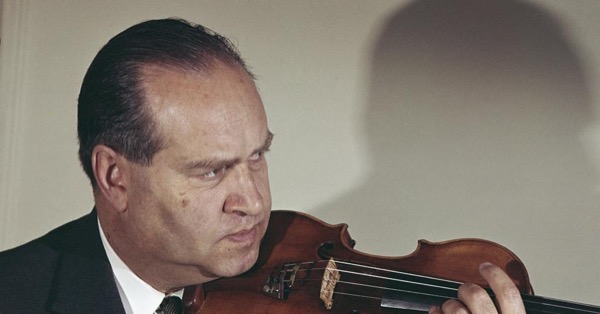
David Oistrakh
Ludwig van Beethoven: Violin Sonata No. 9 in A Major, Op. 47, “Kreutzer”: I. Adagio sostenuto – Presto (David Oistrakh, violin; Lev Oborin, piano)
The collection also includes 3 DVDs: Monsaingeon’s own 1994 documentary, David Oistrakh: Artist of the People? and Moscow recitals and filmed concertos (Sibelius and Tchaikovsky) conducted by Gennadi Rozhdestvensky. Monsaingeon was able to re-edit the original films, having, in some cases, found rehearsal footage. The set offers Oistrakh in a more complete manner than has heretofore been available anywhere in the world.
David Oistrakh, Artist of the People? by Bruno Monsaingeon
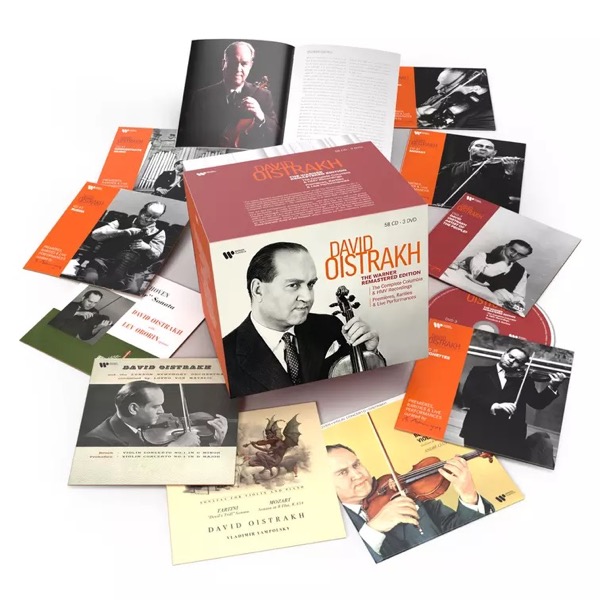
David Oistrakh – The Warner Remastered Edition (The Complete Columbia & HMV Recordings / Premieres, Rarities & Live Performances)
Remastered by Bruno Monsaingeon
Warner Classics 5054197963520
Release date: 18 October 2024
Thibaut Garcia: A Guitar with a View
Directed by Bruno Monsaingeon
Idèale Audience Group
Release date: April 2026
Bruno Monsaingeon and Thibaut Garcia in conversation
For more of the best in classical music, sign up for our E-Newsletter