Sergei Taneyev, who died on 19 June 1915, was a renowned composer, teacher, and musical scholar. His music is deeply influenced by Johann Sebastian Bach and Western polyphonic traditions, featuring exceptional contrapuntal mastery and structural clarity.
A student of Pyotr Ilyich Tchaikovsky, Taneyev became director of the Moscow Conservatory, where he educated an entire generation of composers, including Sergei Rachmaninoff, Alexander Scriabin, and Nikolai Medtner.
To commemorate Taneyev’s passing, let us explore his lasting educational influence on the music of these three masters.
Taneyev: Piano Quintet in G minor, Op. 30 – International Chamber Music Festival – Live concert HD
The Conservatory Years
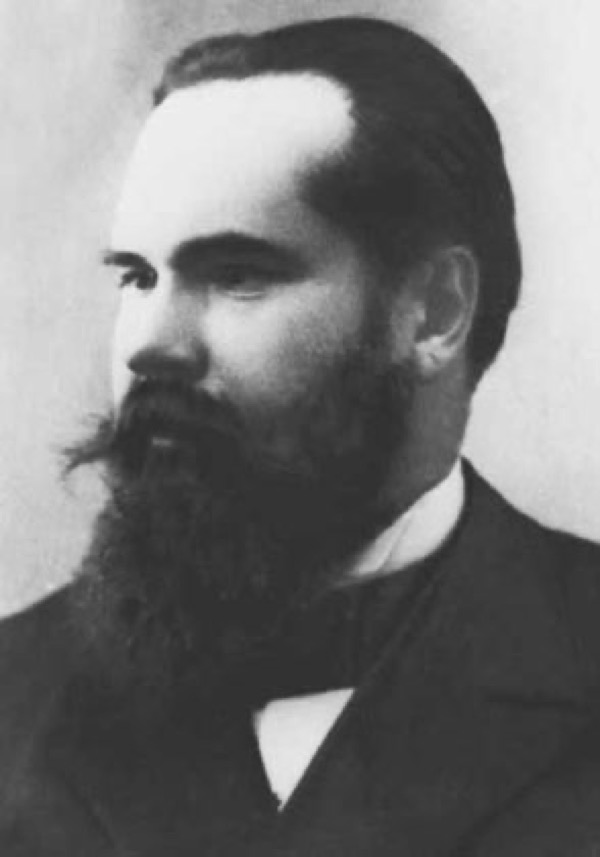
Sergei Taneyev
When Tchaikovsky resigned from the Moscow Conservatory, Sergei Taneyev took over his harmony and orchestration classes. He gradually added piano and composition classes, and in 1885, he became the director of this renowned institution.
He resigned as head of the Conservatory to devote more time to composition in 1889, but he retained his counterpoint class. This became an elite training centre, some called it a pilgrimage site, for the leading Russian composers of the next generation, and a major counterpart to Nikolai Rimsky-Korsakov‘s class at the St. Petersburg Conservatory.
Tchaikovsky called Taneyev the “best counterpoint master of Russia, and I am not even sure that there is his equal in the West.” Not everybody agreed, and his teaching style, based on strict counterpoint, was called fastidious and archaic.
Sergei Taneyev: Prelude and Fugue in G-sharp minor, Op. 29 (Anastasia Solovieva, piano)
The Pursuit of Clarity
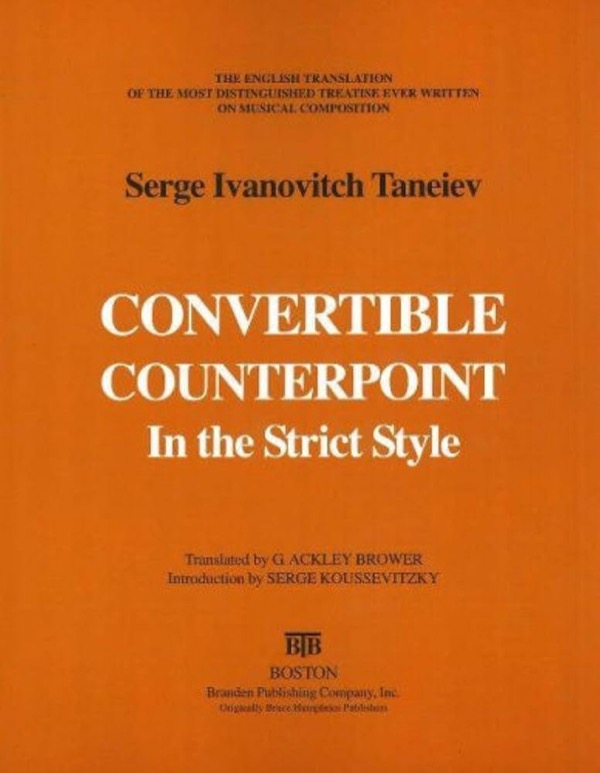
Taneyev’s Counterpoint treatise
Yet, Taneyev wrote to Tchaikovsky that “despite Mozart‘s use of double, triple, and reverse counterpoints, he is one of the most comprehensible and accessible composers, and his knowledge of counterpoint often merely helps him to achieve clarity. Learning is good only when it leads to naturalness and simplicity.” (Reilly, A Rare Find, 2002)
To be sure, Taneyev loved the elegance of Mozart’s formal balance and the freedom and expedience of Bach’s part-singing. He also found inspiration from Palestrina, Haydn, and Beethoven, but in the end, he believed that “there is nothing more beautiful than Mozart. The consummation of beauty.”
While his aesthetic preferences might well be considered conservative by the standards of his day, “Taneyev’s teaching was marked by a highly liberal spirit. Much like his contemporary Gabriel Fauré at the Paris Conservatoire, he was noted for his ability to respond to and promote the artistic personalities of his students rather than turning them into replicas of himself.” (Döhl, Repertoire & Opera Explorer, 2013)
String Trio in D Major by Sergei Taneyev (1879-1880)
Taneyev and Rachmaninoff
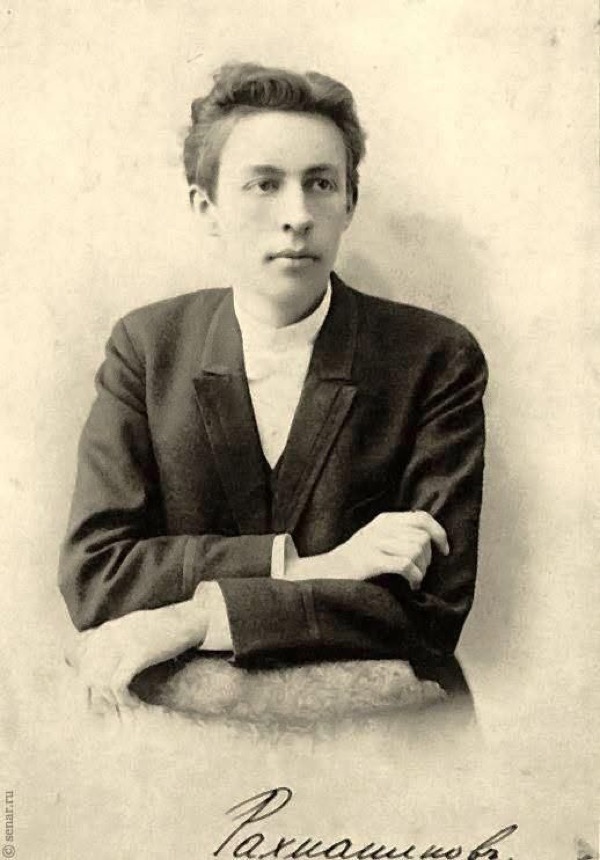
Sergei Rachmaninoff, 1892
Sergei Rachmaninoff regarded his composition and counterpoint teacher Sergei Taneyev as “a master composer, the most erudite musician of his time, a person of individuality, originality, and character—a pinnacle of musical Moscow.”
Taneyev was respected for his intellectual rigour and uncompromising standards, yet he was sometimes feared as well. When young Rachmaninoff played the piano draft of his First Symphony for Taneyev, the latter supposedly described the melodies as flabby and colourless, saying that there was nothing that could be done with them.
Rachmaninoff was predictably crushed, and he desperately tried to rewrite the score. The work ultimately premiered to disastrous reviews, plunging the composer into a three-year psychological depression and creative paralysis.
Rachmaninoff Symphony No. 1, Kochanovsky, NRPO
Architecture and Emotion
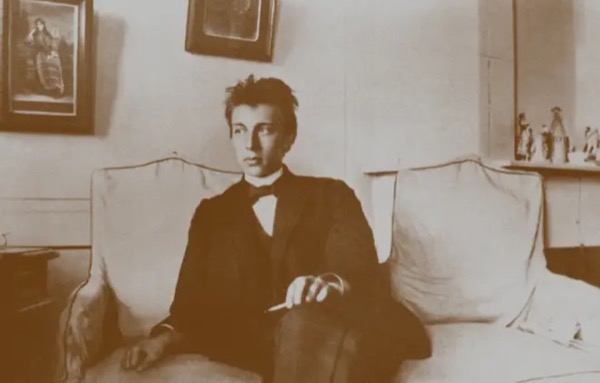
Sergei Rachmaninoff
However, Rachmaninoff retained immense respect for his teacher, even though his compositional style favoured sweeping, unabashedly Romantic melodies. Taneyev’s influence is felt beneath the glittering and emotional surface of Rachmaninoff’s compositions, which reveal remarkable technical control.
Commentators have pointed to the tightly integrated motivic construction in his large-scale works and the sophistication of the inner voices in his piano music. Rachmaninoff never became a Taneyev clone, but he did absorb the technical foundations.
Taneyev provided Rachmaninoff with the architectural skeleton, which he adorned with his intensely lyrical and emotional voice. A remarkable collaboration exists in a piece called Four Improvisations, composed by Sergei Rachmaninoff, Anton Arensky, Alexander Glazunov, and Sergei Taneyev. Each improvisation contains contributions from all the composers.
Arensky, Rachmaninoff, Glazunov & Taneyev – Four improvisations for piano
When Taneyev Met Scriabin
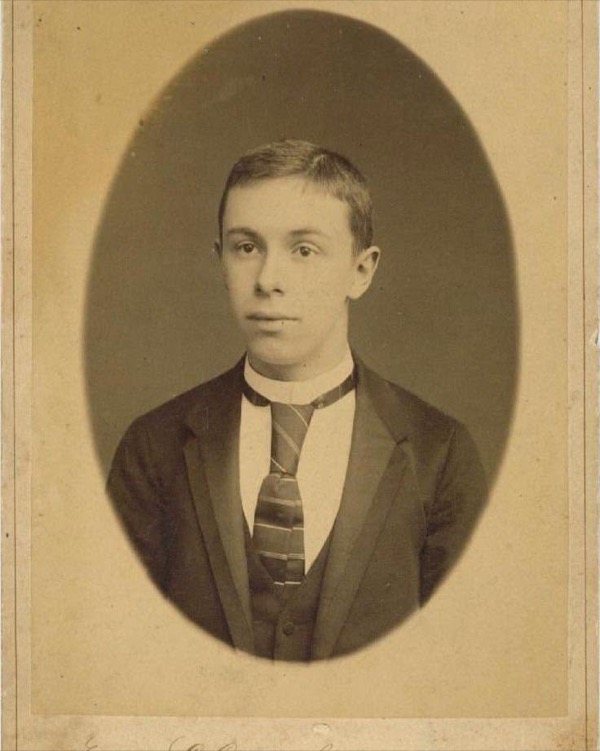
Alexander Scriabin
Taneyev actually provides his own account of his early relationship with Alexander Scriabin. He writes, “One spring, General Nikiforov came to see me and said, ‘May I bring a young, talented musician to see you?’ They brought a young cadet, small, thin and fragile.
I tested his ear—the ability was outstanding and obvious. I began to work with him a little, introduced him to various elements: forms, the sentence, the period. Getting on towards September, he wrote a few pieces, and they were all very pleasing.
A genuine talent could be discerned. Then we worked on harmony for a year. There was already talk of his entering the Conservatoire; to prepare for admission, I recommended that he study with Gyorgy Eduardovich Konyus. He did so, and began to work with him on counterpoint, among other things.” (Scriabin-Association)
Nicholas McCarthy plays Scriabin: Nocturne for left hand
A Rebel Born of Discipline
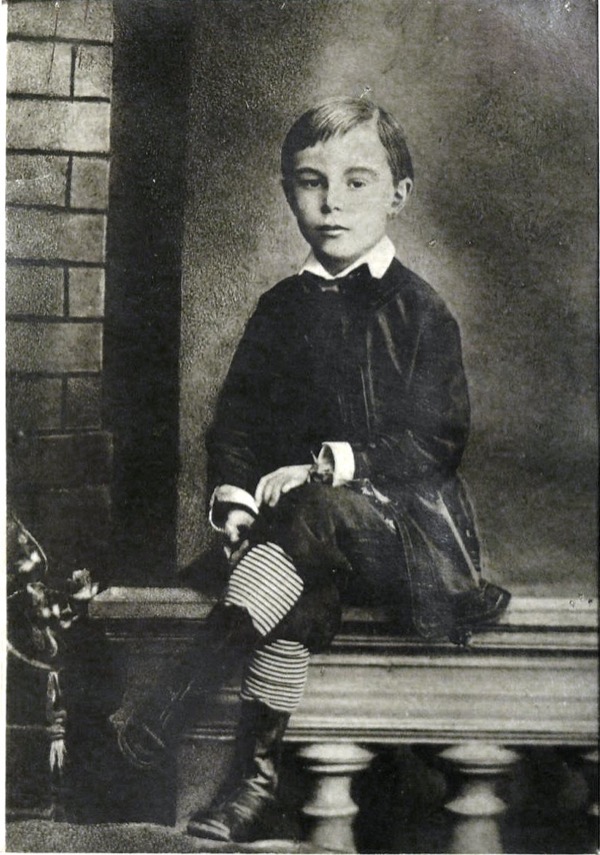
Alexander Scriabin as a young man
From Taneyev’s account, and the subsequent reminiscences by Konyus, it becomes clear that Taneyev did not follow a prescribed method when instructing the young Scriabin, but instead tailored his teaching to the degree of talent and capability of his charge. Taneyev did not ask him to write dry harmonic exercises, but modified his method of teaching to accommodate his talented student.
During his years at the Conservatory, Scriabin studied theory and composition directly under Taneyev and Anton Arensky. He did not complete his formal composition degree at the conservatory, largely due to musical differences with Arensky.
Scriabin, the exceptional rebel, increasingly moved away from Taneyev’s aesthetic conception towards a more personal symbolic language. Yet in early Scriabin, particularly in the preludes, études, and the first sonatas, his music reveals carefully organised musical thought beneath the surface. Isn’t it remarkable that Scriabin’s radical harmonic language emerged from one of the strictest academic educations available in Russia?
Alexander Scriabin – Preludes op. 11 No. 2, 3, 4, 5, 6
Taneyev’s Truest Heir
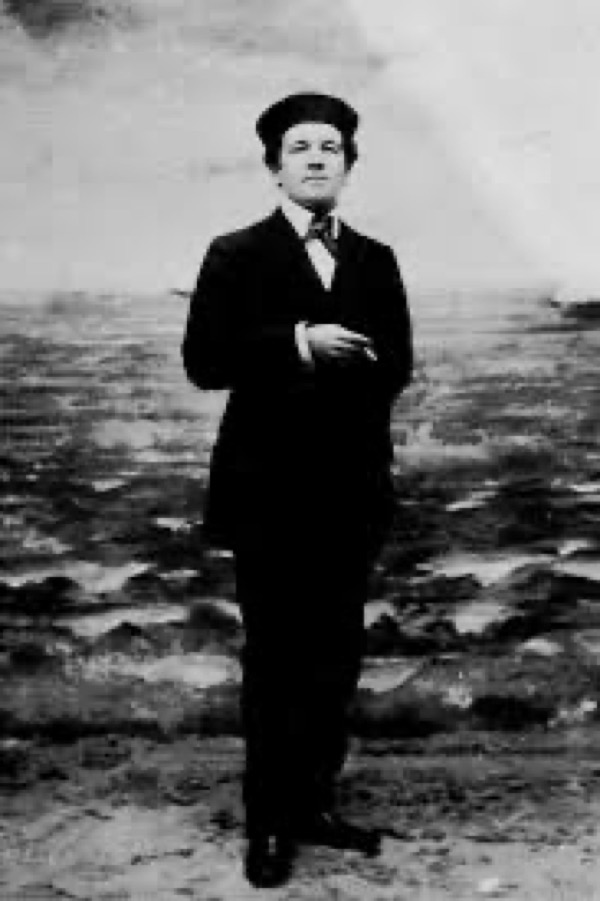
Nikolai Medtner
In 1892, Nikolai Medtner enrolled at the Moscow Conservatory where he was primarily trained as a pianist. He was taught music theory initially by Anton Arensky, and later he sat in the class of Sergei Taneyev, which he attended only irregularly. As Wendelin Bitzan writes, “Except for a series of private consultations with Taneyev, Medtner did not receive formal education as a composer.” (Bitzan, Medtner-Gesellschaft)
However, after he graduated from the Conservatory in 1900, he stunned his teachers and family with the announcement that he would not pursue a career as a pianist, but would instead devote himself to composing. Essentially self-taught as a composer, Taneyev used to say that Medtner was born with the knowledge of sonata form within him—and that was enough.
Although the apprenticeship between Medtner and Taneyev was exceedingly brief, Medtner might well be considered the truest heir to Taneyev in spirit. The emphasis on contrapuntal craft, motific unity, and classical coherence is found throughout his music.
The Art of Teaching Difference
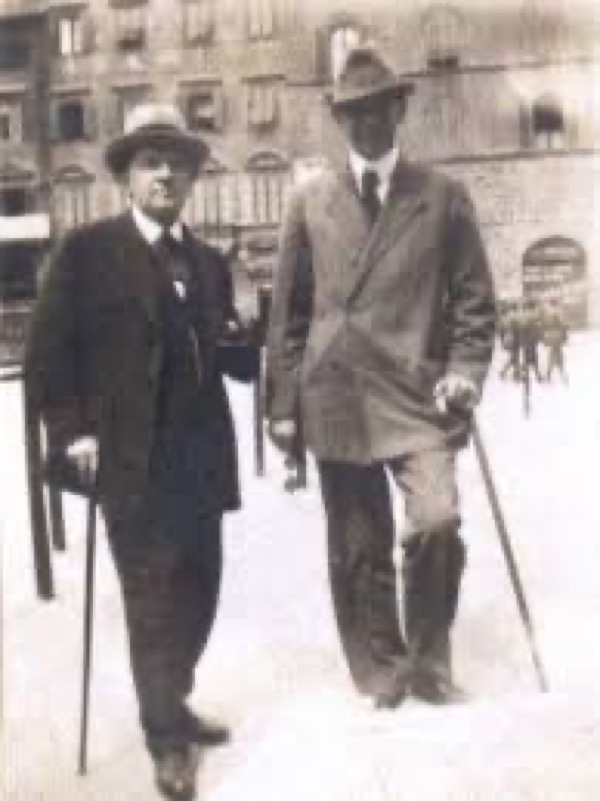
Nikolai Medtner and Sergei Rachmaninoff
Medtner never rebelled against his structural inheritance, and unlike Rachmaninoff, he was less interested in broad emotional sweeps. So how can we best summarise Sergei Taneyev’s influence as a teacher? As for Rachmaninoff, he taught him to organise emotions in music. Taneyev gave the young Scriabin the tools he later escaped from, and although he spent only a limited time with Medtner, he established a direct pedagogical lineage.
Taneyev taught three composers who ended up sounding unlike one another. Rather than imparting a single style, he equipped them with the technical discipline and compositional tools that enabled them to pursue their own artistic identities.
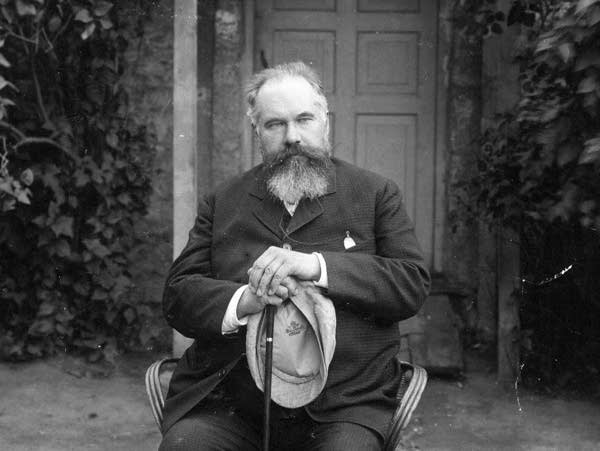
Sergei Taneyev
For more of the best in classical music, sign up for our E-Newsletter