The concerto occupies a unique place in classical music: it showcases an individual soloist, but also relies on the support of a large ensemble.
Some concertos thrill on first hearing but their lustre fades fast, while others continue to reveal new dimensions decades – or centuries – later.
So what separates the truly great concertos from the merely impressive ones?
Today, we’re looking at what makes a concerto truly great: how structure, narrative, orchestration, and interpretive freedom combine to create works that continue to challenge performers and captivate listeners.
1. A striking entrance.
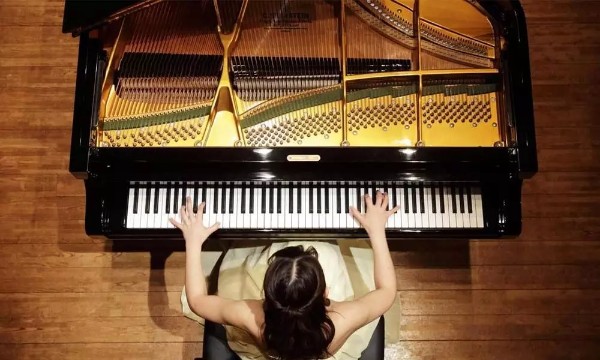
The soloist’s entrance is one of the most revealing moments in any concerto. It immediately defines the relationship between the individual and the orchestra.
A great concerto will use this moment to establish tension or reveal character, rather than simply announcing a soloist’s presence.
When the piano enters alone at the very start of Ludwig van Beethoven‘s Piano Concerto No. 4, the effect is intimate and disarming, like the soloist is alone and telling the listeners a secret.
Mitsuko Uchida plays Beethoven’s Piano Concerto No 4 in G major, Op 58
By contrast, the delayed but expansive entrance in Johannes Brahms’s Violin Concerto feels hard-won: the culmination of minutes of orchestral struggle and pressure.
Brahms: Violinkonzert ∙ hr-Sinfonieorchester ∙ Hilary Hahn ∙ Paavo Järvi
A striking entrance does not merely introduce the soloist; it establishes the emotional terrain of the concerto to come.
2. Memorable themes that reward transformation.
A great concerto depends less on how memorable a theme is on first hearing than on how much it can withstand transformation.
A concerto lives or dies on the malleability of its musical ideas. Those themes have to sustain both repetition and transformation. They have to go somewhere or express something. They have to survive being altered, fragmented, and reframed.
For instance, in Wolfgang Amadeus Mozart‘s piano concertos, themes often seem deceptively simple. But that surface simplicity is flexibility in disguise, allowing them to sound playful, poignant, or quietly unsettling depending on context.
Without material that rewards return and reinterpretation, even the most brilliant concerto writing starts feeling empty fast.
Mozart’s Piano Concerto No.21, K.467 / Yeol Eum Son
3. Skilful dialogue between orchestra and soloist, accounting for the type of instrument that is soloing.
At its core, the concerto is a conversation between soloist and orchestra, and that conversation must take account of the nature of the solo instrument.
A piano’s ability to generate harmony and rhythm creates a different kind of dialogue than a violin’s singing line, or a cello’s blending inside the lower registers of the orchestra.
In Robert Schumann‘s Piano Concerto, the soloist frequently moves in and out of the orchestral texture, producing exchanges that feel chamber-like and collaborative.
Schumann: Piano Concerto | Martha Argerich, Riccardo Chailly & Gewandhausorchester Leipzig
Meanwhile, Antonín Dvořák’s Cello Concerto exploits the cello’s position within the orchestra, allowing dialogue to occur from inside the ensemble rather than above it.
Dvořák: Cello Concerto in B minor, Op. 104 | Tonhalle-Orchester Zürich & Anastasia Kobekina
Great concertos succeed because they take advantage of the character of each solo instrument.
4. An orchestral part that feels necessary, whose impact couldn’t be replicated by a piano.
In a truly successful concerto, the orchestra is not a mere backdrop, but an indispensable presence.
The orchestral writing must shape tension, colour, and narrative in ways that cannot be replicated by a piano reduction without profound loss.
Johannes Brahms’s Piano Concerto No. 2 relies on a rich orchestral partner to provide contrast to the singular voice of the piano soloist.
Brahms: Piano Concerto No. 2 | Daniel Barenboim, Gustavo Dudamel & the Staatskapelle Berlin
In Maurice Ravel’s Piano Concerto in G, the orchestra’s jazz-inflected colours and biting rhythms define the work’s character so completely that removing them would fundamentally alter the piece. No non-orchestral accompaniment is going to be able to satisfactorily replicate the famous whip crack that opens the work!
Lugansky plays Ravel Concerto in G Major
5. Virtuosity as expressive necessity.
For maximum power and impact, the virtuosity in a great concerto should arise from expressive necessity rather than from a desire to impress.
Technical difficulty should sound inevitable, as if the music demands a certain level of intensity or agility in order to communicate its meaning.
In Sergei Prokofiev‘s Piano Concerto No. 3, its rapid passagework conveys a sense of caffeinated, wild-eyed propulsion, not just empty, etude-like brilliance.
Martha Argerich Plays Prokofiev Piano Concerto No.3 | Singapore International Piano Festival 2018
Even the extreme technical demands of Jean Sibelius’s Violin Concerto feel purposeful, like the raw emotion being expressed requires the exertion of the virtuosity, as opposed to display for display’s sake. It’s interesting that Sibelius was ultimately able to achieve this balance, given that the first draft of this concerto was panned for including excessive technical demands. But he went back to the drawing board, and the result is one of the best concertos of the century.
SIBELIUS Violin Concerto in D minor, Op. 47 – Ray Chen
When virtuosity becomes decorative rather than expressive, the concerto loses emotional credibility.

6. Cadenzas as an interior monologue.
When a cadenza is prewritten as opposed to improvised, it should function as a moment of reflection rather than a pause in the narrative.
The best cadenzas feel like interior monologues, allowing the soloist to revisit, reinterpret, or intensify earlier material in ways that only a solitary voice can achieve.
In Dmitri Shostakovich‘s Violin Concerto No. 1, the extended five-minute-long cadenza – among the most famous in the repertoire – draws out the psychological tension, deepening the work’s sense of tortured isolation. It sounds like a solitary scream and fits perfectly with the themes of the rest of the work.
Augustin Hadelich plays Shostakovich Concerto no. 1 Cadenza!
7. Contrast between movements that creates an arc of a story or narrative.
A great concerto doesn’t just consist of great individual movements; it consists of the relationships between the individual moments.
Contrasts in tempo or texture allow a narrative to form.
Take Mendelssohn‘s Violin Concerto. Its first movement is passionate, the second is sweeter and quieter, while the third consists of sparkling, fairy-like music.
Mendelssohn: Violin Concerto in E minor | Julia Fischer, Dresden Philharmonic & Michael Sanderling
In Elgar‘s Cello Concerto, a portion of the first movement reappears in the fourth and final movement. That leads to a sense of a journey completed: a departure and then a return.
Sheku Kanneh-Mason – Elgar Cello Concerto – BBC Proms 2019 with CBSO
8. A chance for the soloist to showcase their playing and musical personality.
Finally, a great concerto leaves room for the soloist to bring their own musical identity to the foreground.
This doesn’t mean indulgence or showboating, but rather space for expression through phrasing, tone, attitude, and more.
Wolfgang Amadeus Mozart’s piano concertos are suited for showcasing a soloist’s personality because they demonstrate wit, elegance, melancholy, or irony, depending on the approach of the performer.
Mozart: Klavierkonzert d-Moll KV 466 ∙ hr-Sinfonieorchester ∙ Emanuel Ax ∙ David Afkham
Another example, again from the Brahms Violin Concerto: it can sound introspective or monumental – and still remain faithful to the score.
Brahms – Violinkonzert | Gil Shaham | Stanislav Kochanovsky | NDR Radiophilharmonie
This capacity for reinvention is what allows great concertos to remain relevant across generations.
Conclusion
In the end, a great concerto is more than a showcase for virtuosity.
It is a story told through contrast and collaboration. That delicate balance – between individuality and structure, freedom and form – is why the greatest concertos continue to resonate, generation after generation.
For more of the best in classical music, sign up for our E-Newsletter