Are there still works by great composers that are practically unknown? Let’s take Robert Schumann, for example, and I wonder if professional pianists really know every single work he has written for the instrument.
Professionals probably do, but as an amateur pianist, I keep stumbling across pieces I had no idea existed.
To mark the anniversary of Schumann’s death on 29 July 1856, let us listen to one such rarity, the Gesänge der Frühe (Songs of Dawn) Op. 133, the last work Schumann himself prepared for printing.
Robert Schumann: Gesänge der Frühe, Op. 133
The Diotima Enigma
One day before Schumann threw himself into the Rhine River, he wrote to his publisher F.W. Arnold, “I do not wish to publish the Fughetten because of their mostly melancholy character and offer you another, recently completed work, “Gesänge der Frühe”, five characteristic pieces for pianoforte, dedicated to the poet Bettina von Arnim. These are pieces of music that depict the feelings as the morning approaches, but more as an expression of emotion than painting.”
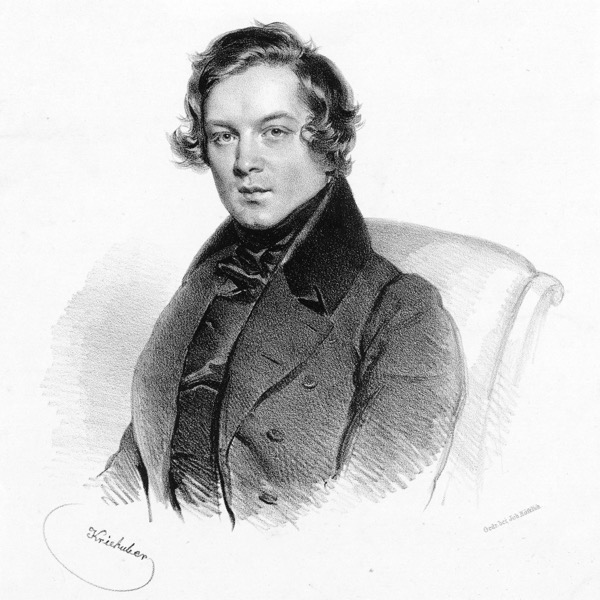
Robert Schumann (1839)
It is probably difficult to know exactly what Schumann was thinking at this stage, but I read that this set was originally dedicated to “Diotima.” So, who was Diotima? She is one of the most intriguing figures in ancient Greek thought, teaching Socrates all about the nature of love.
I’ve had to look it up, but Diotima looked at love as much more than romantic desire. It is the longing for beauty and virtue that gradually elevates us to the pursuit of wisdom. At the highest level, love is eternal and perfect in contemplation of Beauty itself.
Whatever we make of this, her ideas had enormous influence on philosophy and theology, and her teachings in Plato’s Symposium remain highly influential in discussions of love in Western thought.
Robert Schumann: 5 Gesänge der Frühe, Op. 133: No. 1. Im ruhigen Tempo (Burkard Schliessmann, piano)
Hölderlin’s Diotima
She has also inspired later artists and thinkers. For example, the German poet and novelist Friedrich Hölderlin named the beloved heroine of his novel Hyperion “Diotima,” transforming her into an idealised figure of beauty, love, and spiritual aspiration.
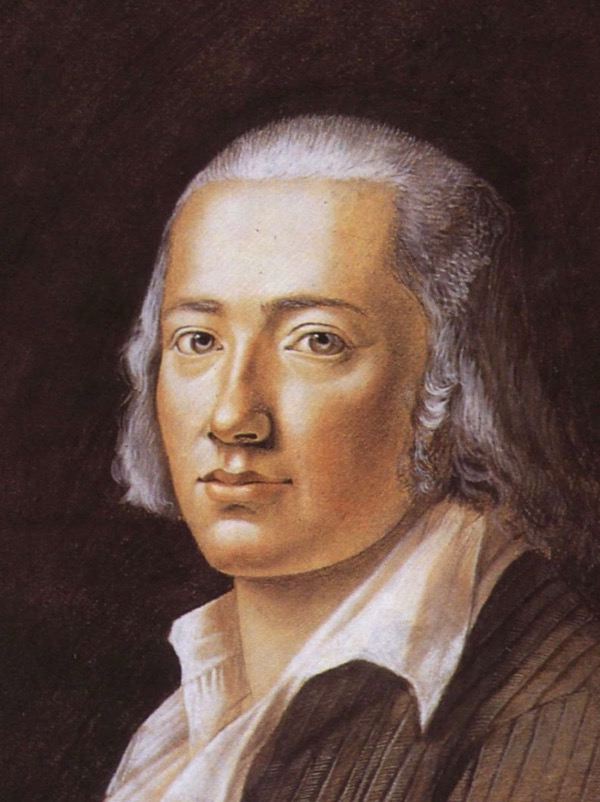
Friedrich Hölderlin (Pastell, 1792)
Schumann, as the son of a book dealer and probably the most widely read of all major composers, probably didn’t think of Plato, but of his favourite German poet and philosopher Friedrich Hölderlin, and specifically his novel Hyperion.
That novel is written as a series of letters from the protagonist Hyperion to his German friend Bellarmin, alongside a few letters between Hyperion and his love Diotima. The story, in brief, unfolds like this.
Hyperion is in love with Diotima, but he considers himself unworthy of her after becoming aware of his own deficiencies and dishonour. When Diotima dies of a broken heart before they can be reunited, Hyperion lives as a hermit in the Greek wilderness. His spiritual affection for Diotima eventually reveals to him the meaning of his own life.
Robert Schumann: 5 Gesänge der Frühe, Op. 133: No. 2. Belebt, nicht zu rasch (Burkard Schliessmann, piano)
From Diotima to Bettina
It is clearly a mystery whether Schumann was thinking of Diotima as a symbolic figure or whether he wanted to refer directly to Hölderlin’s poems. In his list of compositions, the “Songs of Dawn” are only referred to as “Diotima,” with the entire work composed between 15 and 18 October 1853, roughly four months before Schumann attempted suicide.
There is another mystery in this, as Schumann dropped the subtitle “An Diotima” and dedicated the work to Bettina von Arnim. She was the widow of Achim von Arnim and the sister of Clemens Brentano, collectors and editors of the hugely influential Des Knaben Wunderhorn.
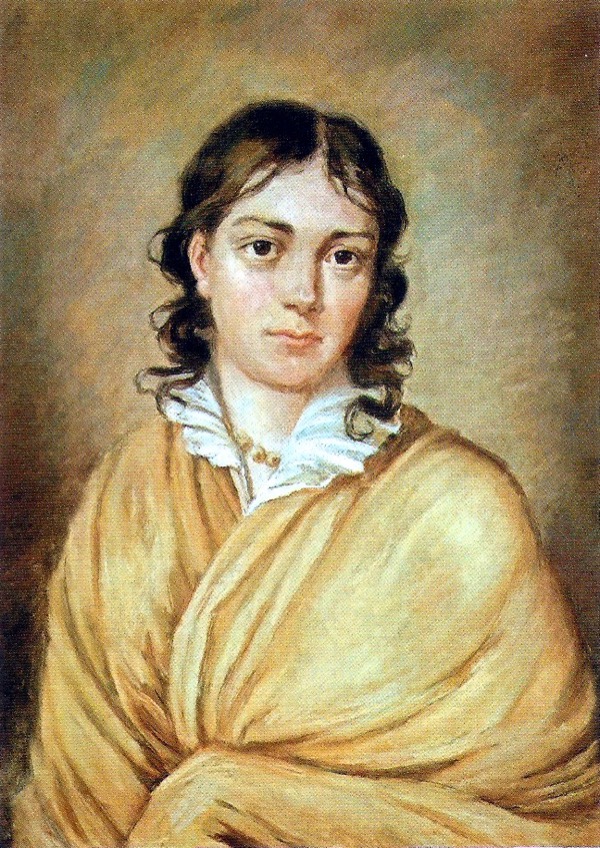
Bettina von Arnim
She was one of Beethoven’s muses, aroused the curiosity of Napoleon Bonaparte, and went for walks with Karl Marx. She also entertained a significant passion for Goethe, and both Schumann and Brahms dedicated songs to her.
Although she never wrote poetry, her writing outraged and fascinated people. She also composed music, and according to some, she was “a supreme muse, a one-woman literary movement, at once among the singular and most representative figures of the Romantic century.”
She didn’t like Clara Schumann’s performances as a pianist and always turned down Robert when he attempted to solicit contributions for his Neue Zeitschrift für Musik. But we do know that Bettina von Arnim, together with her daughter and Joseph Joachim, visited the Schumanns in Düsseldorf ten days after the “Songs of Dawn” were completed.
Bettina von Arnim also visited Schumann in Endenich in May 1855, having heard that Schumann was unhappy with his treatment at the asylum. Apparently, she later reported that the innovative regime to which Schumann was exposed was thoroughly unsatisfactory.
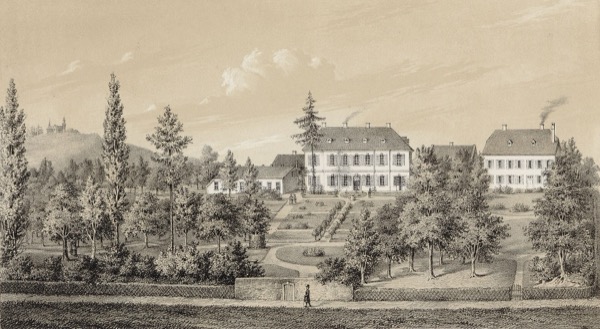
The Endenich maison de santé
Schumann was still working on the publication of Gesänge der Frühe in Endenich, and after von Arnim’s visit, he wrote to her. “I would be delighted if you, honoured lady, heard the Gesänge der Frühe from my Clara. She will also send you the songs. Would you grant me your favour for a long time to come?”
Clara Schumann, in turn, was deeply puzzled by the work. She wrote in her private diary that they were “quite original pieces again, but difficult to grasp; there is such a very strange mood in them.” She did play the cycle in private, but never included it in her public concert repertoire.
Robert Schumann: 5 Gesänge der Frühe, Op. 133: No. 3. Lebhaft (Burkard Schliessmann, piano)
Mystical Fusion
With all this context, it is still difficult to get a handle on this set. Frequently, writers attempt to project Schumann’s mental state onto the music, but all we can say with certainty is that it represents the style characteristic of Schumann’s last creative phase.
Personally, I very much like the idea of pianist Burkard Schliessmann, who released a recording of late Schumann pieces in 2024. Titled “Robert Schumann’s Poetics: Mystical Fusion,” he suggests that Gesänge der Frühe is held together by a subtle network of thematic reminiscences and transformations, with the third piece functioning as the cycle’s expressive centre.
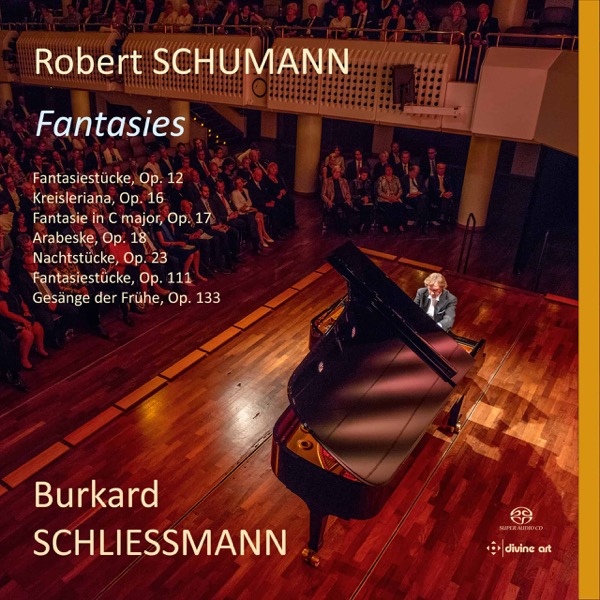
Robert Schumann: Fantasies (Burkard Schliessmann)
Schliessmann finds that the entire set is based on a single core motif, which is introduced in unison at the beginning. Individual movements don’t feature poetic inscriptions, certainly not in their published form. Rather, they feature simple tempo indications. The opening “In a tranquil tempo” opens almost like a chorale, but with plenty of dissonant intervals tossed in.
“Animated, not too quick,” is almost completely contrapuntal and “Lively,” the central and most virtuosic movement of the set, has a constant galloping rhythmic drive. “With motion” features a cascading accompaniment, which renders the music restless and agitated. “First tranquil, then moving in tempo,” returns us to the character and sonority of the first movement.
Robert Schumann: 5 Gesänge der Frühe, Op. 133: No. 4. Bewegt (Burkard Schliessmann, piano)
A Beautiful Mystery
This brings us to a difficult question to which I have no answer. Do we read Gesänge der Frühe in terms of Diotima, Hölderlin’s Hyperion, or in the context of Bettina von Arnim? We must also consider Schumann’s fragile mental state, and what we are left with is probably best summarised by Schliessmann. “The difficult accessibility of this complex work has led many pianists to give this opus a wide berth.”
Like everything Schumann wrote for the piano, Gesänge der Frühe does not readily give up its secrets. It’s this beautiful world of shifting shadows and fleeting glimpses, and I am not really sure it matters whether we know exactly what Schumann intended. To be invited into this most private space may be what matters most.
For more of the best in classical music, sign up for our E-Newsletter
Robert Schumann: 5 Gesänge der Frühe, Op. 133: No. 5. Im Anfange ruhiges, im Verlauf bewegteres Tempo (Burkard Schliessmann, piano)