What is the most iconic work by Antonio Vivaldi (1678-1741)? That’s easy, as just about everybody knows his Four Seasons. What makes these four concertos special is the accompanying descriptive sonnets, which provide the poetic narrative.
Yet, beyond the composition of the Four Seasons and hundreds of concertos for various instruments, Vivaldi also composed nearly fifty operas. These works are less celebrated today, but to commemorate Vivaldi’s death on 28 July 1741, let us feature 10 of his most beloved opera arias.
Antonio Vivaldi: Il Giustino, “Vedrò con mio diletto”
“Vedrò con mio diletto”
Antonio Vivaldi composed his opera Il Giustino in 1724 for the carnival season in Rome. The plot is set in Byzantium and follows a humble peasant who becomes drawn into imperial intrigue after saving members of the royal court.
Many love entanglements later, and with the growing threat from the tyrant of Asia Minor, Giustino, with help from the Goddess Fortune, overthrows the tyrant and is rewarded with high status.
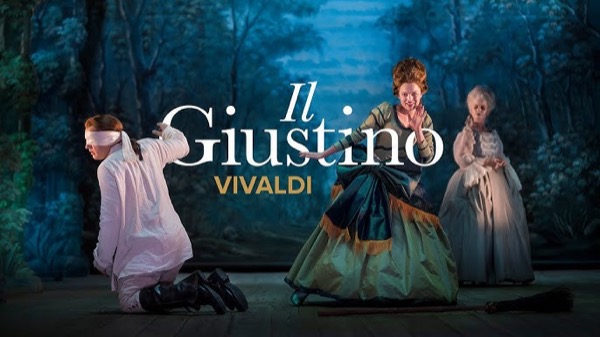
Vivaldi: Il Giustino
The aria “Vedrò con mio diletto” is sung by the Byzantine emperor Anastasio when he is separated from Empress Arianna. He is confident that he will see her again, and Vivaldi composed one of his most beautiful love arias. Full of tender lyricism, the aria has become a recital piece today, and various countertenors and contraltos have made recordings.
Antonio Vivaldi: Griselda, “Agitata da due venti”
“Agitata da due venti”
The celebrated Venetian playwright Carlo Goldoni and Antonio Vivaldi collaborated on Griselda, first performed in Venice in 1735. At the heart of the story is a poor shepherdess married to King Gualtiero of Thessaly.
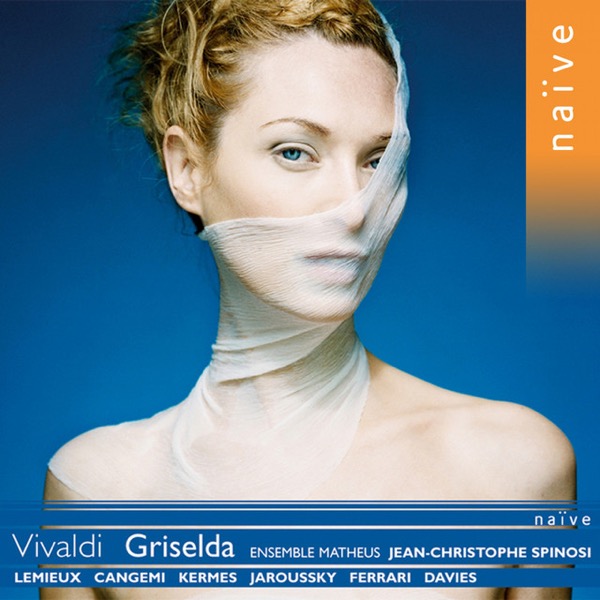
Vivaldi: Griselda
The king secretly sends away their daughter and forces his wife into exile to test her loyalty. What follows is a series of trials involving mistaken identities, forced engagements, and court intrigue. When Griselda’s virtue is proven, she is restored as queen, and all complications untangle.
The famous aria “Agitata da due venti” belongs to Constanza, the couple’s daughter. Caught in a political marriage arrangement while being in love with another man, this fiery coloratura showpiece compares the conflicting emotions of being torn between duty and love.
Antonio Vivaldi: L’Olimpiade, “Siam navi all’onde algenti”
“Siam navi all’onde algenti”
Shall we continue with another storm-tossed aria about human passions sailing like ships on stormy seas? L’Olimpiade, to a libretto by Pietro Metastasio and music by Antonio Vivaldi, premiered in Venice in 1734.

Vivaldi: L’Olimpiade
Set during the Olympic Games in ancient times, the story follows Megacles as he enters the games under his friend Lycidas’ name. This sets off a chain of mistaken identities and conflicting loves. After the deception is exposed and tragedy unfolds, the truth is ultimately revealed. Reconciliation follows, and as the lovers are properly united, all is forgiven.
“Siam navi all’onde algenti” is sung by Aminta and compares people to ships tossed on stormy seas. The famous aria is a philosophical reflection that briefly steps outside the direct action of a love triangle. Vivaldi already knew that reason struggles to control passion.
Antonio Vivaldi: Farnace, “Gelido ogni vena”
“Gelido ogni vena”
Vivaldi’s opera Farnace, based on various earlier libretti, was first performed in 1727 in Venice. The opera tells an imagined story involving Pharnaces II of Pontus, King of the Bosporan and Pontus Kingdoms.
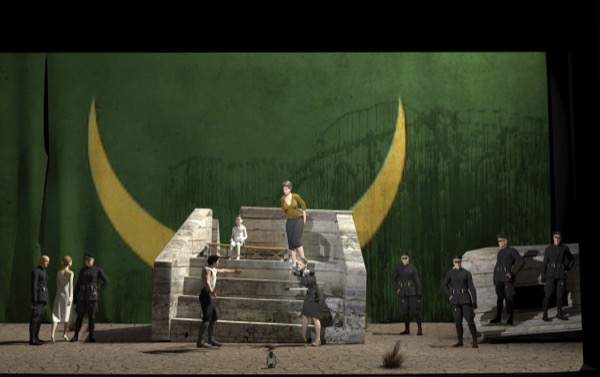
Vivaldi: Farnace
Defeated in battle, Farnace does not want to fall into his enemy’s hands. He orders his wife, Tamiri, to kill their son and then herself. Then it gets complicated as Berenice, Tamiri’s mother, hates Farnace and wants him killed. Then Farnace’s sister is taken captive, but everybody falls in love with her, and she plays them off in an attempt to save her brother. Somehow it all ends happily.
One of Vivaldi’s most famous despair arias, “Gelido ogni vena”, is sung by Tamiri, who believes that her child has been killed. The music expresses total emotional collapse, as “every vein is frozen” from grief and sorrow.
Antonio Vivaldi: Orlando furioso, “Sorge l’irato nembo”
“Sorge l’irato nembo”
Vivaldi’s opera Orlando furioso was first performed in Venice in 1727. It is based on an epic poem by Ludovico Ariosto, which details the exploits of the hero Orlando and the tale of the sorceress Alcina.
It’s a complicated story, but the shipwrecked Medoro is reunited with his beloved Angelica in a magical garden. The sorceress Alcina tricks the jealous Orlando into believing that Medoro is her brother.
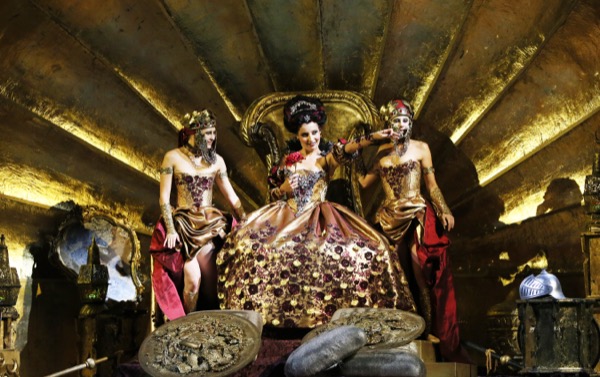
Vivaldi: Orlando furioso
Meanwhile, Alcina seduces Ruggiero with magic, making him forget his true love, Bradamante, but Bradamante breaks the spell. When Angelica marries Medoro, Orlando goes mad with rage, but all together they destroy the temple of Hecate, Alcina’s source of power.
Orlando’s jealous rage is expressed in the famous aria “Sorge l’irato nembo,” right after he discovers the carved love vows of Angelica and Medoro in a tree. What a fantastic musical depiction of Orlando’s fury as he descends into madness.
Antonio Vivaldi: Il Giustino, “Sento in seno”
“Sento in seno”
We know that one of Vivaldi’s most poignant laments, “Sento in seno,” comes from his opera Il Giustino. However, it actually originated in an opera called Tieteberga, first performed in Venice in 1717. The vast majority of the music has been lost, leaving only a handful of surviving arias.
The plot is based on the medieval story of Queen Tieteberga and King Lotario, and centres on Lotario’s attempt to discredit his wife in order to marry his lover Valdrada. Tieteberga is accused of an incestuous relationship with her brother Ercinio, and after plenty of intrigue, the story reaches a happy operatic resolution.
When the aria resurfaced in Il Giustino, it appears when Anastasio believes that Arianna has been carried away by a sea monster. Overwhelmed by grief, he sings a deeply personal lament, knowing that weeping won’t restore Arianna or diminish the pain of separation.
Antonio Vivaldi: Griselda, “Dopo un’orrida procella”
“Dopo un’orrida procella”
Throughout Griselda, Costanza, the daughter of Griselda and Gualtiero, has been torn between filial duty and her love for Roberto. She had also been aggressively pursued by Ottone while being caught in Gualtiero’s cruel tests of Griselda’s honour.
In the final act, misunderstandings are resolved, and Costanza finally sees the prospect of being reunited with Roberto.
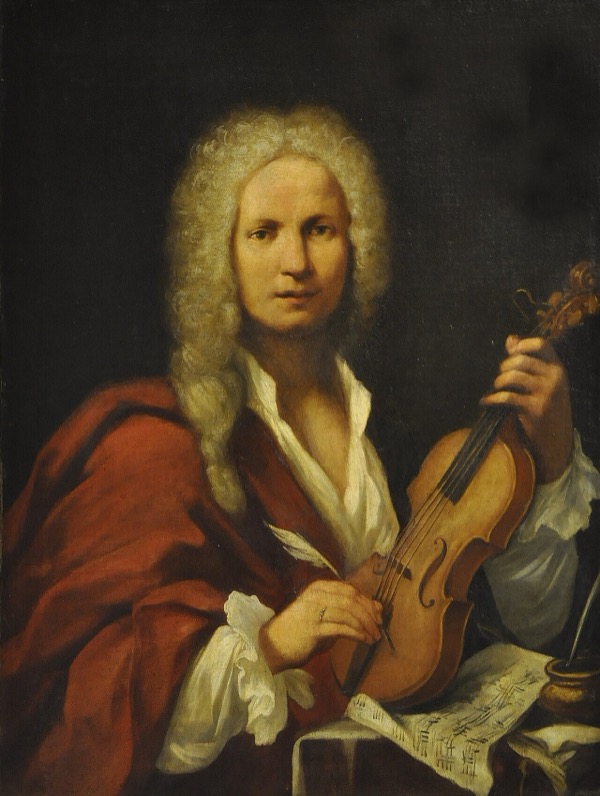
Antonio Vivaldi (Museo internazionale e biblioteca della musica, Bologna)
The aria “Dopo un’orrida procella” (After a dreadful storm, the sky shines more beautiful and clear) captures Costanza’s emotional state. It moves from anguish and uncertainty to the anticipation of a joyful resolution. Dazzling coloratura and snappy rhythms reinforce an exhilarating moment leading to a happy ending.
Antonio Vivaldi: Juditha triumphans, “Armatae face et anguibus”
“Armatae face et anguibus”
Juditha triumphans was commissioned to celebrate the victory of the Republic of Venice over the Turks during the siege of Corfu. It’s not an opera by Vivaldi, but an oratorio celebrating Judith’s victory over the barbarian Holofernes.
Oratorios are based on biblical stories and are not staged, but they also have wonderful and exciting arias. The story is well known: the Assyrian general Holofernes demands overdue tribute from Israel. The young Jewish widow Judith begs for mercy, and he falls in love with her. When Holofernes falls asleep after drinking too much wine, Judith beheads him and returns victorious.
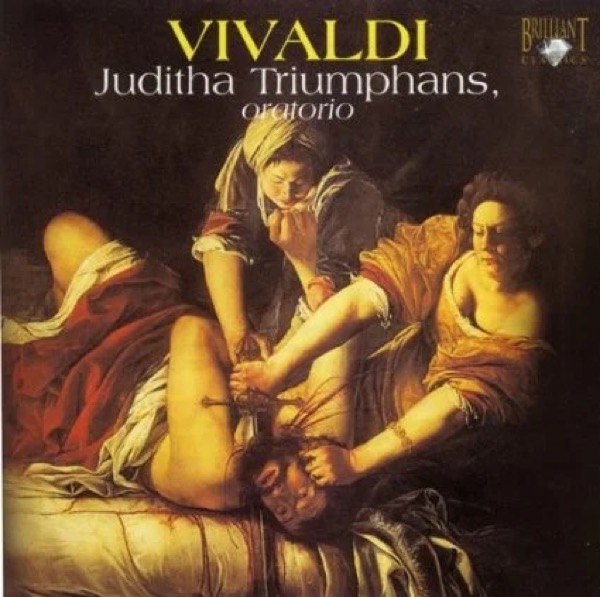
Vivaldi: Juditha triumphans
“Armatae face et anguibus” is sung by Vagaus, the eunuch attendant of Holofernes, immediately following the discovery of the beheaded Holofernes. Predictably, he is overcome with horror and grief, calling on the furies to punish the perpetrator. It’s the most dramatic aria in the oratorio, with vivid orchestral writing describing his hysterical state.
Antonio Vivaldi: La Fida Ninfa, “Il mio core a chi la diede”
“Il mio core a chi la diede”
The opera La fida ninfa was first performed in Verona in 1732. The story is set on the island of Naxos, where pirates had abducted the nymph Licori during childhood. As an adult, Licori and her beloved Osmino struggle against jealous rivals and mistaken identities.
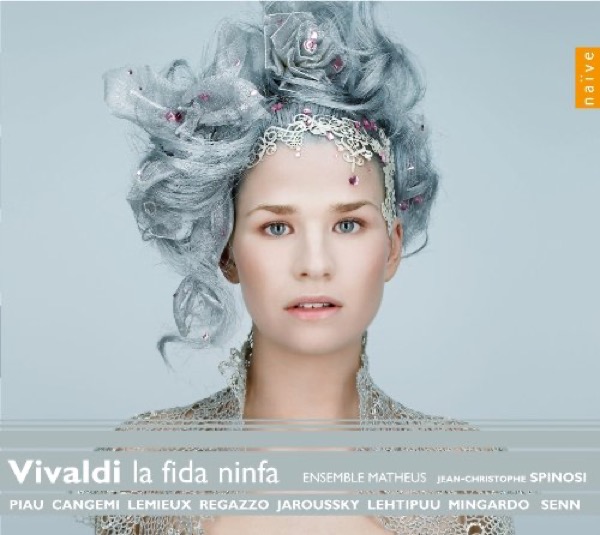
Vivaldi: La fida ninfa
Finally, Licori’s true origins are discovered, estranged family members are reunited, and faithful love is rewarded with a joyful ending. At the beginning of Act II, Licori believes that her first love has been lost forever, yet she remains faithful to his memory.
With “Il mio core a chi la diede,” Vivaldi composed one of his most tender and introspective arias. There is no dazzling virtuosity, but a cantabile style of graceful phrases and long vocal lines.
“Sposa, son disprezzata”
Let’s conclude this blog on the 10 most beloved Vivaldi arias with a piece that wasn’t actually composed by him. The famous “Sposa, son disprezzata” was composed by Geminiano Giacomelli for his opera La Merope in 1734.
Vivaldi subsequently incorporated the music, with a different text, into his 1735 pasticcio opera Il Bajazet (Il Tamerlano). In Vivaldi’s version, the aria is sung by Irene, the Princess of Trebizond. When the conqueror Tamerlano arrives, he pursues Asteria instead, and Irene finds herself humiliated. All her anguish pours out in one of the most heart-rending laments of the Baroque.

Vivaldi: Il Bajazet
Vivaldi painted nature in sound in his famous Four Seasons, and he portrayed the storms and sunshine of the human heart in his operas. The ten featured arias are only a taste of the riches found in his nearly fifty operas. Vivaldi captured the full spectrum of human emotions, and a new wave of brilliant countertenors is bringing these jewels back to life.
For more of the best in classical music, sign up for our E-Newsletter