
You may not know the name of pianist Magda Tagliaferro, but after hearing her play, you will remember it forever.
She was an extraordinary pianist and musician who came of age with some of the greatest French composers of the twentieth century.
She also continued performing their works into her nineties, making her an invaluable link between the past and present.
Today, we’re looking at the life and career of the incredible Magda Tagliaferro.
Magda Tagliaferro’s Family and Early Training
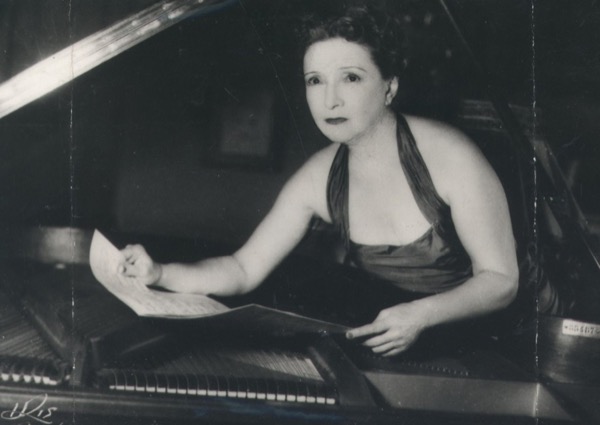
Magda Tagliaferro
Magda Tagliaferro was born Magdalena Maria Yvonne Tagliaferro on 19 January 1893 in Petrópolis, Brazil, seventy kilometres from Rio de Janeiro.
Her family was French-Italian. Her father was a voice and piano professor who had studied under pianist Raoul Pugno in Paris and taken a position teaching at the São Paulo Conservatory.
He began teaching his talented daughter piano when she was around three years old. She gave her first public performance when she was nine, playing a Mozart piano concerto.
In 1904, Pablo Casals toured Brazil and stopped in São Paulo. Eleven-year-old Magda played for him. Casals was so impressed that he urged her parents to take her to study in Paris.
They crossed the Atlantic, and her father reconnected with Raoul Pugno. His daughter was accepted into the Conservatoire.
Life at the Conservatoire
Tagliaferro entered the studio of Antonin Marmontel, one of the most notable professors in the history of the Paris Conservatoire. He taught Isaac Albéniz, Georges Bizet, Claude Debussy, and Vincent d’Indy, among many others.
Debussy’s L’Isle Joyeuse
She formally enrolled at the Conservatoire in 1906 and just eight months later won a prestigious Premier Prix.
No less than Camille Saint-Saëns himself handed her the award at the ceremony. (Decades later, she would go on to make an electric recording of his fifth piano concerto.)
Fellow Marmontel pupil Isaac Albéniz was also on the jury. He described her as an “exceptionally gifted, remarkable technician, already an artist and one with an enviable future.”
Touring With Fauré
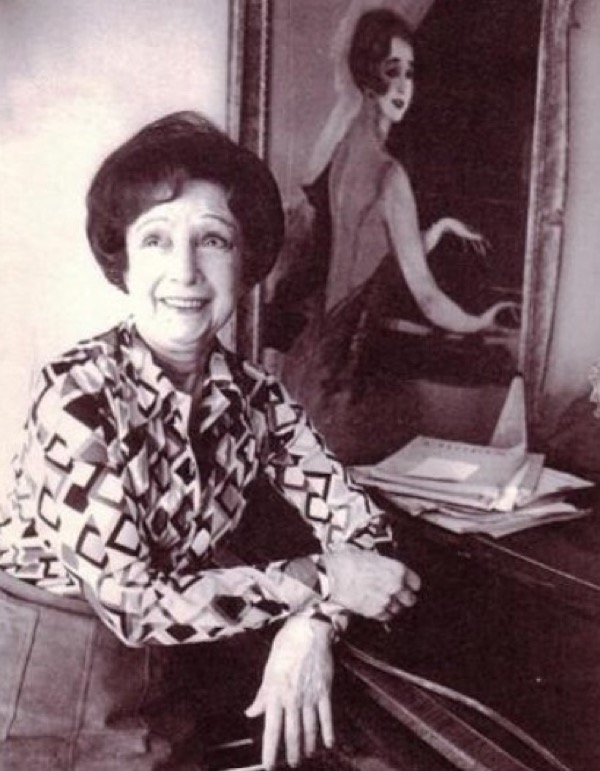
Magda Tagliaferro
Composer and pianist Gabriel Fauré, who was at that time the director of the Conservatoire, was so impressed with her that he invited her to tour with him.
She later told the New York Times:
One day, Fauré called me into his office. There he sat, with his mane of white hair and that wonderful, saintly face. He asked that I play something for him. I played Chopin‘s Third Ballade, and he seemed quite pleased.
He then handed me a sheaf of his own music, saying, “Choose one of these works, study it and come back and play it for me.”
I worked on his Fourth Nocturne, and when I played it for him, he invited me to go on a small tour that he had organised. There was a singer, a violinist and myself.
Fauré accompanied the singer and the violinist in his own works, and at the conclusion, he and I performed his Ballade for Piano and Orchestra on two pianos. I played the piano part and Fauré the orchestral transcription. It was an incredible experience for a girl of 15!
Fauré’s Ballade
Befriending Cortot
In 1907, her father died, leaving her and her mother, in her words, “alone and penniless.” She began supporting herself by concertizing and touring when she was just a teenager.
Even though she was no longer formally enrolled at the Conservatoire, she continued her studies with pianist Alfred Cortot. He would prove to be the teacher – and dear friend – who most shaped her extraordinary musicianship.
She later claimed that Cortot fell in love with her and wanted to marry her.
When she turned him down, he suggested that she marry Casals. His reasoning? He’d still be able to see her, since the Cortot-Thibaud-Casals piano trio was one of the most celebrated chamber ensembles of the era, and it toured internationally.
According to legend, she turned Casals down after he claimed he wanted to have twenty children, like Bach.
Instead, she became their dear friend (and tennis partner), an arrangement that suited them all nicely in the end.
She ended up entering into an ill-fated marriage with a man she chose not to name, saying in a 1979 New York Times interview, “I entered into an unhappy marriage with a widower who was quite a bit older than I. Ultimately, I was able to divorce him, and I was finally free.”
Promoting Her Composer Friends
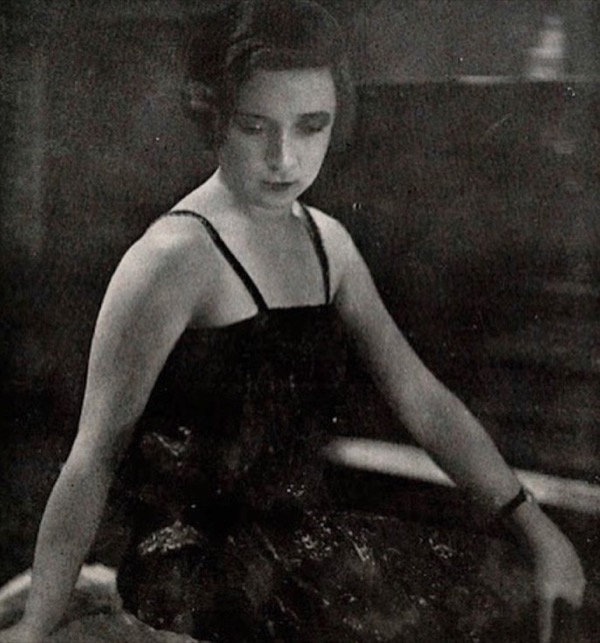
Magda Tagliaferro
During her career, she made it a mission to perform the music of the incredible composers who were part of her social circle: Saint-Saëns, Gabriel Fauré, Maurice Ravel, Francis Poulenc, Jean Rivier, Gabriel Pierné, and others.
In 1929, fellow Brazilian Heitor Villa-Lobos wrote a fantasy for her called Momoprecoce for piano and orchestra, a portrait of the season of Carnival as seen through the eyes of a child. She premiered it in Amsterdam that year under conductor Pierre Monteux.
Playing music by Reynaldo Hahn, 1932
She also became dear friends with composer Reynaldo Hahn, who counted her as his favourite pianist.
Hahn was a French composer who, like Tagliaferro, had been born in South America before returning to France as a prodigiously talented young person.
We don’t hear his music often nowadays, but around the turn of the century, he was an important figure in fin-de-siècle Parisian society, being the former lover of Proust and actor Guy Ferrant.
Reynaldo Hahn: Piano Concerto in E Major (Magda Tagliaferro, piano; Paris Conservatoire Orchestra; Reynaldo Hahn, cond.)
He wrote his 1930 piano concerto for her, and she premiered it under his baton. He convinced her to record it with him, and it became the favourite recording she ever made.
Her career was hitting a high point. In 1928, she was made a Chevalier of the Légion d’honneur, the youngest woman to ever receive this honour.
Becoming a Professor
Chopin’s Piano Sonata No. 3
In 1937, she served on the jury of the International Chopin Piano Competition. She was so inspired by the competitors that after she returned home, she embarked on relearning all of Chopin’s works, incorporating the new ideas she’d picked up from seeing so many performances.
That same year, she also began teaching at the Paris Conservatoire. She excelled in her new role. By the end of the school year, every one of her pupils won a prize.
She was just settling into life as a teacher when World War II broke out.
Life During World War II
In 1940, she toured the United States. She made her recital debut at Town Hall and her New York Philharmonic debut at Carnegie Hall, performing the Robert Schumann piano concerto under Sir John Barbirolli.
She was received warmly, but, to her disappointment, logistics would keep her from returning to America for a number of decades.
While she was away, in June 1940, the Nazis took Paris. She asked the French ambassador if she could return home. After months of delays, he replied to her, “Yes” – as long as she didn’t mind playing for the Germans. She chose not to return to France during the war.
She also married a second time in 1940. As she related the story decades later to the New York Times:
We were together 29 years, but this marriage was also a failure.
You see, this man, who was highly musical and intelligent, managed my career. But he also managed to ruin me financially, and I was left with an enormous amount of debts, incurred by him. In 1969, I left him, and shortly thereafter, he died.
Quelle histoire!
Rebuilding Her Career
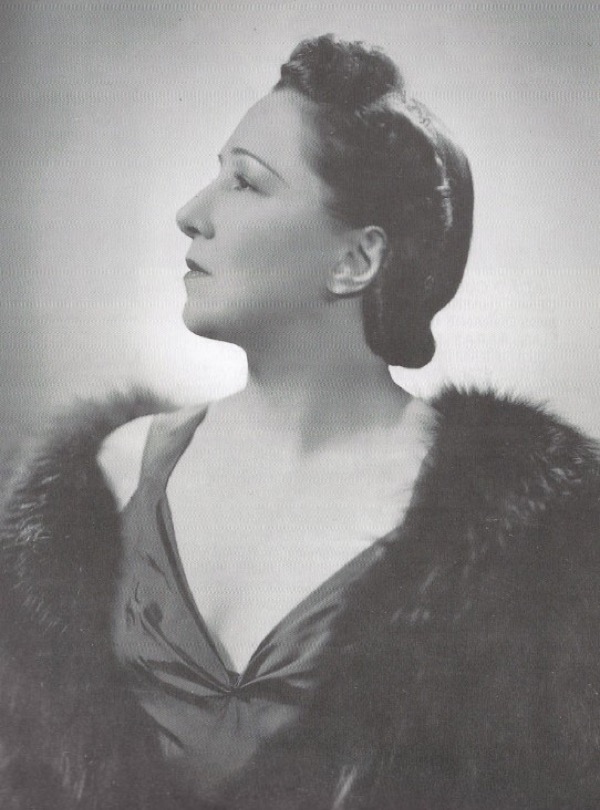
Magda Tagliaferro
After 1949, she began splitting her time between France and Brazil.
She spent the following decades increasingly focused on teaching, founding music schools in Paris, Rio de Janeiro, and São Paulo, and continuing to teach at the Paris Conservatoire.
She also created her own international piano competition.
Meanwhile, she continued serving on the juries of the Chopin Competition, overseeing the successes of pianists like Vladimir Ashkenazy, Maurizio Pollini, and Martha Argerich.
In 1979, she wrote and published a memoir titled Quase Tudo (Almost Everything). Unfortunately, it has never been translated into English.
Late-Career Renaissance
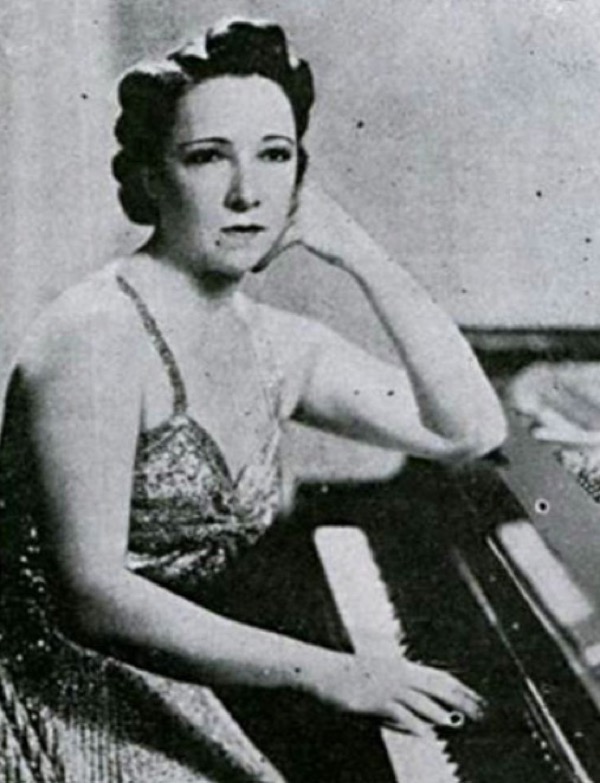
Magda Tagliaferro
In 1978, she gave a recital in Paris that Harold C. Schonberg, the music critic at the New York Times, happened to attend. He was impressed by her playing and wrote about it.
An impresario reached out, and she found herself booked to return to Carnegie Hall in 1979. She was eighty-six years old.
She told the New York Times in a pre-recital interview:
When I play, I am possessed — possessed by the magic of the music I perform.
It’s true I have reached an advanced age, but I have the age that music gives me, which means that I feel ageless.
I have small hands. Sometimes I miss a few notes. But then, I missed notes when I was 15! After all, giving a concert means taking risks. Some notes will not be struck, but it doesn’t really affect the music if one knows what one is doing.
And besides, we are not machines. We are human beings!
Her recital was a triumph.
Chopin’s Nocturne, Op. 27, No. 2
Tagliaferro’s Death and Legacy
Amazingly, Tagliaferro continued giving extraordinarily accomplished performances into her nineties.
She died in September 1986. She was 93 years old.
Late in life, in her autobiography, she summed up her philosophy this way:
I’m going to offer myself up entirely and with humility. My life has all been Love, in the widest sense of the word. Everything I have created within or around me has been created with Love. Which is better? To love or to be loved? Never one to be satisfied, I have always needed both!
For more of the best in classical music, sign up for our E-Newsletter





I am seeking more information. A French woman pianist, a recognized expert of Schoenberg, performed at Carnegie Hall. The last piece she secretly improvised. The secret became public and she admitted to her achievement that had been greatly appreciated by the strongest critics.