During the twentieth century, the composition of classical music became an unexpected but vital means of political resistance.
As fascist and totalitarian regimes spread across Europe, composers faced censorship, persecution, exile, and, in some cases, death.
But rather than retreating into silence, many composers responded by transforming their symphonies and songs into acts of defiance.
Written everywhere from prewar France to besieged Leningrad, from Hollywood exile to Nazi concentration camps, these five pieces show how composers used music to grapple with war, tyranny, and moral collapse.
They stand as enduring musical responses to fascism – and as important reminders of how art can bear powerful and peaceful witness when history turns violent.
Elsa Barraine – Symphony No. 2 (1938)
French composer Elsa Barraine (1910–1999) grew up amidst rising European fascism, becoming an outspoken leftist.
After winning the prestigious Prix de Rome prize in 1929, she studied in Mussolini’s Italy, an experience that helped to shape and confirm her political convictions. When she returned to France, she recognised the growing threat of Nazism in Germany – especially since she was of both Catholic and Jewish parentage.
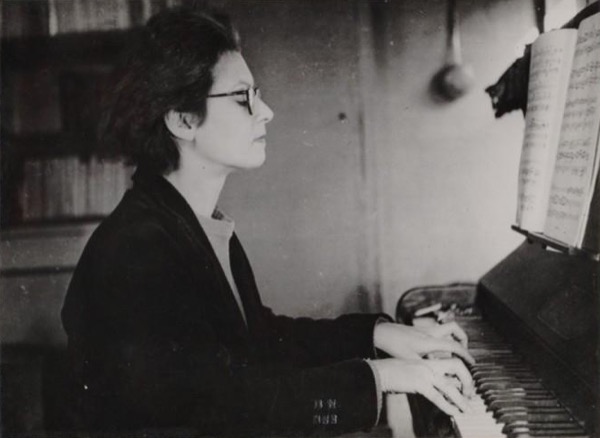
Elsa Barraine
In 1933, Barraine wrote a symphonic poem inspired by André Spire’s text Pogromes, which features the voice of Jewish elders counselling the acceptance of fate when confronted by inescapable destruction.
By 1938, with war looming, she composed her Symphony No. 2, subtitled Voïna (Russian for “war”). This large-scale three-movement work channels the anxiety and horror of the time.
The first movement features a mood of unsettled, restless anguish. The second movement is a sinister funeral march. The third grimly attempts to summon a mood of frivolity – and, uneasily, succeeds.
Barraine herself implied a programmatic arc of “war, death [and] then the end of the nightmare” across the symphony’s three movements.
The symphony became Barraine’s statement of resistance: a French woman repurposing a traditional genre often associated with German composers, describing the catastrophe she rightly sensed was imminent.
Dmitri Shostakovich – Symphony No. 7 (1941)
Dmitri Shostakovich composed his Seventh Symphony – nicknamed the “Leningrad” – during the siege of Leningrad in World War II.
When Nazi Germany invaded the Soviet Union in 1941, Shostakovich began work in Leningrad, eventually completing the score in exile in Samara.
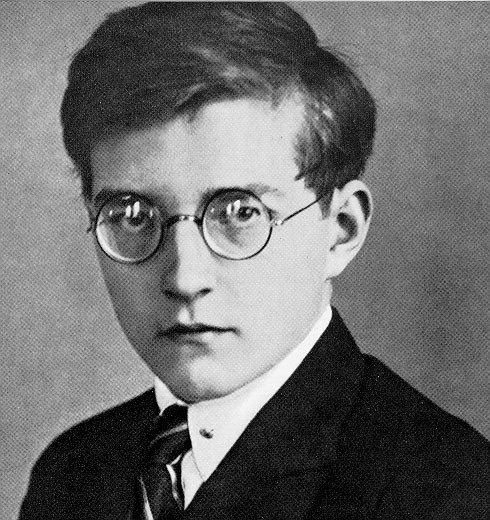
Dmitri Shostakovich, 1925
The symphony’s first Leningrad performance on 9 August 1942 – played by an orchestra of starving musicians, and broadcast via loudspeaker across the city and onto the battle lines – became an act of collective resistance.
From the outset, the “Leningrad” was hailed as a symbol of Soviet defiance, but it has also taken on other meanings over the years. Some interpretations read it as anti-dictatorship generally and even, perhaps, anti-Soviet.
Although on its surface the symphony is powerfully nationalist, according to later (and admittedly disputed) testimony, Shostakovich told friends it was “not only about fascism but about our country… [about] tyranny and totalitarianism.”
In other words, while the Seventh Symphony rallied listeners against Hitler’s aggression, it was also secretly meant to be a veiled critique of the horrors and repression under Stalin.
Whether that’s true or not, the music served both as wartime propaganda and as a wider commentary on the dangers of totalitarian rule generally.
Hanns Eisler – Hollywood Liederbuch (1942–1943)
Austrian composer Hanns Eisler (1898–1962) fled his homeland in 1933 and spent the next few years in exile, mainly in the United States. There, Eisler and playwright and poet Bertolt Brecht joined an émigré circle of artists determined to push back against Nazism.
Even as he was making a new life in California, Eisler was still distressed by and processing the political turmoil in Europe.
Between 1942 and 1943, he compiled the Hollywood Liederbuch (Hollywood Songbook), a song cycle of melodies set mostly to Brecht’s poems.
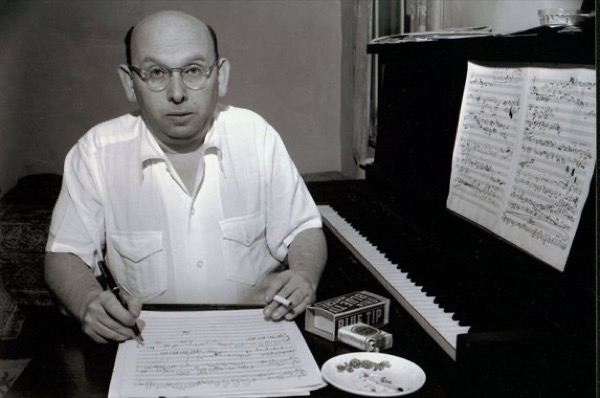
Hanns Eisler
The poems and music oscillate from light-hearted irony to grim expressionism, all centered on two themes: the loneliness of the refugee and the evil of Nazism.
For example, one song, “An den kleinen Radioapparat,” is sung by a German exile to his radio, still tuned to Nazi broadcasts that haunt him.
The Hollywood Liederbuch became Eisler’s deeply personal musical documentation of the alienation and intense personal grief that happens so frequently under fascism.
Viktor Ullmann – Der Kaiser von Atlantis (1943)
Viktor Ullmann (1898–1944), an Austrian-Jewish composer, wrote the one-act opera Der Kaiser von Atlantis oder Die Tod-Verweigerung (“The Emperor of Atlantis or The Refusal of Death”) in 1943 with poet Peter Kien.
Written in the Theresienstadt concentration camp, the opera is a satirical allegory of fascist power.
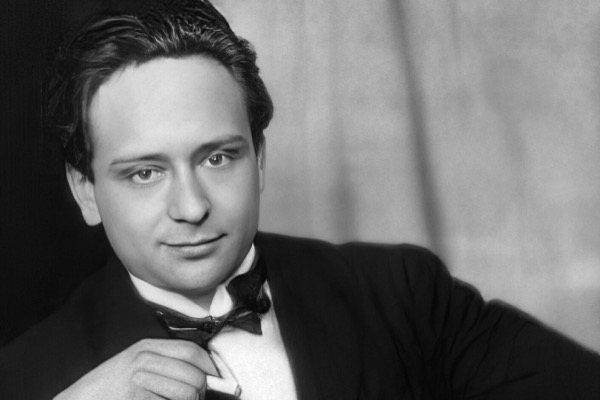
Viktor Ullmann
In the opera, two characters – Death personified and Harlequin, who represents life – are purposeless. Both exist in the Kingdom of Atlantis under the rule of Kaiser Overall, who is a thinly veiled stand-in for Hitler.
The Kaiser’s blase attitude toward life and death has resulted, paradoxically, in the cessation of living and dying. Realising this means he can wage war for as long as he’d like with no casualties, the Kaiser announces endless war – but since nobody can die, the result is a kind of tortured purgatory. Finally, Death offers a bargain to the Kaiser: he will kill if the Kaiser recognises the importance of death and sacrifices himself first.
The Nazis themselves quickly banned the piece. It was never staged in the camp, and Ullmann would soon be deported to Auschwitz and murdered.
However, miraculously, the opera survived, becoming a bold artistic indictment of Nazi brutality and the absurdity of fascist violence.
Arnold Schoenberg – A Survivor from Warsaw (1947)
In the aftermath of World War II, Arnold Schoenberg (1874–1951) – an Austrian-born Jewish composer who by that point was exiled in Los Angeles – set his eyes on commemorating the Holocaust.
In 1947, he composed A Survivor from Warsaw, a dramatic cantata for speaker, men’s chorus, and orchestra.
Its narrative is terse and horrific: a beleaguered elderly survivor in a concentration camp recounts how inmates are forced at gunpoint to line up for a roll call. When the sick and slow cannot keep pace, the guards scream them down.
The climax occurs as the old man remembers that, as a final act of defiance, the prisoners spontaneously burst into singing the Shema Yisrael – a traditional Jewish prayer – until guns were trained on the cantor.
Schoenberg set this scene to intense, atonal music culminating in a radiant choral Shema, ensuring that the victims and their sacred song are the last voice heard.
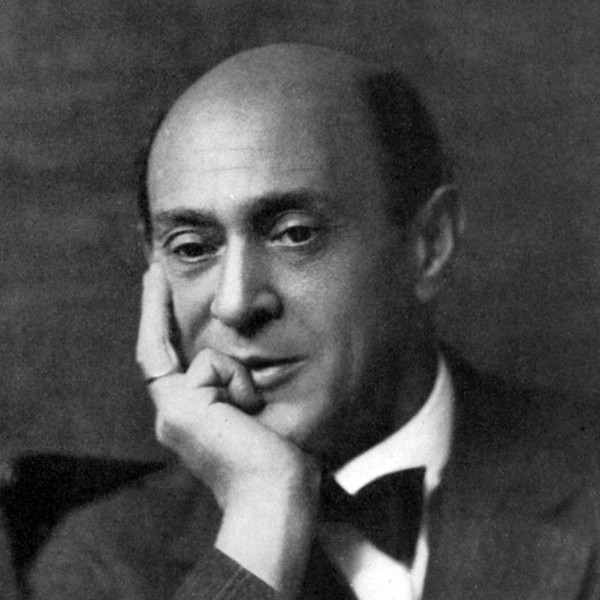
Arnold Schoenberg
In this work, Schoenberg used his music to bear witness to the fascist atrocities of the 1930s and 1940s. The final Hebrew prayer asserts the continuity of Jewish tradition and resistance under terror.
The work became one of the great musical monuments to resilience in the face of fascism, and remains one of the 20th century’s most direct musical condemnations of the horrors of totalitarianism.
Conclusion
Taken together, these works reveal a century in which classical music became a veritable moral battleground. They remind us that resistance to fascism didn’t always take the form of protests; sometimes it emerged in music.
Each composer responded from a different political and personal position, but each one believed that music didn’t have to – or maybe couldn’t – remain neutral in the face of totalitarian violence.
Today, these compositions are urgent warnings. They show how classical music, often thought of as an apolitical or abstract art form, has repeatedly engaged with the most extreme realities of power and oppression.
In listening to them now, we are not only hearing the past: we’re confronting the ethical responsibilities of making art in times of political crisis – a matter that is all too relevant in an era of increasing censorship and rising worldwide authoritarianism.
For more of the best in classical music, sign up for our E-Newsletter