Throughout the history of classical music, composers have written countless pieces of music that touch on themes of loneliness: abandonment, exile, grief, betrayal, and otherwise solitary experiences.
Today, we’re looking at eight pieces of classical music that embody a feeling of loneliness…whether because of the work’s subject matter, the life experience of the composer during the time of its composition, or the effect of the music itself.
Purcell – Dido’s Lament from Dido and Aeneas (1689)
In Purcell‘s opera Dido and Aeneas, Dido, the queen of Carthage, falls in love with Aeneas.
However, his fate is not to stay with her; it is to be the first hero of the Roman people; therefore, he must leave her.
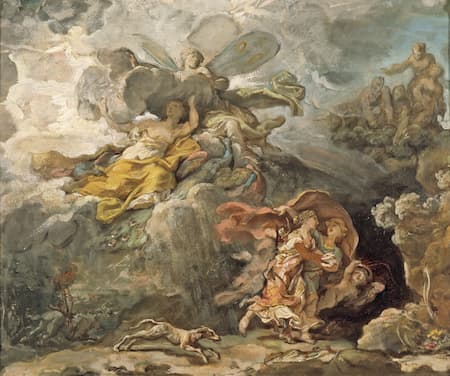
Restout: Aeneas and Dido Fleeing the Storm, ca 1772-1774 (Los Angeles County Museum of Art)
Dido feels she cannot live without Aeneas. She decides she will stab herself just before Aeneas’s ships leave the harbour, and have her body burned on a pyre. Its smoke will signal her grim fate to her lover.
As Dido prepares for death, Purcell employs a heartbreaking descending figure in the bass: an ancient musical pattern used to portray grief, in part because the shape of the phrase resembles tears running down a cheek.
Even after three-plus centuries, Dido’s lament hits hard as a portrait of emotional abandonment and loneliness as she sings, “When I am laid in earth, may my wrongs create no trouble in thy breast; remember me, but forget my fate.”
Schubert – “Der Leiermann” from Winterreise (1827)
Few works capture the feeling of isolation like the final song of Winterreise.
In his Winterreise song cycle, Schubert set 24 poems by the poet Wilhelm Müller, depicting a rejected lover wandering through a frozen landscape.
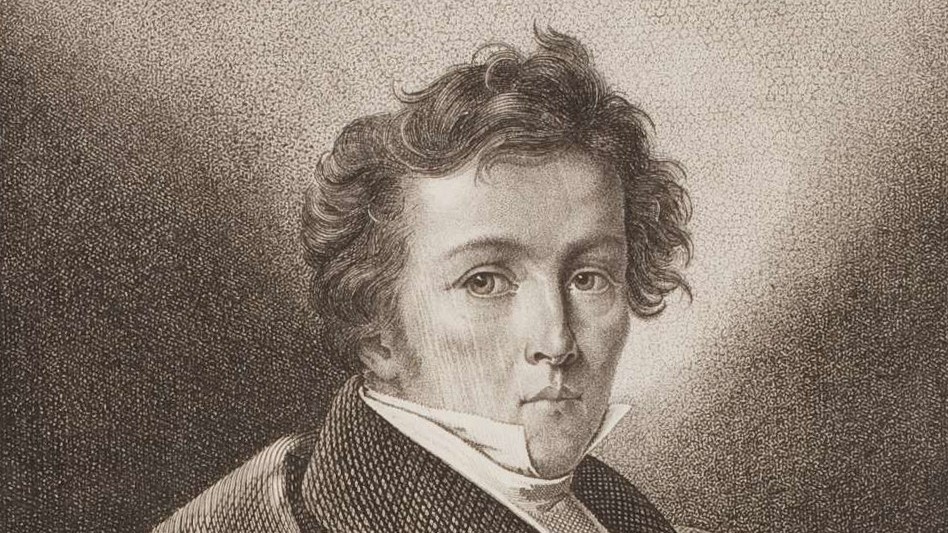
Wilhelm Müller
“Der Leiermann” is the final song, and tells the story of the wanderer seeing a hurdy-gurdy player at the edge of the village, ignored, mocked, and starving.
He is the first person that the wanderer has seen over the course of the song cycle. It is up to the listener to interpret what his presence means.
Schubert composed the cycle when he was thirty. At the time, he knew he was dying of syphilis and felt cut off from the world and his own future. That feeling of loneliness and isolation is infused throughout the entire work.
Liszt – Nuages gris and La lugubre gondola (1881–1882)
By the early 1880s, pianist and composer Franz Liszt was an elderly man. His style changed accordingly: gone were the virtuosic fireworks of his youth, now replaced by stark music stripped to its bones.
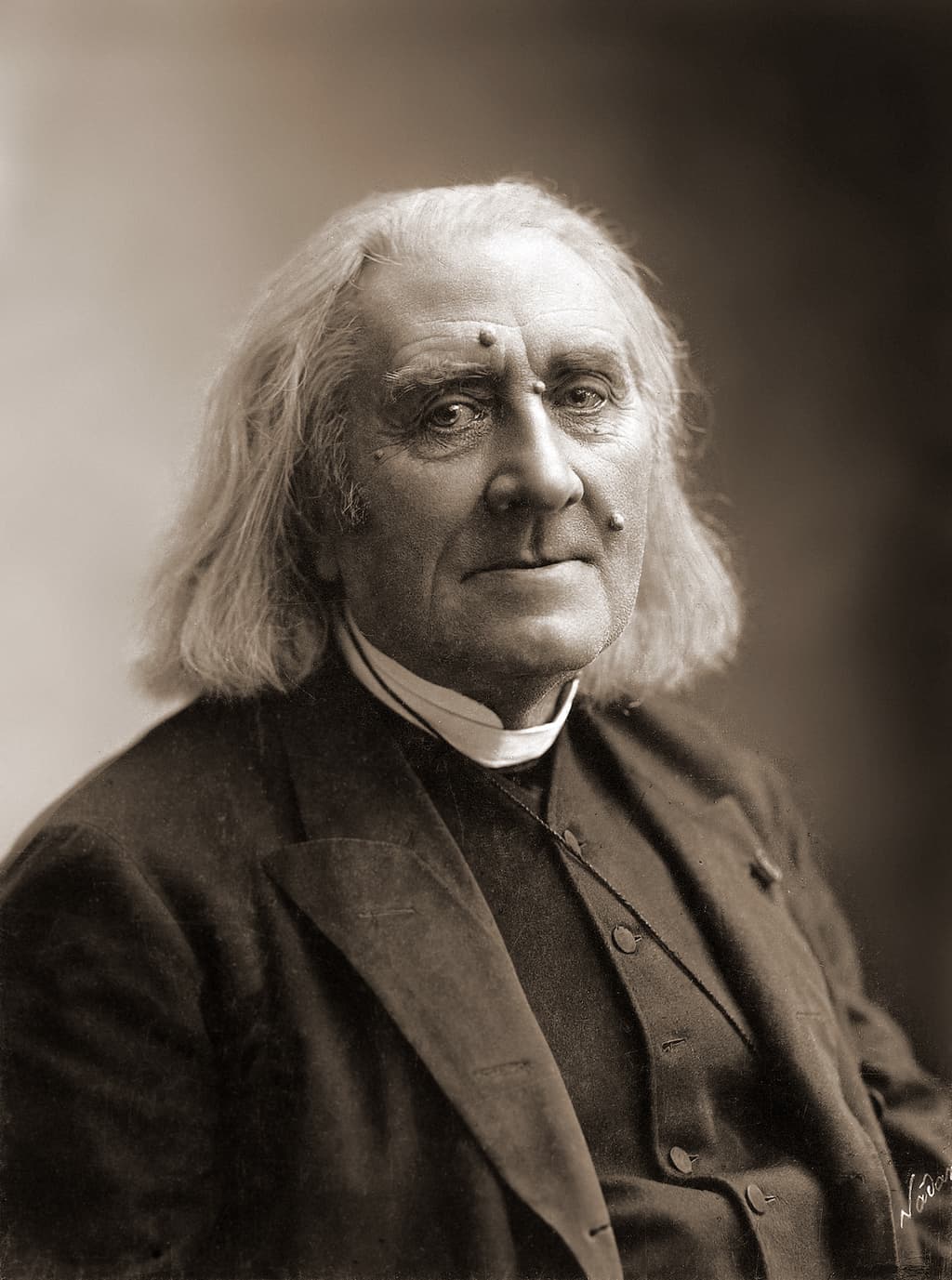
Franz Liszt in 1886
Two brief pieces from this time in his life are especially representative of his late-in-life experimentation.
Nuages gris (Grey Clouds) is two pages of sheer desolation: uneasy, with drifting harmonies that call to mind the work of later composers like Debussy.
It is believed that La lugubre gondola was inspired by a dark premonition Liszt felt in late 1882 while visiting his son-in-law Richard Wagner in Venice. The music imagines Wagner’s funeral boat gliding through the lagoon.
When Wagner died of a heart attack in February 1883, Liszt revisited and revised the piece.
Both works explore similar soundscapes of old age, isolation, and looming mortality.
Tchaikovsky – Symphony No. 6, Movement 4 (1893)
The ending of Tchaikovsky’s Sixth Symphony is one of the loneliest statements in the entirety of the symphonic literature.
Instead of a traditional triumphant ending, Tchaikovsky leaves listeners with a slow, quiet lament.
He wrote the symphony while struggling with his lifelong mental health issues and the secrecy surrounding his sexuality.
He was also a man who struggled with human connection. At the time he wrote the sixth symphony, he was obsessed with his nephew (likely in a romantic fashion), and he even dedicated the work to him.
Whether deliberately or not, some of the emotions he felt found their way into this symphony, especially this devastating finale.
Tragically, Tchaikovsky ended up dying unexpectedly just a few days after the premiere. He went out to eat with his nephew and a handful of other people, and drank a glass of unboiled water, which gave him cholera.
Ravel – “Le Gibet” from Gaspard de la nuit (1908)
Ravel‘s “Le Gibet” (“The Gallows”) is from the virtuosic three-movement piano suite Gaspard de la nuit.
Ravel was inspired by the 1840s poet Aloysius Bertrand’s poem by the same name. In it, a narrator describes being outside of a city, seeing a hanged body swinging on a gallows there, “reddened by the setting sun.” In the far distance, church bells toll.
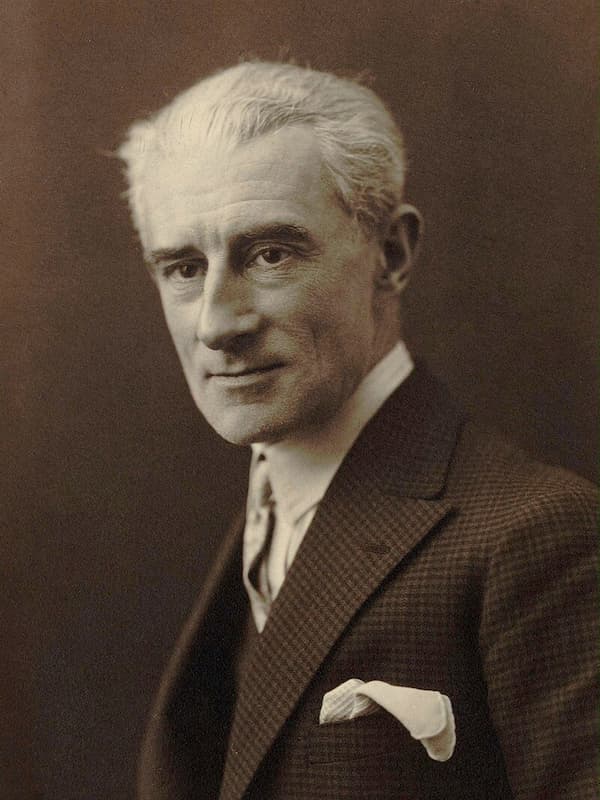
Maurice Ravel in 1925
Ravel writes an unchanging tolling B-flat into the score, which sounds like both a bell tolling and the observer’s solitary heartbeat.
Ravel himself was a very private and emotionally guarded man. There is no conclusive evidence that he ever had a romantic partner in his entire life; he thought of himself as being married to his stunningly crafted, deeply emotionally affecting work.
This movement speaks to that introversion and sense of isolation: it is static, suspended, and alien.
Beach – “Hermit Thrush at Eve” (1921)
American composer Amy Beach spent much of her career isolated in ways that her male colleagues tended not to be.
Restrictive social expectations after her early marriage kept her from becoming a touring virtuoso pianist, despite her extraordinary talent. (She turned to composition instead.)
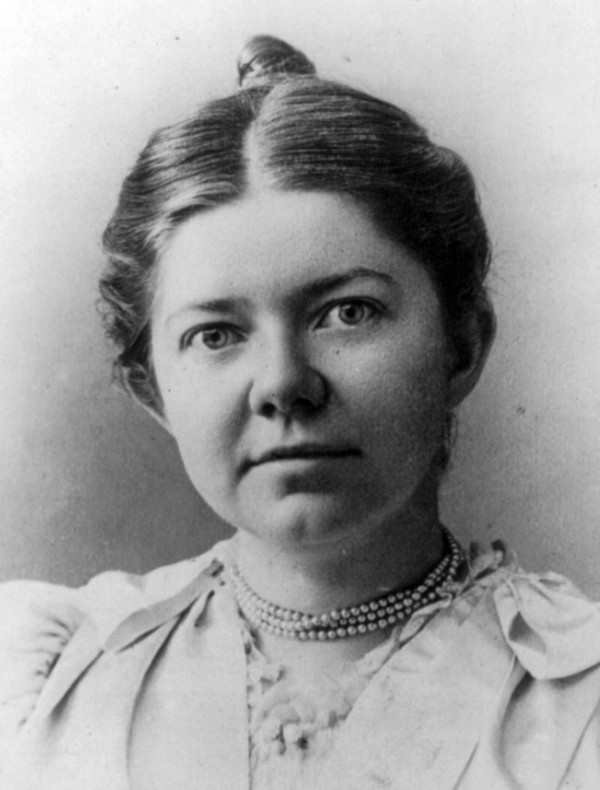
Amy Beach
Later, after she became a widow, she lived for long stretches in quiet artists’ colonies in New Hampshire and Maine, often taking inspiration from the natural world around her.
This piano piece was inspired by the call of a hermit thrush, a famously elusive species of bird. Beach notated an actual thrush call she heard during a solitary stroll and wrote it into the music.
The result is a piece that perfectly captures what it feels like to take a melancholy evening walk alone in the woods, and to be the only human being to witness something magical.
Copland – Quiet City (1939)
This ten-minute orchestral work first began life as sketches for music to accompany Quiet City, a play by writer Irwin Shaw.
Copland wrote that it was “a realistic fantasy concerning the night-thoughts of many different kinds of people in a great city.”
It was meant to mirror the life circumstances of the play’s main character: a man who had married a wealthy socialite and turned away from his Jewish heritage and artistic ambitions to pursue business. But every time he’d hear his brother’s trumpet playing, he’d feel a pang of regret and loneliness about the life choices he had made.
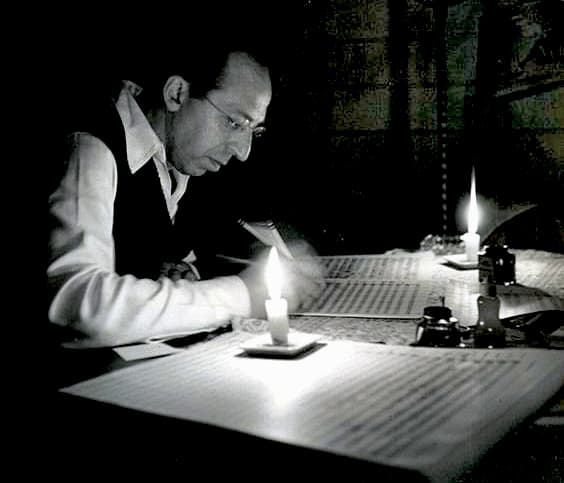
Aaron Copland, 1946
Copland had some personal experiences he could draw on while writing Quiet City. He, too, was a young Jewish man with intense ambitions. However, instead of pursuing a career in business, he channelled his energy into his composing career.
Over the years, Copland’s work has become more and more disconnected from Shaw’s play, and today it is viewed as a general portrait of urban isolation.
Britten – Peter Grimes (1945)
Britten‘s opera is one of the great portraits of social isolation.
The titular character Peter Grimes is an outsider in his village – suspicious, feared, and ultimately condemned – and much of the opera’s emotional power comes from his inability to connect with anyone.
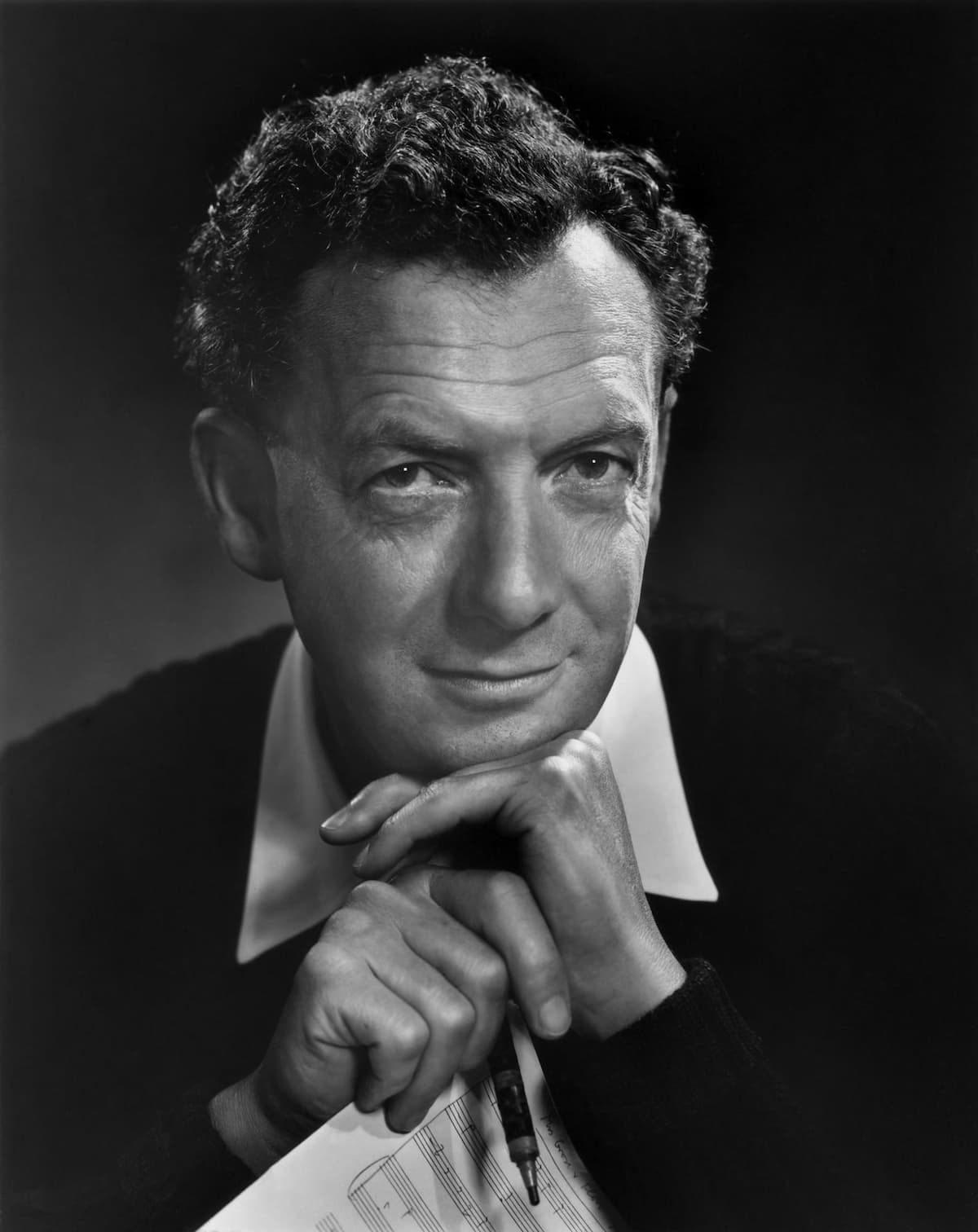
Benjamin Britten
Britten identified strongly with alienation. Because of his homosexuality, pacifism, and naturally introverted personality, he often felt judged or misunderstood.
He once said he knew what it was like to be “a stranger in the world,” and that knowledge saturates the score.
Conclusion
All of these works show how powerfully classical music can capture feelings of loneliness, whether it’s Dido’s heartbreak, Schubert’s frozen wanderer, Liszt’s late-life solitude, or Copland’s empty city streets.
Many of these pieces grew out of moments when the composers themselves were wrestling with moments of isolation or emotional distance in their own lives.
Maybe that’s a reason why these works are so timeless and still speak so powerfully to us today.
For more of the best in classical music, sign up for our E-Newsletter