Moscow Conservatory
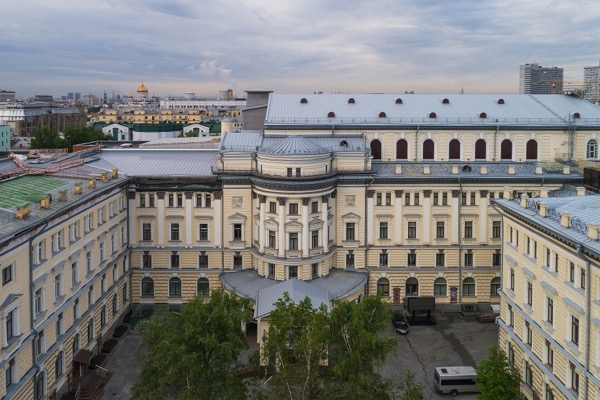
The year 2026 marks the 160th anniversary of the Moscow P. I. Tchaikovsky Conservatory. This renowned institution has, over a century and another sixty years, witnessed the cultural development and the historical progression of Russia. In the running river of history, art is often little more than beautiful ripples stirred by the tides of society. At times, however, it can become an undercurrent that alters the course of history or even find itself at the very heart of the turbulent waters.
A 260th Anniversary?
As it happens, precisely a hundred years before the Conservatory was founded, the first seeds of a cultural legacy were sown on the land where it now stands. In 1766, Princess Yekaterina Dashkova acquired a desirable plot on Moscow’s Bolshaya Nikitskaya Street—not far from the Greater Church of the Ascension, where Pushkin would later marry. Four years earlier, the princess and her allies had helped place her close friend Catherine the Great on the throne in a coup d’état. Her increasingly subtle and strained relationship with the new sovereign would compel Dashkova to leave Russia two years later and spend fourteen years further abroad. Her private building project, however, continued in her absence: in 1780 a stone residence was erected at 13 Bolshaya Nikitskaya Street, and successive extensions eventually made it a sizeable property.
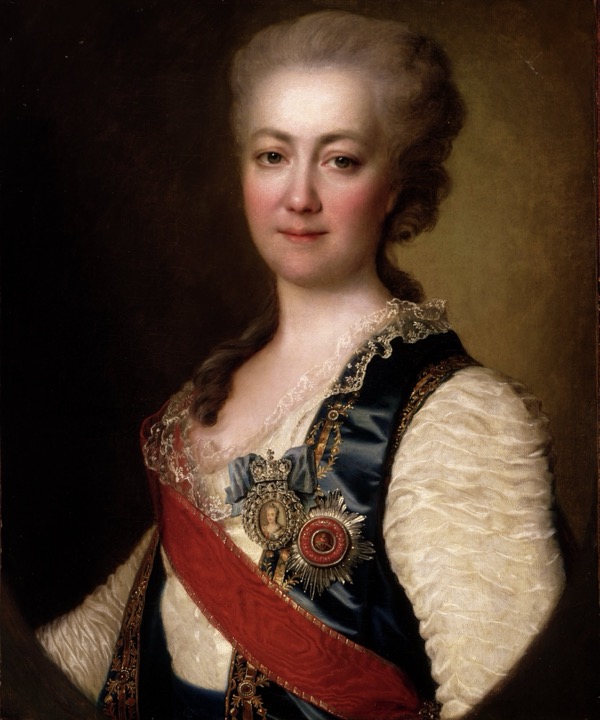
Yekaterina Vorontsova-Dashkova by Dmitry Levitsky (1784, Hillwood)
After Dashkova returned to Russia, the well-travelled princess was appointed by the Empress to head the Imperial Russian Academy and Imperial Academy of Arts and Sciences, leading the country’s cultural, scientific, and educational development, becoming the first woman in Europe to do so. It was, in fact, due to shared literary tastes that Dashkova had befriended Catherine years earlier to root this political alliance: both were well-educated noblewomen who especially admired the French writers of the Enlightenment, among them Voltaire and Diderot. Under Catherine’s rule, as Russia grew stronger and its exchanges with the outside world expanded, Western culture prevailed rapidly among the upper reaches of Russian society. Dashkova, after years spent in Western Europe, was certainly an admirer of its culture; yet she retained a strong sense of her own Slavic identity. In her position, she oversaw the editing of a Russian dictionary, collected and arranged folk songs, and vigorously supported domestic artistic and literary production.
After the Empress’s death, Tsar Alexander I, her grandson, who had himself come to power following another coup, expelled Dashkova from Moscow, and Dashkova spent her declining years at her country estate in bleak circumstances. Having no surviving direct heirs, she left her property to a nephew, including the building at 13 Bolshaya Nikitskaya Street. Beyond material possessions, however, Dashkova also bequeathed Russia spiritual and intellectual legacies. Over the century and more following Catherine’s reign, through political upheavals and social transformations, successive generations of intellectually ambitious aristocrats helped bring about the gradual flourishing of Russian culture in its many forms.
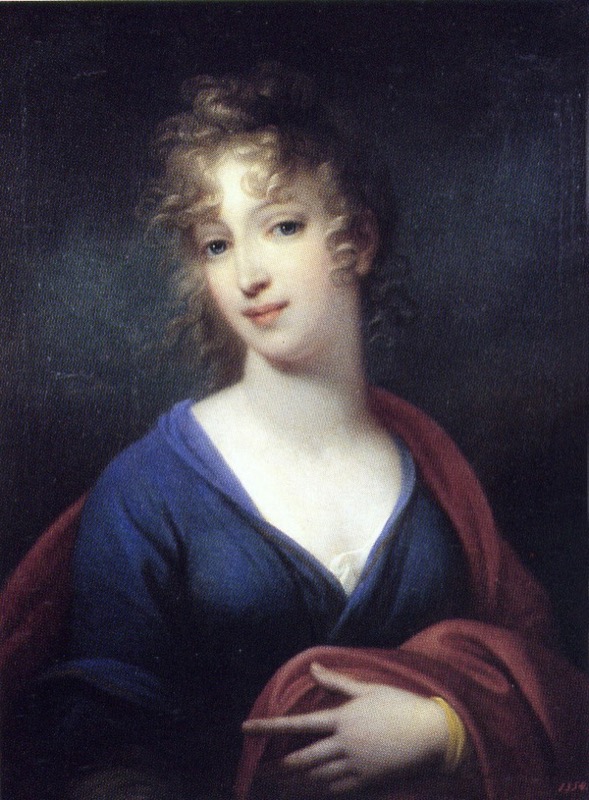
Grand Duchess Elena Pavlovna of Russia
Another aristocratic patron, Grand Duchess Elena Pavlovna—aunt of the reigning Tsar Alexander II—joined forces with Anton Rubinstein in 1859 to establish the Russian Musical Society, dedicated to both concert promotion and music education. In seeking to realise her imperial nephew’s vision of nurturing home-grown musical talent, she helped usher in a new era in Russian musical history. The Society defined its mission in the first article of its founding charter as “the development of musical education and musical taste in Russia and the encouragement of native talents.”
Russia’s system of musical education subsequently expanded at speed. In 1862, the Saint Petersburg Conservatory opened as the country’s first music conservatory; in 1866 came the subject of this article, then known as the Moscow Imperial Conservatory, with Anton’s younger brother Nikolai Rubinstein as its first director. In 1871 the Conservatory began renting the building at 13 Bolshaya Nikitskaya Street, purchasing it outright seven years later; the address has been inseparable from the institution ever since. After more than a century of cultural and social change since Catherine’s day, Moscow, too, at last possessed a conservatory—one that would give rise to many treasures of civilisation. Today, Bolshaya Nikitskaya Street remains a centre of cultural and political life, as home also to several embassies and consulates, theatres, museums and galleries, as well as the Moscow State University.
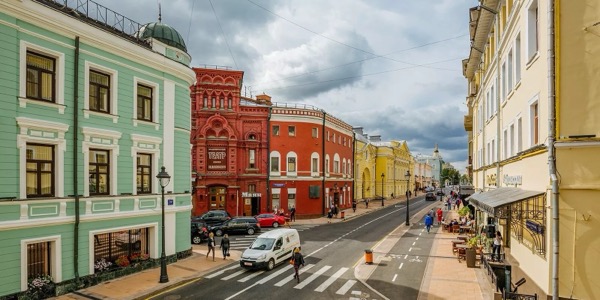
Bolshaya Nikitskaya Street (photo Mos.ru)
Birth of the “Tchaikovsky Conservatory”
Before the mid-nineteenth century, Russia’s musical life remained comparatively underdeveloped and limited in scope. Native musicians faced restricted opportunities, meagre incomes and low social standing, while aspiring musicians could often hope for little more than a career as an orchestral player or music teacher, neither of which was held in particularly high regard. Even those who gained the patronage of the aristocracy generally had to seek training and recognition abroad, particularly in Italy and Germany, as was the case with Glinka, one of the foremost pioneers of Russian national music.
Economic development drove social change, and the emancipation of the serfs in 1861 epitomised the turbulence of the age. The rise of the intelligentsia fuelled increasingly vigorous debates over national identity and social reform, while Alexander II and the aristocratic establishment also recognised the benefits of cultural development. The pressing need for a home-grown system of musical education began to be addressed in 1859. The Rubinstein brothers, trained in the German-speaking musical world, alongside numerous other musicians who had studied in Western Europe, brought their expertise back to Russia. With the support of the imperial government and Grand Duchess Elena Pavlovna, they helped identify and nurture a wealth of native talent, providing aspiring musicians with guidance at crucial stages of their development.
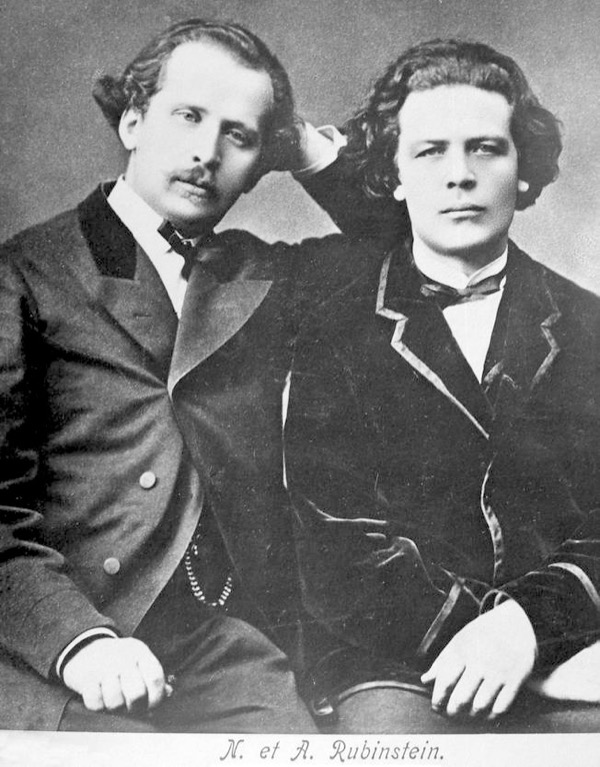
Nikolai and Anton Rubinstein
Of these emerging talents, perhaps none was more representative than Pyotr Ilyich Tchaikovsky. Although precociously gifted, even he needed fertile ground in which his talent could take root and flourish. His German-born teacher, Rudolph Kündinger, had advised the young prodigy, who came from a middle-class family, against pursuing a musical career in Russia. Tchaikovsky consequently studied law and even spent some time working at the Ministry of Justice. The emergence of a new system of musical education, however, transformed his prospects. In the autumn of 1861, at the age of twenty-one, he began studying music theory and composition with Nikolai Zaremba, who had trained in Germany, and subsequently with Anton Rubinstein himself. His studies took him first to the classes of the Russian Musical Society and then to the newly established Saint Petersburg Conservatory, where Rubinstein and Zaremba would serve successively as its first two directors.
Tchaikovsky thrived in this environment, and his reputation steadily grew. Upon graduating from the Saint Petersburg Conservatory in 1865, aged twenty-five, he was promptly offered a position by Nikolai Rubinstein, who invited him to teach music theory at the soon-to-open Moscow Conservatory. The new institution brought together musicians recruited from Western Europe, such as the German cellist Wilhelm Fitzenhagen, to whom Tchaikovsky would later dedicate his Variations on a Rococo Theme, alongside an emerging generation of Russian teachers. Among the latter was the pianist and pedagogue Nikolai Zverev, who would provide the early training of such distinguished musicians as Rachmaninoff, Scriabin, Goldenweiser and Siloti. Musical traditions from across Europe converged and mingled within its walls, reflecting the broader cultural currents shaping Russia in the second half of the nineteenth century.
At the Conservatory, Tchaikovsky’s activities as a teacher, critic and composer enriched one another, while frequent travels across Europe kept him abreast of developments in the wider musical world. His career soon gathered momentum. In 1869, he composed what would become his first major success, the Romeo and Juliet (overture-fantasia); in 1872, he published his Guide to Practical Study of Harmony, which would become an important textbook for generations of students.
Genius, perhaps, is destined for solitude. Ambitious and uncompromising, Tchaikovsky pursued a path that few had ventured upon before. To Russian academic musicians such as Rubinstein and Zaremba, as well as to Western critics, he often appeared to defy established conventions of form and technique in pursuit of personal expression. His music could seem extravagant or rough-hewn, at times even inviting accusations of banality or vulgarity. Meanwhile, nationalist composers who resisted Western influences—notably César Cui of the Mighty Five—found Tchaikovsky excessively Westernised, dismissing his music as stale and affected. Yet much of the Russian music that followed would inherit something of the spirit embodied in his works: drawing inspiration from national life while embracing Western musical styles and techniques, and boldly expanding the possibilities of musical language in the pursuit of individual expression. Perhaps herein lies one reason why Tchaikovsky and his successors have captivated audiences around the world and stood the test of time.
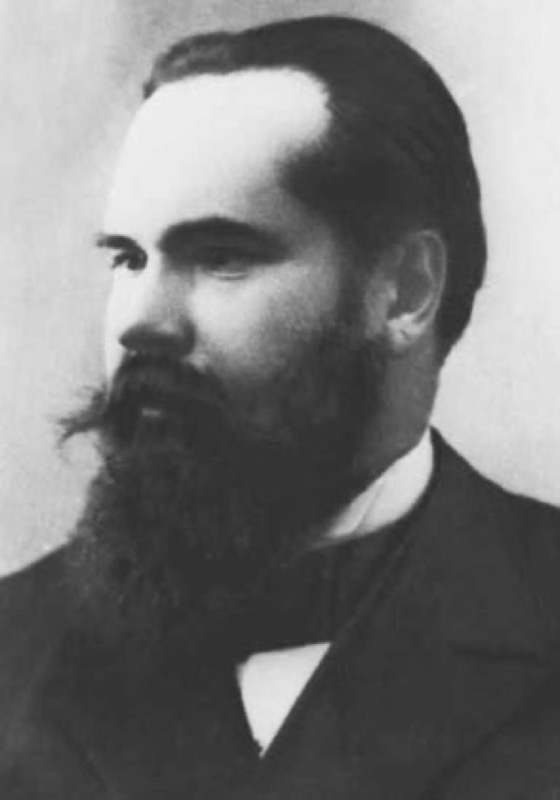
Sergei Taneyev
In Moscow, perhaps Tchaikovsky’s most significant pupil was Sergei Taneyev, both a student and a friend (and, according to some, a secret lover), who would become instrumental in carrying his teacher’s legacy forward. Following Tchaikovsky’s resignation in 1878, Taneyev assumed the former’s position, teaching at the Conservatory until 1905 and serving as its director from 1885 to 1889. His remarkable command of counterpoint left a profound mark on pupils such as Rachmaninoff and Medtner. Scriabin, who would later forge a radically different musical language, likewise benefited from Taneyev’s attentiveness to the individuality of his students, which encouraged his early artistic explorations. Another important admirer of Tchaikovsky was Anton Arensky, an accomplished composer and teacher who also joined the Moscow Conservatory. Although he had studied under Rimsky-Korsakov in his youth, Arensky became deeply enamoured of Tchaikovsky’s music after moving to Moscow, embracing him as a model in both composition and teaching.
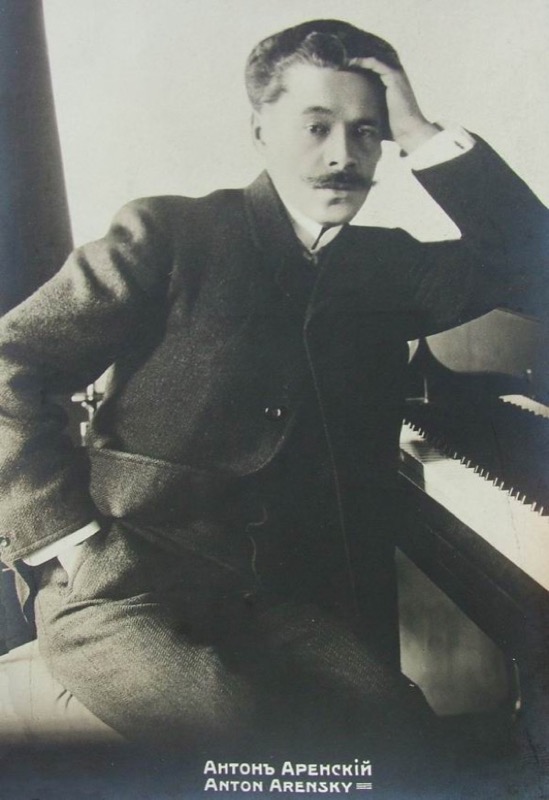
Anton Arensky
As musical styles and techniques continued to evolve, Tchaikovsky’s Romantic idiom gradually became classic and outdated. Yet the sense of cultural identity associated with his music and his name remained undiminished. On 7 May 1940, a decree of the Presidium of the Supreme Soviet bestowed Tchaikovsky’s name upon the Moscow State Conservatory. It was perhaps not a random decision. In late 1939, the Soviet Union and Nazi Germany had partitioned Poland; the Soviet invasion of Finland had met with fierce resistance, ending in a peace treaty in March 1940, while the Soviet occupation and annexation of the Baltic states would follow that summer. Perhaps, amid such political upheaval, the decision to honour Tchaikovsky offered a means of rallying the intelligentsia around a shared cultural heritage. In 1954, the year after Stalin’s death, a monument to the composer was unveiled in front of the Conservatory’s main building.
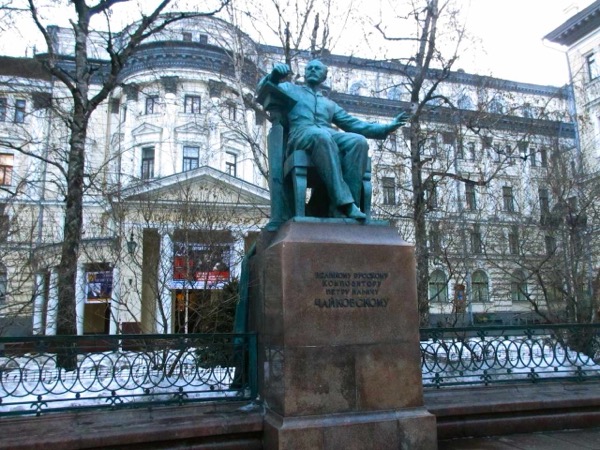
Tchaikovsky Monument
From One New Era to Another
In 1905, the management of Vasily Safonov, then director of the Moscow Conservatory, provoked widespread discontent among faculty and students alike. Taneyev was among his opponents and resigned that September; just a month later, a wave of nationwide political strikes would culminate in the October Revolution of 1905. Taneyev, who subsequently helped establish the experimental People’s Conservatory, would not live to witness the dawn of a new era: he died in 1915. On 12 July 1918, the Council of People’s Commissars, headed by Lenin, issued a decree transferring the Moscow and Petersburg Conservatories from the authority of the Russian Musical Society to the People’s Commissariat for Education, granting them the same status as other institutions of higher education. The property and equipment of both conservatories deemed necessary for state musical education and development were also declared state property.
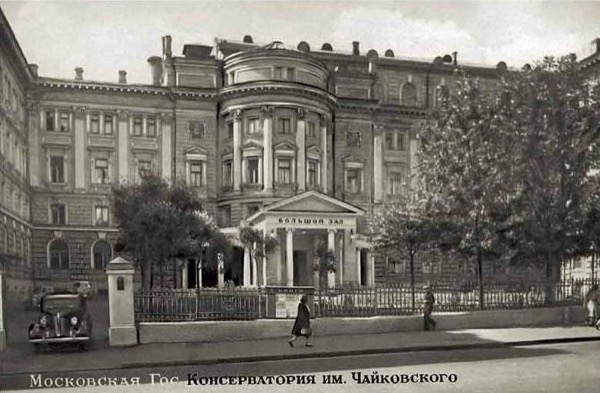
Moscow Conservatory in 1940
The new state-directed system transformed the Conservatory’s organisation and appeared also to reshape the substance of musical education. A more results-oriented approach to cultivating talent emerged, perhaps more ambitious in its expectations than the system of the tsarist era. It undoubtedly yielded considerable achievements, although these cannot necessarily be attributed to the system alone. Among the Moscow Conservatory’s most remarkable accomplishments during the Soviet period was the extraordinary number of outstanding pianists it produced, many of whom had benefited from the guidance of one man: Heinrich Neuhaus.
A Soviet musician of German descent, raised in a Polish-speaking household in what is now Ukraine, Neuhaus received his earliest musical education within his family and in Russia before pursuing further studies in Berlin and Vienna. One dramatic incident is said to have altered both the course of his life and, indirectly, the history of piano playing. In 1912, after hearing Arthur Rubinstein give the Berlin premiere of Szymanowski’s Piano Sonata, Neuhaus reportedly fell into despair over his own artistic prospects. Leaving behind a note declaring his intention to take his own life in Florence, he travelled to the Italian city. Rubinstein and Szymanowski hurried after him and found him in a hotel, where he had attempted to slit his wrists, before arranging for his admission to hospital.
Whatever the truth of this account, Neuhaus began exploring the possibilities of teaching in 1914 and eventually abandoned his aspirations as a concert pianist because of injury. In 1922, he joined the faculty of the Moscow Conservatory. Over the four decades that followed, until his death in 1964, the institution enjoyed what might reasonably be called a golden age of pianism, nurturing an extraordinary succession of artists under his guidance. Beyond the twin giants Richter and Gilels were Yakov Zak, Lev Naumov, Radu Lupu, Anton Ginsburg, Vera Gornostayeva, Margarita Fyodorova, Alexei Lubimov, Eliso Virsaladze and countless others, each distinguished by an artistic individuality. Some remained in the Soviet Union, while others settled in the West, establishing new branches of a pedagogical lineage that would eventually extend across the globe. The legacy of Soviet pianism thus spread far beyond its place of origin, enriching musical life internationally and giving genuine substance to the notion of a ‘Neuhaus school’. Few instrumental pedagogues, or indeed musical institutions, can claim a legacy of comparable breadth and distinction. During the same period, the Conservatory’s teachers in other disciplines also achieved remarkable success, even if their contributions were less conspicuous than those of Neuhaus.
Neuhaus teaching
How did Neuhaus and the Conservatory achieve such extraordinary success? Neuhaus himself was, of course, an exceptional teacher, Russia’s vast population and rich cultural traditions were equally important factors, but the Soviet system of musical training also deserves considerable credit—although Richter, arguably the greatest of them all, owed relatively little to that system.
Under state direction, musically gifted children received rigorous, systematic training from an early age. The most promising were progressively selected for specialised music schools and conservatories, where they studied under increasingly distinguished teachers. From this extensive pool of talent emerged outstanding performers and pedagogues, who would, in turn, pass on their knowledge to succeeding generations. Variations of this model survive today in Russia and parts of the former Soviet Union and have profoundly influenced music education in countries such as China. On the one hand, the system provides an abundant supply of promising young musicians; on the other, it produces instrumentalists with exceptionally solid technical foundations, often giving them a particular advantage in competitions for young performers. Yet it is difficult to discern any common ‘Neuhaus-school sound’ among Neuhaus’ individual pupils. Perhaps, rather than attributing these achievements to Neuhaus alone, we should regard them as the collective accomplishment of an entire era.
An intangible cultural achievement, however, also needs tangible proofs through which it can be recognised. During the Cold War, culture, sport and technology became arenas of rivalry in which nations competed without firing a shot. Following Stalin’s death in 1953, Khrushchev gradually consolidated his power, while mounting pressures at home and abroad called for a change of course. The Geneva Summit of 1955 signalled a diplomatic thaw, while the official denunciation of Stalin in 1956 marked a more profound shift in political direction. In the summer of 1957, Moscow hosted the Sixth World Festival of Youth and Students; that October, the Soviet Union launched the world’s first artificial satellite. In January 1958, the United States and the Soviet Union signed an agreement on cultural, technical and educational exchanges. Science, education, culture and sport thus became not only channels of international communication but also new arenas of geopolitical competition. In the summer of 1956, the Soviet government approved plans for an international piano and violin competition bearing Tchaikovsky’s name. Khrushchev reportedly endorsed the proposal with a terse handwritten instruction: ‘Proceed with it.’ On 3 September, the Ministry of Culture issued a formal order setting preparations in motion. Thus, between 18 March and 14 April 1958, the inaugural International Tchaikovsky Competition took place in Moscow, with the Moscow Conservatory at the heart of the event, establishing what would become one of the world’s most prestigious international music competitions.
Whether out of an unwavering commitment to artistic integrity or a stubborn determination to defy the cultural authorities, the piano jury, chaired by Emil Gilels, awarded the inaugural competition’s first prize to the American pianist Van Cliburn, turning him into an international sensation overnight. According to a frequently recounted anecdote, the jury sought the approval of the Soviet leadership before awarding the top prize to an American. When Khrushchev was told that the judges unanimously considered Cliburn the finest contestant, he reportedly settled the matter with decisiveness: ‘Then give him first prize!’ This display of Soviet ‘fair play’ certainly earned admiration in the West. Upon returning to New York, Cliburn was greeted with a ticker-tape parade in his honour. Addressing the crowds at City Hall, he declared: ‘The thing that thrills me the most is that you are honoring classical music. Because I’m only one of many. I’m only a witness and a messenger.’
Van Cliburn documentary
In the decades that followed, as one era gave way to another, the quadrennial Tchaikovsky Competition remained an important cultural calling card for both the Soviet Union and, later, the Russian Federation. It reinforced the cultural significance of Tchaikovsky’s name while continually investing it with new meanings. Although Russian contestants frequently accounted for a substantial proportion of the field, the lists of laureates consistently featured musicians from across the world. The competition also broadened its scope: initially limited to piano and violin, it subsequently introduced cello and voice, before adding woodwind and brass in 2019, extending its reach across an increasingly wide range of musical disciplines. That year, the French pianist Alexandre Kantorow won both first prize in piano and the Grand Prix; Japan’s Mao Fujita took second prize in piano, the American cellist Zlatomir Fung won first prize in cello, and the Chinese horn player Zeng Yun took first prize in brass. All have since gone on to establish international reputations as performers.
Yet 2019 may also have marked the competition’s high-water mark. Following Russia’s invasion of Ukraine in 2022, the World Federation of International Music Competitions (WFIMC) expelled the Tchaikovsky Competition from its membership, while its former streaming partner, medici.tv, ended its collaboration. Although Western musicians continued to participate, the total number of applications fell by more than 200 in 2023. The proportion of Russian contestants among those admitted rose from just over one-third in 2019 to more than half, while the number of Chinese contestants increased from nine to forty-eight. Where the competition comes from and goes to, however, has never been a matter for musicians alone to decide. Yet within the walls of the Conservatory, where the competition has long found its home, generations of musicians continue to study, perform, compete and teach. The music will go on, whether or not its ‘golden age’ has already passed.
For more of the best in classical music, sign up for our E-Newsletter